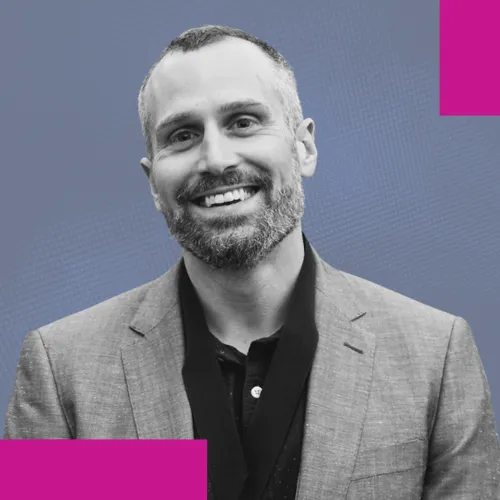
After more than 40 years in the energy industry, Katherine Hamilton is retiring. And that means she’s also retiring from the podcast after a decade behind the microphone.
In this farewell episode, Katherine shares insights into a career that spanned one of the most transformative periods in energy history. We’ll reflect on her accidental entry into grid engineering at Dominion Virginia Power in the 1980s, where she learned to design distribution circuits, calculate load, and build early efficiency projects.
She talks about how those experiences gave her an intuitive grasp of how the grid works — a foundation that shaped her roles at NREL, in federal advocacy, in leading industry associations, and becoming a trusted policy voice in clean energy.
We’re deeply grateful for the clarity and optimism Katherine brought to every conversation. Over the years, she helped listeners make sense of policy upheavals, market shifts, and the messy, unpredictable reality of the energy transition.
This is a chance for us to say thank you. Katherine was an incredibly effective translator for the clean energy industry, and we’re going to miss her deeply.
This is our final episode of the year, but we’ll be back in January with fresh episodes.
We will soon be opening registration for Transition-AI 2026 in San Francisco. More details here.
Credits: Co-hosted by Stephen Lacey, Jigar Shah, and Katherine Hamilton. Produced and edited by Stephen Lacey. Original music and engineering by Sean Marquand.
Nextracker is now Nextpower. As electricity demand surges with AI, data centers and electrified infrastructure, solar is the only power source that can scale fast enough to meet this moment. Nextpower is the technology platform built for this future, delivering connected systems that unify the structural, electrical and digital technologies of a solar power plant. Powering what’s next at Nextpower.com.
Open Circuit is brought to you by Natural Power. Natural Power specializes in renewable energy consulting and engineering, supporting wind, solar, and battery storage projects from concept through financing. Discover how we’re creating a world powered by renewable energy at naturalpower.com.
With resilience now a leading driver of grid investments, Latitude Media and The Ad Hoc Group are hosting the Power Resilience Forum in Houston, Texas on January 21-23, 2026. Utilities, regulators, innovators, and investors will all be in the room — talking about how to keep the grid running in this new era of heatwaves, wildfires, and storms. Register today here!
Transcript
Stephen Lacey: Katherine, you look great. You look like you’re dressed up more than usual.
Katherine Hamilton: After this, have to go to DMV and get a new ID made with my new address.
Stephen Lacey: So it’s not for us.
Jigar Shah: No. 100% she is saying it’s not for you.
Katherine Hamilton: It’s this that’s for you, buddy. It’s my brain. Save that for you.
Stephen Lacey: Are you both familiar with the concept of the holiday news dump?
Jigar Shah: Yeah, I think so. Meaning the most controversial, difficult things you just dump in the holidays because no one’s paying attention.
Katherine Hamilton: Yeah, sneak them in.
Stephen Lacey: Is that what we’re doing here?
Katherine Hamilton: I think of it as a celebration, not a dump.
Stephen Lacey: Definitely. Usually a news dump is something that needs to be hidden, or to be embarrassed by, but this is something indeed to be celebrated. And I think, Katherine, it’s your honor to reveal the news.
Katherine Hamilton: Yeah. At the end of this year, I’m retiring from my job in clean energy and from the podcast.
Stephen Lacey: No more podcasting, no more conferences, no more meetings, just you, and painting, and gardening, and… Wait a second, can Jigar and I do this with you?
Katherine Hamilton: Yeah. Come on out, y’all. Well, actually, I am keeping my board positions. I’m going to stay on the board of Peak Power in Toronto, MKB in Montreal, and Smarter Grid Solutions in Glasgow, and then I’ve also been invited to be visiting senior fellow at Cornell’s Atkinson Center for Sustainability. So that’s an excuse to get to Ithaca a couple times in the next couple years. And so I’m going to continue to stay busy, just not on a daily basis.
Stephen Lacey: Katherine is load shedding.
Katherine Hamilton: That’s right. That’s right, load shedding.
Stephen Lacey: Katherine is cutting her capacity factor.
Jigar Shah: Okay, none of this is resonating for me, honestly.
Stephen Lacey: Katherine’s going to be her own load serving entity.
Katherine Hamilton: Oh, geez. This all sounds terrible.
Jigar Shah: Oh.
Katherine Hamilton: It sounds like exactly what I’m trying to get away from. No, no, no, no, I’m going to do light work, and much more heavy on spending time with my beautiful grandbaby, and all my other kids, and my mom, and the mountains.
Stephen Lacey: Well, before, Katherine, you ride off, get in your EV and ride off into the sunset, and-
Katherine Hamilton: Looking for a charging station?
Stephen Lacey: You’re looking for a charging station, and then never having to respond to one of my prep emails, or one of Jigar’s takes ever again, we wanted to use this episode as a special opportunity to reflect on your career, which has spanned 40 years in energy. And a decade of that period was spent alongside me and Jigar every week, first as the founding co-host of the Energy Gang from 2013 to 2021, and now Open Circuit. Do you guys have any favorite moments or observations from when we first assembled in 2013?
Jigar Shah: Well, I remember we were at a conference, and Katherine and I were in the green room with you, and I don’t exactly know what I said, but Katherine got so mad at me, and it was something about the ARRA stimulus bill, and what was in it or something. And I was just like, “Oh, you can’t mess with mama bear.”
Stephen Lacey: Do you remember this, Katherine?
Katherine Hamilton: I do. He was trying to take credit for something I had actually done.
Stephen Lacey: Oh, do not do that.
Katherine Hamilton: I disabused him.
Stephen Lacey: What about you, Katherine? Are there any moments that jump out for you over the last dozen years you’ve been doing this?
Katherine Hamilton: Even though we were talking about things that were very… I don’t know, some of them could be considered esoteric, wonky, whatever. We became really good friends along the way. Jigar and I knew each other before, but now we’re all really good friends. We just know each other, we trust each other, we have each other’s backs, we challenge each other. I mean, that to me is the best thing. Stephen, because you are a reporter, I knew I had to study extra hard, because I had to know… You’re teeing everybody up, but you’re the reporter, you know stuff, so I had to know more than you. I had to study up for that. Jigar is always challenging and pushing, and that’s so great. And that caused this really interesting dynamic and vibe, and I just… The times that I remember the fondest are the ones where it’s just the three of us.
Stephen Lacey: Yeah. Absolutely. You took the role so seriously. And I was having a conversation with your husband, Dave, about your process and your work ethic, and he was describing how, from the beginning, you would call up people, you would set out your schedule for the week, you would do 3 to 4 interviews, and really try to bring a balanced set of takes, so that you always knew you were getting something really highly accurate when you were delivering your takes.
And people definitely responded to that, that’s the single biggest compliment that I heard about you when people were talking about the show, it was that they could really trust what you were saying, and you gave generally balanced takes, and you would go out and sort of talk about how people are thinking about it in the industry, and so I just can’t thank… That’s so much work. That is so much work, and I cannot tell you how much we and the listeners appreciate that, doing that for basically a decade, with everything else that you have going on. And your seriousness with which you took it, I think really elevated the show. So I’m just so grateful for that.
Katherine Hamilton: Thank you so much. It’s a huge responsibility to come on and talk about something that you have to bring either a point of view or a set of facts to.
Stephen Lacey: Now, Jigar, you are a hard person to sway sometimes, did Katherine change your mind about anything, either a specific subject, or just a frame of reference for thinking about the industry?
Jigar Shah: I mean, she changed my mind about a lot of things. Remember, when we first started in 2013, I totally questioned the value of policy. I mean, I understood state policy, to be clear. We had talked about renewable portfolio standards and that kind of stuff, but I don’t… I mean, I think if you remember, I mean, I was just the most anti-Obama administration person possible, and I still think that they squandered every opportunity that they had during the years that they were there, but I think that the value of the work, that this was not just a side thing, but actually a central thing to the work that we all are engaged in, which is the flourishing of these clean energy solutions, I mean, I don’t know that I revealed it, but I mean, I certainly didn’t understand it, really at all before Katherine helped me.
Stephen Lacey: You changed my mind about a lot of policy and politics stories, so particularly the pathways for legislation. So very often, I would read something in Politico or Axios about maybe a piece of legislation that’s moving forward, some kind of negotiation, and then have an impression that it was struggling, that it was dead. And you would often come into that conversation and be like, “Wait a second, the pieces are coming into place.”
Katherine Hamilton: Go Joe Manchin.
Stephen Lacey: Yeah, poor Joe Manchin. And you had direct knowledge of the wrangling behind the scenes, you were part of the wrangling, and this happened obviously with the IRA, with tax credit legislation in previous years and so on. And so I always knew that I could trust you for a very accurate insider view of the state of play, and that sometimes did not match the reported consensus.
We have a running joke about how optimistic you are. You taught me to be much more optimistic. I am a classic Gemini, I have a classic split personality, I am often split between skepticism or cynicism, and then I do have a real optimistic belief in people, and in goodness, and in progress. And with a different group of people, I think this show could have easily been much more about wallowing, and complaining, and doomerism, and, “What are we getting wrong?” And a huge piece of it, that we were the opposite as a group, and I think that like people really appreciated that. We were realistic, but we brought a sense of optimism, and you taught me to kind of foster that piece of myself.
Katherine Hamilton: That’s funny, because I think of Jigar as a huge optimist too. I mean, Jigar, you’ve convinced me that the industry is fine and growing, and I’ve had to like say, “Okay, Jigar says it is, so it must be.” I’m going to keep smiling, and keep putting one foot in front of the other.
Jigar Shah: One of the things I find fascinating in this moment is just the unique sort of background that you bring to the work. I mean, it’s not just that you’re inside the room when most people aren’t, but it’s also that you came from a utility, you were an investor, you had all of these experiences, all of which gave you firsthand knowledge and impressions around how to process all the stuff that was happening.
Stephen Lacey: Why was now the moment?
Katherine Hamilton: Yeah, I’ve been planning this for a couple of years, and I’ve been wanting to do some things. I’ve been in this industry for 40 years by accident, and there were things that I wanted to do for years. I want to start a foundation to help kids with special needs who are descendants of enslaved people. I mean, I have some amends to make having been from the South. I have things that I want to do with my two younger sons, one of whom wants to start a museum for inclusion, and I want to be part of that, I want to be his first hire.
So there are things that I’ve been wanting to do. When I grew up, I wanted to be… When I was a kid, I wanted to be a teacher. So I would set all my stuffed animals, and dolls, and chairs, because my siblings were too wiggly and young to do it, and I would teach them. And I wanted to write and illustrate children’s books. And it’s been a long time since I painted. I used to paint people’s kids’ portraits, and I haven’t done that in a really long time, and I want to do that. I want to use parts of my brain that I haven’t had a chance to use in a long time.
Stephen Lacey: And now that we have shared the news, and maybe I’ve told too many bad retirement jokes, I think it’s helpful to shift gears and tell Katherine’s story. So as I was preparing for this episode, I talked to your husband, Dave, Katherine, and we talked for a while, and he described a distinct set of superpowers, and I want to explore your arc, your career arc, lessons learned from your career that spans 40 years through the lens of those superpowers.
Katherine Hamilton: Did he mention cooking? Because I would hope he would say that would be one of my superpowers.
Stephen Lacey: And I think the first one is a really key one that what made you so unique on this podcast, which was bringing a technical background to policy. And Dave described how before you ever walked into a policy meeting, you spent many years literally drawing the grid, you have told some of that story on this show, and that gave you a grounding that almost nobody else in D.C. had, that was working on energy policy, even to the people who were writing the rules. So let’s go back at the beginning, your original career move going into Dominion Virginia power was a happy accident, is that right? You weren’t ever planning on going inside utility.
Katherine Hamilton: Oh gosh, no. I did do a summer doing technical writing for the utility, because my grandfather worked for the utility, so I knew it was out there, and he called it the company, and he would have loved for me to be an engineer and work there, but that was really not in my plan. I wanted to write and illustrate children’s books. I got a degree in creative writing from Cornell, and then I had an opportunity to go to France to Paris and be an au pair, and do a degree at the Sorbonne in French civilization and culture, which I loved. I took a bunch of odd jobs over there. And I came back, moved to D.C. from my hometown of Lynchburg, because I did not want to stay in Lynchburg. I moved to D.C., I’m like, “What can I do?”
So I got a job at a law firm for $6 an hour serving subpoenas, and then I applied for the utility, they were desperate, and I was like, “Maybe I should try it.” And they hired me. And what was interesting was that I was required to do a lot of engineering, and I’d never done engineering. However, when I go back and I think about growing up, I think about all the things my great grandmother who taught me to sew when I was five years old… I made my first outfit for myself when I was seven, and my sister still has it, she wore it for a while after I grew up. But sewing, doing things with my hands, it was like structural engineering. You had to understand physics, you had to understand how things… How fabric would lie, you’d have to understand how nap works, and how bias works when you make clothes, and drapes, and… I can basically sew anything. So when I was at the law firm, I did not make a living wage, I had to make all of my own suits. I made suits with shoulder pads, and the whole lining and everything.
Stephen Lacey: Damn. Wow.
Katherine Hamilton: And I knew how to do that, which is another thing I’d like to continue to do. So when I went into engineering, it felt very much like that. I was like, “Oh, this makes sense. There are directions. I know what I need to do to do a guying calculation. It is a very specific formula.” I had to take a test every six months on the job. I had to go take night classes at a community college, and alternating current, and we had long labs at night after… I’d go to work, and then I’d go to the lab, and my lab partner would go to happy hour in advance, and so I was like, “You sit there, you’re not touching anything. I’m going to do the experiment, and I’ll tell you what the results are, and you write them down the best you can, and then we’ll go from there.”
But I loved it. I loved it so much. It made so much sense to me. I would throw in my little artistic stuff, like whenever I did a project on Quaker Lane in Alexandria, I would draw a picture of a quaker, and they’d be like, “Oh, we know who designed this project.” Because I try to do little artistic things in my drawings. But I loved it so much, and I loved going out into the field. I loved watching my projects being built. We did the first water impervious cable splicing in a manhole, and the cable came from Japan, and the instructions were in Japanese. And I got down there with the guys, and I was like, “Come on y’all, how hard can this be? They’re drawings, we should be able to figure this out.”
And now it’s just normal cable, it’s considered normal cable, but at the time, it was so interesting, and I just… I loved doing it, I loved working at the utility because it was just so much interesting stuff going on. We were very innovative, we did… I learned how to design a thermal storage system. We had ice storage then. I learned how to design street lighting. They would send us to factories, they would send us to plants. They sent us to the GE plant in North Carolina to learn how to design lighting, and how does the color work. And so I just loved it. I loved being at a utility. So I’m always up for recommending that if you want to learn how the grid works, go work at a utility for a while. It’s good.
Stephen Lacey: I love that connection between grid engineering, and designing clothes, and sewing. I can see how they would foster similar strengths. So you spent eight years at Dominion Virginia Power, a few of those were designing grids. Then you went to the National Renewable Energy Laboratory, where part of your job was to educate Congress about the lab’s research. So what kind of advantage did that engineering background give you in that work? And then how did it teach you to translate technical things into what something policymakers can understand?
Katherine Hamilton: Yeah. So when I started the lab, I was not doing policy at all. I saw a memo in a real engineer. So I was not a real engineer, I was a field engineer. In a real engineer, a PE’s inbox, because that’s what we had, was paper inboxes, from this guy at Department of Energy, Mark Ginsberg, who was running the Federal Energy Management Program, and I was like, “He seems really interesting. I’m going to reach out to him.” Because I’d kind of reached the end of the line at Virginia Power. I bumped up against a glass ceiling that was quite low, and it was made of really more like lead than glass.
Jigar Shah: Oh, no.
Katherine Hamilton: And I reached out to him and I said, “Hey, it seems like what you’re doing is really interesting. Can I come talk to you?” And he said, “Yeah.” He said, “I don’t have any spots open, but I would love to hire you through the lab. And what I would like for you to do is design an energy audit program for the federal fleet, so that when people go into buildings, they can learn how to do audits, and they can do energy audits, and then they can propose different energy solutions.” So I said, “Yeah, I probably need to get…” Because I’m not a PE, I probably need to get some credentials.” So I went and got my certified energy management certificate, had to take all these tests and classes, so that I could… When I walked into a building operator’s office, I could show them my credential and say, “I know what I’m talking about.”
And that’s been important for me all along, is being able to know what I’m talking about, and have people believe in me. So I did that for a while. Also started a water efficiency program. Did a big project at Kirtland Air Force Base. And then my girlfriend… But I was housed in D.C., and so one of my best friends, a girlfriend of mine said, “Hey, I’m the government relations person.” I was like, “I have no idea what you do.” And she said, “Well, I’m leaving to start my own thing. Would you like to try to do my job?” And I was like… Again, it was a little bit of like, “How hard can this be?” And so I just jumped in, and what I found was… And I was able to learn about a lot of the other technologies that NREL was doing, not just energy efficiency, but a whole host of other renewable technologies, obviously. That I could be in government relations, and serve as an expert witness before Congress. That I had a credibility walking in, because I knew the technology.
And part of what I was able to do, and remember, I talked about teaching, and wanting to teach, I was able to distill really complicated ideas into words that people who didn’t have any kind of technical background could understand. And so that was how I was able to translate. I thought, “Oh, this is great. I can take things that are super technical, and I could draw a grid on a napkin, or I can just explain to them in real people’s language, in layman’s terms, in a way that they can understand and grasp, and that’s how I could have influence.” My influence wasn’t about going and doing fundraisers, it was about, “How can I be credible, and provide real technical understanding in a way that they can grasp?”
Jigar Shah: So wait, you never got an engineering degree?
Katherine Hamilton: No. I took night classes at the community college, and took tests.
Jigar Shah: I mean, you could have fooled me.
Stephen Lacey: Totally.
Katherine Hamilton: Unfortunately, I think I fooled a few people.
Jigar Shah: Well, I mean, it’s an entire topic, frankly, about the over-credentialing of our society around folks not getting a chance to do things that they actually can’t excel at. I’m curious though, so it sounds like you’re at the utility, you’re at NREL, when did this become about clean energy?
Katherine Hamilton: Certainly at the utility, because we’re doing ice storage. After my time as a service rep, which was the one that I was designing the grids, I went into what was called commercial marketing, where I had a bunch of assigned customers, like 100 corporations. Marriott, for example, was one of my customers. I was in charge of all the Marriotts in Northern Virginia, and I had to provide to them any kind of efficiency services that they wanted. And the energy efficiency stuff was just super interesting to me, and ice storage, and there was a creativity there.
Stephen Lacey: And they were thinking about it in terms of clean then?
Katherine Hamilton: Oh, no. No. They were thinking of it because they couldn’t build substations fast enough to feed all this load growth.
Stephen Lacey: Oh, yeah.
Katherine Hamilton: It’s where we are now. Their demand was increasing, so they had TOU rates, they had thermal storage rates. I mean, that was, to me, super interesting. So it was coming up with all of these technical, and… It was actually policy rate solutions using technology to do so, and that was really interesting to me. When I went to NREL, I could see where… It became more of a value, Jigar. The people who worked at NREL in those days were the first people to install solar on their homes. They built their own homes, they practiced what they preached, and they were so inspirational, and that’s how I really got into it.
And then meeting my husband was huge. He was then the head of policy for Alliance to Save Energy. And the day that I was asked to flip from being a technology program manager to being the head of government relations, I went to this meeting at the Alliance to Save Energy, where there were a bunch of different clean energy folks, renewable folks there, and my husband started talking, I was like, “He seems very interesting.” And he said, “I’m starting this subgroup on policy, who wants to be on my subgroup?” And my hand flew up. And he had come from the environmental community, and in fact, he went back into it when he… He was at the Sierra Club for 12 years, and he was so inspirational on how this comes from a real soul perspective, like your real… And I think I had had it all along growing up, because my parents were a real environmentalists, but it wasn’t something that drove me in my jobs until I met him, and I started working at NREL, and realizing this is part of my value system.
Jigar Shah: That’s the other thing though that I think people don’t really know about you is that while you’ve led trade associations, I don’t know that you’ve ever worked in an environmental group.
Stephen Lacey: Well, that actually kind of brings us to your second superpower, which is your relentless preparation. You have led organizations like the American Bioenergy Association, the Energy Storage Association, most recently Common Charge, and you were doing that while running… you’re running these groups while balancing running your firm, you’re doing this show. What was your mindset coming in and managing these organizations, managing that load, and then ultimately winning the arguments that mattered?
Katherine Hamilton: Yeah. A lot of this is, you put one foot in front of the other. You can’t stop and say, “Oh my goodness, I have too much to do.” It’s kind of the saying about Ginger Rogers could do everything Fred Astaire could do, but backwards and in high heels. I had to be really prepared for everything, and that meant I worked a lot, worked all the time. But it also meant I needed to bring what I could, which was like this really… An understanding of technology, an understanding of data, and the importance of that. And one of the things I was part of, because I wasn’t in an environmental group, but I was part of what was called the Sustainable Energy Coalition.
So with NREL, I participated in this group that had all of the environment groups, and also the clean energy groups, like the Alliance to Save Energy, all those folks were part of this, and they were always fighting the budget. So it was during the first Bush administration, where… I will never forget a meeting with Dick Cheney, where he literally growled at me when I suggested that we have a federal renewable portfolio standard. But I knew going in that I needed to… From NREL, I had to bring in all of this information to this group. If they’re all doing policy, I don’t know that much about policy, I’m learning, I’m sitting with people who work on the Hill, sitting in their offices watching C-SPAN and getting schooled on it.
My husband was a huge mentor in that regard about policy and about politics, but it wasn’t my strength. My strength at that point was like, “How do we pull things together in a real way that provides good information?” And at that point, we were running an amendment, and for appropriations, we wanted to increase the budget for renewable energy and energy efficiency. And so I put together a chart, they called me Chart Lady, because I put together a chart that said, “Here’s how it should be broken down.” And I figured out some formula that I came up in my own brain about each program, biomass, solar, hydropower, geothermal, everybody. I had it all listed out, and I decided, “All right, here’s the amount that everybody should get out of 20 million.”
And Mark Udall from Colorado ran the amendment, we won on the Hill, we won that battle in Congress, we won the floor amendment. And so much of that was because they had something in hand that they could point to. They had a chart, it made sense, they had all the talking points. And I realized that that was as much of impact as being able to go and raise a bunch of money for a member of Congress. It was like, “If I have this information, this is power.” And so that’s what I’ve always done. If I can get good information, and present it, and be super prepared, that is going to give me the ability to influence and have an impact.
Stephen Lacey: Why did you decide that instead of going into Congress, or going to an environmental group, that you stayed with the industry associations to focus on solutions, and then to tell the story of the industry in front of policymakers?
Katherine Hamilton: So just keep in mind, none of this was planned. So I went to NREL, when I left NREL, I joined my girlfriend who had been at NREL, Megan Smith, and we ran… We co-directed American Bioenergy Association. And along the way, I was having a bunch of kids. I had my third and fourth kids. I had one and three year olds when I started at NREL. And then by the time I left NREL, I was having my third and fourth kids. And it was a lot, because my last two kids have a lot of differing abilities.
So I actually stopped doing things for a couple of years. And during that time, had to think about, “Well…” We had open heart surgery for a kid, we had a kid go to the Mayo Clinic. We had a lot of stuff, and I had to manage a lot of that. So for about three years, I did that. And then one of my friends recruited me to come to Good Energies, which was Richard Kaufman’s shop, ostensibly to do policy, and I realized they didn’t want to do policy, but I could do diligence, because I knew technology, and they had… They were looking at an ice storage company, I was like, “Oh, I can do this for you. So I was able to work for… That was a private equity firm. And so that got me back in, and then from there, somebody recruited me to lead GridWise Alliance, and become their first president.
And so it was kind of just happenstance, and needing to get… I really wanted to get back into it. My brain needed to get back into doing the energy stuff, or doing something other than… I love my kids, but I needed to do something else, and so I got back into it through that channel. But it wasn’t like I made some decision, “I’m going to do this instead of going to an environmental non-profit.” Or something. It was really like, “Where are the opportunities? What am I good at? How do I keep going forward, and make a living?”
Stephen Lacey: I love the confidence you had going into private equity, and…
Katherine Hamilton: I didn’t know what it was.
Stephen Lacey: Yeah.
Katherine Hamilton: That’s how I’m confident, is, I don’t know what things are. Generally, I’m like, “How hard can it be, really?”
Stephen Lacey: Well, you’ve got a backbone, and that’s, I think, the third superpower that I want to get to, which is, you have a high level of competence that sometimes threatened men with bigger titles and bigger salaries. And I know that some people tried to undermine you as you worked your way up and through this industry, and I think you just persist with this very calm, affable style that earns a lot of trust. And so I’m just curious about where you have needed a backbone in your career? And how have you navigated power dynamics in a male industry?
Katherine Hamilton: I’ve always been pretty brave. I’ve had chutzpah. When I lived in France, people would try to pick my pocket, and I would just curse them out up and down in French, and I took no guff from anybody. So I’ve always had that kind of backbone and sense of bravery. When I went to the utility, I’ll never forget, I was pregnant with my first kid, my boss called us all into a big meeting, staff meeting, and said to me, “I hope that motherhood doesn’t prevent us from making our goals.”
And I realized that year, and as I kept going there, that every time I tried to get a promotion, they wouldn’t promote me. I finally just said, this is when I looked for Mark Ginsberg, and someone else’s in basket and decided to leave, “I’m going to go to the highest person I can, and do an exit interview, and ask for an exit interview.” So I went to the vice president of all of Northern Virginia, and I said, “You’re losing out. Women are smart. There can’t just be one… You can’t just give opportunities to one woman. You have to bring everybody along. I’ve tried to do that, and there’s no place for me here. And that’s too bad, because you’re losing someone who’s really willing to work hard for you, and could potentially learn and grow.” And so all along, I’ve had that. I just don’t take any guff. I mean, my supervisor there said, “Why don’t you brown-nose more? You never suck up.” And I’m like, “Yeah, I don’t have time for that. You’re not worth it. Everybody poops the same way.”
Just, really, everybody is the same. And I’ve always felt that about everybody, and became even more so when I had kids that had differing abilities. Everybody has value, everybody should have dignity. No matter what job you have, you should have that. And that’s been a lot of what has made me kind of persevere in times when it was harder than others.
Stephen Lacey: Okay. So you’ve got an incredible amount of confidence and chutzpah, and I think that brings us to the fourth superpower, which is your ability to bring that confidence to others and lift others up. And your presence on this podcast was a huge deal for a lot of women in the industry, where they could see themselves in a really confident, knowledgeable woman leading the conversation in the industry. I know that throughout the show, you built many connections with women who saw you as proof that they belonged in the field. When did you realize that your voice meant something to listeners?
Katherine Hamilton: Yeah, it’s all anecdotal. It was all just women coming up to me at conferences, and saying, “It’s so important to hear your voice. It means so much.” And I find this myself. I listen to podcasts that have nothing to do with energy, and often, it’s like, “Wait, there are these three dudes, they’re just yammering at each other.” And it feels foreign almost. It just feels like, “I don’t know, I don’t even have a place here.” And everybody deserves a place. And I think women having a place on these shows, and being able to, as you’re giving me today, which is incredibly selfish of me to ask for… Being able to tell my story, but most women don’t get to tell their story. And so I think it’s really important for people to hear that, and for women to hear it. It’s good for men too. Young men come up to me and say, “I’m really glad.” So I think that’s good on both sides.
Jigar Shah: Yeah. I was going to say, I remember when I got into the Biden administration, and people would say to me all of my advanced thinking about how policy can really help clean energy has come from Katherine. And I don’t mean this in any negative way, but a lot of people want to be told how to think about these complex issues, and when they hear somebody who is making an awful lot of sense, they’re like, “That is something I’m going to repeat to a colleague somewhere.” And a lot of people did that.
Stephen Lacey: Absolutely. If you could distill this career arc into a couple lessons, do any come to mind?
Katherine Hamilton: Yeah. One is be a lifelong learner, be open to new things, be willing to take risks. Some people have different appetites for risk. I obviously had a high appetite for risk. And realize that anything you do is important, and you can learn from. And I take this from an example from college. I was on work-study. I didn’t pay off my college loans until I had my second kid or something. It took a long time. But I was on work-study, and one of the first jobs I had was called dish machine operator, and that sounds very technical. And basically what that was is, you put on what amounted to a surgical paper apron, and a white pointy paper hat, and you went in the back behind the cafeteria, and you took all the trays that came through, and you dealt with the garbage. It was the most garbage-intensive, nasty job that there was on campus. And yet all of us who worked what we called DMO, we all had nicknames that we put on our hats, we all treated it like it was the most great, most fun job you could possibly have on campus. It was the stinkiest, dirtiest job there was, but during that time, just realizing, “This has dignity. We can make this fun.”
And remember, anything you do, you can learn from and have fun, and not everything you do has to be the last thing you ever do. I was talking to a friend of mine yesterday who was like, “Well, I want to have a job, and this will be like my last thing. So I want to be at a corporation for a while.” And I was like, “Why are you looking at this as your last opportunity to do something interesting? If you don’t like what you do, leave. It’s okay. Trust your gut.” If something isn’t making you happy, at least figure out, “How can I learn from it until I can find something that does make me happy?”
Jigar Shah: I am continuously impressed and inspired by the way that you choose to view your life. I mean, look, when you think about how much you’ve accomplished, it’s extraordinary. But I think that the thing that people don’t understand is that… I mean, you’ve texted us in the morning saying, “Hey, we can’t record the podcast right now, I’ve got a family member in the hospital.” You’ve got lots going on in your life, and it is never anything but like, “I’m blessed to be in the situation that I’m in.” I think so many of us learn from the fact that attitude is 90% of this, and you have taught us all so much about how to use that superpower.
Katherine Hamilton: Thank you. That’s so kind of you to say that.
Stephen Lacey: I couldn’t have said it better. This is the moment where I’m starting to feel the tears.
Jigar Shah: I was going to say, I’m getting a little wet. The other through line within your career was your ability to explain complicated concepts in a way that a broader audience could understand. And then you join The Energy Gang podcast, now Open Circuit. What did you learn along the way about communications? And the power of media and communications within how you do your work?
Katherine Hamilton: Yeah. So I have always believed that writing is the most important skill you can have. If you can write well, you can do anything. And so I’ve always had the baseline of, whether it’s creative writing or other types of writing, writing is crucial. Writing letters, crucial. But communications, this is very interesting that you ask this, Jigar, because it is a career that I would have probably loved to go into, and would have taken to. But instead, learned how to work at, use communications in a way that was able to do exactly what you said, which was distill things that are complicated into something people can understand.
And it’s been challenging on our show only because a lot of what we talk about is filled with acronyms, it’s filled with really arcane, FERC stuff, purpose stuff. And so sometimes I’ve had to stop and say, “Wait a minute…” And you all have done really well to check me on this, to say, “Hang on, step back a bit. You just went through 12 acronyms.” Just then assuming that since everybody’s been listening from day one, they’ll all know what they mean. So I’ve had to learn that too, because it is very easy to get wonky superfast. And then once you wonk-out, you’ve lost like half the people.
Jigar Shah: The one other question I had for you was that I feel like in this moment, our issues have gotten very political, but for such a long time, they really weren’t. I mean, you were talking about how you just couldn’t build substations fast enough, so they’re like, “All right, let’s do thermal energy storage.” Or whatever else. It was really engineering-based. It’s like, “Well, we have to meet the electricity needs of these people. It’s key to economic growth, and so we’re going to use all the tools in the toolbox to get that done.” And so how has that changed over time? And, I don’t know, what’s your view on the politics of this stuff? Because it feels like some of these things are basic concepts, they shouldn’t really be political.
Katherine Hamilton: I totally agree they shouldn’t be political. I just think back on that $20 million amendment I worked on, and what small potatoes it was. Renewables had such a small voice, they were such a tiny part of the ecosystem, and it was as they grew, and you had a lot to do with this, Jigar, and got more market share, they became more of a threat to the people who really ran the system. And I think that’s when things started getting political, was, “Well, we will…” The oil and gas guys are saying, “Hey, these guys have power. We need to fight them. We need to kill them.” And I think back before I was doing renewables, and before I was even in a career, ExxonMobil was doing this with climate change, because the enviros were having outsized impact.
So I think it’s when someone starts having impact, they earn enemies on whatever side they’re on. When someone starts gaining power, there’s going to be someone who’s fighting them for that power. So I think that may be where we are now. And actually, I think is a good sign that people feel threatened, that the oil and gas industry feels threatened. What I don’t agree with is that it should be politicized. I just don’t. And I don’t think it is with everybody. I think out in the world… I think about the guy who comes out here who helped me with my shed, and he is not a Democrat. I will say, I am 100% sure he voted for Trump, and he said, “I think every single new building should have solar on it.” And I was like, “Amen, brother.” That’s exactly right. It was not political to him at all. It was simply something that made sense.
Stephen Lacey: It’s been a really hard year for the industry, and I’m sure it’s been a hard year for you, because many of the programs that you have worked on throughout your career have been decimated by the Trump administration. What keeps you from falling into pessimism at this moment?
Katherine Hamilton: So it was really disappointing, disheartening, and crushing when Solar for All, and the National Climate Bank, the Greenhouse Gas Reduction Fund were taken a chainsaw to. However, looking at what’s happening in the States, local governments, is so powerful and so uplifting. I spoke to some people at the University of Michigan last week, and they’re just moving ahead. They’re saying, “Now we have everything we need setting up the Solar for All program, we’re just going to keep going.” That is so great, because we have all of these people that are out there inspired, and willing to put the time and effort to do the right thing, and to keep moving ahead, and that keeps me going.
I would also say just my kids. I have four kids, they’re awesome, every one of them in a different way. I have a grandbaby, he’s actually named after my grandfather who got me into energy in the first place by accident. And knowing that they and other people out there who are kind, empathetic, anti-racist, open-hearted, open-minded, all of those people out there, and that’s a lot of people are going to be what makes the world a better place, not the small people who want to take things away, but it’s the people who want to build that are going to be the winners.
Jigar Shah: I think if we dig in a little deeper, I’d say we started our podcast journey with Katherine using a phrase which has been repeated back to her over and over, and over again over her career, which is that storage is the bacon of the grid, and-
Katherine Hamilton: A lot of people have claimed credit for that one.
Jigar Shah: No, I will give it squarely to Katherine.
Stephen Lacey: Definitely.
Jigar Shah: And-
Katherine Hamilton: You never did.
Jigar Shah: And I think people don’t know how hard Katherine has worked on that. The tax credit for storage wasn’t introduced really until the Inflation Reduction Act, or wasn’t actually passed until the Inflation Reduction Act.
Katherine Hamilton: Yeah. It took a long, long time to get that one.
Jigar Shah: We hit 19 gigawatts of storage deployment this year in 2025, we’ll have another 100 gigawatts, I think, through the end of the decade. And the OBBB extended the storage tax credit through 2034. And so the entire solar industry is now calling itself the battery storage industry that adds a little bit of solar when they deploy batteries. I mean, we will probably have 100% battery attachment rate for all residential solar systems next year. Look, I mean, I get the fact that it takes a village to get stuff done, but I mean, it also takes a mayor, and you are that mayor, Katherine.
Katherine Hamilton: Oh, wow. The whole thing about storage being the bacon for the grid, I was on this just absolutely stultifying panel at NARUC, where there were 12 dudes and me, and they were all going, “Blah, blah, blah.” About microgrids and AC/DC. And I thought, “I’ve got to make this better. This cannot be the way I talk.” I was talking about energy storage, and I was sitting with my iPad, and I Googled, what makes everything better? And what popped up was bacon. It was like a Wendy’s ad. And I was like, “Bacon.” I was like, “That’s good.” I’m vegetarian, but whatever. And then I was like, “Well, that actually makes sense too.” And that’s how it started, was at a NARUC conference when I said that, and then… But what that did was it sparked in people’s minds, “Oh, this is something you can envision, and it’s something that…” Oh yeah, if you look at almost any recipe, they’ll say, “Throw a little bacon in, and it’s going to make it better. And I’ll have to use tofu or something, but… What is it?
Jigar Shah: Fake N Bacon.
Katherine Hamilton: Fake N Bacon. Fake N Bacon [inaudible 00:45:02].
Stephen Lacey: Tofurky.
Katherine Hamilton: Yeah, Tofurky is the worst. But it was cool to see that stick, and then also to watch what was ostensibly a science club, the Energy Storage Association become something real, and that was because we worked so hard to put this in terms people are going to understand, and also to try to get policy, which, Jigar, was the investment tax credit, which, it took years to pass, and finally got it in the Inflation Reduction Act. And now everything’s taking off, and that’s great. But that was because of years and years of hard work, and trying to put things in terms that would make sense to people.
Stephen Lacey: Well, whether or not you planned it, clean energy has been your life’s work. What do you think we’ll endure in the industry from your 40 plus years working on this issue?
Katherine Hamilton: Well, first my firm, 38 North, which is the best in the business y’all, everybody should be hiring them for policy. Isaac Brown is staying. He’s been my managing partner for 12 years. I could not have asked for a better person to work with. We share values, we share just everything. We’re friends, we are complementary skill-wise, and he has recruited a new senior partner who is amazing. She’s going to step in, and I’m just delighted that that will stay. I had hired a young person, Tyler Clevenger, out of the White House and Department of Transportation, whom I’ve been mentoring over the course of the year. He’s awesome. He is absolutely stepping up. So I’m really excited that the firm’s going to continue to have impact. I think everybody out there who’s working in clean energy is going to continue to chug along, and I’m going to just be a cheerleader now. I’m super excited to have that role.
My husband and I have a lot of plans. He’s been absolutely my rock solid person, and has enabled me to do all these crazy things, like go to Davos year after year, and go to places that I never would have had a chance to go if I’d been home with the four kids on my own. I mean, he’s just been celebratory about all of that. And so I’m excited that we’ll get to do things together, and that I’ll get to play with my grandbaby more, and that I’ll see all my other kids do what they want to do. And I would pitch my oldest son’s wife, Lisa, has a podcast called Edna. And it’s become really a thing now, where she is solving a crime of her great, great-grandfather being gunned down by a Chicago mob, and nobody held to account. So she is solving the crime. So anyway, these are things that I’m going to be doing and having fun with. And I know that everything will keep going, and I’m here to cheerlead.
Stephen Lacey: Are you going to get into true crime podcasting too?
Katherine Hamilton: Well, it was so funny because there was an issue about the streetlights being cut during the shooting, and she was like, “You need to tell me how the transmission system works.” And I’m like, “First of all, it’s distribution, and I’ll explain to you how the streetlight circuit works.” So I may end up being sucked in at some point.
Stephen Lacey: Well, we have been through so much together. As you said, we’ve become really good friends, and over the course of doing this show, we’ve had family tragedies, weddings, babies, medical issues, a few market collapses, you name it, and we have been right there together, and I’m just so honored to call you a friend, and to have been able to collaborate with you on this show for so long. And we’re going to miss you deeply. You are an absolute rock for this industry, and your voice has been so important for this era of the transition. So I’m going to miss you a lot.
Jigar Shah: I have been not sufficiently thankful enough that you randomly called me one day and said, “I would like to just take you to lunch.” And I was like, “Who’s Katherine Hamilton, and why is she taking me to lunch?” And it was such an extraordinary lunch, and then we kept in touch, and then this podcast happened, and then I just… It’s one of those things where you just don’t know, and you frankly just don’t pay enough attention to how impactful someone is on your life until the habit of seeing you every Wednesday morning, and then of course at all the events, is now going away. Now I’m missing it so much already, and it’s not even happened yet, but it’s happening. And you’re completely irreplaceable. I hope you know that, and we’re all going to be thankful for the rest of our careers for you, and the bacon of the grid.
Katherine Hamilton: Thank you. We’ll be y’all’s friends forever.
Stephen Lacey: So Katherine, you know what this means? It means that because this is your last episode, you get the honors of reading the final closing show notes. So I’m sending them to you right now.
Katherine Hamilton: That’s it for this week’s Open Circuit. Open Circuit is co-hosted by Jigar Shah, Stephen Lacey, and me, Katherine Hamilton. Open Circuit is produced by Latitude Media. The show is edited by Stephen Lacey, and Sean Marquand is our technical director. Anne Bailey is our senior podcast editor. Thanks everyone for listening. Katherine Hamilton signing off.