We’re entering an electricity supercycle that is reshaping how power gets built, where it gets built, and who controls it.
Across the U.S., developers are scrambling to lock up land with access to electricity. And the century-old grid is being pushed in ways it wasn’t designed for. It’s also sparking a new debate about how exactly to modernize the grid.
For all the talk of capacity scarcity, the system sits idle for much of the time. A new report from The Brattle Group suggests that better utilization of the existing system could unlock 100 gigawatts of capacity, while saving ratepayers tens of billions of dollars.
But some are skeptical, saying the focus on utilization and distributed resources isn’t ambitious enough, and doesn’t solve the right problems.
So, do we build our way out of this moment with more steel in the ground? Or do we use what we already have more efficiently and more flexibly?
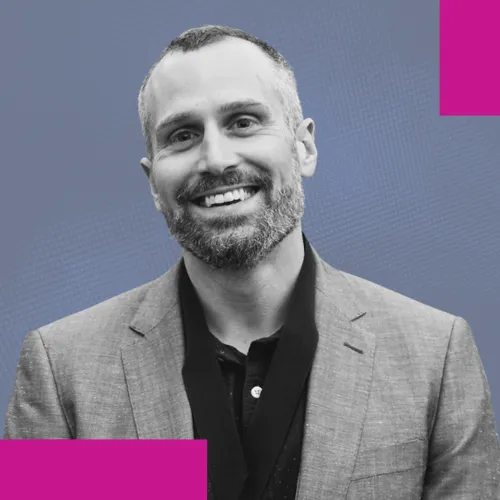
This week, Brian Janous of Cloverleaf Infrastructure joins the show to unpack the debate over grid utilization vs grid expansion.
Plus, we do a vibes check on the most popular narratives in energy right now — from the revival of coal, to the promise of nuclear, to America’s ability to build.
Credits: Co-hosted by Stephen Lacey, Jigar Shah, and Caroline Golin. Produced and edited by Anne Bailey, Sean Marquand, and Stephen Lacey.
Want to watch this episode? Subscribe to our YouTube channel.
Ready to accelerate your career in clean energy? Yale’s Financing and Deploying Clean Energy Certificate is a fully online, 10-month program built for working professionals. It delivers real-world skills in clean energy policy, technology, project finance, and innovation — all in just five hours a week. Enroll hereand use the discount code OpenCircuit26 on your application to save $500 on tuition. Applications close April 20, 2026.
Explore the new era of AI innovation in the fifth season of Where the Internet Lives, an award-winning podcast from Google and Latitude Studios. Follow and listen to Where the Internet Lives on Apple, Spotify, Google, or wherever you get your podcasts.
Join Latitude Media on April 13-14, in San Francisco for Transition-AI 2026, a two-day, in-person conference on the digital and energy infrastructure buildout needed to support AI load growth. Our podcast listeners get a 10% discount on this year’s conference using the code PODS10. Register today here!
Transcript
Stephen Lacey: Brian, do you like my shirt?
Brian Janous: I do. It’s awesome.
Stephen Lacey: I dressed up because I knew I was recording with a modern-day landman, as the New York Times calls you.
Caroline Golin: Oh my God.
Brian Janous: I expected nothing more than to get made fun of for that.
Caroline Golin: Seriously, why didn’t you call me? Why couldn’t I have been there with you and dressed you and made sure you were in a white linen shirt, which would have been far more appropriate for the New York Times?
Brian Janous: Yes, yes, it would have.
Stephen Lacey: I thought you might show up with, like, a Stetson and Wrangler jeans today.
Brian Janous: Oh, next time. There’s a missed opportunity. I need to just lean into this whole landman thing.
Caroline Golin: I’m expecting a Netflix show.
Brian Janous: Yeah, me and Billy Bob. Yeah.
Caroline Golin: Yeah.
Brian Janous: We’re going to get them out of the oil industry and get them into the data center industry.
Stephen Lacey: From Latitude Media, this is Open Circuit. We are entering an electricity supercycle. It’s reshaping how power gets built, what kind of power gets built, and who controls it. Across the U.S., developers are scrambling to lock up land with access to electricity. And the grid, this more-than-century-old machine, is being pushed in ways it wasn’t designed for. And this is feeding a new debate in the industry about what to do with the grid. Because for all this talk of scarcity, the system we’ve built sits idle much of the time. A new report from Brattle suggests the grid is only being used about half the time, and that better utilization could unlock a hundred gigawatts of capacity while saving ratepayers tens of billions of dollars. So the question is: do we build our way out of this moment with more transmission, more generation, more steel in the ground, or do we use what we already have more efficiently, more flexibly, more intelligently?
Stephen Lacey: The obvious answer is that we need both, but there’s a surprising amount of disagreement on this front, and we’re going to wade in. A look at grid utilization versus grid expansion is coming right up.
Stephen Lacey: Welcome to the show. I’m Stephen Lacey, the executive editor of Latitude Media. Thanks so much for being here. Joining me this week are Caroline Golin and Brian Janous. Caroline is our frequent co-host and chief growth and policy officer at NRG. She is with us from CERAWeek in Houston. Caroline, good to see you. How’s CERAWeek?
Caroline Golin: Exhausting, as always. Yeah. It’s good. It’s good this year. Yeah.
Stephen Lacey: What’s the vibe?
Caroline Golin: I think the vibe is concern, honestly. There’s a lot of undertone of concern right now, just geopolitically, locally. Very different from last year, I think.
Stephen Lacey: Yeah. Yeah. I want to get some more of your thoughts on how the current moment is resonating, because CERAWeek is considered, like, the Super Bowl of energy conferences, so it sets the tone for the industry. Let’s turn to Brian Janous. Brian is joining us from Seattle. He’s the co-founder and chief commercial officer of Cloverleaf Infrastructure, a company pushing the boundaries of powered land for digital infrastructure. Brian, how are you? Good to see you.
Brian Janous: I’m great. Thanks for having me.
Stephen Lacey: You’ve been hearing a lot about being called a wildcatter and modern-day landman. I take it that New York Times article profiling you went around a lot.
Brian Janous: It got a little bit of circulation. And yes, I’ve been made fun of a lot, particularly by people on this podcast. Thank you, Caroline.
Stephen Lacey: I thought it was great. This is very loving, by the way. I thought it was a really good article.
Caroline Golin: I mean, I cut out a picture and put it on my wall. That’s great. Next to all the pop stars I’ve loved for my entire life.
Brian Janous: Next time I’m in town, I’ll sign that for you so you can have an autographed copy. Yes.
Caroline Golin: Thank you. I mean, I was thinking maybe a tattoo, like on my right shoulder.
Brian Janous: That would be better. You and my mom can both hang that up in your living room.
Caroline Golin: I’m glad to know that’s the cohort I hold with you — you and your mom.
Stephen Lacey: If you couldn’t tell, Brian and Caroline know each other well. Brian is the former VP of energy at Microsoft, and Caroline is, of course, the former global head of energy market development and innovation at Google. So you two were, like, building clean energy strategies at Google and Microsoft at a time that kind of bridged the early hyperscale days, the commercial breakout of renewables, and into the early AI days. Brian, would you recognize this market a decade ago?
Brian Janous: No, not at all. I mean, it was just such an entirely different time in the energy system development. When we were building out the cloud, there was excess capacity everywhere. We had overbuilt in the 2000s, and so going and asking a utility for — well, and at the time, of course, we were asking for much smaller tranche sizes every year — but going and connecting a 50- or 100-megawatt data center did not entail the complexity that we have today. And the focus during that decade of the cloud buildout in the 2010s was really around energy. It was around megawatt-hours and procuring, via PPAs, largely virtual PPAs, as many megawatt-hours as you could get. Capacity was an afterthought. No one was really thinking about capacity enablement, time to market, resource adequacy. That just wasn’t part of the calculus. And I remember this was around 2020, this was even before AI took off.
Brian Janous: Just looking at growth rates through this decade, if we just kept the same growth rate that we had been on in the prior decade, it was pretty clear that by mid-decade we were going to have a problem, that the size of these additions every year was going to continue getting larger and it was going to start to cause constraints. Of course, then ChatGPT-3 comes along in November of ’22, and then it becomes really clear in the first half of ’23 that we have a real problem. And I remember having a discussion with some folks at Microsoft early in ’23, and there was a debate about whether we were going to run out of chips or run out of power first. And I’m just sitting in the back of the room chuckling. I’m like, “Guys, we’re going to run out of power before we run out of chips. That’s where the constraint’s going to come.”
Caroline Golin: Yeah. We had that same conversation. I think I remember talking to Brian about that. We were like, yeah, we were both those people in the corner going. So we’re on a two-year — I mean now, like 18-month — chip destruction cycle. At best, we get a two-year planning cycle for where we’re going with load, and you plan power over 30-year cycles. The two just never matched. And I think we were all sort of in that struggle from, I guess, 2021 to 2023, those of us who could see what was happening, to try to explain the timeline by which power — which is not a real commodity in the way that the rest of the tech world thinks about commodities — works. And then Brian left and just solved the problem on the other side. It was great.
Caroline Golin: And then I left and I’m trying to solve the problem on the other side too.
Brian Janous: I’d wager to say that the difficulty of explaining that and bridging that gap was a good part of the reason why Caroline and I both have different jobs right now.
Stephen Lacey: Yeah. Caroline, you are at CERAWeek right now. How sophisticated is the conversation around load growth and serving AI specifically?
Caroline Golin: Oh, I think it’s getting incredibly more sophisticated. I think it’s also becoming — what I see happening, and I actually was in a roundtable about this yesterday — what I see happening is the tech companies, for such a long time, we called each other tech companies. Everyone else called us hyperscalers. Now I guess we need to refer to each other as hyperscalers. The tech companies, we were having this global conversation about our energy portfolio. We were having this global carbon conversation, our sustainability role, our role in driving innovation, in spurring new technologies, in creating a decarbonized grid, and we missed the local conversation about what our footprint was doing. And so I think that large margin between this sort of theoretical, abstract conversation about what our capital was going to do in a decarbonization rhetoric versus what our capital needs to do at a very local level and the power system and the grid, that is the leapfrog that I’ve seen over the past two years, really, right?
Caroline Golin: So I would say three years ago at CERAWeek, it was still much more a global conversation driving global financial markets, driving new technology. Last year, I saw it sort of with the onset of the nuclear conversation. I think it became a little more grassroots. This year, it’s very clear that this is about local impacts, right? And interestingly enough, that’s juxtaposed against what’s going on in the Middle East right now, which is a global geopolitical impact, right? So it’s a very different change. I would say that we as a tech industry failed to get the local conversation right, which is why it’s great that Brian is doing what he’s doing, because his entire focus is the local community. We failed to get that local conversation right, not because we’re doing the wrong things or because we don’t care, but because we’ve been stuck between these two stratospheres, I think, for quite some time.
Caroline Golin: And I’m hopeful that the tip of the spear is going to be more about the local community, more about the local power impacts, and less about the global theoretical space moving forward. But you can see that transition and that conflict on stage big time here this week.
Stephen Lacey: Yeah. Brian, does that resonate for you? I think a lot of people would be familiar with your business model in our audience, but just kind of recap how you’re thinking about projects on this very local level. What is the business model, and how are you thinking about local impacts when you’re pulling together capacity?
Brian Janous: Yeah. So, I mean, our big challenges as we think about enabling this hyperscale AI ecosystem are around how do we unlock power capacity, as we were just talking about, and then how do we generate local support for the buildout of this infrastructure? Because all data centers are local, as Caroline is saying. I mean, we need to have good support at the community level. And this has always been a challenge, and we’ve seen it most notably in Europe over the years of getting this stuff built. But clearly that’s become the topic du jour in the United States as well, is going to these communities and really having to have a frank conversation with them about why they should want this in their neighborhood or in their county. And I think there are a lot of misconceptions out there about the benefits that these bring. And my favorite story from the last several months is, we were in a fairly rural county in Georgia, and we were talking with the head of the county commission, and he said, “We’re a rural county and we want to stay a rural county, and that’s why we want a data center, because if someone comes and builds an auto factory here, there are going to be 5,000 people that move to town and we’re going to have to build a new high school.” And if someone builds a distribution center on this site, we’re going to have traffic 24 hours a day. “A data center is perfect.”
Brian Janous: It brings jobs, but not too many jobs that we have to build a new high school. The high school we have just gets better. It brings tax revenue. And so I think a lot of this is about educating communities about truly the benefits that these things bring in terms of jobs and tax benefits, and then also working with the communities to find out where is and is not the right fit for these things. Because not every community is the right fit for a data center, but we have to build them. So it really is about the kitchen-table politics, and I mean literally kitchen tables. The Cloverleaf team sits at kitchen tables every week speaking with landowners and community leaders about what sort of benefits this AI infrastructure buildout can mean for these communities.
Stephen Lacey: So Brian and Caroline are both going to be with us at Transition-AI coming up in San Francisco on April 13th and 14th. And Brian’s going to dig even deeper and present some real-world examples of how Cloverleaf is unlocking and orchestrating capacity. And, of course, Caroline will be with me and Jigar for a live episode of Open Circuit. So if CERAWeek is the Super Bowl of energy conferences, let’s think of Transition-AI as, like, the NFL combine or something, where these ideas get tested and brought into the real world.
Brian Janous: That’s only if I don’t take Jigar’s job, though, Stephen, after today.
Stephen Lacey: That’s right.
Caroline Golin: Oh, we can work on that, actually.
Stephen Lacey: Don’t let him hear this.
Caroline Golin: Oh, he’ll hear it. And I’ll have a very long text message. It’ll be great.
Stephen Lacey: Well, let’s turn to this Brattle report now and talk a little bit more about how do we utilize the grid, because this Brattle report is challenging one of the core assumptions in the transition right now: the assumption that we’re fundamentally short on power. And so Brattle comes in and says, “Hold on, are we as short as people say we are?” I want to interrogate that a little bit. But this report concludes that the grid is only used half of the time, and so before we spend trillions of dollars rebuilding it, maybe we should step back and ask whether we’re leaving capacity on the table. So we’ve, of course, built the grid to serve peak demand, a handful of hours out of the year, which means a huge amount of infrastructure sits unused a lot of the time. And so the argument that Brattle is making is, if you add load in the right places at the right times or shift demand to better align with existing capacity, you can spread those fixed costs across more usage, and that puts downward pressure on rates.
Stephen Lacey: And so Brattle’s modeling shows that this could unlock another 100 gigawatts of capacity and potentially save a hundred billion dollars over a decade. And so I don’t think we’re talking about eliminating new infrastructure, just changing kind of how much you need, when you need it. So I want to interrogate this analysis. First, let’s just start with the hundred-gigawatt number. Again, Brian, this is literally what you do — go out and find ways to unlock capacity. Does that seem accurate to you?
Brian Janous: It does. Yeah. I think it seems right on because — and that work is sort of built on the work that Tyler Norris and team did last year, and they got to sort of a very similar answer, which is if you had just a couple percent more flexibility in the system, which is the inverse way of saying improving grid utilization, then you can add a lot more capacity to the system. And so I think this focus on utilization and this conversation is super important, and part of that work was, I think, spun up by the Utilize Coalition, which just formed, that’s focused on this issue. But when we have this conversation about affordability, the only answer to affordability is improving utilization, because with the current capital cost and inflation impacts to building infrastructure, there is no way, if we keep utilization the same, that we’re not going to drive rates up. Regardless of how we structure rate design and how we isolate costs to different customer classes, you’re still going to face upward pressure on rates if you don’t do something about utilization.
Stephen Lacey: Caroline, what was your reaction to the report and this hundred-gigawatt number?
Caroline Golin: Yeah. I mean, I generally think that that’s probably the ballpark of capacity that we’re leaving on the table. I think it’s harder to get at, maybe, than most of these reports suppose. I think that there are a lot of barriers between what we can theoretically capture in some modeling and what we can actually drive. And I think there are ways to unlock it, but there’s no question that our distribution system and our transmission system is underutilized. And also we are not putting in place the regulations or the policy structures to think of that as an asset that needs to be delivering speed to market, needs to be utilized above 60, 70%. It’s not built that way. And I think we’re, as a country, with all this new load coming on, at real risk of just building a bunch of loops and building the same old system we’ve had for a long time. And you can ring-fence those transmission costs and you can ring-fence the generation costs for data center growth, but that’s only 40% of where grid costs are going to go, overall energy costs are going to go, over the next five years.
Caroline Golin: And so when you think about bringing on electric vehicles, when you think about new C&I, new residential growth, 50% of all rates have been subject to increased distribution costs. That’s a huge aspect of, as Brian said, upward pressure on rates that we’re just ignoring, right? And so I think that there are regulatory ways to ensure — and I will say this by also saying, Brian being the architect of one of these and me being the architect of the other — we never went to market as hyperscalers trying to get residential customers to pay for our system. But there’s a regulatory process to ring-fence that. There isn’t a regulatory process in place right now to make sure that utilities and overall T&D owners are doing absolutely the best that they can to ensure that that is the most utilized asset and that they’re investing in the lowest-cost way to get customers online and to make the grid interoperable.
Caroline Golin: And I think some utilities are doing it on their own. They don’t need it. They see the light and they are putting that customer sentiment forward, and some aren’t, right? But it’s not uniform across the grid.
Stephen Lacey: I want to bring in the debate over this report, and I’m seeing a lot of conversation over on energy Twitter. I’m still calling it energy Twitter, not energy X. It sounds way better. But there’s been a lot of heated discussion on this, and I think that the disagreements — there are a couple different camps. One is more philosophical and one is more technical. So I think some folks seem to believe that this obsession with utilization and distributed resources is kind of a small-ball idea for a historic moment to build out new transmission, reform markets. I wonder — I’m sure you guys know people who are involved with the Utilize Coalition, et cetera — I mean, do you think this is a fair characterization of the utilize proponents, that it’s small ball?
Brian Janous: I don’t think so, no. I actually think it’s a fundamental building block to get to the point where we’re actually building large-scale transmission in this country, which is the hardest of all things to build. And we’ve had this conversation with utilities because, of course, especially the vertically integrated utilities, I mean, their default is, “Well, I want more capital spend and more rate base. That’s how I make money.” So when you come and bring me a DLR project or a VPP or something like this, they look at that and go, “Well, I don’t really make money on that.” And our response to that is, “Well, what you make money on is load growth, long term.” And so if you are able to say yes to more customers because you can take some of these lower-capex, more efficient solutions that lead to greater utilization, you’re still going to get long-term capex investment in your system.
Brian Janous: It’s just you’re now bridging to when that capex is realistic to deploy, because the fact of the matter is, if your answer to every new customer is, “Well, I’m going to go build a combined-cycle plant and I’m going to go upgrade a 500-kV transmission line,” your answer is always going to be five years out or seven years out or 10 years out, right? And that’s not good enough for this market. I still get calls from CEOs of some of the big tech companies and foundation models and everyone else saying, “Hey, do you have any power 12 months from now? Do you have a site?” And I’m like, “Well, no one has power 12 months from now.” But it happens all the time because that’s sort of, as Caroline said earlier, their planning cycles are still 18 to 24 months out, right?
Brian Janous: Even when we see all these big announcements about — I think the latest one I saw yesterday, or this week, was OpenAI and Helion doing 100 gigawatts by 2035. Great, maybe I’d take the under. But all those things are not solving the problem that they actually have today, which is they’re trying to turn on a lot of GPUs in 2026 and 2027 and 2028. And what I think this whole utilization discussion helps with is, hey, there is available capacity if you know where to look. And it’s difficult, and at least for the non-energy person to think about how we would orchestrate those solutions, but they are there.
Caroline Golin: One way that I would like to shift the conversation a little bit — and I’m two weeks in at NRG, but it’s been fabulous to be sort of on this side of the aisle a bit — is that I think the conversation is always about how are we going to meet hyperscaler demand growth? How is this country going to meet the challenge of building a hundred gigawatts of demand for the AI transition? And I would challenge the conversation to be: how is this country going to take the capital that presents itself in this load growth and invest in the system that is best for everybody else moving forward — best for the communities, best for the residential customers, best for the other C&I customers? And I think if you take that posture first, you start to look at, to Brian’s point, those foundational elements that we absolutely need, irrespective of whether it’s 100 gigawatts or 70 gigawatts or 30 gigawatts, right?
Caroline Golin: I think one of the problems that we always had at Google — and Brian, I’m sure you shared this — was that I was always looking for a way to get our energy strategy decoupled from what was an erratic load growth projection from where we were going with cloud or where we were going with AI, right? And in part, that’s what you’re doing with Cloverleaf. But I also think we should challenge ourselves as an ecosystem to say, what’s the grid that we want that gets us out of this frenetic, “Well, we’re 50 megawatts short on that node, so we can’t interconnect you for six years, whereas if you were 200 megawatts less, we could interconnect you tomorrow.” We have one solution for interconnection right now, and it’s pretty old. It’s the same thing we’ve been doing for 50 years, and we haven’t thought about or really, at scale, deployed alternative solutions. And we don’t have any solutions for a coming society that has mass-scale electric vehicles, that has the smart home, that has rooftop solar and storage at scale, which is all coming down in price and all coming down in accessibility.
Caroline Golin: And so I think the conversation needs to be more about that in general. But whether this is hype or not, I don’t think it’s hype. I think it’s both/and, to what you said, Stephen.
Caroline Golin: We need to build new power for the long term. And actually the problem with the scenario that Brian set up is that hyperscalers have a really hard time in planning for more than five years. So we get to, “What do you have in two years?” Well, I don’t have anything. And then we come back two years later and say, “What do you have for the next two years?” And you come back two years later and say, “What do you have for the next two years?” As opposed to saying, “Well, what should I be building now?” And of course, you’re going to be building new power plants absolutely for the next five years out. But in this race to gigawatts, what is the best thing we can actually do to, one, create that bridge power that’s clean and affordable and also is going to leave the grid in a better place, right?
Caroline Golin: Everyone benefits if we utilize the assets we have, and everyone benefits if we redirect our focus into saying, “How do we get the most capacity and the most savings out of the existing system?” And that’s going to be through deploying things like standalone storage, behind-the-meter assets in the C&I and residential space, dynamic line rating, GETs, non-wire alternatives, the whole thing. That’s how you’re going to get the most out of the system. It’s a win-win because, as to Brian’s point, we’re still going to build those power plants. We still have to build those power plants. That’s going to happen. But if we don’t do this now, we’re going to build a Frankenstein grid, and we’re going to build a bunch of loops to nowhere. And ultimately, that’s the capital waste I think that could happen. I’m not as worried about generation capital waste. I think it will get there because I think training will continue.
Caroline Golin: I’m much more worried about grid capital waste.
Brian Janous: Well, I think there’s still a question in my mind about how many of these mega projects — and gosh, just in the last week, what, we had the Piketon, Ohio, SB Energy at $33 billion for nine gigawatts. We had NextEra in southwest Pennsylvania, four gigawatts at, I forget, the $17 billion. You had the EnScale project, you had Fermi before that. I mean, you go down the list and you can quickly get to 60, 80 gigawatts of these sort of mega projects that I’m not convinced are even financeable, because what’s notable in all these projects is the one missing piece is the actual customer signing up for a 20-year offtake. Sure, you have a developer who wants to build it. Sure, you have a big bank or sovereign that wants to lend money to it. But you don’t see the customers right now signing up. And as Caroline’s saying, the hyperscalers really don’t plan that far out for this stuff, such that they could underwrite a $33 billion project. Not to say that none of those will get built, but it’s a lot harder than people think. It’s not just a press release or a groundbreaking to get a project like that off the ground.
Brian Janous: I mean, I can drive an hour from my house out to the Washington coast and find the old Satsop cooling tower that was supposed to be a nuclear power plant that’s now just a giant concrete edifice that you can see from the road, which is a fun little fact when you’re driving the family out there and you can point and say, “Hey, we tried to build a nuclear plant and we failed because it’s actually really hard to build big things in this country.” So I think people are underestimating how difficult it’s going to be to really execute those mega projects, that this path of least resistance, as Caroline was just talking about, is far more elegant. It’s faster, it’s cheaper, and it’s more sustainable. So it is the right solution. Again, not that we’re not going to build power plants — we will — but we should build a whole lot less of those if we’re focused on this issue of utilization.
Caroline Golin: Well, and we should build them responsibly. I mean, I think that’s the problem that you see happening. We’ve got car batteries and lawnmowers being strapped together in a way, and those are supposed to be very short bridge solutions, but they’re getting 15-year contracts because the timeline for building out transmission into central Ohio is longer than that, right? And so I think what’s going to happen is, there’s only a certain book of turbines that can and will be built in this country because there are only certain companies — one of them I work for now — who actually know how to build them and the workforce and the labor to do it. And if those are built responsibly and done well and integrated well, then that’s going to be good for long-term reliability. But what’s going to happen for everyone else who doesn’t build those and they strap together some Frankenstein behind-the-meter solution?
Caroline Golin: And they’re not doing that because they prefer that approach. No one prefers that approach. They’re doing that because they can’t get transmission to pipe and generation anywhere that they’re located, right? So the reality of the congestion and the lack of alternatives on the transmission side is what’s going to drive a lot of irresponsible behind-the-meter growth, which is not good for the community, not good for the environment, and ultimately financeable in the short run, but I think long term has some real pain points. It’s not good.
Stephen Lacey: Can I bring in another piece of this debate? I think the other track is a little bit more technical, which is, like, what value do distributed resources actually bring? So I think when a lot of people talk about opening up new capacity, utilizing the grid, they’re thinking about virtual power plants, distributed energy, demand response, et cetera. That’s a big component of what people are talking about. And we see some pushback in the energy community, I think articulated by Xiao Wang, who’s a research scientist who’s very active in these debates. And his argument is basically that not all capacity is interchangeable. If you’ve got, say, a one-gigawatt data center showing up in a specific location, you can’t necessarily solve that by turning down a gigawatt of load somewhere else on the distribution system. Like, it doesn’t actually solve your constraint. Does that resonate with you?
Brian Janous: It does. And it’s partly why siting and planning for these things is so important. And this is the same — I’ve seen the inverse argument where people have come to me and said, “Well, such and such utility said I couldn’t get power for 10 years, so I have to build a gas plant.” I was like, “Well, maybe you’re just building a data center in the wrong place.” Like, maybe you should think more strategically about where you place that asset, because it’s not true that you can’t connect any data center for 10 years in this country. There are lots of places you can connect them. So understanding the transmission system first — and this is how we do our planning and siting, is we do transmission load-flow analysis, we look at withdrawal points, and then we start to study what resources are available. And I will be talking about this at the Transition-AI conference around how we specifically have done that with LevelTen. But this is where I think the lack of sophistication of a lot of the folks that are trying to develop these assets comes into play. Because yes, it is true.
Brian Janous: If you just take a dart and throw it somewhere on the transmission system and then complain because the utility won’t connect you for 10 years, it’s like, okay, well, if that’s the level of sophisticated planning you’re doing, then you’re right. You need to build your own gas plant behind the meter. But I just don’t think it’s true that those resources that we’ve been talking about can’t contribute a material amount to enabling load growth if it’s done strategically.
Caroline Golin: Yeah. I mean, I agree with Brian. I also would say, though, that there’s a difference between real electrons and paper electrons. And part of the problem we have in this country right now is there are real electrons out there, but they don’t exist on paper because of the way we do load planning, the way we do resource adequacy, how aware a utility is of where things are placed, where their demand is, where their load is going — so just that visibility into their system. So yes, I think that’s true, but I would push back on that a little bit in saying that I think that’s an easy way to explain why we don’t invest in the market signals to grow the VPP as a legitimate commodity, right? Because I think with a really strong, interoperable, visible system and a good partnership, you can work with the utility to say, “Where should I go where congestion is going to be top of mind?”
Caroline Golin: “Where can I go where you are looking at a place that distribution relief or distribution investment is going to free up transmission capacity?” And the problem with that is not only just planning, but it’s also that we don’t have markets, like value signals, for this. Whether you’re in a vertically integrated space and they do their resource planning and VPPs or DERs aren’t given the platform to have capacity value within the resource plan, or whether you’re in PJM and you’re not allowing aggregated VPPs to play in a special auction, or even in ERCOT where there actually isn’t a price signal for an aggregated VPP yet outside of just an energy signal — and we’re working on that in ERCOT — but I think it’s also a market signal situation. And I think it’s sort of a cop-out for not investing in that because, like what Page is doing over at Tapestry, they’re actually trying to figure this out right now, right?
Caroline Golin: Like, how can you actually create the market signals for placement where maybe it’s not a one-to-one swap, but it’s probably at least a two-to-one swap on something like this because you actually know how to operate your grid so well.
Brian Janous: Yeah. Those lack of price signals, I mean, that’s a very real issue. And I think it kind of goes to why the industry — it’s like the data center industry and, to an extent, the IPP industry — have sort of coalesced around this, like, “Well, let’s just go build these mega energy campuses,” because the barriers to entry from a market standpoint are fairly low there, at least conceptually. Again, I challenge on the financing side, but the ability to deliver that actually is a lot harder than people think because of the financing, because of the scale. Whereas the market barriers around VPPs and other solutions are actually higher, as Caroline was noting, but the ability to deliver them is actually really easy. I mean, there’s very little friction in actually deploying those solutions in the real world from a physical standpoint. So it’s not surprising that the market sort of coalesces around what seems like the easy path on the front end, which is just build big power plants, and is not paying enough attention to this harder path because of the way that markets are designed. But really, in the long run, it’s the faster, easier path if we can coalesce around getting the market signals right here.
Caroline Golin: Yeah. Especially for the bridge solution. And that’s what I really think — I think it’s a false argument to say that the VPP, the utilized concept, I guess you would call that, is the equivalent to building new power plants. I think the better conversation is what we see happening in these insane behind-the-meter solutions. Because to Brian’s point, they’re being told it’s going to take 10 years to get transmission, or build a gas plant. That’s the really irresponsible thing that’s happening right now. And that’s the better data point for me in terms of if you’re looking for the argument, because I think it is going to be a both/and on building new power. And I think that what we’re missing is sort of the real tradeoffs long term for the community, notably, and from a financial perspective between those two — that Frankenstein approach versus, like, “Hey, yeah, you could get…” I mean, I remember sitting with said utility at one point and we couldn’t interconnect because of 200 megawatts, right?
Caroline Golin: This was a multi-gigawatt project, and we couldn’t interconnect because of 200 megawatts. And finally they looked at me, and when we had this conversation through, the gentleman said, “Actually, if you invested in X, Y, and Z on these three distribution units, I think I could get you 200 megawatts.” But that conversation had never happened before in an interconnection conversation before, right? They had never been forced to get there. So I think that if we had not had that conversation, if we had not pushed on that, what would have happened? We would have considered — and we never would have done it at Google — but we would have considered one of these Frankenstein approaches. And that’s the tradeoff conversation that I think needs to be more relevant and happening with utilities.
Stephen Lacey: I can’t think of two better people to have this conversation with, and I hope it was clarifying for folks. I want to take a turn here and run through some big themes in the news. Everyone is talking about vibes right now — vibe coding, vibe working, vibe forecasting. Vibes are ubiquitous at the moment. And now a lot of people are suddenly paying close attention to energy that were never involved in energy, and a lot of takes on the energy industry seem to be based on vibes as well. So I want to run through some of the—
Caroline Golin: Stephen, what does vibes mean? I mean, you wrote that in the show notes and I was like, “Shoot.”
Caroline Golin: Okay, so it does just mean feelings. It doesn’t stand for something that I’m not cool enough to understand right now. It was too early for me to text my 15-year-old at this conference and ask him what that meant. It just means feelings. Okay.
Stephen Lacey: Yeah. Sort of let how you feel guide your point of view, or maybe some technical thing that you’re doing.
Caroline Golin: Ah, sleep deprivation is a vibe then.
Stephen Lacey: Yes. I mean, have you been paying attention to the vibe coding space with Claude code and—
Caroline Golin: No, no. No. It’s really incredible. Okay. I will do that. Apologies to Claude code that I haven’t been paying attention to you right now.
Stephen Lacey: Yeah. I mean, anyone can sort of take a feeling that they have, an idea, and execute it like an expert coder.
Caroline Golin: Oh, okay. Yes. Okay. Now I know what you’re talking about, but also no, I’m only paying attention—
Brian Janous: I told Stephen I was going to vibe-code a Jigar emulator for this podcast so I could always get the right Jigar sort of answer. But that is literally something you could do. I could throw all Jigar’s podcasts at Claude code and it could spit out—
Stephen Lacey: Totally.
Caroline Golin: That’s right. That’s right. Okay. Now I understand what you’re talking about. Okay. But also, please don’t do that. Jigar needs to be singular in the world of frenetic rants about energy issues.
Stephen Lacey: All right. So I’m going to run through a few of the storylines. I’ve got a bunch here, but we’ll see how many we can cover. And I want you to answer: is it real or vibes? Coal is back.
Brian Janous: It’s vibes.
Caroline Golin: Yeah. I mean, I think coal — okay. Am I supposed to say yes or no or give my actual thing? Yeah, give a little bit of an answer? Okay. Okay. So I think coal is staying online longer than it would have stayed online a few years ago. I don’t know anyone who’s building new coal. So “back,” or just, like, hanging out for a little bit longer than it probably was going to a few years ago?
Brian Janous: That I would agree with.
Caroline Golin: So I don’t think it’s making a comeback.
Brian Janous: So I wouldn’t call it a comeback, yeah.
Caroline Golin: Yeah.
Stephen Lacey: Don’t call it a comeback. This is the golden age of gas.
Brian Janous: I mean, I definitely think we’re going to see growth in gas generation.
Brian Janous: I think a lot of this conversation we’ve been having right now will dictate whether that growth is predominantly baseload combined-cycle plants or whether it’s more peaking and flexibility simple-cycle plants. I mean, I’m a huge believer in decarbonizing the grid, and I also believe that 50 years from now, we’re still going to have gas plants online. We cannot operate this system without it. I think it would actually be foolish to try to do that and not, for very extreme events, like even the heat wave we’re seeing right now in the middle of spring, have some amount of flexible gas to lean on, at least for the foreseeable future. So I think really the debate should be around, are we building new baseload gas plants that we’re going to have to run at a high utilization, or can we lean on this issue of flexibility and build more peaking plants?
Caroline Golin: I think it’s a very Western view to say that gas went away. Gas never really went away globally. If you look at electrification needs across Asia and Africa, gas never went away. Load growth went away, and capital investment was on the offset, and you weren’t offsetting with building natural gas, you were offsetting with building renewables. But I don’t think gas ever went away.
Stephen Lacey: Certainly the Iran conflict might complicate many countries’ expansion of systems to LNG.
Caroline Golin: Absolutely. I mean, I think that was one of the themes here at CERAWeek, was that even if the conflict ended tomorrow, we are dealing with three years minimum of institutional interruptions and impact. Yeah.
Stephen Lacey: Solar and batteries aren’t real capacity.
Caroline Golin: That’s not true.
Brian Janous: Completely disagree. I mean, I think Google’s announcement just last week about what they were doing in Minnesota and the degree they were leaning on renewables to enable interconnection of a gigawatt-scale site. We did the same thing in Wisconsin last year. That’s now the OpenAI-Oracle Stargate site. That site leaned on 1,500 megawatts of wind, solar, storage as part of its capacity stack. And I know we hear that a lot. I mean, I’ve heard that a lot out of the current administration, and others have echoed that, but it’s just not based in fact.
Caroline Golin: Yeah. And I think it’s even more interesting on the distribution system. I think we’re finally starting to have this conversation about what can distributed solar and storage do for reliability and capacity aggregation on the distribution system, as opposed to utility-scale, which is what anyone was ever interested in thinking about. Yeah.
Stephen Lacey: SMRs are the only real solution.
Brian Janous: SMRs have been the only real solution for the last decade, and they’ll probably continue to be. I’ve heard this most of my time at Microsoft. No, I believe in new nuclear. I think it’s really hard to scale. I think we need to see a more concerted effort between the large energy consumers around betting on certain technologies to make it work. But we can power the energy system without SMRs. Would it be helpful? Sure. But is it necessary? No.
Caroline Golin: It’s not the only solution, but it’s one I’d like to see in the mix. Yeah.
Stephen Lacey: In an era of capacity constraints, levelized cost of energy doesn’t matter anymore.
Caroline Golin: To whom?
Brian Janous: Well, I think — let’s see if some of these mega projects actually get financed, right? Because when you look at the cost of, at least the stated cost of the two projects I just mentioned earlier, they were like $3,500 a kW, which translates—
Caroline Golin: Are you serious?
Brian Janous: Which translates into a very high LCOE. And what I would say, and I think this is where people sort of misunderstand this issue, cost still matters and margins still matter to these businesses, but speed is the imperative. And so where they’re price-insensitive is around short-term capacity, right? Bridging for two years, right? They’ll pay a lot for that. But if your answer to bridging two years is building a 40-year asset, then you’re not really using the right tool to solve that problem, right? And so they will pay a lot of money to go faster. And it’s about — and this is where this whole utilization conversation comes back around — because if those solutions can deliver that bridge, there’s, again, a lot of price insensitivity there, which means there are a lot of solutions we can bring to market because there’s a willingness to pay.
Brian Janous: But I don’t think a lot of people are going to be signing up for $150-megawatt-hour power for 30 years. There’s not a lot of appetite for that.
Caroline Golin: Yeah. I couldn’t agree more. In fact, that’s a great way of pulling it all together, which is that I do actually think that the LCOE for certain customers, if you have power before 2028, really doesn’t matter because there’s no way — and the math is sort of — Brian, check me on my math here, but generally speaking, I would say that 10 cents is the LCOE for power across the board that we were used to for the past five years or 10 cents a kWh, sorry. And if you think about that and what the value of compute was, compute is at least 200% more valuable than the cost of power at that time, at least. And now it’s probably even more.
Brian Janous: Even more, yeah.
Caroline Golin: Yeah. So there’s no way that the cost of power is ever going to become that demonstrative of a barrier in terms of continuing to want to grow and chase market share. And we’re in a market-share — you’re not going to be able to say, “Hey, we’re just not going to run for the next couple of years.” No, no. Then your business is over. You’re not in the game anymore, right? And so I think that’s why these utilization and VPP solutions, we’ve just never explored what’s the actual strike price for that. We’re just assuming that the strike price is what we’ve been putting forward for the past couple of years, which is maybe 5% above avoided cost. No, no, no. I think the strike price is much, much, much higher in terms of getting those on the grid. But I think the LCOE does matter to residential customers and to C&I customers that are going to be part of this system for a very, very long time.
Caroline Golin: So we should invest in the things that are going to make their lives better in the short term.
Stephen Lacey: All right. Final one here for two people who are building a lot: America has lost its muscles to build big things.
Caroline Golin: In space. No, I’m sorry.
Brian Janous: I believe that’s true. I think that’s just not a muscle that we’ve exercised enough, and there’s way too much friction in the system. And it’s unfortunate because China does not have that constraint. So as we think about winning the AI race, which is also about winning the energy race, we’re not good at this as a country. We just have lost that muscle. I believe we can get it back, but part of the way we’re going to have to get it back is, as I mentioned before, a focus on affordability and doing this the right way. Because if what we’re doing is just driving up everyone’s energy rates, then that’s going to be even further headwind for getting big things built in this country.
Caroline Golin: Yeah. I think there are very few players in this country that know how to build big things. The only thing I would add — we always say, if there’s a will, there’s a way. I would say, if there’s a workforce, there’s a way. And we don’t have the workforce right now, and that’s my bigger concern. Capital’s not a problem, but you don’t have enough skilled labor out there that actually knows how to do a lot of this. And that’s another reason why I say power plants are going to get built. Solar, wind, gas — it’s going to get built, and storage is going to get built, and it needs to get built, and we want it to get built. But there’s only a limited amount of workforce that knows how to do that, right? So what can we do with our existing system when that is a real factor?
Caroline Golin: And I’d like to see a lot more going into developing that workforce.
Stephen Lacey: Caroline Golin is the chief growth and policy officer at NRG. Thanks, Caroline. Make sure you stay hydrated there at CERAWeek.
Caroline Golin: Oh my gosh. I need an IV of caffeine straight into my right arm. Yeah.
Stephen Lacey: Brian Janous is the co-founder and chief commercial officer at Cloverleaf Infrastructure. Brian, so good to see you.
Brian Janous: Likewise. Thanks for having me, Stephen.
Stephen Lacey: And remember, Brian and Caroline will both be at TransitionAI. Tickets are selling fast. The crowd, the level of quality of people buying tickets, is really great. So please come join us in San Francisco, April 13th and 14th. Open Circuit is produced by Latitude Media. The show is produced and edited by me, Sean Marquand, and Anne Bailey. Find all of our episodes of Open Circuit on YouTube, and of course the audio versions anywhere you get your shows, your podcasts. And for more in-depth stories on all the topics we cover, go to latitudemedia.com, and you can get transcripts of this show there. Thanks, everyone. We’ll catch you next week.