Distributed energy resources have never looked stronger. Fleets of batteries are now performing like gas plants, virtual power plants are dispatched daily, and hyperscalers are supporting new models to finance capacity around their data centers.
But investor-owned utilities? The Edison Electric Institute says they’re planning more than a trillion dollars in new infrastructure over the next decade to support historic load growth — with no mention of DERs or flexibility as solutions.
So which world are we living in? The one where DERs become essential infrastructure, or the one where they remain a rounding error for utilities?
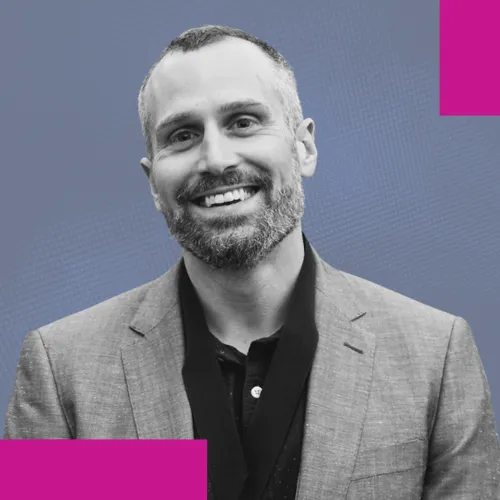
This week, we examine this critical moment for distributed resources. Tim Hade, a co-founder of Brightfield Infrastructure and former COO of Scale Microgrids, joins us to talk about the tug-of-war at the heart of the grid transition.
We unpack a recent historical overview of DERs from Andy Lubershane, who argues that technical innovation and the desperate rush to meet load growth is turning them from nice-to-have experiments into distributed capacity resources that grid operators can actually count on.
We also dig into EEI’s new report on utility planning, and examine why utilities still resist DERs even as customers and data centers push them forward. What are the consequences of ignoring them at this precarious moment when power prices are rising quickly?
Credits: Co-hosted by Stephen Lacey, Jigar Shah, and Katherine Hamilton. Produced and edited by Stephen Lacey. Original music and engineering by Sean Marquand.
Open Circuit is brought to you by Natural Power. Natural Power specializes in renewable energy consulting and engineering, supporting wind, solar, and battery storage projects from concept through financing. Discover how we’re creating a world powered by renewable energy at naturalpower.com.
With resilience now a leading driver of grid investments, Latitude Media and The Ad Hoc Group are hosting the Power Resilience Forum in Houston, Texas on January 21-23, 2026. Utilities, regulators, innovators, and investors will all be in the room — talking about how to keep the grid running in this new era of heatwaves, wildfires, and storms. Register today here!
Transcript
Stephen Lacey: It’s pretty wild that we’ve been recording together long enough that Tim is back on the show after almost a decade. Tim, how’s the last decade gone for you?
Tim Hade: Oh, wow. Well, hey, listen, first things first, I think this should be the cold open. I want to say this, I’m so grateful to be here today, and as I’ve told you many times privately, this show and its predecessor show has had such a profound impact on me professionally and I’ve learned so much from you all over the years, and I’m very grateful to Jigar for his service but I’m also happy he’s returned from his sabbatical and is back to being a ruthless capitalist. So, that’s good.
Jigar Shah: We’re definitely going to cut that statement out.
Stephen Lacey: He’s trying to butter you up, Jigar. He’s wearing a shirt that says, “Deploy,” with Jigar’s face on it.
Tim Hade: That is true.
Katherine Hamilton: You don’t realize this is a hostage video.
Stephen Lacey: From Latitude Media, this is Open Circuit. This week, are DERs about to become essential infrastructure or will they stay stuck at the margins? Distributed resources have never looked stronger, for the first time fleets of batteries are performing like gas plants, virtual power plants are getting dispatched every day, and data centers are seeing them as a real capacity resource. But at the same time, the gatekeepers, utilities, regulators, even officials in California are acting like they’re still optional. Utilities are planning well over a trillion dollars of infrastructure in the next few years, but they still aren’t prioritizing DERs. So, are these resources about to finally break through or get sidelined again?
Welcome to the show, I’m Stephen Lacey. I’m the executive editor at Latitude Media. I am here as always with Jigar Shah and Katherine Hamilton. Katherine is the co-founder and chair of 38 North Solutions. Hey Katherine.
Katherine Hamilton: Good morning. I’m so excited to do this with one of our best friends.
Stephen Lacey: Yes. And Tim is an advisor for 38 North Solutions. Is that right?
Tim Hade: Senior advisor, thank you very much.
Katherine Hamilton: Does that just mean you’re old? What does that mean?
Stephen Lacey: What differentiates between advisor and senior advisor?
Jigar Shah: You have to be on the Energy Gang at least twice, or now Open Circuit to be able to be called a senior advisor.
Tim Hade: That’s it, that’s right. That’s right.
Stephen Lacey: Jigar is the co-founder of Multiplier, and the former director of the DOE’s Loan Programs Office. How’s it going, Jigar?
Jigar Shah: Oh, fantastic.
Stephen Lacey: Excellent. Well, joining us is Tim Hade, the voice you heard. He’s the co-founder of Brightfield Infrastructure. Tim was also the co-founder and COO of Scale Microgrids, which he recently departed after the company was acquired this year, and he is a well-known DER evangelist and entrepreneur in the space. Tim, welcome.
Tim Hade: Thank you all so much for having me, I’m stoked to be here.
Stephen Lacey: I want to start with a little story that you told that last year’s DERVOS conference. I was not at the show but I watched the video afterward, and what some people might not know is that you were an officer in the Air Force, and in your keynote you relayed this story from when you were in the Air Force, that you heard when you were in the Air Force, about FDR and Henry Ford during World War II. And I think it’s a great story that maybe sets the stakes for what we’re talking about today. Tell us that story quickly and what it says about the moment.
Tim Hade: So, I guess first of all, this is a great opportunity to plug the upcoming DERVOS conference, that this year is being co-sponsored by yours truly, Jigar Shah. October 16th I think there’s still a limited number of tickets available, and if you care about DERs that’s the place to be. With due respect to the Latitude Media conferences, that is my favorite conference of the year.
Jigar Shah: I think you got that wrong, Tim. The advertisement should go like Sunday, Sunday, Sunday.
Tim Hade: 100%. But yeah, look, I think the main point that I was talking about last year, and DERVOS last year was shortly before the election, was that in order for the United States to lead the energy transition and address the climate crisis, we really needed a public-private partnership. And the story that you mentioned was basically in the lead-up to World War II the German ambassador came to the White House and was basically like, “We build more bombers than the United States and don’t mess around.” And FDR sat there and listened, and then the German ambassador left the White House. FDR got on a plane, flew to Detroit, met with Henry Ford, who he didn’t like and they didn’t have the same sort of political leanings, and hadn’t talked in like 20 years, and they made this deal. And then, shortly thereafter, the Willow Run plant in the Ford Motor Company’s Willow Run plant was producing more bombers a day than the entire country of Germany.
And the thesis of my talk was that if we’re going to do this it has to be a public-private partnership. And then the election happened. And so, I don’t know, candidly this year has been a journey for me, because I think my view on this is the sad reality of the situation is that we’re not going to have that type of public-private partnership for the foreseeable future. So, now we’re in a position where my view is the U.S. energy transition is going to be private sector led, private sector enabled. And look, I think the good news about that is I know how to make people money, and our industry knows how to make people money. And so, I think there’s still a path and it’s not the path that I would’ve chosen, but I think we as an industry are resilient, and the leaders in this space are figuring things out, and figuring out how to pivot and move and adapt to this new environment.
And look, I think there’s a lot of reason for optimism. There’s headwinds that we’re facing, for sure, but there are also a lot of tailwinds, and I think we’re going to have a big next few years and we’ll see what happens.
Stephen Lacey: Yeah, I loved that story, and I think that’s a really important take on what’s happening now. So, we brought you here because it couldn’t really be a better time to talk about what’s happening in DERs right now. There’s a really interesting conversation going on about the role of distributed energy resources. I mean, this is a conversation we’ve had for 10 years or more, but there is a bunch of stuff that’s happening that I think makes it important to revisit this conversation explicitly. So, I think it’s really well framed out in a couple of pieces of writing that show the two ends of the spectrum. So Andy Lubershane, who is a partner and head of research at Energy Impact Partners, recently published this stellar piece on his Substack called Steel for Fuel. And his argument is basically that DERs have always been the right idea, but they were the right idea at the wrong time.
And 10 years ago when you were on the show with us previously, Tim, at that time the grid didn’t need them as much. They were still fairly expensive, but now everything has flipped. Demand from data centers, extreme weather, transmission bottlenecks, have utilities desperate for capacity, while of course batteries and other tech have gotten a lot more cheap and reliable. And he says that DERs are now turning into distributed capacity resources with this on off switch that grid operators can actually count on like real power plants. So, there’s a great interview with him on the September 18th edition of Catalyst, it’s a really superb breakdown of the history and evolution. But then when you go to the latest financial review from the Edison Electric Institute, which is basically a snapshot of where the money is going in the utility sector, it’s like DERs don’t exist at all. And the headline number is staggering.
Utilities plan to spend more than a trillion dollars this decade, the biggest investment wave in their history. And when you look closer, almost all of that is going into concrete and steel transmission lines, substations, plants, utility-owned storage, and what you don’t see in that document at all are virtual power plants, customer-sided batteries, flexible loads. So, I think this gets to the tension of what we’re going to talk about today, are living in a world where DERs are finally becoming essential infrastructure? Is the moment now? Or in EEI’s world where there’s still a rounding error. Katherine, which do you think is more representative of reality?
Katherine Hamilton: So, I’m going to go in the way back machine because Andy’s not been alive as long as I have, to when I was working for utility and I was designing systems for grids there, and DERs were absolutely crucial. And the reason was that load was growing, faster than we could manage it. And we had plenty of supply side, we had a nuke, we had pump storage, but we did not have enough substations. So, to buy us time to building substations, this was really on the distributed side, we had TOU rates, we had thermal energy storage rates. I was learning how to design ice systems for schools and hospitals. We had demand response programs, very sophisticated. This is the late 1980s, early 1990s. And what is consistent with that and what we’re facing right now is the utility.
The utility got to decide, “We need this, this is what we’re going to do.” They know how to do this. And the reason, Andy makes some great points about why things have or haven’t moved forward, but I think consistently it has to do with the utility and whether the utility wants it, and needs it, and is willing to monetize it or not.
Stephen Lacey: So Jigar, when you look at EEI’s report and you see almost no mention of distributed resources, and then you look at all the activity that we’re going to talk about on the show, what do you make of those two very different realities?
Jigar Shah: Oh, this is going to be fun.
Stephen Lacey: Meaning what?
Jigar Shah: You have a New Jersey Governor’s race right now where electricity rates are a top three issue. When you talk to the head of the Republican Party in Virginia, he’s like, “I have never seen energy be a number one issue in a gubernatorial race.” Like it’s on. The notion that utilities can just raise rates indiscriminately by 10% a year, that these utility CEOs who are basically just glorified head of a regulatory commission, they should get paid exactly what the head of the airport authority, or the water and sewer authority, or the transit authority get paid. But no, these guys think that they’re worth $26 million a year and they’re going to basically put one in six people in their territory such that they can’t afford electricity bills? The buzzsaw that’s coming for them right now is sharp, and it is going to cut right through them. I am very worried about the utility monopoly franchise itself. That’s how pissed off everybody is right now.
Stephen Lacey: There was this time around the 2015, 2016 timeframe when everyone was talking about the utility death spiral, and Andy points this out in that piece of history. Do you think we’re-
Jigar Shah: We’re still there.
Stephen Lacey: Do you think we’re overselling it?
Jigar Shah: No, we’re still there. I just want to make sure that people understand that in California, SoCal Gas has put forward a proposal to the Public Service Commission that says that they want to take all industrial clusters in California off grid based on Duncan’s paper. So, they’re just going to make it solar plus battery storage plus simple cycle gas plants-
Stephen Lacey: When you say Duncan’s paper, you’re talking about his solar microgrids paper that we talked about a couple months ago.
Katherine Hamilton: Duncan Campbell.
Stephen Lacey: Yeah.
Jigar Shah: Yeah. So, Duncan Campbell at Scale. So, now you’re at a place where the gas company is saying that they want to eviscerate the sales of the electric utility company in a formal filing with the Public Service Commission because they believe that doing this de novo would give you 11 cent per kilowatt-hour rates for industrial clusters. I don’t think people understand that the death spiral is real. The death spiral is defined by if people believe that they can generate their own power instead of being part of a system that supports each other, which is what I support, to be clear, I don’t want a death spiral. I want people to be part of a greater system of resiliency, but at some point you give people no choice.
Katherine Hamilton: Yeah, and remember, the reason we didn’t have the utility death spiral per se was because utilities are very organized, and they figured out a way to try to make money and to keep DERs completely out of the market. So they said, “All right, we’re not going to interconnect anything, and we’re going to not compensate anybody for anything, and we’re going to make aggregation of resources illegal. We’re going to do that.” In 16 states they were simply made illegal. So, they have been the ones who have been putting barriers up all along and now all of a sudden they’re like, “Oh, we need to raise our rates.” So, it’s really the ISOs fault, not our own fault that this is happening. But the utilities are very, very organized about this and they’ve been consistent, their messaging has been strong. And you can see, as you referenced, Stephen, in the EEI report, they’re all in lockstep.
Stephen Lacey: Tim, what did you make of Andy Lubershane’s thesis? I know you read it and it was resonating with you. What do you think he got right about the history, and to Katherine’s point, the role of utilities in delaying the deployment of DERs?
Tim Hade: Yeah, so I mean, I guess to begin with, I think Andy’s brilliant and he’s one of the best people I have ever met at synthesizing complex ideas. And so, I would encourage everyone to go read his piece that was put up on LinkedIn a few weeks ago. But look, I think the thing that I would maybe branch off from Andy on is I think he is very conservative with respect to how he talks about the macro situation. And so look, to put it simply I think the U.S. electric grid sucks. And before I get a bunch of emails from retired utility CEOs, look, the American Society of Civil Engineers gave us a D plus this year on the electric grid. I think the World Economic Forum ranked America as having the 19th best electricity system. So, I remember when I was a kid and we were like, “America’s number 19,” and celebrated.
We’re in a situation now where one in five, one in six Americans can’t afford to pay their electricity bills. There’s really nothing that’s happening that gives me any confidence that electric rates are going to come back down to earth or rate inflation is going to come back down to earth. So Brian Deese, who I think was on the show a few months ago, wrote a piece in foreign affairs calling this an electricity crisis. Certainly in the state I live, in in California, the word electricity crisis is thrown around quite regularly. And so listen, I think what we’re watching play out in real time is the electricity system is failing. And so, what I think utilities generally miss about this moment is they don’t have a choice on DER’s. DER’s are inevitable, what we’re talking about is the timeframe. And so, one of two things is going to happen.
Utilities are either going to use DER’s to prevent the electric grid from failing, or the electric grid is going to fail and then people are going to deploy DER’s. And either way, DER’s are going to get deployed. And so, I think to Jigar’s point, what a lot of people in our industry are trying to work on right now is preventing failure from happening. Let’s try to get ahead of this as much as we can and make good things happen before people have to pay the price. But look, I don’t think that’s happening fast enough. The one thing I’ll say is that, and I know you guys make this distinction all the time on the show, it’s hard to talk about utilities as a monolith. And so, the EEI has their perspective on things, but there are good utilities out there that are Incorporating DER’s into their integrated resource planning and things like that.
And I think what you’re seeing is that the utilities that are leading on that front are generally providing a better service to their customers than utilities that aren’t. And so again, I think generally speaking this is heading in the right direction, but it’s not happening fast enough, and if we don’t pick up the pace we’re going to see big consequences. And again, I think you guys talked to Charles about this the other week, and I listened, and thought he had some really good points about this, but ultimately people care about electricity. This is the most important thing that’s the foundation of the future of our economic growth. And when that system fails, people are going to care about it. And so, the question is when do we get to the point where normal people start to really care about this? And to Jigar’s point, I think we’re getting there.
This is a big thing in New Jersey, this is a big thing in Virginia, this is a big thing in California. Normal people who aren’t part of the electricity industry who don’t own Jigar Shah paraphernalia are really starting to care about this. And just walking around town in Santa Barbara, people come up to me all the time and ask me, “Why is my electric bill $600 a month when it was $300 a month four years ago?” Or, “Hey, what happened in LA? Can that happen here? I don’t feel safe when the wind blows,” and things like that. This is becoming a kitchen table issue, and I think things like what Katherine’s doing at Common Charge and a lot of other initiatives in the country are coming together to give people a voice. And so look, I think ultimately the message to utilities is you don’t have a choice about this. Either get on board or the electric grid is going to fail and then you’ll get on board afterwards. And I hope we can avoid that.
Katherine Hamilton: To speak a little bit to common charge, Tim, you’re totally right. We did just a soft launch and I had so much outreach from small businesses, from homeowners, from people of all walks of life, all regions of the country saying, “This is a major issue for you.” And we really are at this acute point where we have to start dealing with affordability and with reliability. And that’s where all of this conversation about DERs, which Andy talks about so well, really comes to the fore.
Jigar Shah: Can I say it maybe a slightly different way, which is that we were at roughly 60% asset utilization as a country for the assets that the utility operates in 2000, 2001. Today we’re at 40% asset utilization. So, that means that we have built a lot of stuff and not enough kilowatt-hours are going through that stuff. And so, every kilowatt-hour that goes through it has to pay more to pay for it. And so, we are in a magical place right now with load growth where we can resolve that situation, get back to 60% utilization by 2030, but the only way to do that is to take the EEI report and say, “Half of that is necessary maintenance, need to do it, stuff is old, it has to be replaced. And half of that is optional.” And the optional stuff can be better served at 90% discount to what you were going to do with DERs.
That’s the moment we’re in right now. And if you fail to meet the moment because you insist on investing a trillion or $1.1 trillion, then you’re going to make electricity so unaffordable that the DERs are going to be the cheapest way for people to serve themselves. And so, that I think is what’s in front of us. And I would say that as someone who has talked to the vast majority of CEOs and CFOs of the electric utility industry in 2024, given the energy and infrastructure reinvestment program that I was running for a loan programs office, I’d say almost all of them get it, but their middle management is fighting at tooth and nail. Their public policy people are fighting at tooth and nail, old habits die hard. I don’t think that the CEOs and CFOs are the ones that are not on board, because Wall Street has already told them that, “We’re worried about your Monopoly franchise. We’re worried that governors are going to go to extreme measures to make sure that this gets solved politically.”
Stephen Lacey: So, let’s talk about some of those potential consequences. You talked about the potential disconnection of industrial loads, you talk about it forcing more deployment of distributed resources, creating more competition. You talked about potential political outcomes, threatening the business model of the utility. Unpack which of those you think is the biggest threat for utilities right now if they don’t embrace this suite of solutions. It feels like we’re talking a very different language, by the way. You read the EEI report, they’re just in a completely different world and they’re really psyched about all this load growth because they’re going to build a lot more stuff. But talk about the potential consequences. Which of those you think are most acute if they continue to ignore them, these resources?
Jigar Shah: So I mean, I think we should balance the conversation from within the PJM Governors’ conference that happened last Monday. And so, you’re in a place where all these governors went on stage led by Shapiro, but then you had Wes Moore and Governor Youngkin from Virginia, et cetera, and they basically issued a veil threat that they’re going to leave the PJM. And the reason that they did that is because they believe that their populous wants them to be tough against the PJM. Make no mistake that it’s the dumbest idea ever to leave the PJM. It is so much better for everybody that we’re sharing power between Illinois and Virginia, so let’s just be clear. Then you follow up with all of these super smart people, some not so smart, that work for the governor. And you say, “What are your list of demands, right? You’ve issued a veil threat, what is it that you want the PJM to do differently?”
Zero demands. Not just bad demands, zero demands. So Shapiro made earlier demands, which is that we want to cap the capacity auction results, we want create a tighter window within which they operate. But if you ask them, “Have you demanded that the PJM implement FERC Order 2222? Have you demanded that they do grid enhancing technologies to expand the amount of capacity in the current grid that they’re operating? Do you actually want them to implement, connect and manage like we have in Texas so you can bring new assets on board faster?” So, you’re not guaranteeing them transmission capacity, you’re just guaranteeing that the new asset is safe to add to the grid, and then if they get curtailed, they get curtailed. These are all things they could have demanded, but they don’t know enough to demand these things.
And then when you talk to their public service commission, their public service commission’s like, “Look, it’s not my job to micromanage the utility.” They’re supposed to submit a rate case, I’m supposed to review it, and sometimes I push back on certain things, which is what Marissa Gilbert was doing in Connecticut, and the utility hated her so much that they spread nasty stories about her and got her fired last week. And so, now the utility is going after their regulator, after the judge that is supposed to oversee them because they don’t like how they’re being regulated. And so, we are in a period of maximum discord. The governors don’t know what to ask for, the regulators are saying, “It’s not our job to micromanage the utilities,” and the utilities are in la-la land saying nothing is wrong.
Katherine Hamilton: Well, they also would love to blame the ISO too. They would love to say it’s not their fault that their rates are going up. Well, they’re causing us to have our rates go up. One of the things that Shapiro did demand was, and other states too, wanted to have more say on the PJM structure, the board. I mean, there’s something to be said about the ISOs and the way they function, and the way that they operate, which is the people who are members of the ISO, the companies that are members of the ISO, those are the supply side resources. Those are the resources on the grid so they’re the ones that have the say, not the homeowners and small businesses that are desperately trying to get into a VPP program to be bid into the market.
They just don’t have any power right now, so part of that is really a power structure that I could see having to be somehow rethought and reorganized. But being out of the market, as Jigar said, that would be really unhelpful to everyone, especially since Pennsylvania is a net exporter. Who’s going to buy their stuff if they’re not in a market?
Tim Hade: Yeah, I mean, just one of the things I think Jigar touched on that I think is really important for people to understand is I think people generally understand that state policy has a huge impact on energy markets. I think what’s been shocking to me over the past few years is how little the average state politician understands about the electricity system in general. And so, as an anecdote I was meeting with a fairly high ranking person in the California legislature a few weeks ago, and we were in the middle of talking about some complex electric grid issues. And she asked me, she was like, “Hey, can you just clarify the difference between the transmission and the distribution system for me real quick? I don’t really get that.” And I laughed, I thought it was a joke, but then I realized she was serious. And so, I explained it to her and we got where we needed to go.
But look, I think the thing people should understand about state assemblymen, and state senators, and legislators who are making a lot of these decisions is they have a lot on their plate. And I think until recently, electricity issues haven’t been at the top of the list in terms of things they’re worried about and things their constituents are worried about. And so, as we talked about in the beginning, that’s changing. And so, now these folks are learning about this stuff, and a lot of the rhetoric from utilities, and regulators, and ISOs, and RTOs, and all these folks about, “Hey, this isn’t possible to do, and we don’t know how to do this and we can’t do this,” people are getting smart about this stuff and they’re realizing that no, you actually can do it. There’s a ton of precedent for doing it.
Jigar in the loan programs office wrote this liftoff report, and this liftoff report, and this liftoff report, and it gives you all the information you need. And so, I think the difference between now and 10 years ago is that there’s a ton of evidence out there, and there’s a ton of credible work out there to show that a better way is possible. And so, I think we’re in this period right now where it’s just taking time to educate folks about what the solutions are, but those solutions are out there and people are going to find them. And so, I think that’s the case for optimism is that as this becomes a big issue and constituents care about it, and normal people care about it, and Charles keeps going on CBS and doing his thing, that’s right, that’s right. As people get educated about this, they’re going to demand a better product and I think we’re in the beginning stages of that happening. And the good news is there are better products out there.
Jigar Shah: Yeah, I mean, I’ve talked to a lot of those legislators, as you know too, and I think what a lot of people have said to me is that basically the only way through this moment is through state legislatures. That what the utility CEOs and CFOs have said to me is that they’re never going to go to Wall Street on their own and say, “We’re going to deploy stuff that’s 90% cheaper.” That is never going to happen. And so, they’re like, “What we need you to do is to pass a law that forces us to do stuff that’s 90% cheaper, and then we can say there’s a law. I’m so sorry, but we have to comply with the law.” And the regulator’s like, “Yeah, once there’s a law and we have to implement it, well then we can implement a law. That’s something we can do.”
And the governors are like, “Yeah, we’re happy to think about putting that law into our package of bills in January 1st so that it’s more likely to get passed,” as opposed to it being some sort of grassroots bubbled up idea that then we’re being forced to sign this law. And so, you’re seeing a lot of governors talk about reaching out and saying, “Okay, I know I ignored you for the last four years, Jigar, but maybe we’ll think about writing a law together to put this forward,” which I’m excited about because I feel like we’re starting to get real traction from the governors and the legislators around actually putting a prescriptive set of solutions together.
Tim Hade: I don’t want people’s impression of this to be that my view is the DER industry is perfect and we’re batting 1,000, and we just need utilities to get out of our way and then everything will be great. One of the real problems we have as a DER industry is that I would say generally speaking we’re politically naive. And so I mean, you guys know all our friends who run these companies and they tend to be introverts who like sitting in front of AutoCAD and designing stuff, and doing weird things, and building cool projects and things like that. But again, the reality is, is that our future is going to be dictated at least in part by state legislators and state regulators. And to date, we as an industry haven’t done a really good job of investing and educating those people. And so, Jigar, and Tom Massie, and Katherine and all these people who are leaders in this industry have gone out and talked to so many companies about, “Hey, you need to put some money in the kitty so we can go and launch these programs, and educate folks and do things.”
And more times than not, people haven’t stepped up to the challenge. And so, there’s a price that you pay for this education, and we as an industry have to take that more seriously. And so, I think part of the problem is that people don’t know this stuff, and part of the problem is that we as an industry haven’t done a good job of teaching, and we have to get better at that, for sure.
Stephen Lacey: Katherine, that is literally what you have devoted your career to. Does that reflect your reality?
Katherine Hamilton: Yeah, absolutely. Just so much education, and sometimes it feels like there’s so much on the other side of educating, the uneducating part of it, that it’s a hard battle to fight. I would say, I think we’re at a tipping point, which is what we’ve been talking about, that people are going to start demanding this stuff. They’re going to start saying, “You have to give us the keys, unlock the door so we can actually start participating and saving money, because we can’t afford to pay our bills.” And I would give an example, Jigar was talking about legislative initiatives, and I would just say there’s an interconnection technology company that was telling me the stories. It’s very simple, interconnection technology, very inexpensive, would be super easy for a customer to get either EV connection or solar connection. And they’ve done this, they’ve deployed it in multiple utility areas that have been open to it, but they recently went to two different utilities in two very different parts of the country.
And the utility each said individually the exact same language, “This is probably illegal so we can’t do it.” And it was like they had been given that phrase, just as they have been given the phrase cost shift, which is also ludicrous, to say, “This is illegal.” And this company said, “If all of this is outlawed, only the outlaws will have it,” and we need to make this legal. We need to not have a bunch of outlaws. But I’ll tell you what, they’re going to be. People are going to deploy DERs whether or not they’re given permission, we need to give them permission.
Stephen Lacey: One of the things that has changed is the comfort of certain utility teams in bringing these resources into the operations team. So, planning teams have gotten used to modeling a lot of solar on their grids, but it is only until recently that operations teams have been thinking about this stuff as delivered capacity. And so, I just wonder how significant you think that shift has been, and if these DERs are now turning into distributed capacity resources with batteries as a backbone, will that accelerate inside these historically skeptical operations teams inside utilities?
Tim Hade: Yes. Yeah, look, this is an important thing I think, for people to understand about the technical journey that we’ve been on is what’s happened in the battery energy storage industry over the past decade has been remarkable. And so, when I was starting Scale in 2015, I would talk to engineers all the time and I would say, “Hey, I want to build a solar storage microgrid.” And they would be like, “Storage doesn’t work, it’s not a real thing.” And now it’s a very, very, very real thing. Battery costs at the cellular level are down 40% year over year this year delivered CNI systems, which is what I spend a lot of time procuring, are down 20%. The economic value proposition of batteries as a capacity resource is an absolute no-brainer in a lot of areas of the country. It’s not everywhere, but it’s a lot of places.
And so again, I think at some point the math just gets so obvious that people can’t ignore it anymore. And I think we’re at that point, we’ve hit that tipping point where putting a Powerwall in your garage, or a Megapack outside your industrial facility is just an obvious economic value proposition for the end use customer. And so, that battery capacity is going to get deployed. And I think the real question is do we use that battery capacity intelligently to help improve the grid, or do we just let people do this sporadically on a case by case basis? And so, the thing I worry the most about in the DER industry is there are a lot of people who just think, “Let’s just let the electricity system continue to do what it’s doing. It’s going to fail, we have a better value proposition, we’ll come in and pick up the scraps.”
And I think really what that leads to is a very unjust system where Fortune 500 companies and rich people have solar panels on their roofs and batteries in their garages, and all that kind of stuff, and then people who don’t have the right credit score or enough money to put a down payment on a solar system are still paying the fixed cost of the grid. And we don’t want to live in that world. If you’ve ever been developing countries, that’s how it is in a lot of the developing world, and it sucks. And so again, I think the key for the folks that run the electric grid is this stuff is going to get deployed anyway, the question is how do you manage that deployment in a smart way so the benefits percolate across society and aren’t just concentrated in a certain sector of the economy?
Jigar Shah: Well, and the thing that I think is so important right now is that we have to understand that the utilities have a really rickety software system. They’re mostly on SAP and Oracle, which are really terrible. And so, the way Oracle has built themselves is they just bolt on companies that, they just buy companies and then they just have this bandaging system. And so as a result, the operations people can’t do the things we’re asking them to do. So, if you ask them to integrate smart meter data into their operations, they don’t know how to do that work. It’s not possible. The vast majority of utilities don’t have a DERMS platform by which to dispatch DERs. And so, the reason why Dana Guernsey at Voltus, or the folks at C-Power or others are doing such a good job is they’ve just created an entirely parallel effort.
So, every time they build a commercial system, they have their own metering system that’s revenue grade on that system that they pay for separately so they can actually settle their dispatch with the PJM or whatever it is, and they can respond to a signal, which is not cost-effective to do for residential. And so, the weird thing is in this moment is that the one technology that can solve all the utilities problems happen to be AI. What AI does for a living, I don’t believe in AGI and all this other crap, but it’s very obvious that what AI is, is 20,000 paralegals that you can get for 20 bucks a month. So, the utilities have enormous amounts of unstructured data by which they can’t make any decisions. AI can turn those data sets into decisionable data sets. That’s what ThinkLabs does, that’s what all these other groups do inside the utility.
So, when you think about the key to OpenAI being successful as a business, it’s actually having a real paying customer that is worth serving. Right now every time they serve them, they lose money every transaction, but this is a use case where they could make a crap load of money. And so, we’re in this moment where it’s, I don’t know what’s going to happen. Does the utility actually want to solve this problem, or do they not want to solve this problem? Because my experience is the distribution people at the utility are in the basement. They do not have nice views of the park, they don’t actually have the right floor. They’re like, “Where’s your office?” “Oh, we’re in the parking garage.” And so, in this moment everything the utility does is utility scale generation, upgraded transmission, upgraded distribution, serve the load. It is clearly way cheaper just to figure out how to serve the load at the distribution line. And all the tools are there now, all the tools are available. And Lord Almighty, is this going to be a cultural shift.
Tim Hade: This is actually one of the things I’m really excited about with the hyperscalers getting involved in this industry, because I think what Jigar said is 100% true, which is one of the problems with integrating DERs into utility systems is utility software is archaic in a lot of cases. And so, now all of a sudden you have this situation where the customers who care most about utilities fixing their situation are literally software engineers. And so, the utilities come to Amazon, or Google goes to the utility and they’re like, “Hey, we need X megawatts of capacity to be able to build our data center.” And the utility is like, “Oh, we can’t do that.” And Google’s like, “Well, why don’t you just put batteries all over the city and then we can do it?” And the utility is like, “Oh, we don’t have the software capability.” And Google’s like, “What are you talking about? We could fix that problem for you in eight seconds.”
And so, now you have these people who have deep understanding of what’s capable in a software world and AI enabled software world who are coming to the table and helping to solve these problems. And I think you’re starting to see a lot of really cool pilots that are partnerships between tech and utilities rolling out across the country. And I think those programs are going to be really successful, because now the tech companies who have the most resources to be able to upgrade utility software and address these problems have a seat at the table and a deep concern about this issue. And so, I think that’s one of the reasons for optimism. My bet is that utility distributed energy resource management software platforms are going to get a lot better over the next two, three years.
Katherine Hamilton: So the other piece of that, and Tim, I totally agree, and with Jigar as well about the software piece, is that that does not just affect the utility operation but also affects the ISO. And that’s part of what the disconnect is, is that with order 2222 in which DERs are supposed to be able to actually completely participate in the markets, it’s taking forever because of all these software updates, and it’s software updates that have to do with the bidding parameters, all the information and data that they need from all the DERs, what are the locational requirements? What are all the different nodes that they need to pull in? Metering and telemetry requirements. And all this coordination has to be done with the utility.
So, you have an issue with utility and the data that they have, which I would argue they have a ton of data, they just don’t know how to use it, and then conveying that and coordinating very closely with the ISO, that is the way DERs are going to become really unlocked is to actually be able to monetize those wholesale markets that will bring down, put downward pressure on prices that will go to everybody in the ISO and all of the customers in the utility side.
Stephen Lacey: Let’s go to a couple other stories here. I want to turn to California. We hinted at this story previously. California has historically been great at promoting DERs but awful at utilizing them. We’ve railed about this previously on the show, but it is now potentially defunding this VPP program called DSGS. Katherine, how much of a blow is this to the market in California?
Katherine Hamilton: Yeah, it’s ridiculous. It’s the demand side grid support program, and what it allowed was for existing assets, like not new stuff but existing distributed assets that were out there to be brought together in virtual power plants to really solve some of the most crucial issues, peak demand and other events on the grid. They were extremely successful, there were hundreds of thousands of customers participating, almost 550 megawatts brought to the grid in a way that was really, really effective. And it was companies like Sunrun and Tesla who knew how to do that and were able to monetize it. And what happened is that in the budget, they only have about 15 million left for this program and they need about 75 million to make it work. So, that’s been part of the issue.
They think they might be able to get a billion or compete for a billion out of the cap and trade fund in the reserve, but it is a blow because it’s a program that was actually working in solving some issues on the grid, and allowing customers to participate. And it was unlocking these resources that were sitting there not being as useful or effective for the grid as they could be. So, I’m sure Tim has a lot of stories about it too, but it seemed one of those things that’s a penny-
Jigar Shah: Penny wise.
Katherine Hamilton: Penny wise, dollar foolish.
Jigar Shah: I’m torn about this thing. The DSGS program basically is a program that’s designed to be the quintessential, “We are incompetent so this is what we’re going to do,” program. Because you can imagine the CCAs, the community choice aggregators, have to buy resource adequacy so they could pay for these batteries right now that they’ve already been geotagged and allocated here. You have this emergency load response program that they could get paid by, the California ISO could pay them under FERC Order 2222, but the California Public Service Commission has deliberately sandbagged that program by making the effective load carrying capacities that they calculate for the California ISO program impossibly low so that nobody can make money in that program. And so, you basically have all this dysfunction up and down the state of California, so they’re like, “Screw it, we’re not going to fix anything. Let’s just pay them through the DSGS program.”
And that bothers me to no end, because along the way we’re just goal plating everything in California. We continue to keep building out new distribution grids because we refuse to use DERs to make those grids run more efficiently. Some of the grids in California are down at 15% capacity utilization. At some point you’re like, “What are we doing?” And so, I’d like to actually solve the underlying problem, which is that the state of California has a CPUC which hates DERs, and the staff that work there, which by the way is 650 people on the electricity side, they’ve got 1,200 people with gas and everything else, largest public service commission in the entire United States thinks that what consumers want is dynamic pricing. So, they hate DERs and they hate aggregators. And they’re like, “What we need is to give people a different price every five minutes of the day, and make them check their app before they turn on their dishwasher.”
And I was like, “In what freaking world do you have a job? I don’t understand how you even are employed here.” And so, the DSGS’s program is fine, but it’s a bandaid to the fact that the state of California can’t figure out what Texas has done, and actually just integrate decision making for the DERs and how they get paid through a stacking of multiple different revenue streams from all these different things that they could do to make things more affordable in the state of California.
Katherine Hamilton: Yeah, and they’ve hated demand response like forever, since the beginning of time they’ve hit a demand response. Like a very simple tool.
Tim Hade: Yeah, all right. So, I guess before I talk about the state of California, it’s probably worth noting that I live in the state of California. And-
Jigar Shah: Is Santa Barbara the state of California? It feels like its own little enclave.
Tim Hade: Some have called it a bubble. Look, I think one of the caveats is before I ever talk about the problems with the California energy system, I do think it’s important to note that California has done more than any state on climate leadership, and I don’t think it’s close. And so, if you think about the history of the solar industry, the wind industry, the battery industry, the EV industry, so much has been done in this state to move those technologies forward and a lot of other states are benefiting from the early work that was done in the state of California. With that said, California has the worst electric grid in the United States and it’s not close. And so, you look at any metric, reliability, resilience, price, it’s terrible. I think in my county of Santa Barbara, one in four people can’t afford their electricity bills, one in four households. So, it’s bad on a national basis, it’s worse in California.
Average retail rates here for residential customers in my area are like 35 cents a kilowatt-hour, which is, I don’t know, two and a half times the national average. And it’s like a safety issue. And so, again, I guess there’s still a court case going on, but potentially the electric grid burned down Pasadena. And so, I think we’re in this situation now where California is the Normandy for this issue nationally, where look, I think the average person I know in the state of California, part of the problem with this is it’s so confusing, and it’s complicated, and people don’t understand the difference between a kilowatt and a kilowatt-hour, and how does any of this stuff work? But what they know is that we’ve been listening to the same people in this state for 20 years, and the result is we have the worst electricity system in the country.
And so, now you have this whole other group of people on the sidelines who have been saying, “Hey, there’s a better way to do this,” over and over and over again, and being ignored. And I think normal people are just like, “Hey, let’s change direction.” And so look, I think the challenge with this is we talked about the education piece with the state legislature and the California Public Utility Commission, but look, ultimately from my view this is going to be a massive issue in the 2026 gubernatorial election. And I think in my mind there hasn’t been a governor who’s done a worse job on electricity policy than Gavin Newsom. And so, I think when we have this gubernatorial election, especially the Democratic primary, people are going to need to answer for that. And so, ultimately I think the gubernatorial candidates are going to have to get smart about this stuff in order to answer the questions people have about why is the system so bad.
And when they’re preparing for those questions, they’re going to find out that like, “Hey, there’s a lot of stuff that we can do to make this better that we’re just not doing because this person at the IBEW, or this person at XIOU doesn’t think it’s in their best interest for quarterly earnings,” or whatever the case might be. But this is going to come to a head, it’s coming to a head right now. And I think again, the good news is that we have a lot of companies in California, we have a lot of innovators in California. I think we’re going to get a shot to deploy this technology and show what it can do. And I think once we do that, people are going to find out we’re ready for this and we’re going to be able to build a better system. And so, part of the reason I live in California is because we have the worst electric grid in the country.
And again, you guys talked about this in terms of painkillers and vitamins, good electricity technology is a painkiller in California. And so, I think ultimately we’re going to get our shot on goal and we got to step up and meet the moment, and make sure we’re doing it the right way. I think once we do that, California is going to become a model for how you build the 21st century grid. At least that’s what I hope happens. And then, the rest of the country can steal our innovation again, and hopefully we land in a good place.
Stephen Lacey: Is there any lesson to take from California about how to fund these programs? So, we’ve learned throughout the history of solar in particular that these stop start programs are bad for the industry, we had early rebate programs that would sell out really quickly. How do you structure these programs so that you’re not at the whims of state politicians so that when they’re in this budget squeeze they don’t just strip funding out of your program? What’s a better way to fund these programs so that they’re market based and stacked appropriately?
Jigar Shah: Well, it depends on-
Tim Hade: Retail choice.
Jigar Shah: Look, I think it depends on what you’re trying to accomplish. So, obviously when you’re in the commercialization phase of a program, rebates and incentives are going to be critical because they’re clearly very expensive. I think the challenge you have in California is that that pivot to a market-based system is very hard when people get addicted to the rebates. So, when you look at Texas, Texas clearly was basically started as a market-based system. They had some wind mandates early on, but solar was really not allowed in Texas until it hit some sort of economic threshold, and then it was allowed to do as much as it wanted to do. And you’re starting to see the DER stuff because Texas unlocked a lot of the smart meter data early on, and is innovated in that area so that you could actually access a lot of the DER work. Whereas California has really been frustrated by entrenched interests.
I mean, you see with the NEM programs in California, we knew a long time ago that the net metering programs needed to be reformed in California, but they just had so much power that they were able to stave it off until they basically just went too far the other way, which is where you are now today. And so, I’m hopeful, and you see that when New York now, and New York has eviscerated the solar industry in New York and has not committed at all to doing any of the permitting reforms or other reforms that are required to cut the cost of doing business in the state of New York by half. And so, residential solar in Texas now is $1.90 a watt unsubsidized, and in New York it’s $4. And so, you’re in this weird spot where New York has not gotten the backlash that California got, but New York has done exactly the same thing to cut the legs out from underneath rooftop solar in that state.
And so, one of the big challenges that we have in front of us is as we commercialize these technologies, we have to figure out a really secure off-ramp for these subsidies as they get bigger and bigger, obviously as the technologies get deployed at more scale, and they get fully integrated into the way the utilities operate so you can get all the best benefits out of them.
Katherine Hamilton: Well, and you need open markets. So, the utilities in California fought against community solar to the point where it’s only going to be allowed by utilities, third parties can’t participate. And that’s where you get the benefits to customers is through third party programs because those third parties come in, they compete, they provide all of the benefits. Well, part of the benefits will go to themselves, but most of the benefits will go to the customer. Whereas of the utility, if they own it, it goes to the return on equity and to their shareholders. So, something has to also give in the utility, and maybe that’s through the legislature as you had mentioned earlier, Jigar, but we need to somehow break that so that we get the ability to have open and fair markets so customers and all of these DERs can actually participate.
Tim Hade: Yeah. And one other thing that I think is really problematic in California is the complexity of the market is mind-boggling. And so, almost no one understands how the electricity markets in California work. I’ll give you a distinct example. When I moved out here, I had to learn about resource adequacy, which is the capacity market in California. It cost me $150,000, something like that, in consulting fees to feel like I had a good understanding of the resource adequacy market, and I still don’t really understand it. And so, now I go out and I want to build a battery system, and I’m like, “Okay,” and my revenue streams are dependent on this abstract concept of a resource adequacy market. How do I think about how much money I’m going to make over the next 10 years? And it’s impossible to figure out. And by the way, trying to figure it out is dependent on do you think Diablo Canyon is going to get relicensed in 2032? That’s the underlying assumption in the model.
And so, none of these markets make sense to anyone. And so, ultimately you’re in this situation where you want to have utilities and the private sector working together to try to figure out how to deploy all these resources, and it’s really, really hard to do and no one understands what the market dynamics are. And I think honestly there’s some entrenched interests in Sacramento who like it that way, because there are six people in Sacramento who actually understand how this works, and that’s their competitive advantage. And so, when people like me want to understand it, I have to pay them a lot of money in order to explain it to me. But that’s not a good way to run a state electricity market. And so, I think ultimately one of the problems in California is like it’s way, way, way too complex.
We’re very, very good at writing laws, we’re not good at taking laws away. We’re very, very good at writing regulations, we’re not good at taking regulations away. And so, if you want to be an entrepreneur and into the electricity sector in California, I’ll print you out 100,000 pages of documents that you probably won’t understand anyway, and you have to read all those things and then guess. And so look, if you really want to create a vibrant market, people have to understand how that market works. And that’s a huge problem in California as people just don’t get it, and I’m one of those people.
Jigar Shah: Well, what’s so sad is that, as you know, we had that gathering of all those California companies a few months ago and they all basically said, “Yeah, we’re based here but we don’t do business here, and we’ll never do business here. So, we do business in Texas and Massachusetts, and all these other places, and we’re based here with our headquarters but we’ll never do business here.”
Stephen Lacey: That actually brings us nicely into something that you’ve been thinking a lot about, Tim, which is soft costs, the costs around permitting, customer acquisition, navigating the regulatory environment. That’s the stuff that hasn’t budged as hardware prices have fallen. And Tesla recently put out this report saying we could potentially lower residential soft costs by 40% with better automation. We’re seeing companies like Aurora Solar, 257 use AI to slash customer acquisition costs. And I know that this is something you’ve been looking into more. Why do you have soft costs on the brain?
Tim Hade: Yeah, so if you think about the problems with distributed energy, and there’s some stuff we own too, and I think Jigar wrote a LinkedIn post about this two or three weeks ago that’s really good and explains the issue in a very concrete way. The biggest problem with the distributed energy resources business model is soft costs. And so, if you think about a typical distributed energy resource project, it varies a little bit, whether it’s residential or commercial, what size of the commercial or whatever the case might be, 50% of the costs are not hardware installation. And so, the cost of putting solar on your roof in California, if you just look at hardware and installation is like two bucks a lot, something like that. The actual cost that the homeowner pays is four bucks a lot. And the difference between those two things is soft costs.
And we’ve known that as an industry for a long time, there just hasn’t been a clear solution. And then AI. And that’s the thing I’m most excited about with AI is AI is a really, really good way to reduce soft costs on these projects. And so, you think about the primary drivers of soft costs, legal, legal and contracting. Jigar mentioned it, it’s a lot easier for me to write a contract today than it was three years ago. Financial modeling, energy modeling, engineering, one line diagrams and things like that. Permitting. The town of Bakersfield, which isn’t considered one of the most innovative places in the state of California, just implemented AI the other week that allows you to get an instant permit to put solar on your roof or a battery on your property. All of these drivers of soft costs can basically be solved with AI.
And so, I think ultimately what you’re seeing is now we’re on this path where hardware costs are dropping, installation costs are going up a little bit, but soft costs are just being eviscerated. And I think in the distributed energy space, whoever wins on soft costs is going to win. So, you have a lot of innovative people in the space who are really taking this seriously and looking for every dollar, every cent that you can extract out of the installed cost of these projects, and how you can apply AI to these things, and the early results are phenomenal. I think Jigar was telling me he was talking to some companies that think they can reduce soft costs by 80% today by using sophisticated AI tools. I’ll take the over on that, I think in the work I’m doing, 30 to 50% is probably reasonable. But even then we just dropped the cost 30 to 50%. Then you’re in this environment where the hub of DERs moving forward is going to be batteries, and I think a pleasant surprise from the last year is that the battery ITC withstood the OBBB process.
And so, you didn’t even lose the battery tax credit, you lost the solar tax credit but you didn’t lose the battery tax credit. So, when you think about the installed cost of these systems, they’re plummeting at the same time retail rates are rising. And again, I think the industry in general is going to hit that tipping point where this stuff just becomes super obvious from an economic value proposition standpoint to off-takers. But then within the DER industry, the race right now is who can do the best job attacking soft costs? And I think there are a lot of people coming up with a lot of innovative solutions really, really quickly.
Stephen Lacey: I totally agree that this is one of the most important areas where AI can have an impact. And Jigar, I think I agree with your take earlier in the conversation. I share your skepticism around AGI, however the AI labs are defining that, but I think this is a very clear example where AI is very good at distilling data, synthesizing things, improving processes. I know to Tim’s point, you were writing about this, Jigar, I think you mentioned 257’s Pink platform that can cut acquisition costs by 33% for installers through automated outreach, prediction modeling. Aurora Solar has been using machine learning for years. How much are you seeing this actually impact soft costs now, Jigar?
Jigar Shah: Well, so EnergySage has put out these awesome reports every year, and certainly every quarter as well, and the last quarterly report they put out was right before RE+ and showed a huge decline actually in the average install cost of residential solar that it was tracking. I think it was like 14% or something. And so, one of the things that I did a lot at RE+ was just talk to a bunch of people when we put together events, and I’d say that something on the order of 20% of the industry is fully committed to this. They’re fully committed to hitting basically a $2 a watt benchmark residential system cost installation by the end of ’26. That’s going to change obviously, it’s $1.90 in Texas and maybe 2.45 a watt in Massachusetts, but they’re committed to whatever that equivalent number looks like for their region and their state, which is not nothing.
And I do think that the other people may not come along and they may all go out of business, and then the people who decided to do this will take up their market share. So, I think like most things in life in solar, the people who are willing to innovate and actually push the envelope are going to have much larger businesses, and the people who want to do things the exact same way they did last year will go out business, and the solar industry megawatts will still go up into the right. So, I think the industry is going to continue to deploy more technology and more panels and all that stuff as ever before. And unfortunately, you might have a bunch of people who go out of business because they decide that they don’t want to commit to the number of changes required to make this a reality.
But I do think in this moment you have 25% rate increases across the country the last four years, you have another 25% rate increases that are coming over the next four years. I mean, solar’s never been more cost-effective. And as Tim suggested, and Katherine has said multiple times, battery storage, I mean, is the bacon of the grid. And so, at some point people want more bacon.
Katherine Hamilton: Every single kind of distributed energy asset company should be using AI to squeeze every kind of efficiency out of their processes no matter what they are. I mean, the ones that do that are going to succeed and be more cost competitive than others. Definitely on the regulatory front I think it’s obviously going to be a little bit slower, it’s a higher risk environment, and I think that it’ll just take a little bit longer. But if you have the DER companies doing this and becoming very cost-effective, as long as the structures are enabling those to be unlocked and allowing customers to participate in a market, that’s going to be what’s needed. And then, hopefully we’ll be able to show the way to the regulators that, and to those who are, for example, processing permits and all of that, that has to be done on a local level, that we can kind of de-risk it so they can feel comfortable.
Jigar Shah: The one other thing that’s happening, which I think people are not paying enough attention to, is that people have gotten super smart about how to get around the regulations. So, like Carrier just announced that they’re putting a battery in their HVAC unit, and what that allows you to do is to just take away the ramp because when you’re turning on an air conditioner you have a huge amount of inflow current. And so, they get rid of that by having the battery. But magically, by having a battery in your HVAC system, there are no interconnection rules whatsoever or permitting requirements. And so, they control 100 gigawatts of HVAC load in the country. So, as all of those HVAC units are being replaced and they replace them with a battery in there, that’s 100 gigawatts worth of demand response that Carrier now controls.
Now look at Copper and what they’re doing in their induction stove. They’ve got a battery in there, there’s no permitting or interconnection requirements needed to put in a Copper stove. And guess what? I’m pretty sure next week someone’s going to come out with a battery inside their water heater. And when that happens, no permitting and interconnection requirements there either. And so, I just think this is going to be awesome.
Stephen Lacey: All right, guys, let’s round this out. So Tim, we talked to you almost 10 years ago. Hopefully we’ll have you on the show in less time than that, but let’s say we talk again in 10-
Tim Hade: I only do once a decade. Once a decade.
Jigar Shah: That’s in my contract, sir.
Stephen Lacey: So, we’re having this conversation in another decade, what is the optimistic scenario for DERs that you think could play out? Look, we were all feeling pretty optimistic about DERs 10 years ago, the utilities did everything they could to stall the transition. There wasn’t the same urgent need for these resources. We saw a lot of really interesting concepts developed but not deployed. So, 10 years from now are we going to be having a materially different conversation? We’ll go down the line with each of you.
Tim Hade: Look, I think what I know or what I deeply believe is that what we do in the electricity sector over the next decade is going to define America in a lot of different ways on a global stage over the course of my lifetime. And whether that’s from a climate perspective or a national security perspective, or a not losing the AI race to China perspective, which I guess is also national security, this stuff is really, really important. What I’m also convinced of is that the future of electricity systems will be wireless. We’re heading towards a world without wires. And the activity that I always ask people to go to when they tell me I’m crazy about that is just imagine the best possible version of the electricity grid. Why would we have wires? You would just have buildings that made their own power, and vehicles that made their own power and all this type of stuff, and you wouldn’t need thousands of miles of transmission lines, and distribution lines and all that kind of stuff.
And that’s going to happen. I don’t know whether that’s going to happen in 100 years, or 200 years, or 300 years, but the electricity system is 120 years old. We’re still in the infancy of this. And the idea that the way this currently works is going to be the way it works forever is preposterous. And so, you believe those two things that this is where America needs to lead on electricity innovation and the future is heading towards a more distributed electricity system, and we have a big role to play in that. And so look, I think to Andy’s point, Andy Lubershane’s point that we talked about with the time for DERs is now, I think if you look at this from an investor perspective and you look at the metrics, and you look at the cost curves and all this type of stuff, there’s a pretty good argument to make.
I think the big question is like, are we ready for this? We as an industry. And Jigar and Katherine, and some of the other leaders in our field, 10 years ago they were ready for that and we were not. The rank and file soldiers of the distributed energy movement were not. And now I think we are. I think we’re battle hardened and we have experience, and we understand how this shit works and we’re ready to go. And so yeah, I’m going to bet on us. And I think what you’re going to see in 10 years is that we’re going to be closer to having the number one electricity system in the world than the number 19 electricity system in the world. And I think that’s the beginning, we can continue to grow this thing and improve, and ultimately set the standard. Now again, I think there’s definitely headwinds in our way, but ultimately I’m going to bet on innovation over everything. And so, that’s where I hope we get to.
Katherine Hamilton: I love that, Tim, and I would just say Jigar was talking about how the DER folks have been stuck in basements. And remember, my examples are from the ’80s, and when I say ’80s I mean 1980s where we kept our files in the back of a funeral home, and we are going now to literally in 10 years I look at organizations like Common Charge and others as really being pathways to break down and heal some of the divisions that we have in our country now. I feel like we all want the same things. We all want to be able to have electricity, we all want power all the time, and this can bring us together. I think DERs will be a means of doing so. It’s been heartbreaking to see how clean energy has become political, and I’m hopeful that some of what we’re working on on the distributed side will start healing that.
Jigar Shah: Look, I thought it was impossible for us to pass SB 540, SB 541 and SB 254 this year of the California legislature. It took 10 years to get those things passed, so we are now allowing California to trade with the rest of its neighbors, which really wasn’t allowed before. We are now mandating VPPs and DERs in the state, and the CEC is going to lead it, the CPC is going to follow. Thank God Alice is leaving, and so we’ll be in a good shape there. And 254 basically helps to securitize $6 billion worth of PG&E debt, which starts to bring costs down. My sense is that we’re going to pass legislation like this in another six states next year because of the political tailwinds we have, and my sense is the environmental groups are all going to get on board. And so, when you think about all of the momentum that we had in the early 2000s around renewable portfolio standards, and how much coordination it took to pass those, we will have the exact same level of coordination over the next 10 years to pass consumer bills of rights across the entire country.
And those Consumer Bill of Rights will include DERs at the very top, grid enhancing technologies, connect and manage, some of these other things that are 90% cheaper than what the utility’s preferred route to do things are. And that is what is going to make for, as Tim said, a century where America continues to have a world beating, a world leading electricity system, which I know that the people who work in the electricity system want. I mean, everybody that I know that works in the electric utility industry is proud of what they do every day, and I’m proud of them and all the great work that they do every day, and I’m proud to be part of that broader industry. And I do think we have what it takes, but I do think we’re going to have to pass laws in all 50 states to really give the consumer the bill of rights that they deserve to be able to be protected in this moment.
Stephen Lacey: A great place to close. What an extraordinary moment it is. Tim Hade is the co-founder of Brightfield Infrastructure, he’s the former CO and co-founder of Scale Microgrids. Tim, this was awesome. Thank you so much.
Tim Hade: Thank you all so much for having me, it’s my favorite show and I’m happy to be here.Stephen Lacey: Jigar Shah and Katherine Hamilton are my co-hosts, good to see you guys. Open Circuit is a production of Latitude Media, you can read about all these subjects on our website or subscribe to our newsletters. Just hit the subscribe button at Latitude Media. And while you’re thinking about subscribing, subscribe to the show if you haven’t already and give us a rating and review, and we will catch you next time. Thank you all so much for being here.