We’ve been sold a very specific story about AI data centers: bigger is always better. But is that true?
There’s no question that we need a lot more computation to push the limits of large language models. But there’s a new debate emerging around how it should get built.
Over the last year, distributed computing has gained attention as a possible solution to the challenges facing data centers. They’re being framed as a way to avoid costly grid upgrades, reduce local opposition, use empty office buildings, and even give homeowners a financial stake in AI.
It’s turning into a distributed energy story. Companies like Span, Sunrun, Arcadia, and Generate Capital are exploring residential and commercial compute nodes paired with solar and batteries. Others, like Perimeter, are turning old office buildings into data centers.
So far, the market is very small. But what would it take to scale these models? And are there hidden impacts on the grid that we need to consider?
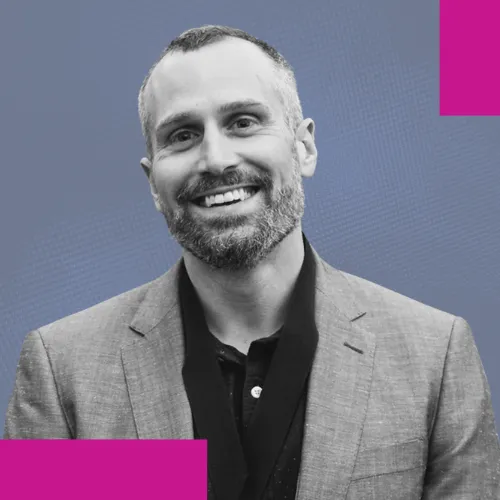
This week, Jim Kapsis, CEO of the Ad Hoc Group, joins us to explore the concept. He recently wrote about distributed data centers for The Gist newsletter.
Plus, we talk about the fallout from Jensen Huang’s departure from NVIDIA, and explore some storylines in the wake of the U.S. midterm elections.
Open Circuit is brought to you by EnergyHub. EnergyHub works with more than 230 utilities to coordinate over 2.6 million DERs and more than 3.6 gigawatts of dispatchable flexibility through a single platform designed to perform when it counts most. See what that looks like at EnergyHub.com.
Open Circuit is brought to you by Giving Green. Giving Green researches the climate nonprofits best positioned for the next big climate win, and sends 100% of every dollar donated to the Giving Green Fund to them. Make your first gift before 2027, and it’s matched up to $500. Go to GivingGreen.earth/Circuit or select Open Circuit at checkout.
Open Circuit is brought to you by Everyday Electric. Everyday Electric simplifies savings at home, helping support a more reliable, affordable grid. Operating the country’s largest residential VPP, it coordinates 6+ GW of capacity across connected products. Learn more at everydayelectric.com.
Transcript
Stephen Lacey: In 2017, Anthropic CEO Dario Amodei, then a researcher at OpenAI, wrote a memo that set today’s infrastructure boom in motion. It was called “The Big Blob of Compute.” It argued that the only way to build general-purpose AI was to make the models bigger. Clever, narrow models were not the answer, he argued. Rather, it was more compute, more data, and longer training runs. That research hypothesis became the operating philosophy of leading AI companies, and the blob grew into something physical: gigawatt-scale campuses, nuclear restarts, gas plants, big batteries, and a build-out now measured in the trillions of dollars. We’ve been told a very specific story about the direction of AI infrastructure: bigger is always better. But is it? There’s no question that we need way more computing to push the frontier of general-purpose models. But large data centers face so much opposition and so many constraints that there’s a debate over how that computing gets built.
Should it — can it — be far more distributed? Rather than taking up thousands of acres, could the computing live in smaller warehouses, empty office space, or even homes? This week, we’ll look at emerging models for distributed computing and how they’re becoming a distributed energy play. Plus, we’ll dip back into some post-midterm commentary and talk about the fallout from Jensen Huang’s departure from NVIDIA. That’s coming right up on Open Circuit.
Welcome to the show. I’m Stephen Lacey, the executive editor of Latitude Media. We have another full roster today. Jigar Shah and Caroline Golin are with me, as always. Jigar is the co-managing partner of Multiplier. Jigar, small data centers, distributed data centers: is this the episode you’ve been waiting for?
Jigar Shah: No, but I will take it. I will take it.
Caroline Golin: What is the episode you were waiting for, just out of curiosity?
Jigar Shah: I mean, I’m still obsessed with vehicle-to-grid.
Caroline Golin: I know. Yeah. You have talked about that a lot. I was hoping you were going to say “when we’re in Barbados” or something like that. But no, vehicle-to-grid. That sounds fine too.
Jigar Shah: I mean, that’s cool. Didn’t Elon say that every Tesla was going to become a distributed data center?
Caroline Golin: Yeah. I mean, he says a lot of things, though.
Jim Kapsis: Well, that relates to the episode we’re having. I don’t know, Jigar, I’m a little disappointed, because when we were hanging out at Climate Week, I thought you were so excited to talk about this topic.
Jigar Shah: I’m excited about a lot of things, especially when it comes to you and Ad Hoc. I think the world of you.
Jim Kapsis: Oh, thanks, Jigar. Appreciate you.
Stephen Lacey: That voice you hear is Jim Kapsis. He’s the founder and CEO of the Ad Hoc Group. He also authors The Gist newsletter, and he has been spending some time thinking about distributed data centers lately as well. Hey, Jim.
Jim Kapsis: Good to see you. Thanks for having me, guys.
Stephen Lacey: Yeah, great to have you on. And of course, Caroline Golin is the chief growth and policy officer at NRG. You had your work cut out for you after the election. This week and last week have now blended together into one. We’re good?
Caroline Golin: No, we’re good.
Stephen Lacey: Figured it all out.
Caroline Golin: Done.
Jigar Shah: Rate freeze. Rate freeze.
Caroline Golin: Move on. Move on.
Stephen Lacey: We’re —
Caroline Golin: Good.
Stephen Lacey: All right. Before we get into the big questions about distributed data centers, let’s focus on the biggest story in the news right now. CEO Jensen Huang has resigned after revelations of affairs with a direct report and with a woman suspected of being a Chinese spy. Other affair allegations have come out in the last day or so. NVIDIA is seen as Jensen Huang. Jensen has been personally responsible for many of the deals with other AI companies that help finance chip purchases and data center build-outs, to the tune of around $530 billion. So if NVIDIA’s stock continues to take a hit, or if it starts to pull back on those deals, what are the possible downstream consequences? I think those consequences connect to our topic today. Caroline, do you think this will eventually lead to a meaningful shift in the infrastructure build-out?
Caroline Golin: Well, I do think NVIDIA has been a strong investor in what it believes is the right way to build infrastructure. That’s to Jensen’s credit, and I think to the credit of the people he surrounded himself with. Apparently they didn’t give him advice in other areas of his life, but I do think they’ve been that. I’ve met him before. He’s an incredibly charismatic man, and he’s very committed to the idea that AI is inevitably what’s best for everyone and the entire community. He often pushed NVIDIA to make investments that would never pencil, but his view was that if they made the infrastructure of AI better, then in the long run it was better for the overall narrative. That really came from him. And there are many people at NVIDIA — some of whom I’ve worked with, and some of whom have been there since employee number five or six — who have carried this mantle.
So with new leadership — he really ran that company with command and control — it’s going to be interesting to see what the board does with this, what new leadership does, and how they redirect. I’ll also tell you, anyone who was watching knows that Jensen, to his credit or to his own political risk, has been hand in hand with Trump and the administration. NVIDIA is on the list that Democrats are going to go after. There are tons of questions about what NVIDIA’s relationship has been and about Trump’s profiteering from that relationship. Someone’s going to take the fall for that at a lot of companies. So it’s actually not surprising to me — both because of his poor judgment in his personal life and because of what’s probably facing the company — that they made this decision when they made it.
Stephen Lacey: Everybody on that board is lawyering up right now.
Caroline Golin: Yeah, absolutely.
Jim Kapsis: As a former national security professional, I’m horrified on that level alone at how this was allowed to happen, and also at who knew what and when they knew it on the government side. We’ll see whether there are hearings next year or whatnot, but there are still a lot of questions. Maybe there’s not as much there as there may seem to be, but I’ve got to think this is a story that’s going to keep unraveling over time. There’s a lot more we’re going to learn.
Stephen Lacey: I absolutely agree, particularly on the government side. I think that’s where the questions are targeted now. Jigar, what do you think? The interim CEO, the former CFO, is someone who —
Caroline Golin: Is female.
Stephen Lacey: Yes. And she has reportedly pushed back on some of the deals Jensen pushed through to support data centers and chip sales. What do you think this does to NVIDIA strategically, and what effects would that have on the build-out itself?
Jigar Shah: The problem I have with Jensen, and with other people as well — and I certainly didn’t know anything about any of the national security stuff — is that I think there’s a feeling that they can take this global commons we’ve created, like the grid, and manipulate it to their will so they can become wealthier, without any collateral damage to the other people using that commons. That’s the thing I’ve always viscerally reacted to. And I don’t think he thinks any differently today than he did when I told him he was a dumbass in 2023. I don’t know if you’ve seen all the investments they’ve made in energy. They’re the most harebrained ideas I have ever heard of: some of these concentrating solar projects and long-duration energy storage projects, all these technologies that you and I both know don’t work and have not worked, but that were supposed to magically solve all these energy problems.
The level of selfishness just never ceases to amaze me.
Caroline Golin: I have said this before: none of the hyperscalers or the big chip companies thought it was their job to fix the grid. It was their job to win the AI race. Fixing the grid became a barrier.
Jigar Shah: And poor people on the grid be damned. Poor people on the grid be damned.
Caroline Golin: Okay. But that’s not their mindset. Their mindset is, “I have to win this AI race or China is going to.”
Jigar Shah: Totally.
Caroline Golin: And that’s what they were going after. Fixing the grid became a hump on the Everest they were climbing to win this race. I think the approach Jensen took was, “Well, there’s a lot of stable capital out there to fund things like natural gas, solar, and wind.” And he wanted to fund the stuff he thought no one was funding. It didn’t make sense as an investment thesis, but I think he invested in some great shops and some great ideas. I don’t know how much of it was actually Jensen, but I do know that, very famously, there were people on his team who said, “We try to pay as much as we can to our supplier partners because we want them to succeed.” I do think he brought a different perspective to it.
Was it calculated and informed by excellent modeling of what’s needed to lower rates and increase the resilience of the grid?
Jigar Shah: Obviously not.
Caroline Golin: Obviously not. But it was informed by people who thought they had a vision, were very hungry, and could raise millions of dollars off a slide deck.
Jigar Shah: But we should let him off the hook because he clearly didn’t have the resources necessary to get smart people around him.
Caroline Golin: I’m just saying, let’s not negate the good he did just because he can’t keep his pants zipped up. That’s all. I’m sorry.
Jim Kapsis: I was going to say — maybe it’s overly optimistic — but I think we may be in both a cultural and a market moment after the election, and with what’s happened with Jensen, that amounts to a bit of a reset. This is an exclamation point: business as usual is over on data centers. That was already true heading into the election, and it’s very true on the other side of it. And I think this exit, and how big a deal it is, raises the question of whether he’s key-man risk, not just for NVIDIA but for the market. I’ve got to hope he’s not for the market, because if that’s the truth, then we really have built this market on a bunch of sand. It’s really about one guy.
Caroline Golin: I do think they’re somewhat outliers in the market. I was talking to a friend about this last night. Say the same story ran at Google: there’s a succession plan, there’s a transition plan. Also, everyone is so watched, and it’s so corporate at Google, I don’t see how all of this could have happened. There are so many internal checks and balances. That’s the difference between a company that 15 years ago was making video game parts and is now the biggest company in the world. As hard as it is, as someone who has been in that corporate bureaucracy for quite some time, it does produce a level of stability when shit hits the fan like this. And NVIDIA didn’t have that. It was ruled like a monarchy.
Stephen Lacey: Yeah. And I’m also preoccupied with a set of really practical questions about what happens next. NVIDIA is taking all these equity stakes in neoclouds. What happens if they draw back on that support? Are they going to continue supporting that massive SB Energy Ohio site for OpenAI? There are a lot of large-load tariffs that require collateral. So if NVIDIA’s support weakens, will customers have to post more collateral?
Jigar Shah: The CFO has already answered those questions. I think in general —
Stephen Lacey: What did she say?
Jigar Shah: She basically said what we’ve all been saying. The thing with Jensen Huang, which I love, and Elon Musk, which I also love —
Stephen Lacey: Wait a second.
Caroline Golin: Stephen, don’t look for the logic.
Jigar Shah: Right. Is that they create their own distortion field. All of it is just one big distortion field. And what Jensen understood about CoreWeave and everything else was that once you start to break the distortion field, it all comes crashing down. People have to believe in something they can’t see to keep investing this money, whether it’s in SpaceX or CoreWeave and the neoclouds. What the CFO basically said was that she’s not comfortable with any of the financial positions they’ve taken, and she’s going to reevaluate all of them. My sense is that if this distortion field breaks, you’ll have the correction Jim was suggesting. And it’s not because AI isn’t real. I think it is real. But it’s very clear that people are front-running their investments before seeing the level of revenue growth needed to justify them.
Jensen wanted that to continue, and now we’ll see whether it does.
Caroline Golin: The erosion of institutional trust in this country is going to get even worse. What’s particularly interesting about the timing is that this is happening on the heels of a major populist movement in politics — a changing of the guard, with electeds who ran on the sentiment that these oligarchs have ruined your country. And here falls the first. If the Chinese spy allegations and the shipping of scrubbed servers to China all prove out, I think the flame that’s already been lit on the political and regulatory clampdown on data centers becomes a bonfire.
Jim Kapsis: I think this may be that moment in terms of rebuilding trust. The folks people haven’t been trusting — it might get worse for them. Jigar, leading up to this, we were talking about the election, the new governors, and what’s happening in these states. I said this to some of the hyperscaler folks before the election: “You guys don’t have a lot of time to figure things out. There’s a presidential race that’s starting —”
Caroline Golin: Oh, the presidential race started two weeks ago.
Jim Kapsis: But the minute folks put out their positions on data centers — which are being written by Jigar right now — it’s sort of game over. The governors are going to have to stand up, which they’re going to do, and say, “Here’s the way forward.” However real it is, and however much is manufactured behind the scenes, the hyperscalers are going to have to be seen as being dragged to the table with a finger wagged at them: “If we’re going to build, this is the way we’re going to do it, and you’re going to do it this way, or you’re not going to do it at all in our state.” Even if they were willing to do it in the first place, it has to —
Caroline Golin: The optics of punishment over proactivity.
Jim Kapsis: Yeah. And Jigar, I know you talk to a lot of the hyperscaler folks too. They’re people. They’re emotional about this stuff. They’re like, “Well, we think we’re doing the right thing. We think we’re doing all these great things, and we’re not getting any credit for it.” And I’m like, “I don’t care what you think, because the voter doesn’t think you are. The people in power now need to show the people who elected them that there’s a new way, and that’s your only hope. So you’d better get on board. And if it means you’re going to look like the bad guy, you’re going to have to accept that in the short run.” I just think that’s the reality of the political situation they find themselves in. And then we can talk about distributed data centers, which I think is a whole other opportunity.
Stephen Lacey: Yeah, let’s get there.
Jim Kapsis: Which we’re also going to force ourselves into.
Jigar Shah: Well, and I think the utilities are in the same place, Jim.
Stephen Lacey: In terms of what?
Jim Kapsis: Yeah, no, I think — what you’re saying.
Jigar Shah: They’re going to have to look like they’re taking it on the chin from the governor to earn back the respect of the voter.
Jim Kapsis: I think you’re right. Again, it’s the same issue for them. I spend a lot of time with utilities. They believe they’re doing the right thing for their customers most of the time. I was at EEI in June, and it was all, “Oh, why doesn’t everyone understand how great we are?” And that’s the wrong message.
Jigar Shah: Guys, it’s like, read the room. Read the room.
Jim Kapsis: Right. 100%, read the room. Again, we can debate how much is true or not, but it’s the perception. So you’ve got to figure out a way forward that’s going to be acceptable so you don’t lose your social license to do the things you want to do.
Stephen Lacey: I was wondering how long it would take us to get from Jensen Huang’s affair to utilities. Here we are.
Caroline Golin: I was just wondering how long it would… Jim, you’re going to be on every week, because you keep saying, “Jigar, I agree with you. Jigar, I agree with you.” Wait.
Jim Kapsis: Those might be the three times I’ve ever said that, Caroline. Don’t worry.
Stephen Lacey: Let’s talk about distributed data centers now. Jigar has been beating the drum on smaller, distributed data centers on this show for a while. In the last year, they’ve gained attention as a possible solution to AI infrastructure bottlenecks: a way to perhaps avoid costly grid upgrades, reduce opposition, give homeowners a financial stake in AI, and even use offices left empty after Covid. And this is morphing into a distributed energy story as well. This spring, Span unveiled XFRA, a 16-GPU compute node that sits inside a house and pairs with a smart panel and batteries. Span CEO Arch Rao made some big claims about cost, saying it would take $3 million per megawatt and six months to build, versus three to five years and $15 million per megawatt for a 100-megawatt data center. Then we’ve seen a bunch of commercial activity. Sunrun launched a pilot that pairs AI compute nodes with homes.
Span and Sunrun have partnered on this. On the commercial building side, Perimeter came out of stealth with plans to put GPUs in office buildings. Telecom companies like Comcast and Spectrum have been doing this for a while, putting GPUs in their network facilities. And of course, we’ve been talking about NVIDIA, which has pursued partnerships on different forms of distributed computing. Added together, maybe there’s not that much capacity right now, but there’s a lot of excitement in this space. Jim, you’ve been thinking and writing about this. How do you define a distributed data center? What caught your eye about this market?
Jim Kapsis: Well, distributed, in the simplest sense, means small: small data centers, tens of megawatts or even smaller, versus the hundreds-of-megawatts or gigawatt campuses we’re seeing. When most people talk about distributed compute — especially edge computing, which means the computing is really close to the device, or on the device itself doing the calculations — you’re really talking about inference. That’s when you call on your AI and ask it a question, and it does a calculation in the moment, as opposed to training all of the time. So there are different flavors, but those are the ways I’m thinking about it. In terms of what’s interesting to me: this summer, I had a conversation with a utility executive in a major city, and I asked, “Hey, what’s the latest with you and data centers?
“Given your territory, I doubt big data centers are being built, because you don’t have a lot of land. What about distributed data centers?” And his response was, “I’m hearing a lot of rumors about people doing behind-the-meter data centers, but I wouldn’t know what they’re doing.” I said, “What do you mean?” He said, “Well, if it’s behind the meter and there are a bunch of negotiations going on, I wouldn’t know.” And that struck me like, “Oh, shit.” I’ve been part of a number of conversations since this summer, and you guys have reported on this at Latitude: there are a lot of developers and other companies knocking on doors at big commercial real estate buildings, downtown and in the suburbs, saying, “Hey, you’ve got some capacity I could use? I’ll give you a check, and I’m going to come develop something at your site.” So my first instinct was, “Wait a second, are we going to repeat the same mistakes we made with the big data centers and go really fast to make a buck?
“Because of course capital is going to flow where there’s opportunity, and we’re going to have a problem when there’s too much behind-the-meter load we weren’t expecting, and the power’s going to go out.” So that was my original concern.
Stephen Lacey: And you compared that to the cannabis industry, right?
Caroline Golin: It’s probably the same salespeople.
Jim Kapsis: Grow houses came out of nowhere, and suddenly utilities were — it was true. It’s a good analogy on many levels. The same salespeople, let me tell you. Utilities found out later, when they saw the load curves beginning to shift. So I definitely spent some time talking to utility folks about this, and I’m a little less worried about that problem now. I do think it’s important for utilities, regulators, and site developers to make sure this happens out in the open as much as possible, not behind closed doors, because there are some real potential risks. But I’m less concerned that you’ll have actual outages as a result. My understanding of how the distribution system operates is that if a building hits its capacity threshold, the building’s power will go out, but it’s not going to cause an issue on the feeder.
So I’m a little less worried about that. But there are concerns about power quality, especially with inference. I’ve talked to a few utility distribution people who said that if you have too much inference happening all at once in a given area, you could definitely have power quality issues that could lead to something going wrong on the distribution feeder. But these, by the way —
Caroline Golin: Because it’s so spiky, right? Because it’s so spiky.
Jim Kapsis: Exactly. It’s like search, boom, and then it comes back down; search, boom. It’s not constant like a big data center. And those spikes can be problematic if you don’t have the right power conditioning —
Caroline Golin: The voltage and harmonics.
Jim Kapsis: Voltage, harmonics, and all of that. But I’m told — and you guys have heard this — that these are solvable problems, not the showstoppers I was originally worried about.
Caroline Golin: I’ll tell you what Jigar will say: storage. That’s the solvable problem.
Stephen Lacey: He’s not wrong.
Caroline Golin: Storage, right? I got it. I got it. I mean, he’s not wrong.
Jim Kapsis: It’s part of the solution.
Stephen Lacey: Well, Jigar, there’s a lot to unpack there about how this computing interfaces with the grid. Maybe step back and make the case for distributed computing as you see it. When you think about this space, what size data centers are you talking about? What workloads are they serving? And why does it matter?
Jigar Shah: My definition of distributed compute is generally data centers put onto the distribution grid. They’re not connected at transmission voltage; they’re connected on distribution. So generally that’s 25 megawatts and below, though it could be higher, I guess. The reason this topic fascinates me so much is what Jim just said: just how much capacity in our existing infrastructure goes underutilized. I was talking to Prologis the other day, and they were telling me about the number of customers who requested 5-megawatt, 10-megawatt, 20-megawatt interconnections but are only running at 25% of their total connection size, because they haven’t gotten Elon’s robots yet, or full automation yet, or they haven’t put in all the EV charging infrastructure for their heavy trucks yet.
So now they’re looking to put data centers in that extra capacity. When you think about how low the asset utilization is on the wires we paid for, it’s abysmal. And now we’re forcing the electric utilities to come to the table and admit how low that number is and what their plan is to do something about it. I love this conversation because it lays everyone bare, and they’re now going, “Oh yeah, we were pulling the wool over your eyes before.” We do have the ability to accommodate double the load growth on some of these feeders by reducing peak. We do have the ability to put in some Torus flywheels in strategic places, like Rocky Mountain Power is doing, et cetera. And I’m like, “Oh, you’re admitting that modern American technology works and you were piloting it to death for no reason?
“Fascinating. Tell me more about how this load growth could be accommodated faster and how you could use modern American technology to integrate it now. Tell me more about how adding more kilowatt-hours to the distribution grid would reduce rates for everybody, Patti Poppe, when you’re on stage talking about how data centers are the only way you can make electricity more affordable in California.” I love it, and the popcorn is popped.
Jim Kapsis: I’ll be a little contrarian with Jigar on this. I think he likes to take his swings at the utilities, but I think utilities are already looking at how to use their grid more efficiently, for the reason you just stated. The joke in the utility industry about the whole idea of good utilization is, “We’re utilities. Literally, utilization is what we’re supposed to be doing.” A lot of the ones I’m talking to welcome this conversation. They don’t feel it’s being imposed on them. Maybe that’s true of some. You guys had Todd Conner on the show.
Jigar Shah: Well, we’re passing laws in 30 states, so let me know whether they’re for it or against it.
Jim Kapsis: What’s definitely true is that utilities have been largely blind on their own distribution systems for a long time — until recently. In fact, many of them are still pretty blind. Maybe this makes one of your points, Jigar, I don’t know. But there are companies with technology utilities can avail themselves of, and some are, that can help them understand what’s happening almost in real time, if not in real time, down to the transformer level, instead of relying on heuristics and engineering assumptions about what the distribution system can handle. And that data is being used. Xcel, for example, is looking for places to put batteries for the filing it made in Minnesota, the work with Sparkfund that I think you guys talked about on the show. That used software from a company called GridSight, out of Australia, that we work with.
That was not possible two or three years ago. It is now. So utilities have the tools. Where I’ll agree is that the tools now exist for utilities to know what’s happening on the distribution system. They need to deploy those tools at scale, and then they can actually find where that capacity is.
Stephen Lacey: This is a really fascinating part of the conversation, but I want to take a step back and talk about how viable this compute model is. Caroline, when you were at Google — obviously a lot of workloads are shifted across geographies and data centers — but if someone had come to you and said, “We’re going to compile however many 20-megawatt or 10-megawatt data centers,” is that even viable for a company like Google?
Caroline Golin: When I was there, it wasn’t something we were looking into. I don’t want to speak for Google, and I don’t believe it’s a primary agenda item now. The lens the hyperscalers were using at the time was economies of scale. That was based on a land bank strategy and the belief that there was more capacity in the system than there probably was. So that hadn’t really hit. The other reason I don’t think it hit is that we already had cloud market infrastructure. A lot of the edge compute and neocloud world has evolved as a more micro version of what cloud was. But cloud was inference. It needed to be within a certain radial proximity — largely Virginia and Ohio — to where the network was and where end use was. So that wasn’t a novel idea. I think we focused on the C&I side of this. But where I think the hyperscalers are more interested is behind power plants that aren’t being fully utilized, because prices are soft or because they’re in areas without as much demand.
You can fit 50 megawatts behind a 1- or 2-gigawatt power plant, so I see more movement there right now. The reason is that it’s a single contract. You’re only signing a contract with that supplier, as opposed to also signing contracts between the supplier, the C&I customer, and the end use. And the bulk power system is already there, so in terms of the harmonics constraint, you have much more headroom. So that’s what I’ve seen from the hyperscaler community. It’s just the world they know. I think they also get a little nervous when it’s their brand. When a Walmart or a big office building says, “We have a contract with Google,” the hyperscaler has to manage its brand with that endpoint customer, as opposed to the building saying, “We have a contract with a no-name edge provider.” That’s not as big a risk.
So I think it’s also about brand management. However, what I’ll tell you is that everything that just happened in Ohio, and what we expect will continue to happen across the country, is going to force more edge compute, or smaller compute like this. Companies will be weighing the trade-off: Do I let these chips depreciate and lose the X billion dollars I’ve invested, or do I take a risk on what might be spotty but at least potential compute or training? So I do think you’ll see a shift there. What I think is interesting is that the headroom Jigar alluded to is the same headroom many analysts have seen as the potential for EV charging. If edge compute eats it up, what are we doing to accommodate continued electrification of the grid and of transportation?
Jim Kapsis: Can I break this down, Stephen? Here’s where I see a few of these opportunities in more detail. Caroline definitely touched on a few. One, to be very explicit, is co-location with existing generation, which you mentioned. There are definitely some companies focused on the renewables side doing this. There’s a startup called Rune. There’s a startup out of Australia, WinDC, that claims it will have 250 megawatts or so deployed next year and has big ambitions beyond that. So that’s one. Another is placing them at utility-owned substations where there’s headroom. I think EPRI has done some studies there and is piloting something at one or more substations, so that’s interesting. Then there are the commercial buildings themselves. I’m a little less optimistic that there are many opportunities inside buildings, because it turns out retrofitting a building to work as a data center that can handle the most sophisticated chips —
Stephen Lacey: Fire codes, the weight of the servers.
Jim Kapsis: Fire codes, cooling, fiber, all the things you need. It seems really hard. There might be some edge cases where it works, but I think it’s really hard. But maybe in suburban or exurban office parks, if you can find buildings that have parking lots, large interconnects, and headroom, you could stick a modular or prefab data center there. There are companies like Armada, Flexnode, Crusoe, and others in that market, and those can get deployed. And I’m interested in — you mentioned EV charging. We’re seeing a good amount of money going into charging, despite where we are with EVs at this exact moment in this country. Although, as one friend of mine just said, the Iran war might have been the best thing for climate Trump ever did. If we start moving in the right direction on EVs — we are building a good number of Level 3 chargers in this country, but the utilization rates aren’t particularly good.
I think on average it’s about 15%, and in the most-used areas it’s about 30%. That’s a lot of opportunity. Those are really big interconnects with a lot of capacity. I’ve been talking to folks in that space, and they’re definitely looking at it. Where it gets really interesting — and I think it’s a big potential opportunity — is that the way those sites were set up with regulators and utilities, they’re on special EV rates. And the way those rates were written, you can’t add a major additional load and stay on the EV rate. So either they’ll have to change the rate structure — the good news there is that it’ll be public and transparent, there’ll be a conversation, though it may take a while —
Or, and I was talking to my team about this after looking into it, it may be possible to opt out of the EV tariff, go onto a normal C&I tariff, and co-locate a data center. Then you’re no longer on the special tariff, you’re on your normal tariff, but you don’t care, because you’re using so much power and getting so much revenue that everyone ends up better off. I’m really intrigued by that space. We’ll see how it evolves, and there’s potentially some regulatory work that has to happen. But I think there are many gigawatts of capacity available there, and it’s only growing as we build out more and more Level 3 chargers. Those chargers are getting bigger. In Europe they’re 250 kilowatt-hours; I think they’re now deploying thousand-kilowatt chargers.
We’re going to see bigger chargers with larger capacity, which might be a good opportunity for co-location and more utilization, Jigar.
Stephen Lacey: What do you guys think about the residential model led by Span and Sunrun? The home battery provides backup and grid services and also keeps the GPUs online. So it seems like you have multiple use cases that could come into conflict. What do you think about using GPUs as part of a solar and battery system? And is it a model that will actually tie enough compute together? Anybody have strong opinions on it?
Caroline Golin: I think a certain percentage of the residential population will buy in, but I still think the vast majority of homeowners are skeptical and just want their energy bills to be simple and to be left alone. So I don’t think it’s for everyone. I don’t. I’d like to be proven wrong, but my gut is that the vast majority of people will not buy into it. But I think the share that does is substantial — maybe 10% — and you could do something with that. I question whether the interoperability of the grid is strong enough to make it work at the distribution level, and what additional… As Jigar likes to say, these idiots out there didn’t know how hard it was to build a power plant. They didn’t know what they were doing at the hyperscale level.
I question whether people know what they’re doing at the aggregated distribution level as well.
Jigar Shah: I think that’s exactly right. I think —
Jim Kapsis: So much agreement. It’s disgusting.
Jigar Shah: My client is the largest deployer of distributed data centers in the country. It’s called Available Infrastructure. The bigger challenge for me, as a project finance guy, is this: for data centers of 5 megawatts and up, you can get three- to five-year offtakes really easily. There are a ton of banks and others who want to buy that compute. When you go toward 250-kilowatt data centers — we’re rolling out 5,000 data centers at Crown Castle towers across the country right now, for instance — those data centers get their contracts from smart city players. Think LG and IBM, who control traffic lights or provide services to Waymo and others. But those contracts aren’t ubiquitous. So those sites have very high returns because they’re selling their tokens merchant. But for folks who want long-term contracts, you have to wait for those smart city players to win the local contract for controlling traffic lights, or whatever it is, before you get your long-term contract.
Part of the problem with residential is that you can certainly do it, and it’s a lot of money — it’s like $150,000 to put this thing in your garage or outside — but you’re getting merchant tokens, so it’s not a long-term, fixed-price offtake. So part of the challenge with these distributed data centers is that the CTOs buying this compute haven’t gotten comfortable with data centers below 5 megawatts yet.
Jim Kapsis: Full disclosure: we work with Span. My sense of the residential market, at least from their experience, is that new construction is a lot easier, because you can sell across multiple homes all at once, like new cul-de-sacs. It’s part of the community, part of the deal. And what’s interesting, at least in what they’re putting forward — and there are some other players that haven’t announced they’re doing this yet, which I think is coming soon — is that they’re going to provide free power to customers. So you’ll never have to pay your power bill again. Now, at the big data center level, we know hyperscalers have offered communities a lot of money, and the communities have said, “We don’t want it.” But I don’t know. I think this is an opportunity, particularly in new construction. In the short run for retrofits, though, they’re mostly going to C&I locations like telecommunications deployments, which is kind of what you said, Caroline.
Stephen Lacey: Okay. Let’s wrap up with some post-election analysis. I think by now everyone is really sick of the phrase “blue tsunami.” Maybe we should be talking about, I don’t know, the green undertow, something like that.
Caroline Golin: No, Stephen.
Jim Kapsis: I don’t know what that is.
Stephen Lacey: There were a couple of big shifts at the state level. People are waking up to the importance of local electricity regulation. We saw PUCs move in a clean-energy-friendly direction in certain states. A new crop of governors was elected with a more expansive view on leveraging DERs and influencing utility regulation, and Jigar has said he’s working with many of those incoming governors. So now that we’ve had some time to digest the election, are any storylines emerging for you as ones to watch? Jim, what are the most consequential ones for you right now?
Jim Kapsis: Certainly everyone’s eyes seem to be on Texas, which you guys have talked about before. I think the governor-elect is still putting her team together, and they’re being pretty tight-lipped about their intentions, from what I understand. So there’s a bit of wait-and-see. There are some indications — Jigar, I’m curious about your perspective, and Caroline, given where you are — that it may not be as negative on the data center front as it appeared during the election. To me, that’s the big question. In some of these moderate states — or states that, until a few weeks ago, we didn’t think of as moderate at all — you have governors who are going to have to govern to the middle. It’s true that people don’t like data centers, but it’s also true that unions, the trades, and others like to build things and understand the economic development benefits of data centers.
So to me, the question is: Can you change the compact? We talked about this earlier — what’s the new way forward? Can the governors in states like Texas, which is such an important one, say, “We’re going to do it differently, and here’s how,” and then keep moving forward with a certain amount of development? Because, as Caroline mentioned earlier, the alternative might be that the big campuses go overseas and all we’re doing is distributed. I’m for distributed — that’s the subject of the episode — but there are some limits on what we can do on the distributed side. So I think we still want to build the bigger data centers, but we need to build them differently, take a deep breath, and figure out what’s going to be socially acceptable. So Texas is interesting.
I’m actually maybe most interested in the places where Democrats have trifectas.
Stephen Lacey: I think it’s six states?
Jim Kapsis: Yeah, like Wisconsin or Michigan. Where do they actually go? How anti-utility, anti-data center, pro-clean energy — and again, I’d rather not see all those things framed that way. That’s a big question for me. So I’m looking at what’s going to —
Stephen Lacey: And also, can they get beyond 100% clean energy mandates? How creative will they get on the clean energy side, rather than going back to…
Jim Kapsis: Yeah, but I also think affordability is so important everywhere that everyone’s going to have to look at it in that context. On the Arizona election, by the way: the last commission undid the state’s energy efficiency resource standard and just killed all efficiency funding in Arizona. I’d like to think this new commission will go in a slightly different direction. So my eyes are on Arizona as well.
Stephen Lacey: Jigar, what do you think?
Jigar Shah: When you think about where the election went, a lot of the voters who voted for the 457 new state legislators around the country were Steve Bannon and Tucker Carlson followers. So when you think about how broad this coalition is, it’s not really a clean energy coalition. It’s more of a “God damn it, we kept telling you to focus on cost of living. Now freaking do it.” That’s why I think utilities are in the crosshairs: they haven’t proposed anything that will get —
Caroline Golin: Rates —
Jigar Shah: — to inflation or lower, so it will be imposed on them. I think a lot of it is going to be grid utilization, demand flexibility, load flexibility, a lot of the things we’ve talked about. On the data center side, almost every one of these governors ran on a moratorium. So there’s almost nothing they can do except provide some sort of safe harbor number. It’s impossible for Governor-elect Acton in Ohio to come out, when I think 40 out of 41 county ballot initiatives basically ban data centers above 25 megawatts, and say, “Psych, here’s another gigawatt data center.” So I think there’s a level of understanding everyone needs. Most people haven’t sat down with the election results and realized we’re in a whole new world.
This isn’t “modify your previous position slightly for this moment.” You have to show in visible ways that you care deeply about the affordability crisis we’re in today. And that’s not solar or wind, that’s not this or that. It’s just people. They don’t care about AI versus China. Nobody cares about AI versus China, especially after Black October and the Anthropic S-1. Let them all burn to the ground. No one cares.
Stephen Lacey: Well, judging from the debate over the permitting bill, I don’t think progressive environmentalists have internalized that new world. All right, Caroline, you’ve had a week and a half, almost two weeks, to really think about the election. You run policy for a major corporation. What questions do you still have? What have you figured out?
Caroline Golin: I don’t know that I have any more questions than have already been articulated. Where I’m focused is actually less on policies and regulations and more on what commercial structures solve the political moment. We as an industry tend to go shopping, lobbying, and defending our own book, whether your book is renewables, thermal, storage, or whatever. You have a few trade groups that present a bridge between renewables or clean generation on the left and thermal on the other side. I don’t think that’s going to work anymore. So what my team and I are focused on right now, informed by the policy team, is what integrated commercial solutions will work.
How do you look at uprates in the natural gas space but combine them with virtual power plants in the residential space? How do you make it easier to solve all of a governor’s problems at once, as opposed to arguing for your piece of the political pie? The companies that go and argue for their piece of the political pie — and I’d say that’s 99% of all companies in this space, whether you’re a supplier, a third party, or a utility — we all just go and argue our book.
If we do that, it’s going to be very unproductive, and we’ll end up with some very aggressive and potentially populist, limiting legislation. What I don’t want to see is the energy community be tone-deaf and fail to present innovative commercial opportunities, so we end up with very short-term fixes that look politically astute but don’t fix the market in the long run. I think that’s a big risk overall. So where I’m focused mentally, and where I’ve focused the growth team and everyone over here, is: let’s be the company that innovates on the commercial offering and integrates something that speaks to all parts of the problem. If we can do that as an industry, I think we could get some really great long-term change. If we can’t, we’re going to be fighting each other, and we’re going to get some pretty short-term, aggressive, and potentially even regressive shifts in the market.
Stephen Lacey: Absolutely. An urgent moment for creative thinking. I think we’re going to have to close it out there. Caroline Golin is the chief growth and policy officer of NRG. Thank you. Good to see you.
Caroline Golin: Thank you, Stephen.
Stephen Lacey: Jigar Shah is the co-managing partner of Multiplier. Great to see you, my friend.
Jigar Shah: Of course.
Stephen Lacey: Jim Kapsis is the founder and CEO of the Ad Hoc Group. Great to see you, Jim. Thanks for joining us.
Jim Kapsis: Good to be here. Always fun to be with you guys.
Stephen Lacey: That’s it for the show. Open Circuit is produced by Latitude Media. The show is edited by me, Sean Marquand, and Anne Bailey. You can find all of our episodes on Apple, Spotify, or wherever you get your podcasts, and you can get transcripts at latitudemedia.com. Check out all of our coverage there and sign up for our newsletter. And of course, you can find all of our episodes on Latitude Media’s YouTube channel, so if you like the show, make sure you hit subscribe. Thanks so much for being here. I’m Stephen Lacey. We’ll catch you next week.