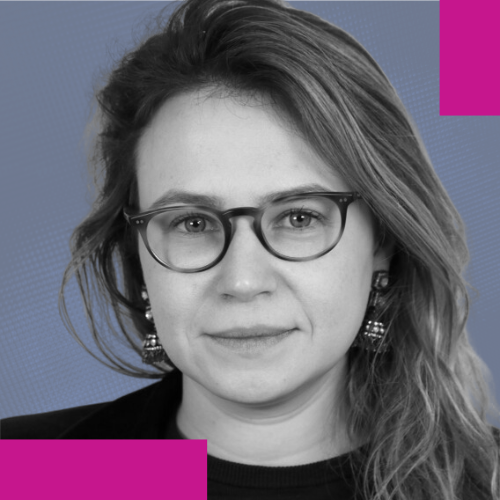
Among the utilities using GE Vernova’s grid orchestration platform, there is “ubiquitous” demand for visual intelligence. That’s according to Scott Reese, CEO of GE Vernova’s electrification software business, which is in charge of the GridOS platform. While utilities are increasingly using software to refine the management of their grid operations, they still have trouble getting eyes on the often vast physical grid.
“The grid is a physical machine out in the field, and it’s difficult for [utilities] to completely understand and have appreciation for [its] state without sending humans out to visually inspect it,” Reese told Latitude Media. Sending humans out, however, is expensive, time-consuming, and still unlikely to provide the complete picture of the grid that utilities need to protect the infrastructure from extreme weather and other risks.
This is the challenge that drove GE Vernova’s recent acquisition of Alteia, a French software company using artificial intelligence and machine learning to bring visual intelligence into utilities’ operations.
“Alteia gives us the ability to bring a combination of satellite data, LiDAR data, and imagery into that data platform that we’ve built, and then layer AI on top of it to give the utility a better understanding of the state of their physical grid,” Reese explained.
Utilities can feed visual data, such as images captured by drones, into Alteia’s software. The software ingests it, processes it, flags the locations on the grid that need physical maintenance, and then suggests a plan for how to go about that work. For example, utilities can use Alteia’s data processing capabilities for more efficient vegetation management,identifying the places where cutting trees ahead of an extreme weather event is going to have the biggest impact in the shortest time.
Improving vegetation management is one of the most common ways utilities are using AI to become more resilient. As climate change makes extreme weather events more intense, utilities are drawing upon these new tools to bolster the grid and keep the lights on. AI’s ability to ingest and process massive amounts of data, and has given rise to a collection of companies targeting these specific needs of utilities.
In addition to Alteia, these include Optelus, which relies heavily on imagery provided by drones; AiDash, which uses imagery, among other things, for vegetation management and wildfire detection and prevention; and Overstory, which creates vegetation data by combining AI with remote sensing sources like satellite and aerial imagery.
Expanding GridOS
The acquisition, which closed last week, incorporates Alteia into the existing GridOS grid orchestration platform. GE Vernova has been building GridOS since 2022, when it acquired Opus One, a platform helping utilities integrate renewables and distributed energy resources at scale across their systems.
The following year, the company expanded GridOS through the acquisition of Greenbird Integration Technology, a data integration platform that Reese said provides the “data fabric that gives the utility the ability to connect all their different data sources to see across their entire grid.”
“That combination laid the foundation through which a utility can see all across their grid — across transmission, distribution, and out onto the edge’s DERM devices,” he said. This is the basis of GE Vernova’s ultimate goal of a fully automated grid, orchestrated by GridOS.
GridOS has also created an “ecosystem” of partners, including DERMs provider EnergyHub and household energy data company Net2Grid, through which it helps utilities modernize their grids. These operate under the same umbrella API, but they are not a part of the GridOS platform.
“Our core tenet is to build an open and extensible platform with GridOS,” Reese said. “We believe that the energy transition is an absolute team sport, and the only way that you can play a team sport in this technology realm is to build such a platform.”
Until recently, Alteia itself was one of these partners. But customers’ widespread need for visual intelligence convinced GE Vernova that incorporating it into the platform was the right thing to do.
“Ultimately, we will make this a core part of the platform and build an ecosystem on top of its visual intelligence,” Reese said. “Now we’re targeting vegetation management, asset inspection, wildfire mitigation, but we look forward to [Alteia] becoming a core part of the platform that people can build on top of from there.”
In the future, Reese expects visual data to become more granular and precise, allowing for a host of predictions way beyond which trees to cut and when.
“You can imagine a world where you have two screens: one that’s monitoring the real world, and then one that’s ultimately predicting what the real world is going to look like,” he said. “And then a human will see the predictions and decide what to do.”