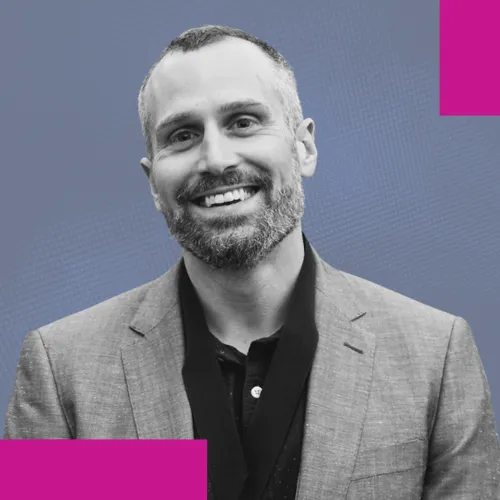
This is an episode with a lot of firsts: the first show of the year, the first full show on video, and the first with our new co-host, Caroline Golin.
In 2026, we’re launching a new chapter for Open Circuit as we sharpen our focus on the physical constraints shaping the energy transition — exploding power demand, grids that can’t keep up, tech companies reshaping electricity markets in real time, and investors trying to figure it all out.
This is no longer a conversation about whether clean energy can scale. It’s about whether the systems around it can move fast enough to support the next wave of industrial demand.
To kick things off, we dig into some of the forces redefining the power sector: the fight over capacity, the rise of co-located and merchant power, the limits of data center flexibility, and what Alphabet’s acquisition of Intersect Power tells us about the race to buy power.
We also officially introduce Caroline Golin as our new regular co-host. Caroline brings a unique perspective to Open Circuit: she spent the last seven years inside Google, where she served as global head of energy market development and innovation.
Caroline helped shape how Google procures electricity, engages utilities, and navigates capacity constraints across global markets. That experience puts her at the center of many of today’s most urgent questions around energy.
Welcome to the new Open Circuit, where we decode how clean energy actually gets built. If you want to watch the episode, subscribe to the show on YouTube!
Credits: Co-hosted by Stephen Lacey, Jigar Shah, and Caroline Golin. Produced and edited by Stephen Lacey. Original music and engineering by Sean Marquand.
With resilience now a leading driver of grid investments, Latitude Media and The Ad Hoc Group are hosting the Power Resilience Forum in Houston, Texas on January 21-23, 2026. Utilities, regulators, innovators, and investors will all be in the room — talking about how to keep the grid running in this new era of heatwaves, wildfires, and storms. Register today here!
Transcript
Stephen Lacey: How long do you guys say Happy New Year for?
Jigar Shah: We’re definitely stretching it. I mean, I think Apple, when you say Happy New Year, stops giving you the celebration fireworks after a certain day.
Stephen Lacey: Oh, wow. So you go by the iMessage standard.
Jigar Shah: Yeah, yeah.
Caroline Golin: No, no. I think it’s until you’ve seen someone. So you could be in August if you haven’t seen them yet. You should still say Happy New Year. It just makes it incredibly uncomfortable and funny.
Stephen Lacey: From Latitude Media, this is Open Circuit. This show started in a very different energy era. In the early 2010s, when we first turned on our microphones, there was this big question about whether clean energy could scale. Today, it’s whether the system around it can keep up. Power demand is exploding. Tech companies are reshaping markets. Global trade instability is the norm. The grid has become the central bottleneck for economic growth and the capital markets are trying to figure it all out. And that’s why this show is changing too. We’ve got a new format, a new voice, but the same obsession. Understanding how the energy transition actually works in the real world, who controls it, who pays for it, and how fast it can actually be built. The new Open Circuit starts now. I’m Stephen Lacey. I’m the executive editor of Latitude Media. Welcome to the show. Wow, guys, this is a big episode.
Jigar Shah: It certainly is different.
Stephen Lacey: Sure is. First of 2026, our first full show on video and perhaps the biggest first of all. Caroline Golin’s first episode as our new co-host. Hey, Caroline.
Caroline Golin: Hello. Glad to be here.
Stephen Lacey: How are you feeling?
Caroline Golin: Generally petrified, but overall good.
Jigar Shah: Can’t tell. Can’t tell at all, Caroline.
Caroline Golin: Thank you, Jigar.
Stephen Lacey: Caroline, for those who are new to her, you’ve heard her on the show a couple of times, but she’s the CEO of Envision Energy Advisors. Up until the middle of last year, she was Google’s global head of energy market development and innovation. And she’s an absolute baller, an all around wonderful human being. So we’re really just delighted that you’re going to be here with us on this journey.
Caroline Golin: Well, that was very kind. Thank you. I’m excited too. I’m an avid student and I think this is the best way to learn, right? Is to force yourself to have something interesting to say every week about the things everyone wants to hear about.
Stephen Lacey: And sometimes I really got to force it.
Caroline Golin: Yeah. Like all good things in life, like all good things.
Stephen Lacey: And of course a big shout-out to Katherine Hamilton who was our co-host for a decade who is freshly retired. She also hung up her mic. If you are listening, we love you. And of course, Jigar Shah is our longtime co-host and resident firebrand here. He’s the clean energy investor. He’s the co-managing partner at Multiplier. He also ran the DOE’s Loan Programs Office under Biden. How are you, sir?
Jigar Shah: I’m great. I’m great. I just realized that I should have wore a sweater. And then-
Caroline Golin: You should. You should have worn a sweater. Maybe we could have matching sweater vests one day, actually.
Jigar Shah: One day.
Caroline Golin: Something to aspire to.
Jigar Shah: I think I’m going to the full sweater though. I’m moving away from the vest towards the full sweater.
Caroline Golin: So you’re inheriting sleeves.
Jigar Shah: I am.
Caroline Golin: That’s pretty cool.
Jigar Shah: I am.
Stephen Lacey: So you went from fleece vest to sweater vest to full sweater?
Jigar Shah: I think I’m going to … I don’t think I ever had a sweater vest. I had a fleece vest. It’s sweater season. I should wear sweaters.
Caroline Golin: You’ve graduated.
Stephen Lacey: Well, now we have to be really conscious about what we’re wearing because we’re doing this whole thing on video as if we didn’t have enough cameras around us recording everything. This whole show is now on video. So Jigar, you can’t look at your emails and text messages anymore when I’m talking.
Jigar Shah: I mean, I feel like my productivity is definitely going to go down.
Stephen Lacey: Did you practice your YouTube dialect?
Jigar Shah: I did not.
Stephen Lacey: “What’s up everyone? Don’t forget to smash that subscribe button.”
Jigar Shah: I’m 100% sure that I’m not going to do this correctly because I just don’t care about optimizing for YouTube.
Caroline Golin: Well, I won’t do it correctly at all, but I think I have a 15-year-old son who will be able to tell me exactly what I should say and not say in order to get the likes or the downloads or the hits. What is it?
Jigar Shah: Subscribe.
Caroline Golin: The subscribe.
Jigar Shah: You got to smash the subscribe button.
Caroline Golin: Oh, gosh.
Stephen Lacey: “Ding that bell. Hey, fam. This is crazy, guys.”
Jigar Shah: Put your feelings in the comments.
Caroline Golin: I’m just imagining a dunk tank right now that you’re smashing and we’re all falling into.
Stephen Lacey: Well, I want to spend some time this week reintroducing Caroline and get her view on what’s happening in energy right now, particularly in the power sector through the lens of her career and expertise. And it is a hell of a moment in energy right now. Here in the US, we are obviously seeing historic load growth and historic spending on power infrastructure. We’ve got fast rising prices that are playing a big role in politics. Electricity markets are starting to bend under the stress of load growth. Tech companies are increasingly powerful and influential in the power sector. We’ve got a highly dynamic and maturing clean energy market that is also under political assault. And a lot of new development models emerging for clean resources alongside large loads like data centers. And of course at the global level, we’ve got the rise of the electrostate, the looming peak oil demand, a highly unstable trade environment and an AI race that is really framed as a geopolitical struggle. That’s a little snapshot. What did I miss? Anything else I missed in that list?
Jigar Shah: You’ve always missed Taylor Swift. She is clearly going to swoop in and solve what’s going on at the PJM.
Caroline Golin: There’s a folk song out there about capacity markets and ancillary services that she can write.
Stephen Lacey: Yeah. I heard she played a hand in the new rules at New England ISO. So Caroline has been witness to and an active participant in many of these changes, so I want to touch on some of them. Caroline, let’s start with some recent history. Let’s talk about what you were doing at Google when you left. How dramatically did your role evolve from 2018 when you first started to 2025?
Caroline Golin: Oh, I mean, it was a night and day difference. I was hired at Google largely because Google didn’t know what it wanted to do with energy at the time. I think it was a six or seven person team that I was hired onto. Incredibly brilliant people, mission-driven people, just wanted to set the bar and meet it, but hadn’t quite grown into its shoes yet of itself and its relevance, I think, in the market. And when I started there, it was a bunch of us sort of sitting in a room going, “Well, what if we did this? Or what if we did that? And looks like we’ve met 100% renewable. What do we do next? And what do we want markets to look like? And how do you actually engage with the utility?” And it was everything that people assumed the primary color sort of wonky San Francisco tech company was, and it was that.
And I joined Google, I think in large part because I thought it was on the margins and I thought it could be disruptive and innovative and it is and has continued to be, but it wasn’t a primary player. I remember when I got the call and I had to ask myself, “What does Google want an energy team for?” It really hadn’t resonated with me that they would care so much about the future of our energy markets and energy costs and our energy portfolios across the world. And within three to four years, we realized we were the market. We were setting the market and there was a beauty in that, right? There’s anyone who is particularly chasing the new or trying to be a trailblazer in their industry, that can be incredibly enticing. And it was, and I loved it.
The con of that though is that sometimes you end up on an island, right? If you move faster and farther than the market, you end up in your own space. And by the time I had left Google, it was clear that whatever step we took was going to have ripple effects. Some of them intentional, some of them incredibly unintentional, and the game changed. We as an industry became much more important, and that was reflected in the way Google managed itself internally and then tried to manage itself externally. And still the brightest and the best people in the industry, but there’s a saying actually, a Spanish saying, “speaking with tweezers.” And I think we went from being an entity that wasn’t afraid to say anything to an entity that had to be incredibly mindful of every single thing we said.
And that transition, not to mention the fact that I was hired to largely create a program and run a market program for a sustainability goal. When I left, it was the number one issue with whether or not we were going to meet our entire corporate agenda was, are we going to get enough energy and are these markets going to work? But it was a wild ride. And anyone who’s still there, and there’s only a few of them left. Most of the originals from the past decade or so at Microsoft, Meta, Amazon, Google, most have left. I think the most that are still there at Google, which probably says something. But yeah, it was a wild ride and one that gave me a vantage point. I think few in the world have been gifted and not anything I would take for granted and incredibly, and still incredibly thankful for.
Stephen Lacey: Well, I’ve got a couple questions for both of you that I think will set the tone for the kinds of conversations that the three of us and occasional guests will be having. Caroline, first to you, if you had to identify some of your top storylines or forcing functions that you think will shape the energy transition through this decade, what would they be?
Caroline Golin: So in the past year, I think sort of three major assumptions about the way we build power have been challenged. While at the time it was a headache for me and I thought just a ramification of not the best planning, the Talen deal that forced everyone to think about behind-the-meter load, co-location load, taking power off the grid to service new load was a tsunami, I think, through most of the commercial sector. And at first, I think we all sort of freaked out and thought, “No, no, no, no. We can’t entertain this. We always have to be grid connected. That’s the way to go. That’s the most resilient way to go. That’s the best way to go in terms of maintaining reliability on the grid,” which I think any electrical engineer will say is still the truth.
It sent a shock wave, I think, through many entities, especially newer entrants into the power system business, into blowing up the box about what was historically your go-to-market practice. And that was really a watershed moment, I think internally at Google and I think externally in the market when people started saying, “Maybe no. Maybe we should be co-locating, maybe we should be building new load off grid, maybe we should be building microgrids, maybe we should be doing this in a way that is wholly different than we’ve thought about industrial load growth in the past.” And that might seem minor to the rest of the industry, but it was a major issue, especially within the data center space. And I think within the large load sector in general, and I think to a degree to the commercial development and IPP market, it sort of is challenging and forcing us to think differently about this. And I have a lot of opinions about it, good and bad, but I distinctly remember that as being one of the bigger moments of thinking, “We have to have an opinion on this. We’re going to have to have a platform on this.”
Stephen Lacey: Jigar’s got a lot of opinions on it.
Jigar Shah: Well, and they still don’t have an opinion on this, to be clear, right? Caroline and I have had this conversation because the Talen and Amazon people came into DOE to tell us they were going to do this. And I told them, because Daniel Gross at the time was at Amazon, who’s now the CFO of X Energy, and I told him, “You’re going to have your ass handed to you. ” And he’s like, “What do you mean? I have no idea.” And I’m like, “Basically what the data center companies have done since 2012 is steal capacity from the rest of the public.” As LED lighting was going through the marketplace, there was excess capacity all around and people were like, “You take the capacity and we’ll give you an economic development rate and we’re going to give you a tax credit and we’re going to do this because we love you and we want you to invest a lot of money into our district.” And so they never cared about the fact that they were basically taking capacity out of the market.
As soon as Talen happened, you were by definition taking 1,000 megawatts of capacity out of the PJM market, right? That was the whole point of the deal. And they were like, “What? We didn’t know that was what we were doing. How is that possible? It’s still in the PJM and it’s still doing this thing.” And I was like, “Yeah, but it’s not available to be bid into the capacity market.” And even now, I would say the vast majority of tech bros are like, “I don’t understand. Why can’t we just build a data center off grid?” “I don’t understand.” I’m like, “Well, because if it’s off grid, then that capacity is clearly not available to the rest of the marketplace. How dumb do you have to be to not understand these concepts?” But I would say the vast majority of data center bros who are on these damn podcasts all over the place still don’t understand this very basic fact that we are not talking about energy. We are only talking about capacity. The entire conversation is about capacity and they still don’t understand the difference between those two words.
Stephen Lacey: So I want you to respond to that, Caroline, but can you just explain the nuances of the Talen deal? I think a lot of listeners would be familiar with it, but there might be some out there who may not be familiar with it. This is for the Susquehanna nuclear power plant in Pennsylvania. Is it a two gigawatt deal?
Caroline Golin: I think it’s one who-
Jigar Shah: It started smaller and then it got bigger over time as Amazon was going to add more capacity. They were going to take more capacity, but it was starting at 100 megawatts or something.
Caroline Golin: And I think to be clear, every hyperscaler bid on that, every hyperscaler-
Jigar Shah: Of course they did-
Caroline Golin: … bid on that. We were all interested in it. The breakdown in the Talen deal for me was how it was classified at PJM. If that would have been bid directly into the market with a bilateral contract that allowed for a premium price and maybe even a sleeved PPA back to whatever hyperscaler got it would have largely sailed through and had approval. It was the way it was filed that was problematic and responding to Jigar, every single industrial customer, manufacturing customer since the 1950s has gotten an economic development rate. So if we’re going to attack data centers, we should attack all of them.
But you could say it was stealing capacity or you could say it was eating up the excess capacity that we built in the mid, I mean early 2000s, 2008 through 2012, we built too much and we had excess capacity on the system. And so data centers came in and took that capacity and were very thankful for it and were happy for their four or five, six cent cost wholesale prices. And then that was done. And we had about 10 years where no one built a power plant and then no one knew how to build a power plant when all of a sudden we had to build more power. So yes, we took the capacity, but it wasn’t like we ran into grandma’s house and stole the pies or something like that.
We were levelizing costs across the country. What that did though, the inherent problem with that was that it meant that most data center energy teams, including Google’s and everyone else’s, never had to deal with this concept of there not being capacity. It was just a matter of, can we offset that capacity with clean energy or with renewable energy?
Jigar Shah: Which has no capacity.
Caroline Golin: Which has very or very little capacity.
Jigar Shah: I mean, so they’re like, “Let’s just figure out how to buy enough megawatt hours to say that we’re 100% clean energy.” And I’m like, “How about you mandate that they put two hours of battery storage there?” No, because that would increase the PPA price. And so like, I’m just saying, like at this point it’s a little rich to say, “Please don’t blame us for using up all this excess capacity that was there. We did you a favor.”
Caroline Golin: Well, I don’t know if it’s rich. I mean, I think it’s what happened. I don’t think any of the teams went into it saying like, “Shh, don’t tell residential customers that we are going to use those 200, 300 megawatts of that gas plant that no one else was going to use.” In large part, the utilities didn’t need to build new capacity for us. Or if anything, you see the same wave happening now, right? So now you have utilities who are saying, “Hey, we’ve got excess capacity or we’ve got congestion notably here, go here. We’d like to place this large load here. It would help the system.”
That is inherently what happened in the beginning. It just happened a little more organically than I think strategic and everyone was placing data centers for different reasons. That’s the other thing. None of us, none of the hyperscalers had the same infrastructure, the same go to-market strategy. We all sort of built our campuses, as we call it, differently and for different reasons. So it’s not something that a utility or even an RTO operator could say everything is alike and we have the ability to cookie cutter approach this and how we build capacity moving forward. That’s on us, or it’s not. If you think infrastructure is an inherited competitive advantage in the way you go-to-market, then you have to sort of deal with the industry ramifications of that. But I mean, to get back to your original point, Stephen, I think that, or question, the Talen deal forced the entire industry to question what responsibility do hyperscalers and the data center industry in general have to maintaining the health of capacity markets across the country.
Stephen Lacey: A lot of fodder for discussion as we start to dissect a lot more deals in this space. What are your other storylines?
Caroline Golin: So I think you can’t ignore the interest, the enthusiasm, the ambition around flexibility and the concept of large load flexibility. It’s something that I worked on with my colleagues at Google for many years and actually Google’s initial purpose at developing flexibility within its data center footprint started with this concept of shifting load to optimize for a carbon signal.
Stephen Lacey: Yeah. It was like carbon-aware computed.
Caroline Golin: Yeah, carbon-aware compute. And then very quickly we were forced into a situation in Europe during the European energy crisis where we thought that there was something more we could do to help shoulder the burden of what was fastly rising costs that were going to fall on residential customers. And so we very voluntarily decided, let’s figure out how to do demand response. And we very quickly realized, oh, it’s all manual. And we had people on our team working Christmas Eve to try to figure out how to turn down servers to reduce our load voluntarily to show that we were trying to be a good grid citizen. And then we kept doing it in the US and Texas and certain areas in Oklahoma and throughout the Southeast where we would get the call and we were able to turn down load.
The problem was that there was absolutely no structure in this whatsoever and no real incentive other than we were trying to be a good grid citizen and it really wasn’t an issue. We could just shift sort of internal compute jobs and it wasn’t going to cut in substantially to a lot of revenue stream. So we kind of left it at that.
And I did not expect the fervor that we started to see around data centers being flexible because it just at first didn’t make a ton of sense to me. And just being honest, and I’ll always be honest about my failures and lack of foresight, it just didn’t make a ton of sense to me to swing 800 megawatts of load on a system. I thought, “Well, why not make the distribution system more flexible or why not make commercial customers more flexible? We’ll pay for that.” And I think that’s still largely Google’s posture, but I think what ended up happening was that data center flexibility became a pipeline for a lot of technology, a lot of software, a lot of storage, a lot of cool tech that I don’t even understand to be integrated into data center build. And that became a huge interest of multiple companies around the country.
And so I believe that data centers should be able to be flexible to some degree and manage ride-through capacity or ride-through calls and have that onsite backup. But the degree to which we are thinking that one, two, in some case three gigawatt campuses should be flexing up or down with signals that are maybe or maybe not consistent is, the jury’s still out for me on that one. I think there’s a lot better way to optimize flexibility on the system. So I’d be remiss if I wouldn’t say there … And I feel sort of guilty because I remember being a founding member and sort of starting DC Flex with Arshad over at EPRI, which is a great program and continues to explore this from a technology perspective, but the market signals still aren’t there and I’m not sure it’s what’s best long term for the grid still. So that would be a big one. And then I think-
Stephen Lacey: Can I pause you on that one? Because I do want to dissect that a little bit more. That is certainly going to be a big topic in 2026. And along with the lack of appropriate market signals, I do think that compute level flexibility is going to be a problem for a lot of data centers that are just trying to maximize the two-year lifetime of their GPUs, right?
Caroline Golin: Exactly. And I think I’ve said this before, maybe even with you all, is that when you think of the depreciation costs for some of these chips, there’s not a market signal in the world that would logically make any actor choose to stop training in order to bring down compute to service a grid, a grid need. There are a ton of market signals that would incentivize paying for someone else to turn down. And you can look at that and say, “Well, why should residential or commercial customers have to invest in flexibility just so data centers don’t have to?” That feels like the stealing of capacity, Jigar, potentially.
But I think the alternative is, well, long term, where do we really want to create interoperability? Long term, where do we want to create resilience? Where do we want to create the opportunity for non-wire alternatives for distributed resources to play a bigger role? And if seeing flexibility as that commodity that you’re searching for on the distribution system, it opens the opportunity for all those other solutions to play. The amount of battery storage you have to build on a two gigawatt system to make meaningful flexibility is insane.
Jigar Shah: And needed.
Caroline Golin: Well, I mean, I would say needed to a certain degree.
Jigar Shah: No, but I’ll give you an example. So when you look at like the tariff that Duke Energy forced Amazon and Google and everybody else to sign in North Carolina, it is still not clear that you can just add batteries at the existing solar installations across North Carolina and count that in a bring-your-own capacity structure. That has to be approved by Duke, right? And so the tariff that the data center signed simply says you have to be flexible, right? That’s all that they signed to interconnect in Duke’s territory.
But it’s not clear that if a bunch of the solar companies who have existing interconnection just added batteries at their existing site that’s already been graded and has extra acreage right there, like whether Amazon or Google or somebody else could just pay them for the BYOC, right? That has to be approved by Duke, right? And so like you’re in this weird spot where like you have gigawatts and gigawatts of solar projects in North Carolina. All of those people have valid interconnections. They could easily add four hours of battery storage at every one of those sites, and then they could actually probably sell that capacity to Carolyn’s point for a price that would clear the market, right? But they would need permission from the utility because it’s not a market there.
And so I just think that in general, we’re in this weird spot where all of this technology has been invented over the last 15 years from the Nest thermostat to like all these batteries and the costs have come down, et cetera. And you’re like, okay, the technology’s there and people can execute it because they’re doing it in Texas and California. Now you’ve got people who are willing to finance it, maybe, right? You have to get this contract or this thing or whatever, but then you’re like, “Well, who the hell is in charge of giving me permission to do this?” And you’re like, “I don’t know. I don’t know.”
Caroline Golin: Well, yeah, the breakdown in the contracting is a whole nother question. But I guess my point is like, hyperscalers are 60% of the market. They’re no longer building three, four, 500 megawatt campuses, maybe in some degree they are. For that segment, which is who gets all the focus, there’s just a better way to deploy that type of flexibility and capacity on themselves.
Jigar Shah: I don’t think you and I are disagreeing, but you need permission to be able to do that.
Caroline Golin: You do. But then there are other entities, more edge compute and I think the smaller footprints where battery storage onsite integrated for that flexibility is a competitive advantage. And that model I love and I think that that’s really smart.
I think the bigger problem, Jigar, is that like if we just stay on storage for a second, which was kind of going to lead into some of my third point is that we haven’t seen the breakthrough in storage from a technology perspective. We’re still sort of in that cathode anode match race. We haven’t seen that breakthrough yet. Once that hits, this whole game is incredibly different, but you need storage to smooth out training and to smooth out serious voltage oscillations with many of these AI training data centers.
Then you need storage in some degree for flexibility and ride-through capacity and the ability to be a prosumer on the grid. And then you need storage to firm the renewables that you want to place and then you need storage to avoid having to build a transmission line that’s going to take seven to 10 years, but there isn’t a single contract out there where you can do all of that at once and sleeve it to a utility or put it in a market seamlessly. And until those types of structures exist, we’re going to be running after these problems left and right.
Stephen Lacey: So you said that brings you into your third storyline that you’re following. What is that?
Caroline Golin: I think there are like a thousand storylines that I’m following right now, but what I’m most interested in 2026 is what the market decides to do with storage. It’s very clear what the market’s going to it do with onsite natural gas, it’s very clear that there’s barriers, but continued opportunity, I think, for renewables. It’s unclear to me where the market’s going to go with storage.
And I hope that it goes, to my previous point, to a stronger integration across multiple steps in the data center supply chain, as opposed to storage for arbitrage or storage for onsite, or storage for grid hardening. My hope is that we stop looking in these silos and that we start integrating that story in a way that allows a customer like Google or Amazon or Meta or Microsoft or anyone else to deploy storage at the scale that it needs to be deployed. Because currently the contract structures for storage don’t make a ton of financial sense in the silos that they exist.
Jigar Shah: I feel really bad for Oracle because they’re never in that list.
Caroline Golin: Okay. I’m going to make a conscious effort. That’s a good point. I’m going to make a conscious effort. It’s true. It’s true. But they also weren’t part of the debate on who had the best sustainability goals, so maybe they weren’t always in the list.
Jigar Shah: Exactly.
Caroline Golin: But yeah, that’s one of the things that I’m most interested in and want to work through this year is like, how do you stop treating a multifaceted technology with a single contract solution, right? How do you integrate that? And that’s what I’m watching the most.
Stephen Lacey: Those are three good ones and very in line with how we have been covering the market. And certainly the big macro stories there are the permission structures and the contracting structures. Jigar, we’ve been talking about this market and you have been investing and building in this market for a long time. With Caroline here, along for the ride with us, what do you want this show to be? When you think about digging into those issue areas that we just talked about, what is most valuable right now for the market?
Jigar Shah: I think when you think about how much content there is in the world today around AI and what people are doing with AI and OpenAI and whether they have $1.8 trillion worth of contracts and whether they actually have cash and what are we tokenizing and yada, yada, yada, yada, yada. None of those people actually understand physical infrastructure or electricity.
And when you ask them to what Carolyn just said around like, “Here’s how the contract structures work and sleeving and this thing. And here’s how it would work in an integrated utility model where they’re vertically integrated. Here’s how it would work in a market model. Here’s how it works in other model.” Not only do they not understand it, in some ways they act like they don’t care. And then when they get slammed, then they’re like, “Ah, well, how come that didn’t work? I thought backup natural gas generators that are modified jet engines would run 8,760 hours a year.” I’m like, “Of course they don’t run 8,760 hours a year.” In the same way that if you ran your backup diesel generator 8,760 hours a year, it wouldn’t work, right?
But these basic concepts are not understood by anybody that’s making 100 billion dollar decisions. It’s shocking to me how uninformed everybody is. And so then when like on this side they’re like exponential growth and on this side we’re like linear and they’re like, “I don’t know how those two interact with each other.” I’m hopeful that we can actually break through and talk about this in a way that’s not just policy driven, but actually physics driven and then turning that into words that lawyers prepare and investment that investors are going into.
Because investors ultimately understand the fact that there’s six different revenue streams that they can get out of these batteries. They want to figure out how to get a return of their capital off of one or two revenue streams just because that allows them to move quickly, but they retain the right on the option value so that four years from now, if those batteries can actually get paid double duty or triple duty or quadruple duty, they want to be able to get that payment.
Caroline Golin: I also don’t want to be someone who says, “Let’s just stick within the box. It’s always been the box,” because the power industry box needs to get broken.” It’s not serving-
Jigar Shah: I’m here to keep that box in place, Caroline. That is my reputation. I am a utility guy through it through.
Caroline Golin: Yeah, you are. I know. I was thinking about that. Yeah, that’s how I always describe you to everyone I know.
Stephen Lacey: For any new listeners, that is deep sarcasm.
Caroline Golin: It’s deep, deep sarcasm. I mean, listen, but not even for the … I mean, the utility is in its own box. And so if that box can expand and grow and give the same returns, potentially even more returns, because there’s more to be invested. The grid has never been more valuable than it is today, and yet we haven’t figured out how to capitalize on that.
Jigar Shah: Yeah. I mean, I’m honestly still shocked that JP Morgan just doesn’t raise $500 billion and buy up all the regulated utilities in the country and just take them private. The option value is so valuable right now, and the people who run the grid are so incompetent right now that the ability to actually just buy them all and just create a national electric utility company has never been more valuable.
Caroline Golin: Well, as someone who also had to work through strategy in Asia, I would say there are also downfalls to creating a national-
Jigar Shah: Well, there’s downfalls on all strategies, right?
Stephen Lacey: Let’s turn from a wild fantasy deal to a real deal in a segment that we are calling power plays. This is where we break down the deals that are reshaping the energy system and what they signal about where the market is headed.
So a few days before Christmas, Google’s parent company, Alphabet, agreed to acquire the energy and data center developer Intersect Power for roughly $4.75 billion in cash, plus the assumption of debt, and the deal is expected to close in the first half of 2026. Intersect was founded in 2016 by Sheldon Kimber. He’s the former CEO of Recurrent Energy, and the company had a very specific thesis: don’t just develop renewables, but build integrated power platforms capable of serving massive energy-intensive loads. And over the last decade, Intersect has become one of the leading developers of large scale solar storage and hybrid projects in the US.
So Intersect is now going to become a dedicated in-house development engine for building power and data center capacity and lockstep with Google’s technical infrastructure team. And I want to talk about the structure of this deal, why Alphabet Google is making this acquisition, why this acquisition now. So let’s dig in. Caroline, to you first, why did Alphabet make this acquisition now? What’s the problem that Google’s trying to solve here?
Caroline Golin: First of all, I should probably say it’s not approved yet, so there’s not too much we can say or know. But if you go back about a year and a half ago, almost two years ago, most of the hyperscalers were coming to terms with the fact that there needed to be a shakeup in terms of the balance between how much do we vertically integrate, how much do we third party rely on that full supply chain of building our digital infrastructure? And if you look at each one of us, everyone is a different recipe for how we’re doing that. Where Google has landed is largely on the vertical integration side, save but for the actual construction of its data centers. And that, at first, everyone thought was a terrible idea. And I think after the last couple of months, that thesis has played out for Google.
And I’m oversimplifying it a bit. Of course, there’s third parties for a number of parts of that supply chain, and there are trade-offs and pros and cons to both, but in terms of capital and in-house intelligence chips, the snowflake designs of Google’s data centers, they’ve been vertically integrated on this, on a lot of it. Where I think Intersect makes sense, and I’ll say that it’s been a thought at Google for a long time. I mean, I think for the past five years, we’ve been questioning, should we have our own supplier? Does it make sense to have our own supplier? Five years ago, it didn’t. It didn’t make sense. At that point, like I said, the vast majority of our energy responsibility was meeting a sustainability goal.
Now it makes sense and it makes sense because there is no way to procure the option on power in this country unless you own it. And if you can’t procure an option on power, then you have to figure out a way to move that power, ramp it up or down in a way that’s going to work where you have control over where you grow. And that’s why I think the acquisition makes sense. And I don’t think it’s an acquisition because Google believes the returns are going to be there to challenge the returns they’re making as a tech company. I think the acquisition makes sense because it decreases operational costs, it improves speed to market, and that is incredibly valuable in terms of a competitive advantage. And it’s a good team. I think culturally it’s a good fit as well. So hats off to the energy team and the biz ops team at Google for driving it through.
Stephen Lacey: Yeah. Jigar, you know the Intersect team, you know Sheldon Kimber well, what stands out to you about this deal or about Intersect in particular?
Jigar Shah: So if you look at the Big 10 developers in the country, right? So think the board of ACP, the vast majority of those companies are bond companies, right? So the whole point of their existence is to buy up projects from other developers and then find someone like Google to like sign a PPA and then figure out what the spread is and then put it into their yield co, right? That is the entire game, whether it’s Brookfield or NextEra or whatever, right?
Sheldon was the first person, because we put the first money behind the strategy that Google bought in 2019 and when I was at Generate Capital, Sheldon was the first person who basically said, “We are giving this power away for free. We should not be selling this power under these PPAs with Google or Microsoft or whatever.” And so he basically said, “I am going to create naked projects with no PPAs because I am not giving this power away for free and I don’t want Morgan Stanley to give me a five-year strip for the tax equity. I don’t want to sell this power to anybody but the wholesale power market for whatever it’s worth.” And we bet on that when I was at Generate Capital, we were like, “Yeah, this power’s worth seven cents a kilowatt-hour. Why are you giving it away for three?”
And Sheldon put his entire development margin at risk, right? So he got no money upfront for any of the projects. The projects basically got funded with debt and then Mez and tax equity, and then he gets paid if everyone else gets paid, right? And so that was the structure he created. Then when disruption started occurring in the marketplace in 2022 because of the Ukraine conflict, well, he had naked power. So he had the ability to sign contracts at much higher prices to all the hyperscalers and other people. And those assets, by the way, that have already constructed are not part of this deal from what I understand. Those assets are outside of this deal, but because all of his assets preserved all this option value, well, now Google could pay for that option value within this issue, right? Which is not true for NextEra and Brookfield and all the other folks. Most of their assets that are at notice to proceed have signed contracts. They have all these things in place, right? So there’s no option value for Google to buy.
Caroline Golin: I think for any developer listening, and I think I’ve said this a few times, but being able to provide an option on power or an option on infrastructured powered land is the most valuable asset. It’s not something that our energy markets were built to do. It’s not something that necessarily the laws of physics were built to do and the way the grid was designed to our circling back to our first conversation on Talen, but if you can create that contract structure through exclusivity, then you’re able to be fungible across your portfolio. And that is something that is priceless right now in a speed to power.
Jigar Shah: And it’s the reason why renewable energy is winning. I mean, that’s the thing that people don’t understand. There is not a single natural gas project happening in the entire United States of America right now that’s merchant. There’s not a single deal that’s LS Power like from the 1990s. Every single deal is out of the money and the only way to do the deal is to rate base it by an integrated utility or to have a rock solid contract with a hyperscaler that’s paying above market, right? There’s no other way-
Caroline Golin: No one wants to do merchant. No one wants to do merchant.
Jigar Shah: No one wants to do merchant, right? So the fact that Sheldon is like, “I’m going to do merchant is a game changer.” And it’s the reason why Republicans hate ERCOT right now in Texas, is they’re like, “These rules don’t let us build any fossil fuel.” Why are these rules not allowing us to build any fossil fuel? When you see Doug Sheridan or others on LinkedIn, they’re like, “We hate ERCOT.” Why? Because they’re basically like, “This is not giving us the outcome that we want. Only batteries and solar are getting through this gauntlet.” And it’s just like, it’s the weirdest thing to me that now I’ve got to deal with a bunch of conservatives who are no longer capitalists.
Caroline Golin: It’s a good learning lesson for the market, is that it’s not an energy plus RECs game anymore. It hasn’t been for quite some time. And I think any developer going to the market just trying to sell 30 year PPAs, energy PPAs that look like the same thing we were buying in 2021 have sort of missed the alarm clock. And I think this is a really smart investment. I can’t say that there are going to be a stream of acquisitions after this. I honestly, I don’t know. It was always, and is always a question at Google and I’m sure at every other major tech company, but this one makes sense for operational flexibility and anything that does, I think you will see an increasing investment in.
Stephen Lacey: What do you both make of the specific co-location flavor energy parks that Intersect is developing? Can you explain the model that Intersect is specifically deploying? Is it going to be more common for Google data centers? What does it signal about Google’s view of the grid?
Caroline Golin: Well, it’s a model that actually only works in Texas right now. Defining co-location, defining how you net a behind-the-meter resource with grid-tied investment is something that is not clear and far from established in most states in this country. So while you can do that netting and why you can build that sort of integrated solution in ERCOT, you can’t necessarily build that any place else.
So I think that that’s going to be the real test for Google Intersect moving forward is how do you take that model and then interject an IOU in the middle of the sleeve? How do you take that model and interject rules around hybrid power or nodal capacity or whatnot in SPP or PJM or the like. It’s not clear. That’s the game and that’s what makes us [inaudible 00:47:51]-
Jigar Shah: But Travis Fisher at Cato is helping us trying to make it happen. He’s got a law passed in New Hampshire. We’re ready to go. We’re going to get it done. I mean, look, I feel like we are in a moment right now that is totally surreal, right? When you think about the fact that philosopher of fossil fuels, Alex Epstein is now promoting demand flexibility, like having-
Stephen Lacey: Oh, is he? Is he-
Jigar Shah: He has no understanding whatsoever of the energy markets, but Lord Almighty’s, he’s like, “Demand flexibility,” right? So we’re in this weird spot right now, right? Where I assembled this group of people, I was like maybe eight weeks ago at the World Resources Institute offices just to have a conversation about all this stuff. There are no firm views about these issues from any political organization. Everyone is starting with a blank sheet of paper and going, “What do I think about this? How do I think about utility power? How do I think about consumer choice? How do I think about speed to power? How do I think about all these things?” And it is breaking everyone’s brain, right?
And that I think is fascinating to the point where I have talked to three major investors recently, all of whom are basically finally on board with doing fully merchant batteries. It took me five years of conversations and they were, for a long time, they were like, “We’re not going to do these batteries unless we get a return of our capital through the contracted period and then we do this thing.” They’re now going, “Okay, Jigar, I agree. The option value is so high from all the different value streams that you’re right that we should actually agree to fully merchant battery contracts, maybe a two-year contract type thing, and then see where it plays.” And so I think the technical and operational stuff is there, right? Now we’re talking about getting the capital lined up, which is going to be at probably $50 to $100 billion scale.
And then the question becomes like, can we get the permission structure right? As Caroline’s suggesting, we have got a way to do it in Texas. I don’t know that all the people that are stuck in queues in MISO and PJM and SPP can take their solar projects and turn them into co-location opportunities for data centers. I think SPP frankly is the smartest of the three. They are allowing people to bring your own capacity from two substations away from your data center to be able to unlock the project. But there is no locomotive force that I can tell within the think tank community that’s actually figuring out what they want to push.
Caroline Golin: There’s also a real issue of alignment on what are the highest and best use questions to answer right now. And because we have to also recognize that what used to be a collective engagement, aspirational engagement that was driven by hyperscalers acknowledgement that their footprint mattered in the conversation around climate change and their footprint mattered in the conversation around technology development has quickly shifted to a conversation of competitive advantage.
So people used to always ask me, “Do you compete with Microsoft? Do you compete with Apple?” I’m like, “We compete in terms of like, ‘Man, that was a really good renewable deal,’ or man, ‘I wish we would have done that investment.'” But generally we try to work together on where we wanted to see the grid go and what we thought was the best policy or the best market structure and worked in coalitions. And that still is happening, I think on the big thoughts-
Jigar Shah: A little less with Oracle, to be clear.
Caroline Golin: But a little less with Oracle. Okay. Now we’re going to have to have Oracle on the podcast and profusely apologizing. But now this is a competitive advantage. This is a competitive advantage in a way that it never has been before. And that changes the role of these NGOs and these coalitions and these third parties. And I’m sure you could get any of the leaders of any of them on there today and they’ll say, “Yeah, the past two years has been a bit bloody.” So how much are you really going to get that alignment versus just taking and grabbing what you can get? I’m not saying I agree with it, but it is sort of the nature of the beast.
Stephen Lacey: All right, let’s close out the episode with an ending segment we call the forecast, a story, a trend in clean energy to watch. Jigar, what are you keeping your eyes on?
Jigar Shah: So I have a lot, but I would say that the one that I’m going to discuss now is the use of AI and all of these like sort of machine learning tools to dramatically reduce the cost of deploying clean energy. We have larded on so many requirements for project finance that I would say a third of all of the costs of clean energy is actually project finance requirements that are unnecessary. I’ll give you an example. For instance, you don’t need an EPC contractor to actually like build a solar or wind farm. You can just work directly with the subs, right? But you need one because the construction finance folks require it, right?
That is all going to be self-performed going into 2026 and 2027 because everyone needs to save the 23 cents a watt that you’re paying to the EPC contractor to do that work. And what the Google Intersect deal allows for is they don’t need construction finance, right? They can actually just self-perform it and you’re seeing a lot of people do that. So I think what you’re seeing is a move from a bunch of tools that have been funded by Powerhouse through their thing to a coordinated, integrated system of managing risk and reward using AI and a bunch of humans and all this other stuff to dramatically reduce risk and cost of deploying clean energy in the United States, which has always been 50% more expensive than Australia and Europe, et cetera. And so that I think is going to be fascinating to watch everyone scramble to reduce their cost of delivery.
Stephen Lacey: Yeah. I think it’s absolutely a trend to watch. And while the utilities are naturally hesitant and slow to move on various AI applications, I think on the project level, I’m also pretty excited about what I’m seeing. So that’s a good one. Caroline, what’s your forecast?
Caroline Golin: So I’ll pick up on the same thread. However, I think the oil and gas industry is outpacing the clean energy in a way that it’s deploying AI, and we could talk ad nauseum for that. The EPC world, in general, workforce development around the entire AI supply chain, the trends that I am watching are the number of trained electricians, the number of trained linesmen and lineswomen. Do you call them lines women? I think lines people.
Stephen Lacey: Yeah. I think line men and women. Yeah.
Caroline Golin: Line men and women and alike because I now have the luxury to sit down and speak with a lot of developers or a lot of the startups in the clean tech space, which I know Jigar has been doing forever, but now I get to sit at the picnic too, I guess. And the number one question I have is, okay, it’s great. You’ve got your prototype that works at like the 30 megawatt level. Do you have the workforce to scale to the three gigawatt level? And all of them say no. Every single one of them says no. And this is across the entire supply chain of data center digital infrastructure. So that is a trend, a concern, a problem we have to fix.
Jigar Shah: It’s an opportunity, Caroline. It’s an opportunity. You two can make $500,000 as an expert electrician at a data center site.
Caroline Golin: Well, maybe not that much, but yes, you can make-
Jigar Shah: That’s what they’re up to now with overtime. It’s $500,000.
Caroline Golin: With overtime? Yeah. Okay. And it is an opportunity, but it is also the third leg of the stool here that everyone keeps talking about, but I see very, very few programs actually trying to address this and they’re coming. And so what I’m going to be watching and trying to actually work in a little bit this year is bolstering those because I do think it’s the opportunity and I think it’s one of potentially the better and greater indirect benefits.
Jigar Shah: Well, we don’t need all of that infrastructure anymore, Caroline, around Girls Who Code and all of that stuff because Claude is doing it all. So we just need to take that entire infrastructure from the hyperscalers and turn it onto electricians.
Stephen Lacey: Yeah. I mean, this was one of my trends to watch at the end of 2025 or one of my projections to the next decade, which is I think that skilled electricians and plumbers, et cetera, will be like the press … Those would be the prestige careers in the near future.
Jigar Shah: Totally.
Stephen Lacey: We really believe that.
Caroline Golin: I hope so. I mean, it’s so critical not only to achieving the clean energy goals that we all have, but it’s just really critical for creating economic development opportunities in communities where those are scarce.
Stephen Lacey: Well, mine is about the automotive sector and the Consumer Electronics Show is this week. My wife is there right now speaking. And one thing that stood out that I’m hearing from the show is that EVs are not really featured in the conversation there and there’s a lot of focus on autonomy and AI. And I guess that’s not surprising that automakers are choosing to sort of not talk about electrification as much, but I do think it highlights a bind that US automakers are in right now.
And there are a bunch of stories that came out at the end of the year about Ford, which I think illustrate why US automakers are in such a difficult position. So remember that Ford shut down its level four autonomy back in 2022, and they were frustrated with the pace of progress and the cost. And since then, autonomy has taken a huge leap forward with Waymo expanding robotaxis to way more cities, and I think they reported 14 million trips in 2025. So it wasn’t that Ford was wrong. It may make sense for them to treat it as a partnership rather than an in-house effort, but the market has clearly moved.
Then there’s EVs. And so at the end of last year, Ford discontinued the all electric F-150 Lightning, which reflects a softening demand for EVs in the US, shifting policy signals and the hard truth that big electric trucks are still tough to scale profitably, but even with US demand softening a bit, the global game is just getting way harder. And so EVs are, I think, what, like 10% of US car sales, but closer to 30% in Europe, 50% in China, and the gap is growing, and who’s stepping in to fill it?
Chinese automakers. And then there’s also another story, which is like automakers like Ford, they’re all of a sudden sitting on this underutilized battery manufacturing capacity, so now they’re repurposing EV battery lines to manufacture stationary storage systems, targeting data centers and grid infrastructure. And I think taken together, it shows what an inflection point the US automakers are in and how the stakes are so high for a company like Ford in 2026.
Jigar Shah: So what are you forecasting, Stephen?
Stephen Lacey: Well, the forecast is a trend, a series of stories that tell us something about what is-
Caroline Golin: I didn’t forecast anything either.
Jigar Shah: I feel like that’s a cop-out.
Caroline Golin: I didn’t forecast anything.
Stephen Lacey: Well, no, this is not intended-
Jigar Shah: You have to forecast that Ford Motor Company will make more money on utility scale batteries than they do on their automotive sector.
Stephen Lacey: What do you think?
Jigar Shah: I mean, as the person who approved the loan for all the Ford EV batteries, I mean, I do think that repurposing them for utility scale is the more profitable thing to do, particularly with the FEOC requirements and all of that stuff that’s coming into the United States. But I also think that one of the big problems that we have in the clean energy industry is that we don’t have any serious brands in our industry except for Tesla. And so no one’s ever heard of Base Power or Haven Energy or this group or that group or the other group, but everyone’s heard of Ford. And so I think a lot of people might put a Ford stationary battery in their garage or other things. And so I think having major Fortune 500 brands that know how to advertise at the Super Bowl would be pretty awesome.
Caroline Golin: Wait, Jigar, what was your forecast?
Stephen Lacey: Yeah, did you even give a forecast?
Jigar Shah: My forecast was that every single major developer of clean energy are going to use these advanced AI tools to reduce the cost of construction by 23 cents a watt.
Stephen Lacey: Oh, wow. Okay. Very specific.
Caroline Golin: I don’t think so.
Jigar Shah: I’m just saying that I put myself out there. I’m very vulnerable right now.
Caroline Golin: I think that’s a good challenge. That should be a challenge. Okay, then I will forecast that at least five or six states pass legislation that force utilities or grid operators to use AI tools in order to improve optimization of their system.
Jigar Shah: Sing it, sister. Sing it.
Caroline Golin: Or at least I’m hoping they do.
Stephen Lacey: I’ve got one last forecast, which is this is going to be a great year for us. I’m really excited about this. Caroline Golin, the CEO of Envision Energy Advisors. This is going to be a great time. Thanks for doing this.
Caroline Golin: This is great.
Stephen Lacey: Jigar, great to see you.
Jigar Shah: Always.
Stephen Lacey: Happy New Year.
Jigar Shah: Happy New Year.
Caroline Golin: Happy New Year until August.
Jigar Shah: I’m going to see you guys in Houston.
Stephen Lacey: See you in Houston. Yeah, absolutely. A couple of weeks, Power Resilience Forum. And that is it for Open Circuit. Open Circuit is produced by Latitude Media. Jigar Shah and Caroline Golin are my co-hosts. The show is produced and edited by me, Stephen Lacey, and Sean Marquand and Anne Bailey. For more in depth reporting, go to latitudemedia.com and sign up for our newsletters. And you can find this show on YouTube now. So go there and subscribe. Just search for Open Circuit. And of course, you can get the audio version anywhere else you get your podcasts. We will see you next week. Thanks so much for being here.