Across America, people are screaming “no” — no to data centers, and no to the energy projects that serve them. So what gets people to a “yes”? Perhaps an enthusiastic yes?
Every utility and tech company is scrambling to answer that question. And so far, they haven’t been able to find one.
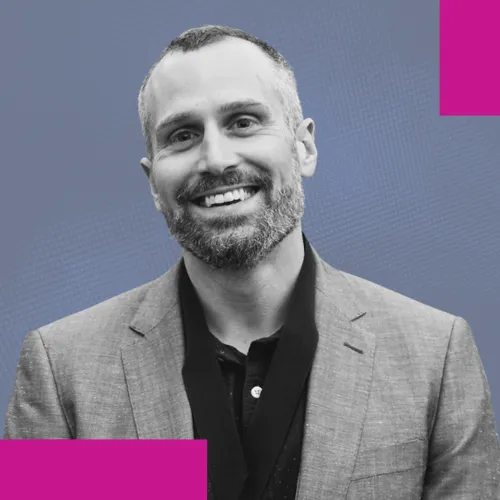
Our guest this week, Sparkfund CEO Pier LaFarge, has thought a lot about this problem. And he’s trying to prove that you can get local buy-in through better energy development models.
First, we’ll talk about the state of grid utilization. At a moment when there’s a deep fear of overbuilding and anger over rising electricity rates, the idea of getting more out of our existing infrastructure is taking off. Pier argues that utilization is the first step toward restoring trust in growth of the grid.
Then we’ll talk about Sparkfund’s partnership with Xcel, backed by Google, to deploy distributed batteries around Minnesota. While only a small part of the answer, Pier sees it as a way to create local buy-in to data center infrastructure.
We’ll end with a deeper look at what’s driving the backlash. Pier shares a playbook for local abundance that he developed with local leaders in Alabama. When promises of jobs and taxes stop working, what comes next?
Credits: Produced and edited by Stephen Lacey, Sean Marquand, and Anne Bailey.
Join Latitude Media on October 14-15 in Austin for Flex Summit 2026, a two-day, in-person conference on distributed capacity, grid-edge flexibility, and the AI demand economy. Our podcast listeners get a 10% discount on this year’s conference using the code PODS10. Register today here!
Open Circuit is brought to you by FischTank PR, an award-winning climate and energy tech, renewables, and sustainability-focused PR firm dedicated to elevating the work of both early-stage and established companies. Learn more about their PR approach and how they can support your company’s messaging by visiting fischtankpr.com.
Open Circuit is brought to you by New Mexico Women Lead, an organization dedicated to empowering women, elevating communities, and leading New Mexico forward. Explore how New Mexico is advancing energy production, research, and innovation at the state’s official energy data platform, detectnm.com.
Transcript
Stephen Lacey: From Latitude Media, this is Open Circuit. Across America, people are screaming no. No to data centers, no to the big energy projects that serve them. So what gets people to a yes? Perhaps an enthusiastic yes.
This is what every company building infrastructure is desperately trying to figure out right now. And our guest has thought long and hard about this problem and he’s trying to prove that you can get to a yes through distributed batteries.
So this week we’re asking what emerging energy models can break the cycle of resistance? Can the grid earn the right to grow? And can the energy industry serving that growth earn back the trust of local leaders? We’re going to look at grid utilization, distributed batteries, and most importantly, the way you pitch those models to the locals making decisions. That’s coming right up.
Hey, welcome. I’m Stephen Lacey. I’m the executive editor of Latitude Media. Caroline Golin is our regular co-host. She’s the chief growth and policy officer at NRG. How are you?
Caroline Golin: I’m great. I’m great. The weather is turning in Atlanta too. I woke up yesterday giddy because it was cool and I jumped and squealed and I was very excited. It’s been warm here for far too long.
Stephen Lacey: And you’re surprisingly relaxed because you did not have a week full of insane meetings at Climate Week.
Caroline Golin: I didn’t have to go to Climate Week. Sorry. I mean, Climate Week’s great. I mean, it’s great. Love it.
Stephen Lacey: Well, Jigar is somewhere with a pillow over his head after his Climate Week and in his place is none other than Pier LaFarge, the CEO of Sparkfund, a company that helps build utilities build and deploy clean energy. Pier, so good to see you.
Pier LaFarge: Good to see you too. Glad to be here.
Stephen Lacey: When I saw you yesterday, you were just so full of energy. You are an extrovert to the max.
Pier LaFarge: Climate Week jungle gym. You either get energy from it or die trying.
Stephen Lacey: So Pier’s going to be speaking at our Flex Summit coming up on October 14th and 15th in Austin, Texas. If you like this conversation, and I think you will, or you have comments you directly want to make to Pier, you can meet him there and wax poetic about the future of the grid. I promise not to squeeze all the juice out of this episode. Pier, I’ll leave something on the table for you for Flex Summit.
Pier LaFarge: Always got to hold something back for Flex Summit.
Stephen Lacey: So let’s talk about energy models that can break through the cynicism and pessimism that’s looming over what I think we all consider the greatest infrastructure build out in history. And I want to start by looking at the state of grid utilization and the role that distributed batteries can play and specifically the way Pier thinks we should be positioning these solutions to local leaders. And then I want to step back and talk about the backlash itself, the root of the backlash. All of this can feel like it’s something that popped up overnight, but it is the result of decades of people feeling like institutions have failed them. And I know that’s something that you have thought a lot about Pier on how to fix. And Caroline, it’s something that we’ve talked about extensively on this show. So let’s dig in and start with the concept of utilization, a framework for the grid.
The hottest phrase in energy right now and clean energy is grid utilization. The electric grid is one of the most truly amazing machines that humans have ever built and we’re all plugged into it all the time now, but we don’t actually use as much of it as you think. On average, the grid runs out at about half capacity. And so everyone’s asking how we get more out of it and that there’s this real fear of overbuilding right now and there’s a lot of anger about electric rates that is sweeping through politics. And so the idea of using more of the grid that we’ve already paid for is very attractive, which is why this is getting so much traction. But are there limits to the benefits? How do we maximize its value? Caroline, I want to start with you first. We had Brian Janous on the show, I think it was back in February, talking about this Brattle Group report that we could save more than $100 billion through lower rates, through better utilization of existing infrastructure.
Since then, we’ve seen Virginia adopt legislation that mandates reporting on grid utilization. This conversation seems to have broken outside traditional clean energy circles into the broader political discourse. And there’s now considerable debate about how far we can push it. So what do you think has changed the most in the last few months?
Caroline Golin: Well, I think that it’s a time value of money conversation at the end of the day and not necessarily the economic equation, but what is the value of waiting for five years to get a new power plant on? And what is the value of investing in something that’s sort of a no regret investment for the grid? And how do you recoup your value on those investments as well? What I think has happened over the past couple years is that utilities accepted load growth and then they didn’t have an answer for it at all. And they didn’t have a grid that was capable of absorbing it or a supply chain that was capable of absorbing it or a list of transformers ready to be installed capable of absorbing it. And at the same time, they didn’t want to lose the load growth because the load growth transfers into customers and it transfers into revenue and it transfers into robust durable cash for their investor community.
So the answer was initially, let’s just rent seek off the data centers at an astronomical rate, which I can’t blame them for doing. And then that didn’t go anywhere. And then the answer became, well, maybe we could try distributed resources, but that still has a backlog. And then I think then some very smart people realized, what if you just improved how much capacity you could shove through the existing wires? And then that became a conversation. And actually what’s interesting to me is that it was the last thing that happened in the conversation over the past four years of the data centers screaming there’s not enough capacity. I mean, it was four years ago when at Google we started telling our regulators, there’s not enough capacity on the system for what we want to build. So it’s a little shocking to me that it came at the end of the conversation considering the fact that 10 years ago we had a ton of great cases all over the country trying for grid modernization and none of this kind of came up.
And I think that was more of an effort of there wasn’t load growth and so the utilities needed to make some money. So they decided to call what was day-to-day grid operations and grid maintenance, grid modernization, which of course it’s not, but it is. It’s been the last sort of piece in what I think has been an exacerbated puzzle of how do we find capacity on the system so that we don’t lose customers that we ultimately want to capture long-term for revenue. That’s where we are today. And I think what you’re seeing is that utilities are willing to do more or do more innovative things if it means they can maintain their revenue mode. And that’s what is most interesting about this to me. And Pier, I’d be interested to see what you say, but as someone who’s worked in utilities for a very long time, we haven’t seen that quite often.
So that’s what I think has changed. It was just like we finally got to the end of it and we’re like, okay, maybe some things that reconductoring would work or distributed storage would work. But it looks the same to me as New York REV did 10 years ago, to be honest. It looks like the same solutions. It’s just now load.
Pier LaFarge: I hadn’t thought about it this way, but I really like how you lay out the, and look, you’ve been lucky to really be part of so many of those pieces of the conversation and the sequence really does matter. It’s almost like for the last 10 years starting with REV, we were always looking at one piece of the puzzle at a time. It’s like a table full of rocks. We would just pick up one rock and be like, energy efficiency, not enough. Distributed capacity. Well, still too expensive, hard, fragmented. And then you’d say, well, in the context of no load growth, we’re worried that there’ll never be load growth again. Why would you do this?
Caroline Golin: Right.
Pier LaFarge: Why would you do this? And then you come with load growth forecasts and four years ago you were like, it’s coming, it’s real, we need it. And the whole system was filled with conversations about, well, do you think it could be more than 2% load growth a year? Wow, that would really change everything. And then it was three and now it’s seven and it turned out to be real. And I was walking around back then with decks saying the grid’s going to double, just that’s all you need to know. And people were pushing back and not sure of the forecast. And so when you look at one of those pieces at a time, sort of each camera angle, I think the story feels incomplete and that no one piece itself is justifying a kind of clear path forward. I think what utilization has done at the end of the conversation here, and I’m sure there’ll be more to come, but it really gives it a kind of system, a container, almost like a Tupperware for all those things.
It lets you see that picture in one frame. And I think why utilization is having such a moment is because it’s good Tupperware to think about at least the first step of how we get more out of the grid we have. And I think important to say upfront, we’re going to need to build a heck of a lot more wires and generation to the actual quantity of load growth that’s coming to these United States. We’re going to need to double or triple the grid. We should. This is a century that’s going to be defined by access to abundant cheap electrons and the infrastructure that supports it. So utilization is really just, I think a first step to start a conversation about restoring trust in that growth actually.
Caroline Golin: Oh, it’s interesting you say that. It’s about restoring trust. I think it’s also about shaping just a bit how creative you can be because we’ve been such a centralized grid for such a long time. And to be honest, it works and it’s easy and you’ve got 50 years of workforce that know how to do it. And so I think it’s also the first time the distributed energy space has to also think more creatively as opposed to just in pilot form. Most renewables got on the system because of these sustainability goals for them, these hyperscalers, and that’s an energy only goal. It’s a REC play. That’s not, are you shifting peak? That is not, are you firming and supporting congestion play? That’s not what we were pricing them for. They could figure out how to do that on their own great, but this is actually forcing a larger palette, I think, in the way that you think about technologies. And that’s great because we’ve siloed technologies for a long time.
Stephen Lacey: When you’re sitting around tables with utilities, both of you, Pier, what has changed in those conversations?
Pier LaFarge: Well, maybe a bridge to that question, really, I think the framing of load growth coming back with such fire and fury is what is going to shape everything in these conversations. And I think we’re all clear on that. It’s what justifies, I think, a increased focus on distributed capacity because it’s a way to move forward and get more out of the grid in the near term. It’s also what justifies an increased focus and investment on the centralized resources. And interestingly, I think for a lot of years, the distributed industry was only sort of presenting itself as an optimization of the existing grid without load growth. We were saying, “Hey, here’s a good way to improve carbon outcomes or handle intermittency or we do these different jobs or we could avoid infrastructure because there isn’t load growth to pay for all the things.” I think the biggest challenge to the, and this a little bit gets to your question, Stephen, about utilities and how they think about this, I think quite genuinely, is now that load growth is back, it is not clear that this problem is not actually easiest and most economically efficient to solve just with the original centralized playbook.
There are enormous economies of scale of putting a thousand megawatts of batteries in a field. Utilities know how to contract for them. There’s a full ecosystem to deploy them. And when you do big centralized things in large financial transactions, it’s easy to put in billions of dollars to pay for those upgrades and put downward pressure on rates. So one of the ways I try to run my business at Sparkfund is really have respect for we’re now not only lucky to be in a moment of grid need where distributed resources and distributed capacity might be just on the list of how to grow the grid, but we’re going to be the third thing on the list after transmission, centralized generation, maybe even operational flexibility of large loads and then distributed capacity. And if you don’t understand the reasons for that rank sorting, I think you’re going to be talking past each other and utilities and regulators.
Caroline Golin: Yeah. And I think it’s also because that’s what the investment community is asking for. I mean, at the end of the day, it’s what they understand. It’s how infrastructure capital is structured. And it also mitigates the human aspect of some of this, which we’ve talked about before. If you go build power out in the middle of nowhere and the transmission line could become a problem, but you’re dealing with less humans. And that’s a part of this now too. And there’s another conversation about this, which is that a lot of the utilities that are pro-grid utilization right now are either utilities that have the market structure where they can make returns on all layers of the stack, or they are hoping that this gets them back into the generation game in some way. And so there is this… And I understand that. I may not agree with it, but I understand it.
If you’re a utility that decided to divest of all generation, if you’re a T&D utility, because there’s no load growth and you decided to be a more simple revenue model, now you’re not part of the party.
Base Power is growing everywhere. And then you’ve got X, Y, and Z behind the meter, a gas turbine business with several billion dollar market cap. And you’re like, “Wait, I want in. I want to be part of this. I don’t want to just be stuck with the interconnection queue drama. I want to be part of this.” And so you see this shift, which was always sort of there, but I think what is most interesting to me and I’m sort of stuck in the middle of is how this grid utilization debate is really uncovering a retail choice debate across the country. And it’s like you see the utilities that are in it and what we’re going to do as a broader ecosystem around that. And that’s where my head is focused most of the time.
Stephen Lacey: So Pier, let’s talk about your approach to this. We have had discussions about the Capacity Connect program with Xcel Energy to fund a couple hundred megawatts of distributed C&I batteries in Minnesota. This is something, this is the Sparkfund model. So I’m curious, I know you’ve been on lots of podcasts talking about this and we’ve had discussions about it. So let’s kind of zip through it and just explain why strategically placing a one to three megawatt battery in parking lots and other free space is a grid utilization strategy.
Pier LaFarge: Well, look, grid utilization, regardless of what market model or regulatory model you use to pursue it, I think is a resource that can be harvested. You can go get it. And to do that, you need to shave the peaks on the grid, particularly in the distribution grid and transmission to pull the substations off transmission. On transmission, you need to smooth out the peaks to be able to deliver more energy. And then if you can have demand show up in the right load pockets and help customers target EV fleets and compute and electrification in the right places, that picture together really lets you harvest utilization. So one piece of that puzzle, there’s sort of the flex piece and the demand piece to get it right. The reason you’d want to do both is that if you can sell more kilowatt hours faster than you grow the dollars that it costs to deliver that system, regardless of the regulatory model, it’s all the same equation.
How much is the grid cost divided by how many units of energy you sell over it? Basically the price of power. And we have various regulatory ways of explaining that to ourselves and setting the prices, but it’s all really just a division problem at the end of the day about throughput and dollars behind it. So if utilization is a resource you can go harvest and the reason you want to do it is that you can both sell more energy and make power cheaper every time you sell more energy. That’s a really compelling way to run and grow a grid. And batteries are one critical piece, right? You have the flex side and the demand side. And the flex side, you want resources that can almost act as an extension of the wires themselves. Batteries are not generation. I think it’s really important to say that regardless of their regulatory treatment.
They do not produce energy. They store it. In fact, they destroy a little bit of it with round trip efficiency. So they’re like the opposite of generation. They’re actually like incremental energy destroying machines. They just, for the cost of that reduced round trip efficiency, they can move energy in time. And I’ve said this before, batteries are electron time machines.
When you’re talking about the best type of flexibility, it would be flexibility both in space and time. And the beauty of batteries is you can put them where the grid needs the most. So you charge them up when there’s plenty of energy on the grid, you dispatch them when it has constraints, both where the grid needs that relief of constraint and when it needs it because you’re holding the electron safe until it needs to be dispatched. And running through that framework, all of a sudden the model that I think we’re pursuing with Xcel and others through distributed capacity procurements and really very first principles approach to that. It’s like, okay, if putting batteries near the grid constraints to be able to smooth them to improve the grid, to improve utilization, then great. Just go put them at reasonable size where the grid needs them. That can be done with resi batteries.
Caroline, you mentioned Base Power, Tesla, many, many players in that space are putting lots and lots of smaller batteries over the grid. Sparkfund’s model is to put three to five megawatt batteries at the edge of a parking lot. They’re bigger, so you get a little bit of that economy of scale, makes it cheaper to build per megawatt or per megawatt hour. And you put them working with the grid operator right where the grid has that constraint. And it also gives you an amazing opportunity for community wealth participation in infrastructure because by renting that parking lot, you pay a church or a school or a fire station a nice annuity for 20 years because we need to build infrastructure and they’re in the right place. We’ll come back to that piece.
Caroline Golin: I personally like the three to five megawatt model, mainly because if you want to geek out for a second, if you think about rate classes for C&I customers versus residential customers, there’s just more incentive. There’s more incentive there. But Pier, one of the things that, and maybe we can talk about this a little bit, but one of the things that has always been, I guess, part of my career, it was this concept of decentralizing power. And I agree with you. If we’re taking on this AI infrastructure, if our country’s going to do it, you’re not going to do it without building more power lines and without building more power plants, full stop. So anyone who says that we don’t need to is frankly kind of, I think, causing more confusion and is probably deleterious to the argument. But what I think is more interesting here is the, and we’ve talked about this a million times on the pod, Stephen, but the data centers don’t care where the power comes from. And I think that the other important part here is that the concept of being off grid was really ramped up for the data center community for about six months, in large part because Trump sort of said it.
He sort of endorsed this idea of just go build the microgrid data center and build data centers in space, which I stand by is still going to happen.
Stephen Lacey: Google just did some tests this week, right?
Caroline Golin: I’m with you. Jigar owes me so much money. Space is real. So much money. Jigar, you’re not on the pod. You owe me $10,000 for that bet we make. So that’s all going to happen. But I worked in the concept of decentralized power more in the developing world, and I’m going to come back to that for a second in a second. But what I think is interesting now is that in addition to the whole, we want in on the spending spree, and I’ll call it that, from the utilities, there’s also a real political recognition that like, well, if we can’t provide this and all these data centers go do this really irresponsible thing, we’re stuck with the political consequences of that. So there’s this interesting motivation going on where sort of behind the meter, decentralized power provision for the data centers became this really difficult thing to do.
Power plants are hard and also they were doing it really irresponsibly. And so now it’s sort of shifting back like, oh, but we actually do want to be grid tied. We actually really want to be on the grid. Actually, the grid’s really important. We want to do it. And it’s opening up, okay, well, if you want to do it in three years, we can’t get you three gigawatts, but we could probably get you 250 megawatts. What can you do with 250 megawatts? And so when we were building data centers 10 years ago, even five years ago, if we came to the table and said we needed 200 megawatts, which was the most we would ever say ever, the answer would be like no. But if we’d come back and said, well, what we really need is 75 megawatts, the answer would’ve been yes. And so part of this is the back and forth nuanced conversation of how do you incrementally build power on the distribution system to match the incremental load ramp of the utilities.
And that can really only happen with distributed resources because you’re not going to incrementally build a gas plant. The economies of scale doesn’t make sense. You’re going to build it as big as you can and with as much robust resilience and with the cheapest output as possible. And that’s what will get built in 2030 and that’s what you’ll run on. But in this ramp rate, this is really the only way to build that one for one block. So that’s what I think is really important for people to understand in the nuance of this for why it’s appealing to a data center ramp if we can get the structures right contractually.
Pier LaFarge: I totally agree. I think one of the big emerging themes from Climate Week from this market right now is that we’re starting to get the contractual structures right. Companies like Voltus and Base and Sparkfund are all, I think, centering around the sort of bring your own distributed capacity BYOC framework. Google did a paper with Alliance to Save Energy and Ad Hoc Group. There’s been a bunch of really great contributions, I think, to the framework of how do we structure, transact, buy, and sell this stuff in increments that are both meaningful to their contribution to total growth, hundreds of megawatts or gigawatts at a time, but also how do you kind of divide up the value of who pays for what they want? Data centers paying for premium capacity and resource adequacy above kind of ambient market, but not enough to cover the whole asset price. And then ultimately grid operators get, and therefore their customers and community members or otherwise get discounted assets that make the grid better.
So that bring your own distributed capacity model I think is really now the center of the fairway for this space. And I’m excited as I’ve ever been that distributed capacity as a category is really arriving. Again, I think we’re the third thing on the list of how to grow the grid, but I think we’re now on the list.
Caroline Golin: Yeah. I think you’re the third thing in the totality of the gigawatts that have to be built. But again, after the data center, I don’t want to say after the data center boom is done because that’s a stupid statement, but we still have electrification, right? We still have resilience issues with climate change. Where it’s going to break down, and we’ve talked about this before, is you’ve got this window Pier for contracting because you’ve got data centers who are willing to do it because it also has this affordability lens. It also has this good grid citizen lens of this community value lens, which should be exploited and pushed as much as you possibly can through a bilateral negotiation. But the markets don’t reflect this. So PJM’s not valuing this. There’s no signal yet in ERCOT for this, SPP, unclear where that’s going to go. So the long-term barrier to this is that we don’t have an actual price signal for the value that this provides yet in an organized wholesale market, unless the utility says, “I count this in my resource planning for the next 10 years, and therefore I am either A, reducing it from what I need in the market or B, going to give it the accredited capacity that it’s not going to receive from whatever operator.” And that is the barrier.
And if that doesn’t get figured out, it could become less than third in tools in the toolkit once the big power plants get built. And so I think that’s what the focus needs to be on.
Stephen Lacey: Yeah. I know Pier, you’ve been thinking a lot about this. Does that feel like the right gap in the market?
Pier LaFarge: Absolutely. We’ve been talking about it in concept. Then two things become really clear. In a funny way, distributed capacity is most urgently related to building large loads connected to transmission. And also that’s the job that a lot of distributed capacity does the least well because it’s not in the right place. It’s not as electrically proximate as it needs to be to really take the constraint off transmission. So there’s a lot of great work as a Peak Energy and Base Power study on this, the Utilize Coalition, which I’m a part of, has been doing work on this. There’s some really good thinking on where do you need to put them? How do you need to operate them? What is the threshold of telemetry? How clearly does a grid operator need to see them to use distributed capacity? So I think you’re getting two things at once in the context of how distributed capacity as a category can directly address and firm load growth in the transmission connected large load sense.
And one of those is contractual, right? Caroline, to your point, you don’t have a market signal, you don’t have a clear regulatory structure. So how do you start connecting the economic flow of value, large load tariffs popping up in multiple states, ESAs and bilaterals starting to add distributed… Offsite flexibility resources to those contracts. And then bring your own distributed capacity as a sort of umbrella category of a series of bilateral contracts where you can pay simply the premium that is valued by the offtake based on how much that acceleration and capacity is worth to them. But I think you also pointed Caroline to something important, which is if it’s true that it’s sort of do or die for distributed capacity to be able to connect to this moment because the grid and the economy is largely downstream of the infrastructure cycle around data centers. I think we’re going to get there.
But I also think that when we look back 25 years in the future to this moment, we’ll see that it was data centers that helped price, structure, and scale distributed capacity. It’s the grid operators that will then build the new operational protocols, control room, dispatch signals and improvements that let them use it well, which is no small task. Grid was designed to grow, to deliver power one way. So it’s a non-trivial operational change. But when we look back, what we’ll also see I think is that distributed capacity was even better at supporting the next waves of load growth that’ll go through electric vehicles and home electrification, which I was actually surprised even just the last couple of months to see graphs that even the eroded forecasts of electric vehicle penetration by 2040 are in most forecasts I’ve seen the same size as all the data centers that’ll be built through 2040.
So it’s still a lot. Transportation is just a ton of energy when you look at those old quad flow energy graphs, quadrillion BTUs. Cars take a lot of power to move around. So that’s not something we talk about as much anymore, but it’s going to be a long-term contributor. But it’s hard to transact with. You can’t do a bilateral contract with a million EV drivers as easily.
Stephen Lacey: I want to shift gears here. We could spend the rest of the time talking about contracting and frequency regulation and capacity accreditation, but I want to talk about why this matters. There’s a value exchange being created here. If we consider, for example, the Capacity Connect program that Sparkfund is involved with. If we take a model like this, Pier, and do it in the right way, how do you create more local goodwill? I presume that you’re not going to the customer site and talking about ancillary services and frequency regulations. So what are you talking about? How do you get these projects done and ultimately what is the goal to creating that local goodwill?
Pier LaFarge: Yeah, you touched on it earlier in a way that I really appreciate, which is the reason we’re in a moment of backlash to major infrastructure proposals is not about any type of confusion or misinformation. It’s in my view, it’s downstream of an authentic and real experience that a lot of Americans have of not trusting the institutions and the decision making processes that in a lot of people’s experience have just not delivered the results in their communities that they expected. And if they have delivered results, they’ve been hard to access or don’t seem to reflect their sense of dignity and choice in terms of what their place should be. People of all types have a right to feel agent and participate in how these decisions get made and a lot of people just don’t. And the decision making processes and institutions that have been making these decisions for years haven’t earned their trust, I think for good reason.
So what the data center backlash is, in my view, is a cry for control. It’s a cry to say we’re here. We have a franchise in our place and we want to express that in the world. Starting the conversation with that as a authentic lived experience that really is valid and real, I think leads to a whole bunch of other… The way you would then tackle that I think is really different than if you think it’s just confusion, misinformation or a lack of good PR. So with that framing, something I’m really proud of is that my belief is that what communities deserve is a engagement that creates an authentic exchange of value. So communities need to participate in the wealth of infrastructure creation, but they need to do that in a way where they know what they get, but also they know what you get.
So our Capacity Connect model is a very small example of that. It’s not the whole picture. There’s a lot more work to be done in this space to build authentic exchanges of value in terms of how communities feel like they’re participating in the wealth of infrastructure investment. But in the small act of renting the side of a parking lot to put a battery, you can, I think, create one of the clearest and best and most intuitive examples, both economically and politically of that goal. So I’ll tell you a story. In our Capacity Connect program in Xcel, one of our first sites is a church in the Twin Cities and the pastor who runs that church is great, wonderful, wonderful fellow. We’re renting 5,000 square feet on the edge of his parking lot, wasn’t using it, and that’s going to give that church over 20 years, thousands and thousands of dollars a month for 20 years.
That’s an annuity that ultimately can go right to church operations, hiring lay ministers or bringing new programs or food banks. So there’s this really authentic exchange of we’re putting a battery in your place because we want to grow the grid. We want to power data centers. This is part of a program that Xcel brought to the PUC and was approved by the regulators. And then Google also was able to put money into to get capacity off the backend. So there’s this clear participation model. And that community leader, that church pastor can explain to himself, to his neighbors, to his constituents, we’re part of this. Here’s what we’re getting from it. There’s both an annuity to rent ground that’s not a complicated explanation of bill savings or frequency regulation or anything like that. It’s just money for value. They know what we get. We get to build a battery.
We make money on it. The grid grows. The data center gets built. They make money on that. And it also has a lot of great co-benefits. It can be proud to say that helping keep the lights on for his neighbors in that part of the grid, helping make the grid more reliable for weather events and better at handling renewable energy and intermittency. So there’s really, I think, a good story of how to engage communities and have them see themselves in that story.
Stephen Lacey: Caroline, what does this represent to you? I mean, I know that you’re focused a lot on the distributed side as well. Is there a model here that you think is replicable and impactful in the way Pier described it?
Caroline Golin: Well, yeah. I think you have to break out the resistance to data center load growth and it’s a complex political conversation. And I think that if you ring fence it too, there are some people who rightfully feel like they don’t have agency in what the country has said is our economic future, want to keep their sunset skyline, do not want lots of people driving trucks in their neighborhoods. I don’t think going to them and saying, “We’re going to put a battery at your farm and give you a lower cost of electricity is going to get them on board.” I think it is unclear to me what will and if they necessarily need to be. I think there is parts of America that should be allowed to say no. But then there’s this interesting intersection of people who are both skeptical of the utilities engagement and highly skeptical of the data center hyperscalers motivations.
Please use less power so I can use more, can be boiled down quite quickly. But in between these, there are motivated customers who I think if they can see the broader benefits to distributed capacity can get on board with this. And I think that’s sort of the overlap in the Venn diagram that Pier is going after, which is that it’s not politically tenable and maybe it never should have been to say, “We need you to pay more so that these trillion dollar companies at this point can meet their shareholder returns so that their cost of power can be lower or so that they can get online faster.” And that’s really what this has been articulated as. And I think that if you can insulate that portion, and that’s really an urban portion, that’s not the portion that’s dealing with two gigawatt data centers rolling in next door.
That’s the portion that’s dealing with, “Well, my rates are going up because two gigawatt data centers are rolling in a hundred miles from the city center.” That doesn’t make any sense. If you can isolate that portion, I think what’s interesting about that, going back to what we also said is that’s also the portion you need for electrification and electric vehicles and resiliency place. That’s where you’re going to start placing charging stations. That’s where you’re going to start seeing the ability for distributed capacity to meet those short term signals. And so it plays nicely. I think what I’m thinking about is how do you bridge this model to that reality? Because I do think it’s short-lived in saying we’re going to put this here that Google’s paying for it or Microsoft’s paying for it, whoever’s paying for it, your rates are going to go down and it helps them get online.
But we’re making a deal, we’re cutting a deal here. And to already placing it into a future rate structure market model that gets beyond the data center load growth onslaught because my fear is we’re pricing things for a bilateral offtake and we’re going to be behind in three years when electrification starts ramping up and then we’re going to be caught between having to repurpose or restructure or think differently about these pricing models again. So it’s that bridge that I think about. But I think the Venn diagram is, that’s the right customer group to go after. It is not, of course, and I think Pier would agree with this, it doesn’t assuage the NIMBYism or the data center backlash of rural America, which is politically driving what’s going on. Yeah.
Stephen Lacey: Yeah. I want to get your direct response to that, Pier. I also want to just use that as a segue into talking about what a playbook for local leaders could look like, which is something that you’re thinking a lot about. So how do you start with outcomes a community wants? How do you measure proposals against those outcomes, being honest about the trade-offs? And so maybe respond to specifically what this model does effectively and doesn’t do, and then what the right framework looks like in practice.
Pier LaFarge: Absolutely. So society at its best is a weighing machine and you get different groups who come to the societal scale and they put little pebbles and rocks and boulders depending on how much they care, how engaged, how upset, frustrated, worried, or excited. And that weighing machine is good and it is not designed to have a universal agreement or to kind of win it all. I think that the approach that I’m proposing is one where you would hope that by authentically engaging community members, churches, fire stations, schools, hospitals, small business leaders, with a exchange of value that’s authentic and that’s engaged with what they get, what you get, you would build a constituency and a group that can show up in those societal conversations, not to say this fixes everything or we have no further concerns or we think our neighbor’s concerns are invalid, but just to say, here’s what we got.
And that puts a little pebble, little rock on the other side. And sometimes in these civic processes, permitting, zoning, utility commissions, you don’t need absolute agreement. You need a balancing of voices to show that there are trade-offs, to your point, Stephen, and that some people get value, but others have real concerns. And then it’s the job of local leaders to try to do the hard, slow, patient work of working through the concerns, building structures that address them substantively and honestly, and then celebrate and tell the stories of the parts of the community that are really coming along, both in terms of wealth and value.
Stephen Lacey: Caroline, is America capable of that in the midst of this AI frenzy?
Caroline Golin: Listen, I think that, and I mean, I feel like I’m beating a dead horse here. I feel like the voter base that is utilizing AI, that sees the economic benefits of it is largely urban. And that is the voter base of which these type of solutions appeal to. And so yeah, that works. I think the voter base that doesn’t think AI is going to make their life better because they are pig farmers, this doesn’t appeal to. And so it is a weighing game. And the way we’ve sort of structured our political lines right now, I don’t know that the urban AI users have some of the weight in some of these state races. So that’s the difference here. And I’d be the first person to say as someone who is actively trying to buy farmland, yeah, I wouldn’t want to put a data center in my skyline view of the mountains and farmland.
So I think that it is a question of agency. And I will also say this, I think it is interesting that the tools to get buy-in into the economic value creation of AI are being relegated or delegated to small suppliers and innovative energy startups and are not being required of these large behemoth tech companies that are essentially running our GDP right now. I just think it’s interesting that the entities that are trying to make this bridge, that are trying to solve this problem are very low capitalized startup or energy supplier companies compared to the amount of money that’s going into it. So I’ll leave it at there and you can get a lot of YouTube comments on that one.
Pier LaFarge: And that’s a cynical way to look at that. And then there’s a hopeful way, which is that the great thing about an innovation economy is little companies come up with good ideas and then the question.
Caroline Golin: No, that wasn’t a comment on the little companies. I think it’s a strength.
Pier LaFarge: Oh I know. I heard it that way.
Caroline Golin: The little companies are doing some phenomenal work. And my question is, at what point do we as people be like, “Nah, you got to give some more buy-in for this.”
Pier LaFarge: Oh no, I heard it that way. My point was that the way that this history will be written will really be determined by how much those big companies actually adopt those good ideas, how quickly they can sort.
Caroline Golin: I think so. I think so.
Pier LaFarge: And say, okay, that’s right. I agree with you. But Stephen, happy to go back to the point about starting with outcomes and what that could look like. That’d be good.
Stephen Lacey: Yeah.
Pier LaFarge: So very proud of the work that we’re doing in this space with Sparkfund and distributed capacity and that model we’ve described. But one of my side projects is a group called Abundant America, spending a lot of time for the last several years doing some of this work with sort of local leaders sitting down and doing dinners and workshops, thinking about how these decisions get made. And when we started that work three years ago, it was meant to be much longer term and less applicable to the current political cycles. It was really a curiosity about how local leaders could slowly but surely begin to restore faith in our institutions by bringing tangible results to their communities. And we think that the best way to restore trust in that process of shared politics is actually to start at the ground level and that the signal and the noise of American politics is sort of the presence or absence of results and how clearly you can communicate them.
But it’s been interesting over these years of doing that listening work and shaping work, giving ourselves the permission to slow down a little bit and hear those voices of mayors and town council people and state reps and county council folks that the pattern that’s emerged is how frustrating it is for them to be constantly in reactive mode, reactive mode to these big proposals and have so few tools to enumerate the benefits, to engage the people. They love their places. They work for these people and it’s so hard for them to be able to do their job when there’s this incoming proposal that they didn’t see or shows up in a zoning board or was under NDA and gets the cover’s taken off. And it’s frustrating. So we heard that again and again. And what came from that was a series of working sessions with local leaders where we actually asked them to say, what’s hard, what’s easy, what would make your job better and write that down.
And we came up with a really simple, almost to the point of naive answer to that, but it was brought to us by local leaders doing this work at the level of town council, state reps, rural places mostly. And we call it the playbook for local abundance. And the simple idea is start with outcomes, engage your community in listening sessions, put up a posted board in a town park, hold sessions in a library and ask some really intuitive, simple questions, which is, what do you love about this place? What’s been difficult? What would make it a better place to raise a family or have a job or start a business? What would you see that would make you excited about your town or county? And when you have that input, then it also gives the leader an opportunity to talk to other leaders and say, what’s happening in your place?
What’s going well? What are you able to achieve? And how did you cut your property taxes? How did you double your school budget? How did you get a new county athletic facility? How has that gone? And if you start with outcomes, then the second key phase of the playbook is commit as a leader to measure every proposal you get against how well it delivers those outcomes. That’s the job that you want to do for your town or your place.
Caroline Golin: I wonder though, what you’re articulating is almost exactly what we should be expecting out of development from the data center industry as well as the power development that goes along with it. And that’s been lost. And I think everyone agrees, even the hyperscalers agree, they didn’t do the work. They focused on a jobs number to maintain sort of their status for tax. And that was when you had a dozen 200 megawatt data centers, that was probably sufficient. And so you’re moving into this new space. But what you’re really articulating is a valuation score for infrastructure and for the development of infrastructure, which has been reduced largely to two metrics, which is how much does it cost?
Pier LaFarge: Jobs and taxes.
Caroline Golin: Exactly, exactly. How much does it cost and how many jobs is it going to bring? And I think that that is really insightful. And I also think that it’s something that really should be, and you’re seeing this in Texas right now, that they paused everything, asked for this audit. Intuitively, if you look at this audit for the data center, if you look at this, there’s like, well, there’s no way you could really answer all of this unless you’re one, very, very far along in the development and two, you’ve actually engaged your community. And that’s essentially what I think Abbott is saying, which is that if you haven’t had a town hall and figured out if they want you there and what it’s going to take for them to want you there, then you’re probably not going to get through the political gauntlet of building a data center here.
And so I wonder if all this NIMBYism and insecurity about infrastructure, the first time we really had a lot of insecurity about building new infrastructure is going to create a new value system for what we think the broader built environment should do and bring beyond taxes and jobs. Because let’s be honest, the jobs component is not part of this in terms of the data center space. They’re not bringing the same sort of direct jobs.
Pier LaFarge: And that’s just not enough anymore. Jobs and taxes, if you’re this type of nerd where the pillars of a neoliberal political order, it’s gone. We’re in a chaotic moment between moments. And if you want to dive into that type of nerd, you can go to our website at Abundant America. We’ll put the link somewhere. Yeah,
Stephen Lacey: You’ve got a great Substack and you’re writing about this occasionally, so everybody should check it out. We’ll provide a link in the show notes.
Pier LaFarge: And I think that to come back to your point, Caroline, yes, the best and most successful infrastructure development projects, transmission has often done a great job at this. Sometimes not, but sometimes they have. They’ve shown up, they’ve had listening sessions, they’ve really authentically asked, “What do you want for your place?” The best data center developers have done it, right? Project Camelia down in Savannah, fully transparent.
Caroline Golin: Yes, yes, yes.
Pier LaFarge: With Georgia Power and OpenAI just did. So there’s some good examples of that, but I also want to be clear that the work that we were doing with Abundant America and these local leaders had nothing to do with data centers. Most of the time you were talking about housing redevelopment or county roads or how to do athletic centers or deal with school districts or build public pools. So I think that the reframing that we’re offering is if you go broader and think about this not as about one particular type of infrastructure and also not as the job of a developer, because clearly they’re not that good at doing it despite a few bright spots, the people in the United States who are good at it, who have the local trust, the local knowledge, what we call grocery store accountability, right? I always say you’re a leader who makes a decision and you think there’s even odds that someone stops you in the grocery store and says, “Hey, let me talk to you about that.” I think the just first principle is you’re going to make a better decision.
And you also know more about what results your place actually needs. And so in those contexts, local leaders are the people in the United States who should be doing this work, who can be going through that playbook for local abundance and saying, “What would make our place better and more flourishing?” And in the end, you also have to be real about trade-offs because if you do a housing project versus upgrade the local athletic facility or a water treatment plant or transmission or data center, all of those take time, money, space. So that’s the simple idea. Start with outcomes, commit to measure them.
Caroline Golin: I’m connecting the two and saying most of the time where it falls down on the data center development piece is they just don’t know what’s going to make that community happy and they don’t have the time because again, they’re running on a different signal. So if that work is done and you’re like, “Here, this is how we go from a not bought in community to a bought in community because we need this daycare. We need this training facility. We need a new town hall. We need whatever it is that you –
Pier LaFarge: Well, they’ll come up with things that a data center operator would never think of, right?
Caroline Golin: Right. And we’ve talked about this before, but it is so key in negotiation for both parties to know what they want. And the data centers know what they want. And the cost of giving the communities what they want is usually negligible to what they could be risking by not being able to build their infrastructure. But the communities have to know what they want and they have to be able to vocalize it. And I think that that is missing often in this.
Stephen Lacey: And in the absence of knowing what the communities want, they come in with their PowerPoint presentation. I mean, this is a joke that Pier was saying to me yesterday, which is they come in with their PowerPoint presentation and say, “We’re going to pay for this soccer field or this facility.” And how did you describe it, Pier? Usually when the person comes in with their fancy presentation and saying, “We’re just going to buy this for you,” that people see that as the bad guy.
Pier LaFarge: Well, there are two points there, right? I mean, I grew up partly in rural Appalachia, partly in the South, and partly in the North. I’m a hybrid. And I can imagine my grandfather was a cattle farm in Southwestern Virginia, very few conversations in that community ever started with a deck or someone saying, “Let me run through a few slides before we get started here.” It’s normal to us. Yeah. And we’ve built this very, this is a very common thing in the professional technocratic world. Exactly. Yes. And so there’s this, first of all, this first principle’s strangeness when you walk into a room with a bunch of poster boards and they’re like, “We’re being transparent about information.” They’re like, “Why do y’all make all these graphics? What do you want? Why did you go to all this trouble?” And then I think the more important point, and I see this really as a risk, genuine risk of getting this wrong, particularly from data centers, but also transmission. I’m in conversations about how to navigate through this community engagement issue all the time. And one of the things I hear is, “Well, just increase the benefits and make them just so good they can’t refuse. And what do you just pay for the power bill of a whole school district? Just buy them a stadium or pay for everything. Pay for the whole town. Who cares?” And they’re like, from my perspective, I think this, by the way, if your listeners out there, if you’re from a certain part of the country or grew up in a rural area, this should just be like, I’m sure it’s already in your head, but you’re like, “That’s the bad guy.
That’s the one who wants something. I don’t understand that.” I just think that there’s this tone mismatch that’s, by the way, quite well-intentioned. I really think also having worked in this space, that the good news is that these developers of transmission, of housing, of critical minerals, of digital infrastructure, all of them sincerely want to understand what these communities would need to be better. They want to be part of the story. They want to be the good guys. And some of the mistakes that they’ve made are simply because, frankly, these are good people who have their own cultural way of thinking about things, and they’re not used to being the bad guys. And so we’re in this difficult moment where we’re receiving each other across that gap. And yeah, I think that’s the simple point. I think local leaders can really, if we give them the right tools and the right framework, and we can really help them bridge that conversation.
And like you said, be more clear about what a community wants, whether it’s housing in a grocery store or whatever it is. Yeah.
Caroline Golin: Or they just want to say no, that’s awesome.
Pier LaFarge: They just want to say no.
Stephen Lacey: That’s right.
Pier LaFarge: Yeah. That’s an outcome you can measure things against.
Caroline Golin: Exactly.
Stephen Lacey: Caroline, to wrap this up, I mean, you’re in a unique position to answer this question because you’ve spent so many years at Google. You have a significant local engagement at NRG. What do you think, let’s take the tech companies as an example. What is missing? Having talked to them, they had these very robust community engagement teams. They do have all these positive stories about buying a school bus or laptop program or a science program or whatever it is, and communities have historically been happy, but why are they falling short right now and what needs to change to get closer to this framework?
Caroline Golin: So I think when three or four years ago, when the data center community writ large recognized just how much capacity was going to be needed while some of the energy strategy shifted, the strategy for community and political validation did not shift fast enough. And it focused for a long time on defending rather than proactively engaging and creating buy-in. That’s one variable. The second variable is when everyone started to realize how big the pie was, you got a flood of new two guys in a data center truck entrants into the market. And Jigar said this a million times, the hyperscaler community both needed those and hated those entities because we needed them for fungibility and optionality on a land bank strategy and a potential interconnection. But we hated them because they were irresponsible, they did not have political acumen, and they were sort of running around creating a muck problem.
And that division within the industry is severe and is shaping both the political headache for I think the larger tech companies who believe that they will be around for the next hundred years. And so they appreciate the necessity to get political buy-in, even if they didn’t build the machine to do it well. And those that are really looking to just flip and make a couple hundred million dollars and move on. And I think that the hyperscaler community is not going to rein in the two guys in the data center truck. They’re going to try to differentiate and you kind of see that happening with the trade groups now. And so the two guys in the data center truck world is going to be left for the legislature and the governors and the county commissioners to decide. And then if they’re smart, and some of them are, the large tech companies will use that division to determine what responsible infrastructure looks like and box themselves into a solution and that community out of it.
Stephen Lacey: So Pier, to wrap this up, we’re in this moment of just extreme tension and anger, and I’m hearing a lot of optimism from you. Do you see this period as an opportunity to flex the local muscles that you’re talking about here in this interview?
Pier LaFarge: I do. And I think it’s important to recognize that while data centers have made this issue central to energy, they’ve made it more urgent. This issue existed long before we were having this data center conversation, which is why the work we started with Abundant America was before this moment. And it was about housing and rural infrastructure and transportation and things like that. And I think those issues were there before, they’ll be there in the future. And the opportunity is really to recognize that we have this sort of civic fabric. I often say that one of the great tasks of the next chapter of American politics is to fall back in love with civic engagement as a task and fall back in love with that grocery store accountability and take real pride in –
Caroline Golin: It’s very analog of you though.
Pier LaFarge: But I do see that opportunity and I think what’s hopeful about it is it’s decentralized, it’s simple. If you’re a local leader, town council person or a mayor listening to this, start a listening meeting. Ask your constituents what they want, write it down, commit to measure proposals against it and be honest about the trade-offs and publish the proposals you’re seeing on a town website. Go make the website with AI. Ironically, the tools are in our hands and this moment I think is, it’s operationally simple. It’s hard, it’s slow. We have to be patient, but it also I think can, like many beautiful decentralized systems, if it started in enough places at once, all of a sudden become the normal way to think about knowing what communities want and how they can see themselves reflected in this incredible infrastructure boom and opportunity.
Caroline Golin: If this is the only thing really bringing the right and the left together to sit down and hash out what they want in a shared future, then I say let’s lean into that. Yeah, that’s right. One of my colleagues at work said, “Well, at least it means democracy is still kind of working.” And I think that’s true.
Pier LaFarge: To be clear, we started the work with Abundant America in Alabama and West Virginia where my wife and I live and in states like New Hampshire and Minnesota and done meetings in Texas and California. And so this issue resonates all over the country, not just about data centers, but about how we can use local leaders and decision making to restore trust in these institutions. And if we’re lucky, start to build an abundant America from the ground up.
Stephen Lacey: Pier LaFarge is the CEO of Sparkfund. He is the co-founder of Abundant America. Having spent some time with Pier and have him explain this platform that they’re building at Abundant America, it is incredibly inspiring. And you can read more about his thoughts at Abundance Project at Substack and we’ll provide a link to it there. Pier is also going to be speaking at Flex Summit. So if you liked this conversation, you can come riff with him. He is a really good conversationalist. So come to Flex Summit on October 14th and 15th in Austin, Texas. And our podcast listeners get a 10% discount by using the code PODS10. So come see us all and we really appreciate it, Pier. This was just such a fun conversation. Thank you.
Pier LaFarge: It was a great conversation and thank you for having me on.
Stephen Lacey: Caroline Golin is the chief growth and policy officer at NRG. We’re sorry to miss you at Flex Summit.
Caroline Golin: I know. It’s okay. You’ve got Pier and many other great speakers.
Stephen Lacey: Good to see you.
Caroline Golin: Same.
Stephen Lacey: Open Circuit is produced by Latitude Media. The show is edited by me, Sean Marquand and Anne Bailey. You can find all of our episodes anywhere you get audio podcasts, Apple and Spotify and whatever else you use. You can find our transcripts at latitudemedia.com. While you’re there, subscribe to our newsletters, get all our industry coverage. We are covering the flexibility, utilization, debate, and momentum at the website. So we’ve got lots of in-depth coverage there and you can find all of our episodes to watch on YouTube at Latitude Media’s channel. Thank you so much for being here. I’m Stephen Lacey and we will catch you all next week.