For 20 years, the blueprint for data centers was simple: find some land, get in line for power, and trust that the utility could deliver. Data centers and power infrastructure got built on separate tracks because the grid had room to spare.
That model is gone. Today, with long lead times for equipment, multi-year interconnection queues, and the pressure to bring your own generation, it all has to be sequenced together. And on top of it all, public opinion has radically shifted against data centers, adding new risks.
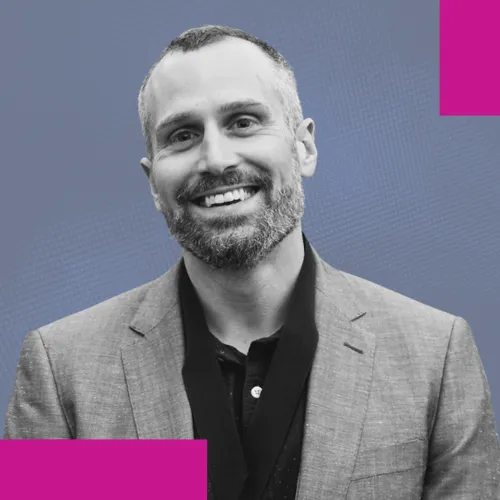
In this episode, recorded live at our Transition-AI conference in April, we hear from two executives navigating all of it: Holly Adams, SVP of Energy at Beale Infrastructure, and Ian Black, SVP and Global Head of Energy at Digital Realty.
They cover the similarities between renewables and data centers, the changing definition of “powered land,” the evolution of large load tariffs, how community opposition has grown, and the hard questions around bringing your own generation that utilities are betting developers won’t solve.
Get your ticket to Latitude Media’s Flex Summit in Austin, Texas on October 14-15.
Credits: Co-hosted by Stephen Lacey, Jigar Shah, and Caroline Golin. Produced and edited by Stephen Lacey, Sean Marquand, and Anne Bailey. This episode was mixed by Matthew Filler.
Open Circuit is brought to you by FischTank PR, an award-winning climate and energy tech, renewables, and sustainability-focused PR firm dedicated to elevating the work of both early-stage and established companies. Learn more about their PR approach and how they can support your company’s messaging by visiting fischtankpr.com.
Transcript
Stephen Lacey: From Latitude Media, this is Open Circuit. For 20 years, the blueprint for data centers was simple. Find the land, get in line for power, and trust that the utility could deliver quickly. Consequently, data centers and power infrastructure got built on separate tracks because the grid had room to spare, but that model is gone.
Today with long lead times for equipment, multi-year interconnection queues, and the pressure to bring your own generation, it all has to be sequenced together and that’s creating a whole new set of challenges for developers. And on top of it all, public opinion has radically shifted against data centers and it’s impossible to take for granted that people will actually want you in their town. This week, we hear from two executives at the front lines of data center development to hear how they’re navigating all of it.
Hello, welcome to the show. I’m Steven Lacey, the executive editor at Latitude Media. Jigar and Caroline are out this 4th of July week and in our place of our normal show, we’re bringing you a conversation I moderated on stage at our Transition AI conference in April.
It features two people who spent their careers in clean energy who are now leading two major data center developers. Holly Adams is SVP of energy at Beal Infrastructure, a data center developer backed by Blue Owl Capital. Beal is not an owner operator. Instead, they develop and deliver infrastructure on behalf of customers and they focus on secondary markets like Tulsa, Tucson, and Kansas City. Ian Black is SVP and global head of energy at Digital Realty, one of the largest data center owner operators in the world. It’s a publicly traded REIT with roughly 300 facilities across 50 metro areas globally.
And in this conversation, we touch on almost everything that is keeping data center developers up at night right now: community opposition, equipment lead times, constraints on powered land, large load tariffs, and the risks of bring your own generation. I really enjoyed this one.
And so before we get into it, I just want to mention that Latitude Media has officially launched registration for our Flex Summit 2026. That is going to be in Austin, Texas on October 14th and 15th. This is our event that goes deep on distributed capacity and grid edge flexibility, which are of course having a moment because of all the new demand on the system. We’re going to be doing a live Open Circuit there and we already have speakers lined up from Tesla, Octopus Energy, BasePower, Excel, ERCOT, and more. So check out the link in the show notes and get your ticket now. Okay. Onto my conversation with Holly Adams and Ian Black.
I wanted to start off by having you maybe talk through a project that is ongoing or that you recently executed that sort of speaks to the kinds of challenge you are specifically working through given your business model. Holly?
Holly Adams: There’s just so many different needs of the utilities that we’re talking to right now and their approaches are so unique, but I think probably one of the biggest challenges that we’re facing right now is with the public power utility that we’re working with near Tulsa and they’re willing to give us some of their excess capacity and then they’re out a capacity. So we are actually having to come up with accredited capacity to sleep to them. So we’re working right now. We did an RFP recently and we’re shortlisting developers and really having negotiations because we have to actually get this into the aggregate transmission study in order to be able to have it qualified as capacity. So that’s the biggest challenge I think we’re facing across the board in all of it is there’s no excess capacity, but every utility’s facing it a little bit differently.
Stephen Lacey: And what is the kind of capacity that you’re developing?
Holly Adams: Well, in this sense, I do think it’s very diverse. So we are talking with some gas developers that are operational, but mainly a lot of the new capacity that’s coming online, we’re looking at a lot of solar plus storage and we’re seeing that across the board. And I do think it’s going to be very important to bring on a diverse resource mix as we’re trying to make sure that as our resources are planned to be operational for 20 plus years, that we’re able to meet the accredited capacity needs going forward.
Stephen Lacey: Okay. Ian, a project that is representative of your development model and some unique challenges that you might be working through.
Ian Black: Sure. I’ll give you four quickly. I’m working on one that the ESA’s negotiations are going on for a year and a half in the Western US and that has everything to do with what we bring for batteries. We have been waiting on Encore for two years to give us a study in Texas. So Texas is now becoming critical path even just to get studied. They’re really overwhelmed. Another one I negotiated and signed an ESA in 20 days. It is entirely predicated on BYO power. And then finally, my team is spending a lot of time getting prepped for the secondary capacity auction in PJM, which gets more and more interesting by the day and by the week. So all four of those are happening at the same time.
Stephen Lacey: You both come from the power world, the renewables world. Ian, I think when we chatted, you said that the world of data centers feels like the world of renewables in 2014. What does that mean?
Ian Black: I think if Nat took his charts and did a 10-year regression and showed renewable interconnection queues, they’d look pretty similar in terms of percentages and just the S-curve. I think there’s a couple of things there. One, the margin for error in data centers has historically been lower and I think that’s due to the way that land has been acquired. It’s more expensive and your options are shorter. The renewable space has always been a five to seven year land option at a very low amount and you don’t trigger that option until you get your GIA. That’s not how data center land has historically worked. It is a much higher valuation. Options are 60 to 90 days and you commit regardless of where you’re at. So now that we’re instituting queues for data centers and everyone’s bombing the queues as Nat showed in ERCOT, the whole model is being challenged and everyone’s acting as if it’s the first time we’ve run into financial securities and first ready, first served, but these are all things that were done in MISO and PJM in 2013, 2014 and it’s the same toolbox.
What I continue to say to utilities when I meet them is, all due respect, you can look at how well that worked. That’s how we ended up with FERC 2023, which notwithstanding the current president, FERC 2023 was going to consolidate and shrink pipelines by 70, 80% by itself in the renewable space and that’s what large load tariffs are going to do and utilities are very happy about it. They show me graphs all the time about, look, we just cut 80% of our applicants by putting in place financial security amounts that look exactly like MISO and PJM in 2013 and 2014.
Stephen Lacey: Holly, does that resonate with you?
Holly Adams: It definitely does. I was actually supporting MISO on the regulatory front at Nexera and I remember having these conversations because they were flooded with generation interconnection queues and how do you weed people out? How do you know who are the real projects and not the speculative ones? And that’s exactly what’s happening here in the data center world. You’re looking around and all these utilities are like, “Are you real? Are you going to show up? Give us the money, show us you’re here to actually take it to construction.” And I think that’s definitely what we’re seeing and I can’t blame them. It’s really hard to plan for a system when you have no idea if the load’s actually going to show up. And so I think we’re starting to see more strict site control requirements definitely increase collateral and they’re wanting us to prove it that we’re actually going to be there and I can’t blame them.
The other thing I think that resonates when you’re looking at it from a generation perspective, a lot of the data centers were focusing on siding on lower voltage lines and now because we want to get to gigawatt scale, we’re actually citing at pretty high level. Well, 500 kV, potentially 345, definitely. We’re looking at higher voltage lines because that’s where it makes sense if you’re going to inject such big capacity.
Stephen Lacey: So are there any shortcomings to way some of these large load tariffs are being designed?
Ian Black: How many hours? Yeah, I put a matrix together. There was a white paper. I can’t remember if it was Lawrence Berkeley or somebody came out and said, “Here’s the ways in which large load tariffs are coming together.” I think 38, 39 states now have large —
Stephen Lacey: Latitude Research actually. We put out a white paper on this as well so you can check out.
Ian Black: And DSIRE also, they tried to update that great math that they had. They’re not quite there on large loads. I think it’s because they all have some weird kicker in them that’s just different, whether it’s a study process or whether the minimums are different. I think all of them are challenging and not altogether clear. The thing that I’m kind of struggling with maybe the most is the large load tariff was intended to help weed folks out, but now all these states do it, they’re successfully put in place, we’re still signing agreements and now legislatures are getting involved. And it’s almost as if the large lead tariff that we thought as the industry was going to be kind of the rationalizing of the pipelines was the tip of an iceberg, unfortunately. And now you see legislatures and you see a lot of the NIMBYism going well beyond that and the questions of affordability and whether we should or shouldn’t be doing it seem to entirely discount that we just went through this two-year battle with large load tariffs that was intended to address these concerns.
So now I think the question is, what did large load tariffs do? Did they solve something or did they just create more problems?
Holly Adams: Yeah, I think Ian really hit it. I mean, I think for us, certainty is key. So we appreciate the large tariffs because then we know what it takes to interconnect. And I think when you’re talking about how long it takes to negotiate with utilities, just like tell us what we need to do to interconnect, make a decision exactly how you’re going to frame it. And the legislative sessions, like he’s right, there’s a lot of bills that are out there and I think it comes down to there’s just a need to educate everyone basically on data centers. I mean, you cannot turn on your TV without hearing something about data centers and a lot of the information isn’t accurate. Just like we’ve seen with clean energy in the past, like we really need to start educating people on what it takes and how much infrastructure we’re paying for and the benefits to large loads coming to people’s system.
Ian Black: There are people in Virginia when we go talk to them and do that education. We’ve been told straight up, “Nobody votes for me if I say yes to you.” And I think that’s why we’ve gone beyond large load tariffs to now this become kind of this is no longer in the wonky world of PUCs and FERC. This is now in the popular culture. It is now a political bouncing ball and that is not something I’m super comfortable with. And I think for most of us in the power space we’re good at focusing on power and our world of acronyms and our network of people. Now we’re in this whole different universe of acronyms and people and as much as I’d like to say we’ve figured it out, that would be a lie.
Stephen Lacey: Yeah. I mean, I think this is a good chance to skip ahead and to a part of the conversation I was going to have a little bit later, which is about community acceptance, the collision within communities. It has been remarkable, as you said, to see data centers go from kind of background infrastructure, a place where a lot of communities were very supportive of hosting data centers to something that is a fierce, fierce political issue. And I agree, there’s just a ton of misinformation right now. What are you seeing on the ground? Where are the friction points and how much earlier do you have to go into communities now and what are there questions that you’re getting that you never got before? Holly, do you want to start?
Holly Adams: Sure. I mean, I definitely think for us at Beal, we’re really trying to focus on community first and not just say it, but we actually are trying to mean it. So when we’re looking at new sites, we’re talking to the community early on and the biggest issue we hear is transparency. And so just like Microsoft announced recently, we are trying to eliminate the use of NDAs. We’re trying to unredact a lot of stuff that we used to redact in a lot of our agreements. We’re trying to be as upfront as possible. I was a wind developer for a lot of years in my early part of the career. It’s the same thing You have to get in on the site, you have to be there often. You have to know what challenges are facing the community. And I always like to tell my team, I always like to quote Maya Angelou who said, “People will forget what you said, they’ll forget what you did, but then you never will forget how you felt, how you made them feel.” And so I think it’s really important when we’re going into these communities to know their challenges, to be part of the community, to help with it.
How can we provide actual benefits that are meaningful to that community? And you can’t do that if you’re trying to develop from San Francisco or somewhere else. You have to be there on site getting to know them.
Stephen Lacey: And I believe you pulled out of a project in Oklahoma, is that right? So what was the reason for that? And was that a community acceptance issue?
Holly Adams: That was a community acceptance issue and there was a lot of, I think transparency issues I think from the actual city council members that were going on in that area. But it was a decision where we are really trying to stick to if the community doesn’t want us to be there, we don’t want to be there. This is a long-term commitment and it was a tough decision because we actually had the power lined up for that site. So it’s challenging because now we’re talking to the utility going, “Hey, where can we use this power and can we use it for another site that we have lined up?” But it’s one of those situations where you’re going in and back to Ian’s point, we had individuals on the planning and zoning committee on this city council that said, “We want to vote for it. We see a lot of great benefits, but I’m afraid to vote for it.”
Stephen Lacey: Ian, the renewables industry is very familiar with a lot of these community friction points. Does the data center industry feel materially different from what you dealt with in the renewable space?
Ian Black: There are two I think Holly knocked out of the park in terms of what it’s like to be a developer and I loved being a developer. I loved being in those meetings. It was amazing. It was a rush. I think there are two things I would add to that, that I’m seeing at Digital Realty. First, the pursuit of kind of further and further rural areas in the renewable space is kind of the standard approach. You don’t build a 500 megawatt solar plant in LA County, that’s just not a realistic thing. We operate four data centers in downtown LA. So we’re already in a place where our engagement with community is different. And we’ve had great relationships in Northern Virginia and LA and Chicago where we have significant amounts of data centers, but in the last year and a half, we are getting more questions for our operating teams than we ever got our entire history as to what we’re doing and how we’re doing it.
I would say we’re building that muscle of how to respond and I think the right way to say it is community affairs, because I think if you talk about it as public affairs or regulatory affairs, it’s more of a risk mitigant. Community engagement is a more proactive. I like to think that words matter, I guess, in that regard. The second part is the role that utilities play. Nat’s chart was great. Every utility wants my business. They all want my business. They’re all competing for my business. That’s really, really great until a utility that maybe hasn’t built anything in a while and hasn’t had to develop something from scratch and greenfield engages the community on your behalf. That is a double edged sword. Some of them have great relationships with their local communities, some of them not so much. I’ve had a longstanding good relationship with the senior management team at Tucson Electric.
What they’ve been going through the last year with Project Blue is really, really challenging. They’ve always had a better relationship with their local community and the ACC than APS. But if you look at Tucson’s experience over the last year, it looks and feels like every other utility and there’s a lot of folks who are not ready to get into this game and the dollars are way bigger. Renewables, whatever, even if it’s a solar plus storage, you’re talking about $2 a watt, right? If you build a data center, you’re talking $10 to $13 a watt and then if you BYO with a gas plant at 2,500, that means for a billion dollars of renewable spend and equivalent for a data center is $15 billion. That permeates the entire value chain.
Stephen Lacey: Let’s go back to the sequencing issue. You can stand up a data center in months. Power infrastructure is now in a multi-year timeframe. So where does that cause the most tension in your development process right now? Holly?
Holly Adams: Well, we are trying to order equipment ahead of time, long lead equipment, just because we don’t want to have the critical path being having our infrastructure done and waiting on it. So that’s why we are ordering transformers, breakers, and we’re trying to make sure it fits multiple different sites. So we have fungibility, we can use it for other areas, but I think that’s important. But I think the sequencing is really important. And one of the things we’re trying to do is just really work with our utility partners to make sure that we are aligned because obviously we know that there’s incremental increases in capacity that are happening, whether it’s on the transmission side or the generation side, we’re trying to line that up and sync it up as much as possible with our development.
Stephen Lacey: Yeah. And what are the lead times that you’ve seen? How have those stretched and what does equipment availability look like?
Holly Adams: It’s actually gotten a little bit better in recent, I would say even in the last six months, I would say it’s gotten a little bit better. But I mean, we are ordering, that’s probably the first thing that we’re doing is ordering transformers when we actually have an idea of a site happening because we feel like it’s fungible and we can use it somewhere else. So that’s, I would say years out and then we want to make sure that it’s not the long lead in the tent basically.
Stephen Lacey: So Ian, in that mismatch in developing the Shell and developing the power capacity, what are the biggest friction points for you?
Ian Black: It can be more than one thing I would say, but I would say the renewable industry’s great at thinking ahead on long lead equipment because it’s part of the tax policy. I would say the data center industry, certainly my firm is learning what strategic procurement looks like and feels like. And to Holly’s point earlier, we have data centers connecting at 12KV, 20KV, 35 KV, 110, 161. We haven’t thought it through as much the fungibility of it. So I think we need to do more work on that. So I think that can be a challenge. I think the other thing is the challenge is there are a lot of people in the market right now trying to sell off their slots. There’s plenty of renewable developers who don’t need 65 MPTs, but they’re not designed the same. If they’re not bidirectional or if they’re not designed for usage of load center, they actually may not work.
So just as utilities are worried about stranded equipment, I am worried about stranded equipment in marketplace where, hey, it looks like there’s plenty of supply, but then you find out that it’s not quite the widget that you thought it was.
Stephen Lacey: One thing that you said to me when we were chatting before this panel was that one of the most misunderstood concepts in the industry is powered land. So what does powered land actually mean in 2026?
Ian Black: Yeah, I hate to do a poll in middle of this, but can I get to see a raise of hands of anyone in here that was involved in renewable energy development? Okay. Now that everyone now who’s involved in data center development, reraise your hands. Okay. There’s a lot of overlap. I would say if you were a renewable energy developer 18 months ago, chances are you are now a powered land developer for data centers. Because of the queues we’re now running into, because of the way that utilities are trying to gate certain aspects, you now see utilities just saying, “We are only going to work with the end customer.” And what we’re trying to avoid other than a mic cutting out, is convincing utilities that we are the end customer. Digital realty operates 300 data centers, but we host third parties. A lot of utilities are kind of of the mindset that there’s only five end customers.
And so there’s a big element of convincing them that, “Hey, we handle every first responder call from Boise to Anchorage out of our Seattle data centers. None of the top five hyperscalers are in those data centers. So they need to treat us a certain way. And I would just say that powered land is going to become the same as interconnection after FERC 2023. You better have a lot of money, you better have a lot of land and you may have to have permits in hand before you can get studied. So showing up with a great piece of land next to a piece of fiber and next to a transmission system in the utility that we like is no longer sufficient to get your 10X multiple. So I think there’s a lot of good land out there, but powered land itself I think is a much higher bar than it was six or nine months ago.
Stephen Lacey: Holly, are all these folks now powered land developers?
Holly Adams: I think if they aren’t, they will be pursuing it soon. I think you have to explore your options, but I do think it’s a bigger hurdle. I think everybody thinks if you have land, if you have power, all of a sudden you’re powered land and it’s not that easy. We get inbounds daily, I mean, multiple times and it’s a lot like the utilities are facing, right? They don’t know who’s speculative, who’s actually can actually build the project. And so I mean, it’s the same situation.
Stephen Lacey: Talk to me about where you’re choosing to build right now. It sounds like, Holly, you’re avoiding PJM entirely, is that right?
Holly Adams: That is correct.
Stephen Lacey: So where are you choosing to build?
Holly Adams: I mean, when Beal was founded two years ago, we really wanted to target secondary and tertiary markets. So really getting away from the primary markets that we thought were flooded with projects and really had no excess capacity. So we pivoted to areas where we saw excess capacity in 27, 28 timeframe and really trying to get areas where we thought there’s going to be community that it was supportive of us having infrastructure in the area where utilities had open arms or were wanting us to come and that’s kind of where we’re positioned and that’s where we’re continuing to focus on. I think power is always key. I mean, between now and 2030, there’s not much excess capacity. So where we are looking to go is going to be who has excess capacity. That’s the first target. And then secondary is who has a community that’s willing to support infrastructure and wants us there.
Stephen Lacey: Ian, you have what, 50 data centers in PJM, is that right?
Ian Black: 52. Yeah.
Stephen Lacey: 52. And are you continuing to build there? It sounds like you’re also moving out to other rural markets. What does your geographic spread look like?
Ian Black: Yeah, I’d say the history of Digital Realty is a commercial real estate company that happens at data centers. So we have 52 sites in PJM and most of our data centers are focused on tier one markets. So that would be your New York cities, that would be Northern Virginia, it’d be Chicago, be Los Angeles, it’d be Paris, France, it’d be Singapore. So we have two megawatt sites all the way up to 500 megawatt sites. We are not going to abandon our core markets because the way we look at it is, to Nat’s point earlier about inference, inference is going to happen at our existing sites. If you looked at where our existing data centers were and then you looked at congestion on the map, you would say, “That’s where I want to be with an enormous battery.” We’re there. And so we are fully invested in helping operators like PJM solve their congestion issues and at the same time growing into markets where we can land a gigawatt with the same customers.
We have thousands of customers. And so if they’re in Seattle, they also want to be in Wenatchee. If they’re in LA, they also be in Phoenix. So we are building concentric circles out from our tier one markets. What you’re not going to generally see from us is going to a place we’ve never been and there’s no anchoring point. So you won’t see us competing in Wyoming or Montana, at least not for the foreseeable future.
Stephen Lacey: Let’s talk about the bring your own generation stack. You mentioned you have a project that entails bring your own power. What does that stack look like for you right now?
Ian Black: So before I got on my 6:00 AM flight this morning, I finished your last podcast with Caroline and Jigar, and I think you guys did a great job of covering it. I think there is a fundamental question of, do we want to be islanded as power producers and data centers? I think there are so many questions there, but I’ll just focus on three of the most important ones to me. One is cost. How much of a premium are you going to pay to grid power to go fully islanded? Secondly, how are you going to prove the resilience of that operating plant? You’re not going to have one piece of equipment. I think it was Caroline said, there’s going to be three different types of equipment at least on your site to give yourself three nines. What combination does that look like now with the supply chain looking like it is?
And maybe third is how are you going to avoid cross defaults? If you own a gas plant powering your data center and the gas plant fails and the capital you have in the data center is 10X is large, who is losing their shirt other than everybody? And I would say at the heart of this is I was at the NARUC conference and asked this question somewhat rhetorically in a room full of utilities and they all laughed and they said, “Well, that’s why you’ll never do it.” And they’re banking on it. They’re banking on the industry being too afraid to do it. And what I said back to them not rhetorically was, if you think that the hyperscalers, if they were the only customers you had, if you think they’re going to sit around and wait for a PJM RTEP for seven years, you’re kidding yourself.
So yeah, today it may not look like what it’s going to be, but go back to my 2013, 2014 comment. We all knew in 2013 and 2014 in California that we were going to have to build batteries. It took us five years to really lock down what an AC coupled 85% round trip efficiency non-degrading battery looked like. It took us a lot of iterating to get there and that was an industry that had a fraction of the money of the hyperscalers. If you think it’s going to take the hyperscalers 10 years to figure this out, you are dreaming and the utilities have got to wake up to that. Sitting on your hands and saying, “It’s too scary, you’ll never try it,” is not a way to the future. Hyperscalers are going to figure out with or without utilities and the utilities have the ear of governors and they have a lot of public money and a lot of public trust, but they cannot continue in the role of gatekeeper.
They’re going to have to become facilitators of this industry or they’re going to get steamrolled and that’s going to be ugly for all of us.
Stephen Lacey: So what does the resource mix look like then? Are you buying a bunch of jet engines?
Ian Black: I did renewables for 15 years. I got into power because I grew up in the mountains and I’m a big skier and I wanted to save winter. Okay. That’s my 25-year-old self-talking. This year was the worst winter in the history of my home state, Colorado. It breaks my heart and now I’m developing 10 gas plants. So I have weekly conversations with myself about what it is I’m doing and why. There is no future of data centers without gas and maybe SMRs 10 years from now, happy to debate that with anyone who wants to debate it. But I agree with what you guys said in the podcast. There are so many parts around that that are not fully fleshed out. How much solar is should put in there? What does long duration storage look like? What are VPPs for? What’s low methane controls on gas plants look like?
None of this has been figured out. This is all the iterating that we need to do and right now we are in the first or second inning of this and the first and second inning is I’m buying a bunch of SGT 800s and trying to figure out where to put them. All the rest of that is going to be really the fun part for the next four years for me and my team.
Stephen Lacey: Holly, I know Beal is really trying to take a renewables first approach to development. So what is your resource mix for bring your own capacity look like?
Holly Adams: Well, I think coming from renewables, we always used to say that, look, we needed gas to bridge it until we could get to 100% renewables. It’s flipped, but right now we are actually needing renewables to bridge to gas because gas turbines, the lead times are pretty long. Gas pipelines are really hard to cite. So renewables can come online quick. They’re pretty cost-efficient. So I think we are trying to use clean energy as much as possible. I like to see a diversified mix. Back to Ian’s point, I think I love to have us stay connected to the grid. That’s where you’re going to get the reliability and I’m a huge advocate of market and market design. And that meaning that the best way to have efficient market is to have all your resources pulled together, having an efficient transmission system that’s combined with an oat that’s actually fully functioning.
I think that’s the way you get efficiencies. Having us have generation that we own is a really inefficient marketplace and it’s not the best design. And so we really need to work with these utilities because the utilities, they want to own it. They want to own the generation, they want to own the transmission, but they’re capital constraint. We’re not talking about small projects now. We are talking about huge billions of dollars of resources. How do they do it without impacting their credit metrics? And it’s really challenging for them and we’re trying to come up with solutions for them and say, “Here’s what we can do to make this happen.” But they’re in a world where they haven’t been in. The last 20 years have been stagnant load growth. So this is pretty new to them and they’re wanting to work with us, but honestly they’re kind of lost and trying to figure it out along the way.
Stephen Lacey: Thank you, both. Thank you very much.
That’s it for the show. Open Circuit is produced by Latitude Media. The show is edited by me, Sean Marquand, and Anne Bailey. You can find all of our episodes on Apple, Spotify, or wherever you get your podcasts. And of course, we’ve got transcripts of every episode at latitudemedia.com. While you’re there, check out our newsletters. We’ve got all the industry coverage of stuff that we talk about on this show and you can find all of our episodes on Latitude Media’s YouTube channel. So if you’re liking this show, be sure to subscribe there. Thanks so much for being here. I’m Stephen Lacey. We’ll catch you next week.