The grid faces a mismatch: the system is getting smarter, but we’re not getting smarter about how we use it.
Utilities have installed 130 million advanced meters. Millions of homes have smart thermostats, water heaters, and batteries that could work in concert. Data centers could unlock over 100 gigawatts of new capacity without major infrastructure expansion.
Yet most smart devices aren’t coordinated, advanced meter data sits unused, and there’s no standard way to plan for or pay flexible loads.
In this episode of Open Circuit, we examine what is holding back grid flexibility — and what it would take to unlock the resources we’ve already paid for.
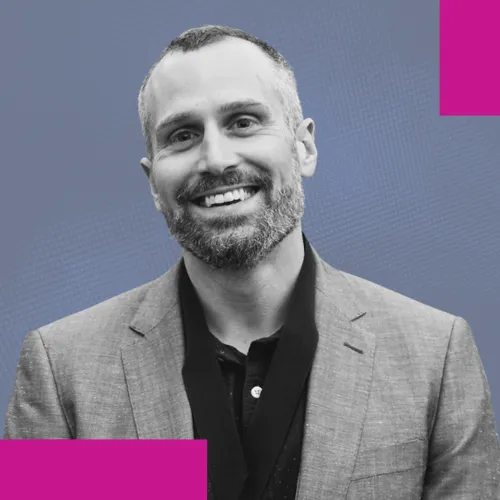
We’re joined by Arushi Sharma Frank, the founder of Luminary Strategies, and former markets policy lead for Tesla, who explains the imperative for flexibility: “We have a massive opportunity to leverage this for the whole grid. Why would you not want to leverage the opportunity that is staring at you in the face?”
Sharma Frank, who is also a senior associate at the Center for Strategic and International Studies, has long been on the front lines of DER policy. We examine the barriers to deploying VPPs, AMI, and flexible data centers. Utilities want these services, but why don’t planners and regulators trust them?
The fix isn’t complicated: align state agencies with regulators, make sure all customers benefit from flexibility programs, and bring tech companies into the grid planning process. As Sharma Frank puts it: “If we’re going to procure a grid asset, it needs to be in a procurement process for a grid asset, period.”
Credits: Co-hosted by Stephen Lacey, Jigar Shah, and Katherine Hamilton. Produced and edited by Stephen Lacey. Original music and engineering by Sean Marquand.
Open Circuit is brought to you by Natural Power. Natural Power specializes in renewable energy consulting and engineering, supporting wind, solar, and battery storage projects from concept through financing. Discover how we’re creating a world powered by renewable energy at naturalpower.com.
Open Circuit is brought to you by Sungrow, the trusted provider of PV inverters and battery storage. With over 605 GW installed worldwide and a BloombergNEF ranking of “most bankable” in power conversion and energy storage, Sungrow provides solar tech you can count on. Learn more at sungrowpower.com.
Transcript
Stephen Lacey: So how do you guys describe virtual power plants? My favorite is Jen Downing, formerly of the DOE, called them the sandwich of the electric grid. Anybody have that beat?
Jigar Shah: No. I mean, once you go head-to-head with Jen Downing, I just, I feel like I just put down the weapons.
Stephen Lacey: Katherine, you had the famous phrase, storage is the bacon of the electric grid.
Katherine Hamilton: Yeah, I was thinking that this is a BLT if you’re doing DERs and VPPs, right?
Arushi Sharma Frank: Currently I’m hungry and this is just not helping.
Stephen Lacey: From Latitude Media, this is Open Circuit. This week, the grid is getting smarter, but are we getting smarter about the grid? Millions of homes now have smart devices that could theoretically work together, but most of them are not coordinated at all. Utilities have installed 130 million advanced meters for real-time control. Most of that data is underused or unused, and data centers are emerging as a unique flexibility resource, but there’s no standard way to plan for them or pay them. The problem isn’t technology. It’s a mismatch between what these systems can do and what we actually let them do. So we’re diving deep on VPPs, DERs and AMI, all the acronyms today, how do we unlock their real value.
I’m Stephen Lacey. I’m executive editor at Latitude Media. I’m joined as always by Katherine Hamilton and Jigar Shah, my regular co-hosts. Katherine Hamilton is the chair and co-founder of 38 North Solutions. Hi, Katherine.
Katherine Hamilton: Hello. Hope everybody’s doing well today.
Stephen Lacey: Excellent. Jigar Shah is the clean energy investor and former director of the DOE’s Loan Programs Office. Hi, Jigar.
Jigar Shah: Hi.
Stephen Lacey: I will say you have the best recording set up yet. Where are you?
Jigar Shah: I’m in Denver, Colorado. My cousins are trying to break me with all of their outdoor activity.
Stephen Lacey: I’m not going outdoors. I’m going to sit in the closet and record a podcast. This week we’re joined by Arushi Sharma Frank, the founder of Luminary Strategies. Arushi, how are you?
Arushi Sharma Frank: I am so well. I am also sitting in a closet.
Stephen Lacey: Arushi is a legal and policy strategist who is an expert on all things grid flexibility and she’s worked across gas distribution, independent power generation. You led energy market strategy for Tesla, and today you’re one of the most sought after experts on distributed energy integration. Is it fair to say you live a lot of your life in regulatory filings?
Arushi Sharma Frank: Actually, not anymore. I used to, but now I mostly live in Starbuckses and in cars with founders of various firms that are trying to solve for our technology and grid challenges. I think in the past year I’ve been on the road more than I have in the past four years, mentoring companies, mentoring executives, and then it all comes down to it’s me and a marker board. If you ask any of my clients, if you talk to Zach Dell at Base, he’ll say, “Arushi showed up in my office before the office and whipped out a marker and then marker boarded all of our [inaudible 00:04:50] for us in 10 minutes.” I’ve been doing a lot of that. So no, quite the other side. But I do like to train and then mentor regulatory teams and get companies to hire the right people for regulatory strategy very early in the game instead of waiting and pretending that they never have to do that work. You got to be in the dockets.
Stephen Lacey: I feel like I need to ask you a question that I’m sure you get a lot.
Arushi Sharma Frank: Sure.
Stephen Lacey: Which is how do you go from the gas industry into hardcore into DERs? What was that trajectory and when were, as the DER Task Force people like to say, when were you DER-pilled?
Arushi Sharma Frank: When I was DER-pilled, right. So I think that I’ve always been a integrated thinker. Actually, integrated problem solving is a whole scientific discipline, right? So I started my career as a scientist who realized that putting STEM into policy advocacy was the smart and the right way to do things, and once you put yourself in that space you move through the world as a problem solver in a space that is much bigger than the silo of any one field type or technology type. It just became really just apparent to me really early that you’re not solving for one problem, you’re solving for a system, and that’s actually what systems engineering is.
And so now in my world some of the days that I do go into regulatory filings and read them. I read a lot about integrated system planning, how different utilities are thinking about it. We’re going to talk about that a lot today. But the science of looking at a problem statement as a multivariable problem is the heart of solving our biggest challenges in any industry, in any piece of what we’re trying to accomplish as a society to make America great again, strong again, happier, safer, wealthier.
Stephen Lacey: So we’ve assembled a grid flexibility supergroup of sorts. We’re going to break up the conversation into a few different topics. So we’re going to start with virtual power plants, how they’re shaping up, what they offer, comparison markets. Then we’ll go into advanced metering infrastructure. Utilities are starting to replace the first generation of smart meters that they installed a decade or more ago, and we want to figure out how to avoid the mistakes that prevented us from realizing their value. And then finally, we’ll end with the hottest thing in the world of flexibility, data centers. Small changes in data centers can unlock huge amounts of grid capacity, but first regulators need to think differently about large loads. And so let’s go to virtual power plants now. Katherine, we’ve been talking about this concept for a decade and a half, maybe more. I first heard about virtual power plants in the late ’90s, early 2000s. What is different today?
Tuning the virtual power plant orchestra
Katherine Hamilton: Yeah. So it’s interesting because Arushi brings science to the case and sort of the way she thinks about systems integrated thinking. I bring a background in creative writing and art into what I did at a utility which was engineering, and so I’m just doing this slightly backwards. But I started thinking about how do I ground myself for DERs because I’ve worked in DERs for so long, and it’s just been such incremental improvement, and we can talk about this when we talk about AMI as well. It’s just glacial improvement. But the way I think about it is we need, our grid needs to be an orchestra. If you think of this as in the arts concept, it needs to be an orchestra and what we have is a marching band. We have a big horn section, some snare drums, some woodwinds, the trumpets are always too loud. But then what we really need is to bring the other side in to make it an orchestra, not just a marching band, right?
But right now what we’re seeing, DERs is seen as like a washboard and a couple of spoons, when really we are like the string section, or the violins, the violas, the cellos, the bass, and they all have to be brought in by the conductor. The conductor can be the utility, that’s fine, although the first chair of the violins make sure that they’re all in tune, that there’s not vibrato when there shouldn’t be. It’s like, all right, we’re all going to do what is required by the music to do, and the customer, the people who are listening, then get a much better experience. If like one violin drops off, fine, you’ve got a whole bunch of other ones to kind of fill in. But I see this and DERs and VPPs as part of this orchestra making us better than what we were and making sure that the trumpet doesn’t take over.
Stephen Lacey: Oh my god, that’s so good. Did you just come up with that? I love that.
Katherine Hamilton: Yeah.
Stephen Lacey: Jigar, can you beat that one?
Jigar Shah: No, I just want to get paid. That’s it. I just want to get paid. I’m so tired of the fact that in DC, every time there is a like a hundred-degree week they brown out my neighborhood. They just shut it down for like three hours and then turn it back on. That’s their form of DERs, right? I’m like, “Why don’t you just pay me to not charge my EV during this time or heat up my water during this time or whatever it is?” And I’m just like, “I just want to get paid.”
Stephen Lacey: You wrote this piece back in 2023, Jigar, for Latitude Media outlining this tale of two utilities and you gave examples of a utility that’s doing it right and a utility that’s doing it wrong, a utility that’s actually taking advantage of VPPs and a utility that ignores them. These are theoretical utilities, but can you just break down what it looks like when this is done right?
Jigar Shah: So basically what’s happened since the 1970s is that everyone got air conditioning and then they got espresso machines and they got all sorts of other electrical gadgets. We are electrifying everything, not because there’s a movement around it, but just because people prefer electric appliances to clunky sort of fossil appliances. And so what ends up happening is the grid gets peakier. And so what happens is the electric utility says, “In order to meet our obligations to serve, we need to build a lot of generation, transmit that generation hundreds if not a thousand miles to your neighborhood, and then build distribution grids to take it to your house.”
That system works when all of that equipment is largely being used most of the time, right? At the time at which you get all these peaks, that system is hardly ever used, right? And so transmission grids were 70% used, now it’s like 35, 40% used. Distribution grids were sort of 60% used. Now some neighborhoods, 15% of the time it’s getting used, right? And so because of that, the utility of the past is getting more and more and more expensive because we just don’t use the equipment that often.
The utilities of the future say, “Well, instead of actually overbuilding the system, we’ll just shift some of the loads around that people don’t really care about.” Like electric vehicles, most people have them plugged in 13 hours at night. They plug them in when they get home and they don’t unplug them until they go to work the next morning, and they’re charging three hours of that 13 hours, three hours. You don’t really care which three hours it charges, but because the system’s so dumb it charges right when you plug it in, and you’re like, “Why? I don’t get it.” The same thing’s true with your thermostat, the same thing’s with your water heater. It’s like why does everybody’s water heater turn on right after they’re done taking a shower? You could wait three hours. It doesn’t matter, right?
The beauty of it today is that every single device that you buy today has an app on it. Every single device you buy, even humidifiers that I’ve bought come with an app. And so once that connectivity is there, you can do all of the orchestra work that Katherine was talking about because it’s there, right? And so then the question becomes the utility of the future is going to use all of that capacity to make the experience for the consumer better.
Stephen Lacey: So Arushi, pull, this all together for us. If we’ve got all these smart apps and horns and trumpets and flutes, what does that look like on the ground? What does gigawatt scale virtual power plant… what does the gigawatt scale virtual power plant market actually look like?
Arushi Sharma Frank: Yeah. So firstly I got excited with Katherine’s analogy because I have a similar one about the evolution of orchestras from the 1600s which were primarily strings back then. Then we added a couple of oboes to tune the strings, and it sounds very funny that an oboe can tune strings, but that’s how it is when I try to explain how DERs help system planners, they look at me like I’m crazy. That analogy is in a Doug Lewin podcast which obviously now I’m sending Katherine a link to later. But back to the present question, the other reason I got excited by what she said is that, Katherine, you said something about how if one violinist drops out, the show goes on.
Katherine Hamilton: Yep.
Arushi Sharma Frank: Yeah. So the problem with then what you’re seeing with the flexibility solution set that is before our eyes at this gigawatt scale is that in our transmission and distribution planning world we don’t model the system such that we value that the rest of it will work when one of those string components drops out. We’re very concerned about worst-case contingency, and if you’re concerned about what is going to fail, the idea around how you value what you build and what you pay for is based on that. It’s very nerdy. It’s called N minus one planning.
But there are very few system planners who look, even when their operations team, like Jigar is calling it, utilities of the future, even when those operations teams say in public in front of their regulators that I rely on a DER or a grid edge response. Whether that response is load reduction, load shifting, or export of stored battery capacity, all as examples, I rely on it in real time. It is an operating asset in my gen stack, and I bid and dispatch on that gen stack the way I bid and dispatch every other asset I have. The planners don’t believe it and the planners don’t believe it because we do not have either the models today for system planning nor the imperative to turn operational reality from DER operations into a system asset.
Now Jigar has said this to me too recently when we were speaking that it doesn’t really matter whether you’re in a red state or a blue state, it’s a system planning belief problem and like, well, okay, how do you get there. That’s where I think that we need to unstick ourselves, and we’ll unstick ourselves ideally in a manner that creates planning incentives as a new way for utilities to model the economic value of DERs rather than it being an attachment to their existing resource stack and their tool set that they believe is conventionally the right answer to every reliability issue. We have to start there.
Katherine Hamilton: Yeah, this is super interesting because what you’re getting at also is that this is not a technical problem. This is not about whether something works or doesn’t work. This is really about how do you value it, how do you monetize it, how do you make sure that it operates effectively, and it doesn’t even necessarily need to be the utility that operates it. The utility sets the requirements for it, and then aggregators can come in which is the beauty of VPPs is that an aggregator can come in and meet all of the requirements and make sure that technically it works. But that’s not the problem you’re describing.
Arushi Sharma Frank: And there’s more to it too with sensitivity analysis. So whether it’s an aggregator bringing the asset or it’s the utility controlling it, you can decide as a planner how reliable you want that asset to be relative to other things in your stack of resources you thought was valuable, and you can make some shots and calls on that which make the whole thing appear uneconomic and uninvestable in the first place.
Jigar Shah: I mean, I do think that part of this challenge that we’re in right now is that the utilities really have no choice but to look at VPPs as part of this stack, as Arushi’s talking about, and the companies that are in this space have not yet pivoted towards understanding that there is a different level of sophistication required if you’re going to be determined to be infrastructure, right? If you’re sort of to the side, then you’re like, “Well, it could work, not work,” et cetera, and you see this in spades with the residential solar industry where they sort of just do it. They sell, they do the stuff, and then if someone’s system doesn’t work they take a week to fix it. It’s like, well, whatever, we might be able to do it, whatever.
But if you’re actually going to rely on those batteries every single day to make sure that people have a good experience, which is what they do in Puerto Rico, you actually have to have three-hour response times. You have to actually have an infrastructure-like system by which you maintain all those assets and make sure that those assets are available when the utility needs them by circuit, right? So if you have a lot of assets not working on this circuit but all the ones on this circuit are fine, that’s also not fine, right? It’s still like 98% up-time, but the 2% that are not up are the ones on the most sensitive circuit, right? So I do think that the people in our industry have the capability of meeting the standard, but they have to want it and they have to understand what they’re actually reaching for, and some people do and many people don’t.
Katherine Hamilton: But the utility also has to allow it. There are a lot of utilities and regulators that don’t even allow this.
Stephen Lacey: Yeah, and that brings me to another scene-setting question. I mean, we have been talking about this forever. I mentioned I first heard of this concept in the early 2000s, but a lot of regulators and utilities don’t see the value in this resource. So Arushi, how would you sort of describe your top three reasons why this market hasn’t been unleashed?
Arushi Sharma Frank: Mm. Well, one of them is that when a VPP construct arises as a result of consumer led and consumer finance choices, it becomes like a dirty Velcro sticker to the utility’s fundamentals in how they allocate and raise for planning resources for their system. That’s one issue, right? So the legacy fight behind what Katherine describes as the reason… well, it’s the reason behind what Katherine describes as utilities not allowing these types of resources to play ball is because it materially conflicts in that structure with the fundamentals of their business model which, for our listeners who don’t know yet although AI thankfully is making this more apparent, is utilities raise debt at a cheaper rate to build all their things on the basis of the return they receive from us ratepayers through a regulated rate case, i.e., a regulated process that is not exposed to the same capital risks. Then they build stuff, and it’s amazing when they can build the right stuff and it’s not that great when they can’t build the right stuff. That’s one.
The second one is the inherent problem in how they are allowed to even recover on what they can build, and that is software and operational work that makes them as a sector more creative. They cannot recover on the equity side for major expenses in conventional, regulated markets when those expenses are not related to capital, they’re related to a thing that is considered operational or OpEx. Software is a big piece of that. When I worked at Exelon, this was one of the things I was struggling with. I worked on the generation side before the spin-off and in generation compliance, and I was helping build an internal system that was designed to bring all the other legacy systems together because it’s too hard to try and rework the whole thing, right?
I’ve had the same issue at Tesla, and when we were trying to build out the retail electric plan, it’s like, okay, if you’re trying to do this in a certain utility area, we have to tackle their legacy software issues, and there aren’t great ways to get those systems to play ball at the level you need for massive expansion of a smart orchestration strategy for DERs. I think that’s two.
And then three is that the catalyst for the private capital to flow to this sector very much lives in a space that hasn’t really figured out hybrid financing with conventional utility investing, and by that I mean take two different examples. In California and Puerto Rico, those are places where consumers bought Powerwalls and then folks came in on the top of those consumer decisions to create programs that optimize the consumer experience, right? Ideally, like Jigar’s experience in DC, is what you’re optimizing for. You’re not optimizing for the utility resource stack or resilience outcome, you’re optimizing for the customer. So then all the programs that are built on top of that kind of struggle to fit everything together.
In Texas, it was similar at the start where it was just suddenly after Winter Storm Uri, ten X increase in Powerwall purchases. That’s the moment where someone like me realizes like, “Oh, if I don’t do something now about this, we’re going to have, again, thousands upon thousands of Powerwalls and no meaningful integrated commodity strategy that the local utilities, which aren’t utilities in the competitive area of Texas, they are the retail electric providers, they can’t actually monetize it,” which is a crazy break between the fact that the asset exists, it’s available, but there’s no way to get it to market.
Jigar Shah: I think what’s different in this moment for me is that the utilities are actually not gatekeepers anymore. They’re buyers, right? The utilities actually want to buy a service. It’s rising demand, it’s interconnection delays, it’s climate-driven reliability challenges, all of it is forcing them to take it seriously. What’s weird in this moment is we sort of lump everybody together, but my experience at least in this last 12 months is that all of the utilities are actively looking at how to use these services to make it work. Now they may want to control it all, right? They want to do the dispatch. They don’t want some third-party aggregator that they have to send a signal to or whatever, but what they’re finding is that their regulators are not on board. So the regulators are completely against like rate basing whatever it is that they want to do.
You see this with the distributed capacity procurement concept. You see this with the EV orchestration software where Baltimore Gas Electric is fully on board, everybody’s on board. PG&E still has a cap of 7,000 vehicles total that can participate in this pilot three years later because the regulator hates EV load orchestration, and so they refuse to raise that cap to 700,000 EVs in PG&E’s territory, right? And so you’re in this weird spot where the utility desperately wants to buy these services, I don’t think they necessarily care about this virtual power plant versus this asset versus that asset, but the regulator is like, “Wait, what? Explain this to me for the 12th time.”
Stephen Lacey: Yeah, Arushi, so let’s get to the regulatory piece. How much of this falls on… how much of the slow progress falls on utility resistance and infrastructure models and the regulators who are trying to grapple with this?
Arushi Sharma Frank: Yeah. So let’s go to Jigar’s thoughts about the utilities that he said in his tour of duty recently he’s learning that the utilities are interested but regulators aren’t interested in rate basing. So pull it back to the concept around there’s utility cost of capital and then there’s private capital, and when utilities do things conventionally they ask their regulators for a return, like, okay. Well, one of the reasons regulators aren’t excited is that we already have rate pressure in every area of conventional utility investment, right? So states that are very big in the news on these issues, Connecticut is a good example of one, where regulators, it can be hard for them to be excited about anything that bumps a rate increase.
You know there’s a little narrative about this. One of the reasons that Jigar’s former boss was happily convinced to come down to Puerto Rico a couple years ago to help me, me personally and professionally, with handling the crisis at hand with a regulator not approving their battery program was basically something about a mayor calling in to the governor’s office at the time and saying that there would be a 0.001 increase in rates based on where the VPP program was put in the utilities rate case and the design of where the program would get funded from. Even a fraction of a cent increase in rates that doesn’t actually look like anything real on paper can be a political reason for this kind of program to not be a reality, right?
And then we have all the other rate pressures right now on us as a society. The data center boom is one of those rate pressures, but there are others. There’s beneficial electrification. There’s the lopsided rollout of smart metering. There is overall energy affordability. There’s inflation. There’s unemployment issues. There’s all sorts of transitionary problems which ultimately come down to, wait a minute, I don’t want to put anything else in your revenue requirement that you can recover on. Yeah?
So when I said earlier that I think that the hybridized approach where utilities partner up with private capital is so important, it allows them to then go to their regulator and do a few different things, share ownership or share the cost of ownership, share the cost of funding with private actors and remove rate-based pressure, use either in-house financed or outside expertise for the tech and the platforms to make DERS a part of their regular system, and then help the utilities with market access issues that aren’t materially going to rely on more complexity in rate filings in front of regulators, right? So the more you do to create partnership in this space, the better. That’s my view on how we get to the half gigawatt scale, if not a gigawatt on the VPP journey.
Stephen Lacey: Jigar, you’ve mentioned something that you’re frustrated by and that is it’s not just regulators, it’s a lot of the advocates in this space who are going to regulators and you don’t think that many of the folks, say in the environmental community, in the advocacy community are really on board with VPPs. Explain.
Jigar Shah: So there’s been a long-standing effort to educate regulators on energy efficiency from the 1970s all the way to today. That mindset is not the same mindset as we need for this rollout, but everybody wants to treat DERS like it’s just another form of energy efficiency. It’s not. Energy efficiency can be integrated into it. You could go to heat pump water heaters instead of regular electric water heaters. You can integrate energy efficiency into the rollout. But DERs don’t care about saving kilowatt-hours. DERs only care about time shifting, right? So the energy efficiency layer that people are completely set in right now with the regulator and with the advocates is what is confusing people, and you see this in spades in blue states, right? So California can knock it out of its own way because the CPUC is like, “We just have to send them the right price signal. If we just make it a dollar a kilowatt-hour for them to charge their EV at the wrong time, they’ll just shift.” And like, “We don’t need active controls, we don’t need DERs. We don’t need any of this stuff.”
That’s why PG&E, SCE, and SG&E have done literally almost nothing on virtual power plants, right? Look at Massachusetts. They brag so much about how much solar power they have in Massachusetts. The amount of DER and VPP integration there is horrible, and you’ve got National Grid that is bragging about how desperately they want to do more VPPs. The DPU in Massachusetts is run like an iron fist by the governor. It’s not like it’s like a separate judicial body, whatever. This could be fixed. But instead where are we rolling this out at scale? In Texas and Florida, and you’re like, “What? What are we doing here? How is it Texas and Florida that’s doing it first?”
Katherine Hamilton: Yeah. So I would just point to RMI’s VP3 report for 2024 and the 10 utility commissions over the last year in DC as well took action to expand VPPs. 10 state legislatures have been moving to expand VPPs. Utilities in 34 states in Puerto Rico have been trying to expand it. So I do think there’s movement. I spoke with Shannon Armstrong from Solar United Neighbors, and they do residential solar, very focused on the residential customer, and they have been working on what they call DPPs, distributed power plants, rather than virtual because virtual sounds a little too magic. So they call it DPPs, and they say that they’re very much focused on overcoming regulatory barriers and they want to, in every single case, move legislation. They said no matter how great the program is in the state that enabling increased political capital will really unleash VPPs. They want to have full-scale tariffs by utilities filed with commissions, allow for stakeholder interventions to stand up programs.
They say a lot of these programs are stuck in pilot, and we know about death by pilot. So just getting out of the pilot phase and scaling is going to be enormously productive. And so they have been working in states to really push a model tariff to make sure that you can get out of your own way, as Jigar says, to try to do VPPs in a much more politically savvy way, and they seem to be making progress. They understand that third parties have to be the innovators at hand, but there also should be partnership with the… you can’t not have utilities as part of the mix when you have a regulated environment. And so their push is, yes, utilities can be partners, but we really need the third parties to stand up, to have the ability to stand up through public policy and to be given permission to do so.
Arushi Sharma Frank: One evolution that’s really important to note here. So for starters on the legislative side, there’s a couple ways to do that, right? One is just a full-on mandate around a tariff, and the other is done most recently in Illinois, one of their recent laws, a Climate and Equitable Jobs Act actually has specific language for the integrated resource plan, statutory requirements for the utilities, and that says you shall have in your IRP specifics around DER hosting capacity, deployment, and grid modernization. The resource planning process is getting edited in law which is I think really cool, and where a lot of the guidance where I said system planners don’t look at new things as a way to handle their risk-averse models, it forces the conversation in a productive way. In the IRP, mind you, the next step should be should the utility really build this or should third parties build it, and the answers that have come to me from doing this work in practice is that it is, sort of to Katherine’s point, sometimes a really critical hybrid of the two.
I’ll give you example of this. In Puerto Rico, in the demand response regulation, their actual DR rule which was the basis for ideating and then creating the program that exists today, there is actual language that says, some blessed person drafted this in there years ago, that says for functions around demand response that the utility is not technologically capable of providing, the utility shall procure those services or those technologies from third parties, and that’s exactly how the Puerto Rico plan looks. I mean, I seized on that language and I said, “Okay.” My friends at Luma who I work with very collaboratively over this process, and they’re some of the most phenomenally bright people, the folks in their demand risk, demand side team, I said, “Well, everybody already has a Powerwall. They bought the Powerwall through some financing structure that’s associated with some installer. They all have the app. Make sure your program utilizes the app.” They said, “Okay,” and they had the regulatory and the statutory guidance to say okay. That’s what I’d like to see around our country. So however we’re getting there, let’s get there.
Jigar Shah: Yeah, and I think you’re starting to see that certain states do things in certain ways. Like in Maryland, the reason they’ve got so much movement on EV integration is because we got the legislature just to pass a bill forcing the regulator to do it, and they weren’t going to do it otherwise. All the regulators are my friends. These are people that I’ve hired over the years, and they still didn’t feel like they had the freedom to do that. We’re doing the exact same thing in California, and so SB541 passed the Senate and there’s an improvement to that bill that’s going through the assembly right now, and they’re going to force them in California. And so you saw Illinois sort of did the same thing.
I would’ve hoped that they would get there by themselves. I mean, it is patently obvious that this stuff is way cheaper. When you think about how many thermostats Renew Home controls with the merger with Nest, or the fact that Rheem and all these other folks have a VPP division, Carrier has a VPP division, they know exactly where all their customers live. They’ve got warranty cards with all of them. They just need a financial incentive to turn it on, right? It’s like it’s right there. When you want to solve for the fact that we are limiting our economic growth in this country because of this culture issue, I don’t care. Pass a law in blue states. Do it the right way in red states. I don’t care how you do it, but for the love of God, don’t let your cultural biases hold back the economic development of our country.
Arushi Sharma Frank: Jigar, you know who knows… the where you live point, they know where you live point you made, the hilarious thing is that most of our device vendors or operators know way more about what the customer has and does not have to provide this service than the utilities do, and AMI metering is almost unanimously seen as deeply inaccurate on geolocation of customers. So the systems for AMI aggregation, the system says that this meter is located here, but it really might be belonging to a neighbor down the street. So there is a massive divide in just basic knowledge between how you kind of like geofence customers as a device or a service provider and aggregator and what the utilities get in-house from their big investments like AMI.
Stephen Lacey: Yeah, and we’re going to roll into the limits of AMI, but first you’ve talked about framing virtual power plants through the lens of the customer damage function, Arushi. Can you simply explain what you mean by that?
Arushi Sharma Frank: Yeah, of course. This is something I teach in my classes too. So it’s a graph that gets drawn a lot. So if you’re on Wikipedia and you look up a term called value of lost load, you’ll see a graph that has a basic function assigned to the graph, right? It’s going to be a curve or just a traditional demand curve, and the whole point of that curve is what is the value as the minutes of a potential outage increase, like a power outage increase, to you of investing to avoid that outage. So conventionally, when we think about what residents did 10 years ago or 15 years ago when they had a five-minute or a ten-minute power outage, their damage related to that outage is fairly low on kind of a quality of life and economic scale. And so they don’t really invest in protecting themselves from the outage and they say like, “Oh, calling my utility, it’ll get fixed. Everything will be fine.”
So that customer damage function or the representation of what it’s worth to you to not lose power has things in it like the amount of money I’ll invest to prevent an outage or to be able to ride one out is dependent on how much notice I had the outage is coming, the ability for me to engage in my conventional activities, like keep my home device for my baby who has jaundice running. It depends on the duration of the outage. Is it going to be 10 minutes? Is this going to be three days? And it also depends on where I can go if the outage cannot get resolved in my home. So is there somewhere else for me to go? So is the hotel next to me a place where I can have power?
So the customer damage function, Stephen, the reason it’s so important is that the function is changing dramatically. In the places where I know, Powerwalls and end phase and solar storage products and residential thermostats and electric vehicles and backup diesel gas generators, all of these technologies that people spend money on, they spend more of it on the tech just to begin with because their customer damage function has acquired a higher slope, meaning as the minutes of an outage rise, there are more meaningful health welfare and safety consequences to people. They recognize that, so they spend money on this stuff. That is why when I talk to utilities or I talk to anyone in the regulatory space, I say, “Folks, you are missing on a massive opportunity to leverage this for the whole grid. You have to do it because people are going to buy it anyway. Why would you not want to leverage the opportunity that is staring at you in the face?”
Jigar Shah: Yeah, I mean, just to put a number on it, I think we’re now at around 15% of single family homes around the country that have some sort of backup power, right? So whether it’s a Generac that’s formally installed or whether it’s the $1,500 gas generator at Home Depot that they put in the back of the yard, that’s real money.
Stephen Lacey: I want to make sure we get to AMI and data centers, but very quickly, Arushi, you’ve been active in a lot of different states helping shape programs. Can you just compare some of the programs that you’ve been working on? So maybe we can take Texas and California. You helped stand up a very successful pilot called ADER in Texas, California itself has had a lot of challenges. Can you just compare the two markets and what does it say about the workable and not workable structures?
Arushi Sharma Frank: Sure. So both are useful. Neither should be blindly copied because fundamentally they have different regulatory DNA. In California, the VPP model was first consumer-led and consumer-financed. So the technology got deployed, like I mentioned, through various incentives and net metering structures, utilities initially as the load-serving entities. So California, for the residential customers, you’re the power provider. You can’t go outside the utility to get the power commodity itself which is a complete opposite in the competitive area of Texas, and that’s for residential. Commercial, there is limited retail. Anyway. So DERs initially got tacked on from the outside.
So for there to be true action around integrating DERs into how the utilities look at their generation versus DERs and pay people for performance, there’s been a really slow cultural shift which is conflated by the fact that there are also many different cooks in the kitchen in California. There’s a grid operator, there’s multiple utilities, there’s a CEC, there’s a CPUC, and there’s even this very tough thing where there’s a lot of choice of where to put your DER. If you’re a net energy metering customer, you want to stay in the PUC’s program because you’re a Rule 21 net energy metering customer. You don’t want to go to the wholesale market program which is the wholesale distribution program. So you have this very convoluted way for people even to understand where the value sits, but at the end of the day it is customer adoption of volume that drove all of the programs that came over it.
In Texas, the starting point was completely different. First of all, there’s no capacity market, so there’s no central procurement mandate that becomes the benchmark for valuing these assets. Instead, we are in a space where scarcity in megawatt hours and in megawatts drives who builds and buys what, and the folks who are motivated to invest in that are conventional power plants. But it’s also retail energy providers, the utility equivalents that want more ways to hedge their exposure for themselves as big financial players in energy markets, and also make sure that the bill that they send you and me in February isn’t wildly outsized to the bill that they send us in May, right? So they’re trying to levelize their costs.
So in that environment, the thing that is very different is that the ADER program enables residential batteries to be utilized by these energy retailers which are basically the equivalent of utilities for this purpose to put them into the market like generation assets. So when you have a stack of batteries that have capacity and you can forecast that stack, you can give that model for your stack to ERCOT as a retailer, and then that model becomes the basis for you to engage in the market every day and bid the battery capacity in and get paid for that availability, and then actually run those batteries in real time if you get deployed, and if you don’t get deployed you can make money by doing other things in the real-time market. So in that sense, it’s the complete opposite structure and it really is disciplining on the idea that DERs can’t do it all. They absolutely can, it’s just very much a question of the technology and the way that you allow the technology to play in the space with your income and generation.
Jigar Shah: So the way this manifests itself is that you have 3,000 megawatts of behind-the-meter batteries that have been purchased in California that the only program that they can really operate in is getting paid $2 a kilowatt-hour when there’s an emergency and the governor has signed a piece of paper. That program, by the way, is being ended by this legislative session, so we’ll see how that goes. So you have CCAs, for instance, in California. Those CCAs have to procure wholesale power from NextEra or other people. Having batteries would substantially reduce their cost of procurement of that wholesale power, right?
So they could pay their customers who have Powerwalls for resource adequacy to be able to reduce wholesale market prices, but they feel completely neutered. When you talk to a CCA, there’s like four people who work there. They’re basically just there to hold rallies. When you talk to the people who work at CCAs, they’re like, “We don’t run anything here. We’ve got like a little office in the back of city hall over here that we operate out of.” They don’t view themselves as a utility. And so you’re in this weird spot where they have all this power but don’t actually believe that they can exercise it.
Arushi Sharma Frank: That reminds me, the thing about co-ops and other of these small providers, I think that everyone needs to pay a lot closer attention, maybe this is a thing that goes back to make sure you read some dockets, folks, is that there are different types of structures motivate different ways of exercising that control. By that I mean if you own and operate your own generation as a co-op, you’re a lot less interested in these innovative solutions embarrassing you into a space where you realize that, oh gee, DER capacity is actually a lot cheaper for me to deploy than my own owned and operated generation which I’m long on and also is costing my ratepayers too much. If you’re the other kind of co-op where you don’t have that problem, then you’re exposed to the market like everyone else and you’ll choose to use your power differently.
There are some co-ops in Texas that are trying to be a part of or are a part of ADER today. They’re doing a great job and they’re actually implementing the model I talked about earlier which is kind of the split ownership approach where they’ll lease the batteries to their customers and they’ll utilize private financing and a private installer to help with the whole kind of stack of getting these systems online and they get to play with the asset in the market on their behalf, and then those savings go to their own customers. So if the incentives are right, the small players can make a big difference. But if the incentives are just terrible, you’re going to get stuck with the hand waving.
Stephen Lacey: So I feel like we have to round this out, and I want to bring in a question from a listener that sparked this conversation which was, he asked, “We keep hearing this market is ripe to explode, but the main players in the space are still small. When is it really going to arrive?” So that is a question for all three of you. Any response to that?
Jigar Shah: Well, I mean, this is the moment for it to arrive. I mean, the reason we are in this conversation I think right now is that the VPP industry has their moment right now, right? Everybody’s in pain. Everybody wants a solution. This is the only affordable solution. It’s the only thing that can meet President Trump’s executive order to make electricity more affordable. If they all continue to push their own book and their own technologies instead of recognizing that this is really a collective problem that they need to solve then we are going to be in trouble, right? SIA clearly doesn’t actually represent the DER and VPP industry with all this conversation. So that’s point number one.
I think point number two is that because of the way that utilities are regulated, the real question is how do people get paid because if you can value price VPPs, now people are making a hundred times their investment. Think about how valuable each one of these Nest thermostats are that are already connected by Renew Home. But the problem is the vast majority of these programs are cost-plus programs. And so everyone is saying, “It only costs you a hundred dollars to do this. I’ll pay you $105,” even though the value of what they’re doing is worth $10,000.
And so that’s why you’re seeing so much deployment in Texas because you literally see people with negative electricity bills, right? People will publish their negative electricity bills because they were able to take a kilowatt-hour that was in their Powerwall that they charged at 8 cents a kilowatt-hour and dispatch it $5 a kilowatt-hour. And so they’re like, “This is amazing. I’m getting paid.” And so that dynamic is not universal around the country, and investors are genuinely confused around, hey, if I just deploy all this stuff, am I going to be able to get the value pricing or am I going to get the cost-plus pricing. And so people are sort of like, “I don’t know whether I want to put all that money in and which states I want to put it in,” et cetera.
And then that last piece I talked about is that we need to get the entire industry to get serious because right now, as Arushi is talking about, people are just randomly deploying this stuff with customers, and when the utility comes to them and says, “I need 40 megawatts of solutions on this distribution circuit so I can say yes to all these other loads that are providing economic development,” Sunrun will raise their hand and say, “Well, I got two megawatts.” And the utility’ll go back and say, “Well, do you want to get the other 38 for me?” They’re like, “Hell no. I’m not interested in solving your problem. I’m interested in getting paid for the two megawatts that I have on the circuit. I’m not interested in finding the other 38 megawatts such that I can offset your need to upgrade the distribution circuit.” And so at some point if you’re infrastructure, well, then the industry has to solve the problem. They can’t just say, “Well, I’ve got five customers, I hope that’s enough for you.”
Katherine Hamilton: Well, that sounds like a business model problem. That sounds like what are they getting paid for, because Sunrun has about 650 megawatts, 17 power plant programs that they can dispatch, and they’re going to activate about 130,000 home batteries, and those are in states that allow them to do that, so Texas, Arizona, California, New York, Puerto Rico. But I feel like if you can get more of those folks, get the right policies in place, get the right price signals in place, they’re going to come. They know how to do this. Sunrun and others know how to do this as well. We just have to give them permission and the right price signals to do so.
Arushi Sharma Frank: If we’re going to procure a grid asset, it needs to be in a procurement process for a grid asset, period. Everything else that flows from it, the argumentation of whether a Sunrun can do it or a third party integrated to a utilities program can do it, it doesn’t really matter to me. I care about solving for the baseline, and the baseline is that we don’t have these babies in planning models, and they should be. If they’re not in planning models, then the correct assumptions, the sensitivities around their availability won’t even be there, and this idea that, oh, the utility needs 40 megawatts. Actually, they could probably use a lot more than 40 megawatts, but no engineer is going to give us that outcome, and if they don’t have that outcome, the CFO doesn’t have that outcome. The CFO doesn’t have that outcome, investors don’t understand the value of that outcome, and you can sure as then bet that no regulator is going to approve a IRP or the equivalency and system plan that motivates that outcome. When I say that outcome, I mean the benefits outcome, right?
So for DERS as an industry, we have to get away from doing the same old boring cost-plus analysis, to Jigar’s point. It’s a value-based exercise, and to understand that value you need to be able to do a benefits assessment, a benefits exercise, and that’s how you get to the economic outcome that gives everyone the correct price signal.
Advanced metering infrastructure
Stephen Lacey: Let’s turn to AMI now, the infrastructure layer that’s supposed to make VPPs possible in the first place. So we have 130 million smart meters around the country. The first generation of those meters was supposed to transform how we manage energy and monitor the grid, and instead 97% failed to deliver meaningful customer benefits according to one industry survey. Now utilities are in the middle of replacing those meters, making fifteen-year infrastructure decisions right now. How are we going to actually make good use of them? Katherine, what was wrong with the first generation of smart meters?
Katherine Hamilton: Oh boy. I was running GridWise Alliance when the stimulus bill under President Obama was passed, and there was a ton of money put in for smart grid, and the vision of course is, oh, this is going to just make everything better. It’s going to make everything run really well. Customers are going to be able to participate, and yet you had customers, especially I remember at PG&E, they were lying down in front of the meter trucks because they were like, “No, if you put a smart meter in, they’re going to know how many socks are in my drawer and if my milk’s gone bad,” and all these conspiracy theories. Well, I wanted to say, “Don’t worry, they’re not going to do anything.”
I had a smart meter installed, it was in our cabin in the Adirondacks which has no HVAC, by the way. We keep ourselves cool in the summer with like a floor fan or your own hands with a piece of paper, and there’s no heating, so there’s barely any load in our cabin. The guy from Niagara Mohawk now National Grid came down and started installing a smart meter, and I was like, “What? Why are you doing that? It seems like I’m like the least cost-effective customer to have that.” And he was like, “Oh yeah, everybody’s getting these.” What were they there for? For ease of meter reading so they didn’t have to come down and read our meter? Probably. For maybe more accurate meter reading, so you could make sure that you weren’t having a lot of theft on the line?
So they did help utilities a little bit in managing their back-end systems. These were not a means for customers to participate, and certainly even though we tried to put into place Green Button initiatives where customers could get their meter data and be able to act upon it, most of those programs would get to within 10 feet of the house and then fail because they didn’t actually get the customers what they needed. So it’ll be interesting to see what happens next. I have a lot of thoughts about that, but the first iteration didn’t really do what it promised to do.
Stephen Lacey: Arushi, you’ve called AMI deployment cart before the horse. What do you mean by that?
Arushi Sharma Frank: Yeah. So AMI as a tool, yeah, the reason we had it in the first place as a 1.0 initiative was simply to make settlement more accurate and cost reflective, right? What does that mean? Before you have AMI, you have an idea generally of what your customers are consuming, and the idea of getting settlement more granular means that you can motivate them to do things that motivates them to consume differently and do things, like what Jigar mentioned, which is shave peaks and everyone’s demand charges go down and customers enjoy bill savings. The problem is that we’re still at a place where we’ve gone from AMI 1, AMI 2, where we are still basically doing the thing we always did in so many utility areas around the country where none of the data is being used to create a program to reward demand flexibility, create very powerful price signals in time of use rates, or engage with third-party aggregators at scale so that they can help the utility shape load to avoid peak prices.
So cart before horse is you don’t have the DER low flexibility programs. You keep installing new versions of the tech that are supposed to give you a data set to get there. Where are the programs? I said in my weekend rant to Jigar while I headed to the beach that AMI deployment just needs to stop. Every dollar you spend on this thing, it has to be tied to a material outcome, to someone’s bill. It needs to be tied to that. Do it with a performance incentive.
Go to your public utility commission and say, “We want to keep doing this, but we don’t have the program.” The commission needs to say back to the applicant, okay, you want to keep rolling out your new AMI infrastructure? Come to me with three things. Come to me with a demand-side program that works and actually settles your customers on something that isn’t their boring monthly load profile. Also, come to me with a program that says you have figured out a way to enhance AMI 2.0 with meaningful real-time information that AMI does not provide. And three, how do you know where everything is if your AMI is GIS inaccurate, and then what the heck is the point of your investment? I mean, I think regulators have to ask the right questions to get us somewhere, and that’s like a… it’s a cyber truck before the horse, not a cart.
Stephen Lacey: Jigar, I feel like you have strong opinions on what went wrong with smart meters. Am I correct?
Jigar Shah: We were very smart when I was working with Richard Kauffman in the State of New York to basically ban smart meters. We were like, “No, no smart meters. Not now. Not ever.”
Katherine Hamilton: You failed.
Jigar Shah: I think they’re finally putting them… I know they’re finally putting them out. But the problem with all this stuff, it was funny, there was a certain utility which usually I name them but today I don’t really want to, and I went to the utility and I said, “What are you doing this for?” And it happened to be a good friend of mine’s wife that was running the rollout of this program, and I was like, “There’s no chance that you deliver any of these benefits.” I remember the regulator actually rejected the rate case, and then this was during the Obama stimulus thing. So they basically weren’t going to get their 50% matching dollars because of the rejection. And then they came back and said, “Okay, fine. We’ll tie our reimbursement or whatever to these milestones,” as Arushi talked about, and then they failed all of the milestones. They never gave us a real-time app. They never actually did all these other things.
The thing that bothers me the most about AMI is that it’s so essential to the implementation of FERC Order 2222, right? Because what PJM is saying, for instance, is saying, “We will not accept your data stream synced with our data stream. We need the utilities’ AMI data stream if you actually want to get paid for FERC Order 2222 revenues.” And I was like, “Well, crap. I mean, I wish they would’ve actually fixed that thing earlier.” And now when you ask them, they’re not really that interested in fixing it. That’s the thing. It’s like when you talk to the utilities, they’re like, “Well, we’ll get to it. I don’t know when we’re going to get to it, but we’ll try to get that data for you.”
I mean, that’s one of the things that Texas did really well was a lot of these meters actually had this communication capability built into the meter and they just said, “Screw it. We’re forcing all of you guys to open that up so that anyone could read that data.” They still haven’t done that, by the way, in California. You still can’t read the data from your smart meters yourself, right? And so as a result, the private sector, public sector partnership between all these things, whether it’s Green Button or red button or blue button or orange button or whatever it is is still not there.
The thing that I find the most fascinating is a company called UtilityAPI and you’re like, “What do you do?” And they’re like, “We scrape the utilities’ data for them off of computer screens and then give it to the utility so that they can give it to customers to actually settle payments.” And I was like, “What?” They’re basically, it’s like legal, illegal stuff internally because they can’t get their own systems to read the AMI data. They’re like, “We’re going to let you just scrape the data for us and then give it to third parties so that we can implement these demand programs.” And I was just like, “How did we get here and why am I going to be at all supportive of this next generation of AMI rollout?”
Katherine Hamilton: Yeah, I spent a bunch of time talking to Michael Murray from Mission:data and his whole project has been allow customers to own their own data, and in New York they don’t own their own data. Once you get let customers own their data, then they’re able to give that data to aggregators and let aggregators run virtual power plants, manage what the utilities are not able to do, and let the utilities use their meters for what they need. They need to have a business model for it, but you need to give customers access to the data and ownership of it.
Stephen Lacey: So, Arushi, you talked about some changes we need to see. Loop this back around to virtual power plants more explicitly and DER aggregation. What do future AMI deployments need to look like? How should they be redesigned to make DER integration, VPP aggregation more effective?
Arushi Sharma Frank: Mm-hmm. So I’ll give you five things that I thought of. More real-time grid visibility. AMI is not sub-second. It doesn’t capture voltage fault waveform type data, things that help a utility decide how it wants to upgrade its infrastructure or avoid that upgrade by utilizing a behavioral profile for DERs or other big assets on their system to help them create that real-time benefit to their system, right? So if AMI doesn’t do that, they need AMI plus, they need someone’s other type of technology. It’s typically low-cost sensors that can be used for that purpose.
The other thing is geolocation accuracy. I mean, if you can’t map AMI data to the right transformer, then your utility on a VPP project, if it’s interesting to them, what is the source of truth on how, let’s say, grid export from batteries is affecting the transformer. A lot of hesitation that I get from utility engineers is their just lack of understanding on how concerted exports will impact a specific low-voltage feeder. So if they’re not getting data around what that feeder’s rating and the transformer’s capacity is from AMI, they’ve got to get it from somewhere, and for that, the thing needs to be accurate in the first place.
And then of course there’s non-meter DERs, right? So there’s all sorts of other things happening in VPP space that aren’t necessarily associated with the AMI meter, and if that is invisible to the utility, then your program needs to motivate behavior from a consumer that is independent of AMI data. The perfect example of this is what Jigar mentioned where people plug their cars in at night and y’all are charging for the next seven hours. That’s crazy. You don’t need to do that. You don’t need AMI to tell your customer either that, oh gee, if you do have the cyber truck, here is a profile for when you should charge and we’ll pay you something to be in this window.
Finally, what AMI is not, and it never was, is that AMI is not a DERMS, right? So DERMS means distributed energy resource management system. Pretending that AMI is a DERMS is like getting a second grader to fly a military drone. It just does not work. DERMS is all about location, flexibility, operational control, and smart visibility, and those aren’t fundamentally the things AMI in a vacuum was designed to do in the first place. So stop forcing it and build the correct DERMS system in-house. If you can’t do it in-house, go to all these third parties who have phenomenal ways to bring you real-time visibility, dashboards, all the things you want at a feeder specific level. Look at that information, learn to trust it, build your models around it, and build a VPP program that works for your utility area.
Data center flexibility
Stephen Lacey: Love it. Let’s turn now to data center flexibility to round this conversation out. Recent research from Duke University suggests that we might already have the capacity for over a hundred gigawatts of new load without major infrastructure expansion if we can unlock flexibility. We’re talking about data centers that could curtail load just a quarter percent of the time and suddenly the existing grid can handle four times the capacity of Project Stargate. So the conventional narrative is that data centers are inflexible loads that stretch the grid. What would it take to flip the script? So, Arushi, the same problems that are facing hyperscalers, slow interconnections, tariff uncertainty, capital bottlenecks are the same ones you say that are facing virtual power plants and DERs. What are the commonalities?
Arushi Sharma Frank: Yeah. I mean there’s so many. I mean, first of all, Tyler Norris’s study is correct on this potential. It’s massive. But we have the same problem with planning models. Remember earlier we said for planning models it’s very hard to trust the actual operational profile as a planning resource, i.e., as a certainty that can be modeled in a utility systems assessment of what will happen if they lose one violin. They hate being in a space of uncertainty. Well, for loads, guess what? We haven’t bothered with even trying to even think of loads that way.
My colleague Anuja at EPRI, she’s running the DCFlex program there that is all about utilities working with hyperscalers and their development partners on making data centers a more grid-friendly asset. Ultimately the word she used, I remember I talked to her in this fun conversation, is like, “We connect all loads in all the grids today like they’re all Home Depots.” And that has been a very simplistic and most of the evolution we’ve seen in intelligent transmission line and design planning, reliability planning is all based on advancements we’ve made in studying generators, i.e., power plants to interconnect to the grid with some degree of variability, flexibility, ability to curtail, so on and so forth. We really do for the most part just treat loads like Home Depots, and that of course, A, it’s not reflective of the technical realities either at conventional cloud computing sites or at these AI HPC, which means high-power computing sites, and that’s not going to be the reality you’re building for in the future.
I’ve told lay audiences that it’s kind of like saying that you’re going to design your traffic light pattern as if you know that every single truck and car will always behave the exact same way, but the reality is that there’s a lot more nuance to who uses every lane and when they use it. So your traffic light pattern has to be reactive. It can’t be centrally planned. If you do that, you’re going to have a lot of accidents. That’s the same analogy here that of course the permutation is very similar for trying to think of data centers as a grid-friendly customer and designing the right incentives for them to invest in being a friendly customer for the grid, and the same goes with VPPs as well.
Katherine Hamilton: So I live in Virginia which is of course a massive data center area. I think 70% of the global internet traffic goes through Virginia or Northern Virginia, but now I’m sitting in more of the Shenandoah area, but rural Virginia is now where data centers are looking to go because there’s space. There’s going to be one built in my community not too far from here, and we’re served by a co-op, and co-ops, we talked about this, Arushi, where they’re very much on the hook for their customers, all of their customers because they’re owned by their customers. So they have to do things really to benefit the customers and all of those… they have a lot of sensitivity around that and around cost.
So they’re saying, “How do we do this? Can we get everybody? Can we incentivize everyone to get a backup battery in their homes?” I would love a backup battery in my home. Can we do that and then be able to aggregate those to serve some of these new DER data center loads? So it’s kind of interesting the way some of the folks who have to be creative, the utilities that have to be creative are forced to think about this, whereas the investor-owned utility, they have enough juice coming out of the nuclear plant, they’re fine. Dominion can provide a lot of these data centers what they need. It’s when you get out into the rural communities and the co-ops that you have to really start being creative.
Arushi Sharma Frank: Yeah. So co-ops versus IOUs, fascinating. I take it one level deeper which is my reaction too. Okay. So if you’ve got a AI HPU cluster-driven power load that is the 50% of that site’s electric consumption load, it really depends what that tariff can and can’t do to make that load more likely to stick around. Okay? So Dominion has a filing in… this is again going to Katherine’s commentary about living in a co-op area. The big utility, Dominion, has a filing for a new tariff design that obligates data centers in their service territory to a 10 plus four year PPA, meaning power purchase agreement, and they have to buy a certain amount of power for a certain amount of time essentially, right? That’s the structure.
And so when you look at PPA world and how we think about as originators of power and how we manage the risk of how we consume power, that type of tariff is very different than the kind where the IOU has a smattering of large resources that the general rate base pays for and they’re allocating only some of that to a potential data center customer, and the rest of it is just getting allocated to the general rate base.
Because those two are so different, they’re obviously going to have some site selection bias with the compute customers, but also PPA risk varies dramatically depending on what kind of tariff you’re looking at and what kind of data center you are. Because, A, I just mentioned the compute centers, conventional compute are different than the AI HPC campuses. Only one of those two really has a risk appetite for a 15, 20-year PPA. You can guess which one is the conventionals. For the rest, there’s so much change going on in the technology itself. What is the technology I’m talking about? What makes a efficient data center, the power infrastructure, the cooling and HVAC, server and rack, security and facility, monitoring control.
There are all of these different levers inside this site, and to top that off, training and inference, like, gee, we don’t know, I don’t know that anyone has ever told me that one AI HPU site is going to do the same thing or close to the same thing for 15 years. So there are a lot of mixed signals that need to be sorted out. Stephen, I know I mentioned this to you, when I look at the tariffs out there today, it feels like a hodgepodge because it’s hard to understand what is the incentive you’re sending to a data center to size itself and price its PPA risk appropriately to match what it is that would benefit the grid, benefit the site, and also not create undue burdens for repairs.
Jigar Shah: The thing that excites me so much in this moment is that I just wrote a piece for Utility Dive on the Midwest Independent System Operator. When FERC Order 2222 passed and other things occurred, the MISO was like, “We are never going to change a damn thing about the way we operate our ISO.” But today they just got a FERC ruling that said that their updated interconnection process using AI based tools like Pearlstree have been fully approved and they are like leading edge now compared to all the other ISOs, right?
They also have this historic opportunity to integrate all of these data centers because they all want to be in the MISO because of all this excess wind power and solar power and stuff that’s there, and they’re going to need to aggressively use DERs to be able to integrate all of that, as Arushi was talking about, that we sort of let generators do all the flexing and the loads can do whatever they want, right? But as we move to this vision of loads being just… having the same level of dexterity that we have as supply, that then necessitates these rules around tariffs and all these other things, and when you talk to the data center companies, they don’t care, right? When you talk to our energy people, fine, they care, but they’re not in charge of Google or Microsoft or Amazon or Meta. For god’s sakes, they just cobbled together 31 random natural gas generators in Ohio to try to power their data center, right?
And so making these things the rule and saying, “If you are going to interconnect, you’re going to be flexible in this way, and I don’t care how you do it. You can turn down your data center, you can figure out a way to co-locate batteries at the site and then take yourself kind of off-grid. I don’t care how you do it.” Then you go to the CEO of Microsoft and he’s like, “Whatever they want to meet the tariff, just get that data center online in 18 months.” So then it happens, right?
But I just think that we use all this logic and like, “Here’s why this is great. Here’s why this is important. Here’s why there’s this thing.” As far as I’m concerned, this is the only way we’re going to get MISO a crap load of data center load which they need. Because honestly, when you think about how MISO is constructed and all the coal plants that are over 50 years old that are going to retire regardless of what President Trump says, they need this next generation flexibility. If anybody needs it, it’s MISO, right? And so that’s what I wrote up in Utility Dive, but also this is just how this whole thing is going to come together.
And so I appreciate the expertise that Arushi brings to this. Lord Almighty, she’s been my saving grace for the last four years, educating me all along the way and then… but now we’re in implementation mode and this is the moment. All of the companies need to put their big boy pants on and figure out exactly how they’re going to meet this exact moment because they’re never going to get another one like this.
Stephen Lacey: If we could wrap all of these three topics together and say, “Here are the three major changes that we need to see to unlock this flexibility across the grid,” what would you want listeners to take away? Arushi, are there three distilled points that you could make, like, “Here are the structural changes we need to see”?
Arushi Sharma Frank: Let’s give it a shot. So structural change number one, align government and governance at the state level with the objectives of all of the electricity providers in that state, right? I look at every system as it is today. I don’t try to pretend that I can fix everything and everything will be different and better in five years. Look at every state as it is today, wherever it is that you’re trying to do any of this work, and ensure that there is commonality and a common thread of efficient grid design and human welfare that is running through the messaging from a governor’s office, the state commission, and all of our legacy incumbent and/or new electricity providers. That’s one. I think that’s huge.
I’m seeing too much, just too much, Stephen, of there being one theory about DERs that is getting proffered in a legislative session and then a different theory altogether when you have the meeting with your major institutional investors as a related utility and a totally different vibe from the systems engineers and the planners which is just too much differentiation and no one is talking to each other. That’s not cool. We have to fix it. That’s my first principle. I actually want maybe, Jigar, if you want to do the second one and then we can round out on a common third.
Jigar Shah: Look, I think that we are stuck in a place where we have got to use what we’ve already paid for more efficiently, right? The thing that I worry about the most is that we are going to do this the easy way, and so we’re going to work only with the most information rich parties, whether it’s data centers or wealthy individuals, and we are not going to instead focus on one in six households that are behind on their electricity bills, right? We have got to figure out how to get those people the benefits that we’re talking about here because for them electricity is a means for mobility, right? It’s a means for them being able to get up the economic ladder, right? It’s a means for them to take care of their loved ones, and if you’re behind on your electricity bill, it really just strips you of your dignity.
And so a lot of what I want people to recognize is that these are ubiquitous appliances, right? We have 23 million smart thermostats that are expected to be deployed by 2029. We have 5 million electric water heaters being sold every year. Now it’s more than gas water heaters. A lot of people have electric water heaters, right? We have over a million electric vehicles and plug-in hybrids being sold every year, and now a lot of them are available for very cheap on the used car market, right? And so this is not something that is going to be uniformly distributed across the country unless we’re intentional about making sure that every customer class gets access to these programs.
Stephen Lacey: So do we want to find agreement on the last one?
Arushi Sharma Frank: Well, I’ll proffer one idea which is that to make two real, we need more strange bedfellows to hang out with each other more often. So if you’re trying to look at VPPs as the overall rate payer as well as the welfare and life solution, then that meeting needs to be the same sort of meeting where the right execs and the right policymakers and the governor’s staff and whoever it is who’s really in charge of things needs to be talking about the data center boom issue and this issue together and cross-sell a thing because otherwise it’s just silos forever. What do you think, Jigar?
Jigar Shah: Well, I agree totally, and that means that everyone should go to DERVOS October 17th in Governors Island in New York City. I mean, this is what’s so amazing is you have all these people who are in tech who are coming over to our side. You have all these people in economic development who are coming over to our side. You have all these people who frankly are in appliances. That’s the crazy thing is these Powerwalls and that kind of stuff, they’re becoming appliances that you could just buy. When you look at Jackery, I mean, you just buy one of those things. You just get it for Father’s Day and you open it up and you plug it in. I mean, it’s just like we’re moving to a world where you can do it yourself in all of these areas. That is a completely different set of people that need to come into this industry to make us even more fun to hang out with.
Arushi Sharma Frank: We’re pretty fun by ourselves, Jigar. I don’t know. We don’t need more fun people.
Stephen Lacey: This was amazing. Arushi Sharma Frank is the founder of Luminary Strategies. If you have not been following her, follow her. She is one of the sharpest people on policy and market strategy in energy and in distributed energy. We’re so grateful to have you on the show.
Arushi Sharma Frank: I am delighted to be here. On the next pod, I get to sing songs with the word Jigar in them.
Jigar Shah: Some of those are very racy.
Arushi Sharma Frank: They are incredibly raunchy which is why they will generate revenue.
Stephen Lacey: All right, Jigar. I think you need to get out of the closet and go experience nature in Colorado.
Jigar Shah: Exactly, exactly. More hiking on the agenda for today, but this was exciting.
Stephen Lacey: Katherine Hamilton, this was fun. Thank you.
Katherine Hamilton: This was great conversation. Thanks so much.
Stephen Lacey: Open Circuit is produced by Latitude Media. The show is produced and edited by me. Sean Marquand is our technical director. He wrote our theme song. Anne Bailey is our senior podcast editor. The show is hosted by Latitude Media, and Latitude Media is supported by Prelude Ventures. If you like this conversation, you find it valuable, pass it on to your friends and colleagues, and give us a rating and review anywhere you find your podcasts. For more in-depth reporting on all the topics we discussed today and on our show, sign up for Latitude Media’s newsletters. We’ve got a few there for you, and just hit the subscribe button at Latitude Media. You can find transcripts there as well, so you can read through this conversation if you need to cite something, and you can find this show anywhere you get your podcast. We will see you next week. Thank you so much for being here.