A familiar debate is reemerging in US politics: is it helpful or damaging to talk about climate change?
It broke into the open when the New York Times published an op-ed from Matthew Huber arguing that Democrats should avoid talking about climate change. His case: climate carries far too much political baggage for working class voters that Democrats are trying to win back.
It sparked a conversation over whether “climate hushing” is a savvy political strategy or a dangerous concession.
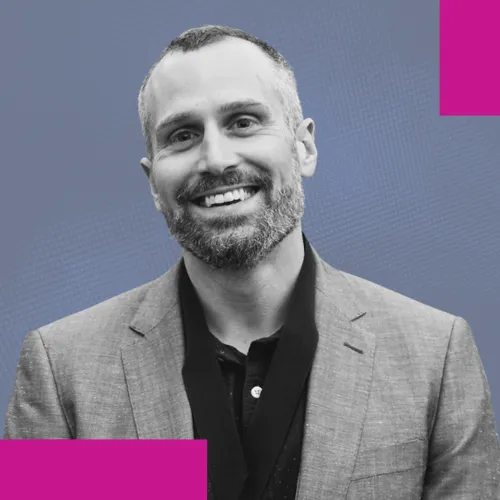
This week, we take the debate head-on. Guest co-host Jane Flegal joins us to talk about the latest version of this argument, and whether dropping the climate frame is a smart tactical pivot.
Then we turn to a more fundamental problem. Even if we land on the perfect climate frame, it may not matter if the U.S. can’t actually build the infrastructure the transition requires. A sweeping new essay in American Affairs argues that both parties have become functionally obstructionist — and that “ideologically portable” obstruction has become a feature of American governance.
We close with a look at an opening in philanthropy. Nan Ransohoff published a piece this month arguing that AI company wealth is about to generate up to $100 billion per year in new philanthropic capital. Do the institutions exist to deploy it? And how much might find its way to climate and energy work?
Credits: Co-hosted by Stephen Lacey, Jigar Shah, and Jane Flegal. Produced and edited by Stephen Lacey, Sean Marquand, and Anne Bailey.
Open Circuit is brought to you by FlexGen, a leader in integrated battery energy storage solutions and energy management software. FlexGen helps owners and operators gain greater visibility and control across complex energy systems to maximize performance. Learn more at www.flexgen.com.
Tune into Critical Capital, a brand new podcast from Crux and Latitude Studios. Hosted by Crux CEO Alfred Johnson, Critical Capital explores the interlocking forces powering clean and critical infrastructure. Join us every other Tuesday for in-depth conversations at the intersection of energy, government, finance, and global markets. Listen here, or wherever you get podcasts.
Transcript
Stephen Lacey: Climate hushing. What do you guys think of this term? Have you ever been called the climate husher?
Jigar Shah: I’ve been called a climate pusher, but not a husher.
Jane Flegal: No, I’ve never been called a husher.
Jigar Shah: I don’t actually believe in the whole hushing thing, but anyway, we can get into it.
Jane Flegal: Yeah, we can get it. I have a hard time. Well, I say I have a hard time getting excited about this conversation, but then I start talking about it and find that I get increasingly exercised. Typical.
Stephen Lacey: Yeah. The only hushing we’ll do is if Jigar goes on too many rants.
Jane Flegal: I could be a Jigar husher. That I would sign up for.
Jigar Shah: Yes. We need that. We need that.
Stephen Lacey: From Latitude Media, this is Open Circuit. A familiar debate is reemerging in US politics. Is it helpful or damaging to talk about climate? An op-ed in the New York Times argues that Democrats should stop talking about climate, pivot to affordability, and lean into the current moment. The backlash was swift and we’re going to look at the latest version of this flare up, what some are calling climate hushing.
Then, messaging might not matter if you can’t build anything. A sweeping new essay argues that both parties have become energy obstructionists and the result is a system so broken that the US is headed into a real energy emergency.
And we’ll close with a potential opening. AI wealth is about to generate an historic amount of new philanthropic capital, possibly tens of billions of dollars a year looking for a home. The question is whether those institutions exist to deploy it and how much finds its way to climate and energy work. A look at what survives and what thrives in this political era is coming right up.
Stephen Lacey: Welcome to the show. I’m Stephen Lacey, the executive editor of Latitude Media. I am back in studio after a couple weeks of travel. Caroline Golin is off gallivanting around Scotland this week and in her place is Jane Flegal, a senior fellow at the Searchlight Institute and a senior fellow at the States Forum. Jane, good to see you again.
Jane Flegal: Thanks so much for having me. I listened to an earlier episode of this podcast where Caroline revealed that she’s on an AI planned trip to Scotland. So I’m eager to hear whether the robots did her well or not when she returns.
Stephen Lacey: Yes. We made sure that she would give us that update to see how useful it is.
Jigar Shah: I was a little worried that we’d become a hallmark movie and she had come back with a newly purchased Scottish Castle.
Jane Flegal: That would be great.
Stephen Lacey: Yeah. What was that movie? I watched that this year.
Jigar Shah: Those like Brooke Shields I think did one.
Jane Flegal: What are you talking about?
Stephen Lacey: It’s a Netflix Christmas movie. I forgot what it’s called though. We’ve actually had a discussion about Netflix Christmas movies a couple of weeks ago too. Are you into that genre?
Jane Flegal: No, I’m not partaking in this. No. No, that’s not my favorite flavor, though I’m really intrigued by the fact that it is for the two of you, I must say.
Jigar Shah: Well, it is 110% safe for my 10 year old who has a very narrow sort of movie watching.
Jane Flegal: Yeah, that’s fair. I’m watching a lot of Netflix dinosaur documentaries during which my four-year-old tells me that it’s scientifically incorrect.
Jigar Shah: Oh, it sounds like the apple did not fall.
Jane Flegal: No, I’m raising a truly annoying child.
Stephen Lacey: Jigar Shah is the co-managing partner of Multiplier. How are you, sir?
Jigar Shah: I’m fantastic.
Stephen Lacey: It was weird being on stage last week doing a live show without you or Caroline. I just did it by myself.
Jigar Shah: I think that you should do more of that. I felt like so relaxed last week. I was like, “Wait, I don’t have to tape Open Circuit. This is amazing. And I get to enjoy the content. Wonderful.
Stephen Lacey: Well, the last time Jane was here, we were talking about the tension and disagreement among climate groups over whether to stop or to leverage the data center build out. And this week we’re going to lean into a more fundamental disagreement. How should we be talking about climate? Should we even be talking about it at all in politics?
The conversation has been playing out for a while over the last year, year and a half behind the scenes within the Democratic Party. And as the Democrats try to seek a path back to power in Washington and it broke out into the open when the New York Times published an op-ed from Matthew Huber, a professor at Syracuse and the author of Climate Change as Class War. And his argument is that the voters who already prioritize climate are already within the Democratic Coalition for the most part. And the voters that Democrats actually need to win back are working class voters for whom energy is like an end of the month issue and for them climate carries more political baggage than it’s worth.
So he says, lead with affordability, drop the frame, trust that the politics will sort of fall in line for climate, even if the language doesn’t. And this was reflected somewhat by a poll of battleground voters conducted by Searchlight Institute last year. And so this piece sparked a lot of very expected and immediate backlash. Huber was criticized for feeding into this trend of climate hushing, which is a term that has gained traction over the last year. And it sparked a debate that we saw 15 years ago in Washington over whether to talk about climate change. Jane, over to you. How would you summarize the latest version of this argument?
Jane Flegal: I mean, look, what I want to try to do is like disaggregate this a little bit because I think the large scale conversation about to hush or not hush on climate is conflating a bunch of things. So first of all, there’s the question of like whomst is speaking and to whom and why does it matter? And I think because if you’re talking about a scientist or a trade negotiator or a climate organization, that is not the same thing as talking about a Senate candidate in a swing district. And so if the question is actually what Matt was sort of focused on, which was like, as a matter of electoral politics in tough electoral contexts, ought one lead with climate. I think he is correct.
I think we have now tried this. Not only do I think he’s correct, but I actually think even the most aggressive climate advocates, you can think about the Sunrise Movement and the Green New Deal, for instance, sort of internalized this to a certain extent because what was novel about the Green New Deal framework for better or worse was that it was actually trying to embed climate in a much broader agenda on industrial policy and jobs and even healthcare and like this much bigger thing. So I sort of feel like we’re kind of kidding ourselves. We have all sort of metabolized or we should have, that if you are in a swing seat, you probably ought not run principally as a climate candidate. The evidence has just borne this out, that it’s probably not the right strategy. Again, I think that could be a very different thing in different contexts and even electorally. I think Ezra Klein was talking about this difference between whether we demand national uniformity in our candidates versus like some more localism. Do you remember this?
Stephen Lacey: Yeah, it was from last fall. And basically he said like, the winning Democratic strategy is that each candidate should reflect the local politics, not some national strategy.
Jane Flegal: Totally. So I do think it is where I think this matters is I think as we gear up for 2028, the expectation that Democrats in particular have a candidate who runs on climate, I think we should not focus as much on that this time around unless the politics changed so much between now and 2028. But I think actually like the localism thing broadly holds true. If you’re in a blue state or blue district, you should talk about climate, like know your constituents and don’t be dumb is sort of my basic takeaway on this. And then the one other dimension that I wanted to highlight here is sort of like the longitudinal part of this, which is just like, because I did my dissertation on solar geoengineering and I’ve spent a lot of time on carbon removal and I really am very, very concerned about the impacts of climate change on humans and ecosystems. And it is hard for me to imagine quote unquote solving climate change as a problem without somebody caring about climate change qua climate change, right?
Like getting to a net negative economy globally and potentially doing other things like adaptation and solar radiation management, like that does require concern about climate as climate. My issue or my theory anyway here is that like we have to be realistic about the constraints on action today in order to build the political coalitions and economic context to allow us to care about climate climate in the future. The more that we invest in clean energy, the stronger the political coalition becomes for more aggressive climate action, the less we are asking people to sacrifice in the name of climate, right? Like you’re kind of reducing the marginal unit of political will that is required to overcome opposition to climate change. So that’s just to say like, I don’t think that climate hushing in an electoral context is a forever prescription necessarily. These things evolve. I don’t know. What do you think, Jigar?
Stephen Lacey: Yeah. Where do you come on this Jigar?
Jigar Shah: Yeah. I mean, I’ve certainly lived my life through Jane’s words. I totally agree. I mean, we started the Carbon War Room because we didn’t want to feature the sacrifice part of it, right? And we really wanted to talk about climate change as the largest opportunity of our lifetimes. And so, I mean, that has been the through line of everything I’m talking about. I’d say that what’s a little bit different for me is I think that one of the detours I think we took with Greta Thunberg and some of the other folks on the moral part of this is that we went so far as to demonize the people who were working in the natural gas industry, working in the oil industry and working in the coal industry, et cetera.
And I think that did spill out into the Democratic Party brand broadly so it wasn’t contained by the groups that were doing the demonizing. It was the Democrats doing the demonizing and that I think ended up costing folks big time because like when the Ukraine crisis occurred, right, I mean, Secretary Granholm was at CERAWeek begging people to drill and then like the Straits of Hormuz thing, you’re like, “Oh, that’s a bad look.” And so I do think that there is a notion that we are moving forward on solutions and that those solutions actually have a far larger theoretical market size than they have currently achieved because of structural challenges around permitting and this and that and all the things that we talk about and that those things should be things that we all collectively want to solve while, which would then reduce the total consumption of oil and natural gas and coal and other things.
And then I think on the other side of things, on the hushing side of things, I think part of this is really just corporations just not wanting the drama, right? They’re like, “We’re doing this because it’s actually better for long-term risk management.” We have a lot of volatility in the fossil fuel prices that we pay and so we’d like to reduce that volatility by diversifying into solar and battery storage and other fuels and services. And so constantly bragging about the fact that we’re doing this for climate doesn’t actually serve our interests anymore because these are actually core corporate functions now, particularly with the Strait of Hormuz and what’s happening there. I mean, like everything has become a national security and economic security challenge.
And so there actually is real justifiable reasons why people might pay a premium for sustainable aviation fuels over jet fuel that now is trading at like $8 a gallon on the spot market, right? So I just think that in general, everybody wants this to be this like moral fight and I think there’s a lot of people who are exhausted by it.
Jane Flegal: Totally.
Stephen Lacey: For sure. I think we have seen the limits of the moral argument and actually I passed around a link from The Times on Al Gore and how he’s changed his presentation, his climate change presentation over the last 20 years and he has really dialed back the moral obligation argument and has leaned into the economic argument, which is quite frankly what the clean energy industry has been doing for decades and then I think it got swept up into the moral argument and some of the doomerism. But I think we’ve reached the limits of how far the moral arguments can go in politics. What do you guys think?
Jane Flegal: I mean, I guess I’m really compelled by Jigar sort of pushing back on my like, “Well, if you’re an elected, it’s different from being an advocacy organization because I do agree that there was a ton of slippage.” I do sort of think at the end of the day, the responsibility sits with the politicians and the Democratic Party to not allow themselves to be hijacked by single issue advocacy groups, really wherever they are. That I think is a real problem. But I don’t know, in a way, I don’t think this is so much about climate hushing.
I actually think one of the bigger problems was, because I’m actually sort of compelled by the moral imperative to care about climate change. I would like my son to see a coral reef and I know that we were all like, “Don’t talk about the polar bears, but I would like to talk about the polar bears occasionally.” I think it’s like one of the things that makes us human is our ability to care for and tend the planet in a way that is gracious to non-human life and that really matters to me. I don’t think that’s an electoral strategy, but I don’t think you can never talk about these things. I actually think a lot of the deadlineism in like the 2021 period was really bad because to your point, Jigar, the demonization of the fossil fuel industry and like it was a gross oversimplification of not just the politics, but like the actual way that our energy economy functions and what’s going to be required.
Stephen Lacey: When you said deadlineism, you mean like we have a decade to prevent catastrophic warming.
Jane Flegal: Exactly. And therefore any additional increment of natural gas is incompatible with one and a half, like just this sort of … So it wasn’t so much in my view that there was a moral dimension, but that it became, in a way, I actually think it was the scientism that was a problem, not the moralism because it was sort of like people were under the guise of science saying, “We have seven years to stop all greenhouse gas emissions.”
And in that context, it makes no sense to like deal with the war in Ukraine in a reasonable way. I don’t know, it’s sort of an interesting … That to me felt like it got the way that we metabolized the science around the risks of climate change reinforced the like these people are the enemy and there can be no compromise and whatever, rather than a more thoughtful view of what it’s going to take to decarbonize as quickly as possible, whereas quickly as possible also takes seriously like the physical and economic and geopolitical constraints of the world we live in.
Stephen Lacey: On that front, Jane, I’m curious what you both think about the UN panel on climate change rolling back the RCP 8.5 scenario. For context, this was like the worst case scenario with unabated fossil fuel use, scientists say that the change in the global energy mix has made the scenario no longer plausible, but a lot of people have been calling it implausible and extreme for a long time. And so now that it’s been eliminated, a lot of skeptics, including the president, of course, are now saying that it’s proof that climate scientists were just scaremongering all along when in fact there was this debate over whether that extreme scenario was plausible. Do you think this focus on this extreme scenario was ultimately really bad for communicating the urgency of climate change? It sounds maybe like you were hinting at that, Jane.
Jane Flegal: I think there is just like confusion about what the RCPs and what scenarios are and we were sort of obsessed with treating these scenarios as predictive in some way and RCP 8.5, like the emissions trajectory was always pretty unrealistic in my view. That’s not to say that like an emissions scenario that gets you the radiator forcing an 8.5 is totally outside of the bounds of possibility. If climate uncertainties turns out to be really nightmarish, I mean, who knows, like things happen. So I don’t object to the use of these scenarios in probing the science. I think what happened that was really problematic was like the climate impact literature in particular, sort of using 8.5 in a way that at least gave the sense to folks that it was a kind of baseline scenario for where we were headed. A
nd as a former academic, I can understand part of the allure of that because it’s a hell of a lot easier to get a piece published in nature if it’s as flashy as an 8.5 scenario’s impact would be than like one where we kind of muddle along and things get broadly worse, but it’s like whatever. And then I think it was just a huge science communication failure and then we had journalists and media covering these stories, covering these papers that were coming out in a way that if not dishonest about what scenario it was looking at and how plausible it was we’re at least obscuring that question a bit so that folks got really confused about what a more versus less likely trajectory was.
Jigar Shah: Yeah. I mean, I think you know from my energy gang days to Open Circuit now, like I’ve always been against all of it. So I’m against like net zero, I was always against the ESG BS. I was against the 1.5 versus two degrees stuff. I just think all of it doesn’t make any sense. The notion that all of this is some sort of United Way thermometer and that basically you just like put stuff in and like remember the whole carbon budget bullshit? There’s always something that’s like, we got to control our carbon budget, we got to control this, got to control that. And to Jane’s point, it’s all interactive. It all like the nature stuff is interactive with the ocean stuff, like if the permafrost releases all of the methane that’s trapped in the permafrost right now, right?
It’s all interactive. And the notion that we would simplify this for the general audience to like be able to give them a north star around like, “Hey, you like changing to a solar panel, just reduce this by 0.0001. Good job.” And then like you went to an electric vehicle, amazing, right? And then you went to a heat pump. My God, have you been crushing it, right? It’s like a candy crush game or something, right? And it was never accurate in any way, shape or form.
And so I get it. I don’t want to explain all this complexity to the general voter. I get the fact that that’s too hard, but I think what the general voter wants from a politician to take this back around is hope and optimism. That’s it, right? Whether it’s Bill Clinton or George W. Bush or like Barack Obama, et cetera, they just want someone to make it better for them. And part of the reason why Trump came into office in 2024 is he promised to bring down costs. Now, did he do it? No, but like he promised it and a lot of people thought on the margins, well, maybe he would do it. And so that’s it, right? And so in each and every district, like folks have to like take whatever the science data is and this data is and that data is and then boil it down to the talking points that work in their district to give people hope and optimism that their lives might be better if they vote for this person.
Stephen Lacey: Yeah, that’s right. The United Way thermometer is pretty funny. I think that you sort of need some way to communicate this to people and that was a reflection of the way we saw environmentalism through the 1990s, right? Like that if you just start a recycling program in school, you’re going to help save the planet. I remember I had this book on like a hundred things that you can do to save the planet and like I think it was an extension of that mindset, but I do agree that like it really does come down to how are you going to talk about this in terms of insurance costs, farming yields, lowering your bill and to the extent that you can do that, I don’t think talking about climate change is a big turnoff for most people, but you have to make it really tangible and it has to be very local.
Jane Flegal: I feel like what’s at the base of this in particular, I mean it’s amazing how uncomfortable we are as a society with just like grappling with uncertainty. You see this kind of everywhere, including in the electricity demand growth. Everyone is just like, no, I want to know exactly what the outcome is going to be and I want to know like exactly how many tons I have to reduce to avoid it or like people like people, experts like fall, they prefer false precision to like honest grappling with risk. I remember being at a climate event like probably in 2020 at Columbia and I said something about risk management around climate and I immediately got jumped on by like 10 different climate communications specialists who were like, “If you talk about climate as a risk management problem, you’re basically a climate denier.” And I thought that was like extremely unhealthy and actually just incorrect. It is not true.
David Keith recently was talking at Harvard, I mean at University of Chicago and he was talking about, this goes back to us, I think, mistaking climate change for like a simple conventional pollution control problem. Like David was sort of saying, with something like lead or with acid rain or whatever, you can sort of say, “This is a pretty straightforward problem of elimination. We will simply eliminate the pollutant and we can do it because there are obvious substitutes and then the problem is solved.” Climate is much more like a long-term management problem, which is a totally different structure of a problem. And I think the obsession with collapsing all of the complexities of the climate system and the social systems that interact with the climate system into these like linear trajectories is a little silly. Yeah.
Stephen Lacey: Well, let’s turn to the next segment because even if we somehow get the perfect messaging, there is a much more fundamental problem lurking beneath all of this. It doesn’t matter if we have the perfect climate frame, even if every candidate threads the needle between affordability and decarbonization, doesn’t really matter if the US can’t actually build the infrastructure needed and right now it appears that we can’t. That’s the argument at the center of a sweeping new essay in American fairs from Pavan Venkantakrishnan.
His diagnosis is stark. It’s the diagnosis we’ve had here. Both parties have become fundamentally obstructionist. The left uses environmental review, litigation, executive discretion to block fossil fuels. The right uses the same toolkit to block renewables, efficiency, now carbon removal and he calls it, which I love this term, ideologically portable obstruction. And so this has become like a feature of American governance. So how do we support, I guess the question I want to get to is how do we support this strategy of energy addition while also decarbonizing. So Jigar, to your point earlier, you said you had been skeptical of like ESG and some of this framing. I do remember back in like 2013, 2014, you were warning about the impact of politicizing fossil fuel infrastructure, right? That was a moment when blocking-
Jigar Shah: You can see the echoes between fracking and data centers.
Stephen Lacey: Absolutely. And that was the central strategy of the climate movement at that time and it was probably not a popular opinion to question it. Did it backfire as you expected?
Jigar Shah: Yeah, but I think that the part that I find fascinating about this entire piece, like I thought Pavan’s piece was really balanced, honestly, but like the part that I find fascinating is that he misrepresents what actually happened. If you think about it, like the Obama administration has been unequivocally the most pro-fossil fuel administration in my lifetime. I mean, the notion that they really were sort of like trying to stop fracking or anything else. I mean, Hillary Clinton lived on a plane to export LNG. All she did all day was like, “We need to export more LNG.” And then she went to the Council on Foreign Relations and being like, “We’ve changed the entire balance of the world order.”
And so I just think that those were activists, right? To our point before, that was not the Democratic Party that was doing that. Now, those activists did get so loud that like Bill McKibben did force Obama to pull the permit on XL Pipeline, which didn’t make any sense whatsoever and it sort of is what it is. But I think that it’s important to note that when you think about what’s happening on the right, that’s a completely different set of actors, right? This is actually being done through the entire formal Republican Party apparatus, right? We have wind farms that are being held up for routine approval processes out of the FAA. I just think that the false equivalence on this was like alarm bells in my head. This is not the same thing. And the last thing I would say is that he was making a federal government case, which fine, I get that. And I have always said, and I ran the loan programs office this way to chagrin of people in the White House, which was that we’re going to play everything straight. Everything goes as fast as possible and we’re playing everything straight.
The stuff that though he really comments on is local battles and I’m not here to police local battles. If a local county does not want a data center for whatever reason, then they don’t get a data center. That’s how environmentalism started in the 1970s, right? If you don’t want fracking or you don’t want the XL pipeline going through your county, you can say, “I don’t want it through my county,” and then they have to reroute it around your county, right? That’s how transmission works. That’s how a lot of stuff works. And so I think there was a little bit of conflating between the federal government’s actions, which I agree completely.
The federal government should be neutral and shouldn’t be weaponized in any way, shape or form on these big ideas. And then the local community obviously can say, “We don’t want oil and gas off the coast of Florida like Florida has said.” Or, “We don’t want this, that,” or whatever. I mean, I can bring them science to say that that’s a dumb idea on your part, but local communities have a heart and the heart wants what it wants.
Stephen Lacey: Yeah, I think that’s largely right. But one piece of pushback, I mean, I guess it was the Biden administration that started shifting policy. It slow walked the ConocoPhillips Willow project. It paused LNG exports. That was seen as using government to weaponize fossil fuel infrastructure.
Jigar Shah: Well, I mean, I certainly don’t disagree with that and to the extent that I could comment on it while I was serving within the Biden administration, I did comment on it and I said that was dumb at the time, but the LNG pause stuff was pure theater and isn’t the same thing, right? Every single LNG facility that’s under construction right now was approved by the Biden administration. And so there was a theater after they approved enough LNG export facilities to get to like 22 BCF a day that they were like, “Oh, let’s just theatrically pause new LNG approvals.” But they had already approved so many projects, all of which are the ones that are under construction now that are exporting now, right?
Stephen Lacey: Jane, what did you think of Pavan’s framing?
Jane Flegal: Yeah, it’s so funny because different things sort of pop for different people. But on this point, I think that one of the things that was powerful about this is the sort of for either party when they are in control, we have a cultural and political context in which both parties have felt compelled to try to score political wins by stopping things. And that I think is one of the things Pavan is trying to argue is that is not a healthy dynamic for a country that needs to electrify its economy and power and economic growth and have a reliable and secure grid.
And I sort of take your point, Jigar, about the federal and local being different, but what I sort of liked about his argument about energy addition almost as a philosophical reorientation is that we are not going to succeed if we continue to have a political environment that rewards obstructionism at any scale basically. And that’s not to say community should have no say in what gets built, but the fact that the political conditions are such that both Republicans and Democrats think they’re scoring victories by blocking stuff, by blocking energy stuff is like finding a way to crack that does feel important and also very difficult.
The other part of the piece that I really liked, which is not going to be surprising probably to anyone is this, he talked a little bit about kind of Cold War analogies and this point that he tries to make about the risks there being some asymmetry in the risks of either under or overbuilding energy. He’s basically like, there are some risks of overbuilding energy infrastructure as we have talked about ad nauseum in terms of rate payer impacts among other things that we should take seriously, but there are real very big risks of underbuilding also. And part of what he’s trying to use to justify, I think the pivot to energy addition is this like actually the risks of overbuilding are far less serious than the risks of underbuilding. And we should like take that seriously as an ethic of energy policy.
Stephen Lacey: Yeah, that stood out to me. I actually have one of his quotes pulled here because that grabbed my attention. He writes, “The cost of modest overbuilding surplus capacity, lower utilization, temporary idle assets, marginally higher physical footprint are manageable. The cost of underbuilding, scarcity, volatility and foregone industrial output or technological development are not.” Jigar, what do you think about that framing? I know that you are often framing this as we need to better utilize the assets that we have to support, for example, data center infrastructure. Do you worry more about overbuilding?
Jigar Shah: Well, I mean, I don’t know that it matters what I believe, but the entire electricity infrastructure is worried about overbuilding, right? Because it is what they actually have PTSD over is they overbuilt in the ’90s. They overbuilt in the run up to the 2008 financial crisis. They overbuilt … And so when you get hired as a regulator, your first task is to do a training video on overbuilding, right? That is how this works. And so he’s literally going into orthodoxy of the electric utility sector and saying, “You shouldn’t worry about overbuilding.” If you go to a NARUC conference, I don’t care whether you’re like a Republican or a Democrat, every single one of them talks about the risks of overbuilding, right?
That is the nature of the power imbalance between the regulated monopoly and the regulator because the monopoly makes tons more money through overbuilding, right? They don’t make tons more money through underbuilding. And so that is their charge is to guard against overbuilding. So he just doesn’t understand the dynamics of any of this and how it works. He’s like, “Well, I think it would be an overall good to do overbuilding.” I was like, “Yes, but then how exactly are you going to overcome the inertia of the entire system that we have set up?”
Stephen Lacey: I guess I just look at two recent examples. If you look at the overbuild of fiber, right, it enabled a whole generation of startups to flourish with cheap infrastructure to build their companies and we overbuilt a bunch of gas plants, which then the early hyperscale data centers were able to utilize and we were able to build a domestic tech industry that is completely unrivaled in any other region of the world. And that was the result of having overbuilt infrastructure that we grew into.
Jane Flegal: Jigar and I probably just disagree about this. I mean, of course I understand the sort of incentive structure in the regulated utility model and the CapEx bias and blah, blah, blah. I think the question is, is the CapEx bias to the extent it is real, resulting in outcomes that are bad for our country in the short, medium, and long term? And I think that’s just a really complicated question, honestly. Everyone talks even on the distribution side about overspending and gold plating and all of this stuff. And I don’t really want to opine on the extent to which that’s true or not. I’m sure there is some of it given what the incentive structures are and it is also the case that like our US energy infrastructure has like a D plus according to the Society of Civil Engineers.
Jigar Shah: We got it up to a C minus during the Biden administration, just to be clear.
Jane Flegal: I’m not sure the issue is overbuilding per se. And I take your point, Jigar, that what if you take this seriously, it does call for some pretty big picture thinking about how we do this in this country because I do think that the near term risks of overbuilding are that we are funding it on the backs of rate payers, which is like a super regressive way to do basically anything and you have all the concerns about regulatory capture that you’ve described, Jigar. And so is that investment at all efficient? Are we just letting them do whatever they want?
These are important questions, but I think that’s a different … The overbuild or underbuild question is a different question from the distributional question over who should pay for over and under build, who should bear the risks of over and under building. And I think we can probably all agree that the current system in which those risks are born asymmetrically by low income rate payers is like not a good outcome. But then the set of interventions or policy solutions that you would contemplate are really big picture things about like, maybe we need to figure out other ways to do both grid planning and financing that aren’t just through the rate base.
Stephen Lacey: I seem to remember someone coming up with an idea about a hyperscaler fund. Who was that?
Jane Flegal: Yeah, totally. And that’s not to say, I think Jigar is right to like keep bringing up the incentive problems in the utility industry. Actually this morning I saw my friend Noah Kaufman had a funny tweet that was like, “I have long thought that the incentives in the energy sector are misaligned and should be fixed.” And then it was like, “I have long thought that our failure to invest at the right scale is a problem that should be fixed. We should fix both of these things.” It’s like we sort of need to find a way to do both.
Jigar Shah: Yeah, for sure. And we can do both. I mean, but it just requires a level of thoughtfulness that didn’t come out of this piece. I think the broader argument that he’s making, which is that we shouldn’t politicize standard approval processes makes total sense. And I’ve said that for years and years and years and so I’m on that bandwagon, right? But I think when you look at what Travis Kavula has been writing really eloquently with Jabs, which he is known in everything that he writes has been great. And he puts out something as well around how one might do this more thoughtfully. I thought the way that Microsoft led on a customer led framework in Nevada, I thought was really thoughtful. We’ve talked about Google and what they’ve done in Excel Minnesota’s territory. So I think there’s a lot of ways to promote building that actually is more thoughtful in nature.
But I think that the part that troubles me in this moment is that when you lose the American public, then you are by definition in a race to the bottom and it doesn’t matter what thoughtful essay you publish in whatever publication you publish in it, right? Look at Arizona right now, right? Both Tucson Electric Power and Arizona Public Service are putting forward a 14% rate increase this week, right? Now the Public Service Commission there, the ACC is likely to rule on it around the governor’s race in November. And so what do you think the official position is going to be of the sitting Democratic governor that’s there or her challenger in that race? They both are going to hate APS and TEP on purpose, right? And then what do you think that the notion is going to be back to them? I just think that when you basically show so little understanding of how electoral politics work at a moment when 36 governors are running for election or reelection throughout the country and then you just put up a academic piece and ask me to comment on it, I’m like, dumb ass, come on.
Jane Flegal: But I actually think this is … I mean, what you’re describing is both real and I think bad actually. Yes, there — What are you proposing to fix it?
Jane Flegal: I mean, well, I think we need to have a much, much, much bigger conversation about whether a bunch of the spending on necessary infrastructure should come out of the tax base. I know you’ve been quite pessimistic about the notion that this administration would do something like that, but on the other hand, they’ve used their energy dominance financing authority, Jigar’s former home to do a bunch of pretty serious stuff to reduce the cost of capital arguably in these places.
I mean, I guess I would just say I understand the electoral obsession with near term affordability, but maybe two things. One, while it is true that a lot of things we need to do for climate are very easily collapsed into an affordability frame, not everything is. And so we should be honest with ourselves about that and the climate advocacy community should be honest with itself about that. What I do not want to see and what I have seen is people slapping an affordability label on a policy idea that is not in fact going to reduce system costs and then selling it to governors. And I think there is a lot of that happening right now that I don’t like.
But then moreover, we have an opportunity right now with demand growth and with like real attention on the electricity system to do some big stuff and the focus, understandable electoral focus on like, how is the governor of New Jersey going to reduce rates in the next 12 months? A, I think, I mean, Jigar has the panacea for all of these problems I recognize. So holding that aside, I believe it’s going to be very, very hard for most governors to hold rates flat, let alone bring them down given the scale of investment that we need to make in our electricity system, even if you do as many VPPs and batteries as you want. At a national scale, we need much more investment in our grid system. And so I worry also about us like Democrats in particular saying that they’re going to do an affordability agenda and then getting elected and being like not able to deliver for very real reasons. It’s just a hard problem.
I mean, my solution to this is like pivot the frame a little bit or widen the frame a little bit to think more about how an electricity system enables economic growth, what we have to do to drive that growth and how we’re going to ensure that rate payers don’t bear the burden of those investments, whether that’s leveraging public financing at the state or federal level or doing large load tariffs to make sure that there’s cost causes, whatever it is. There’s a suite of things you could do that could help to get at this, but that’s a different thing than like a very near term affordability we should just be avoiding overbuilding at all costs agenda.
Stephen Lacey: One last tension here, and this is something that I feel very conflicted about. I mean, if you look at any reasonable warming scenarios, we do have to phase out fossil fuels much faster than we are, but I also think that the strategy of politicizing fossil fuel infrastructure has been a losing strategy. So if we think about the energy addition approach, it’s really at odds with the idea that we need to phase out fossil fuels pretty quickly. How do you both hold those in your head at the same time?
Jigar Shah: I think all of this stuff looks very difficult to do until you’re on the other side of the S-curve. And I just think that like the fact that we’re at one in three roughly, like 30% of all new vehicles shipped this year are going to be electric vehicles is a massive supply chain lever, right? That requires all the batteries to be in existence. It requires all the other software and equipment and whatever, whatever, and EV charging and all these other things, right? And so as a result, no one is investing in internal combustion engine R&D.
No one is investing in new manufacturing plants for internal combustion engines because we peaked in like 2018 in terms of global internal combustion engine sales, right? And so I know that everything looks hard in the middle of the S-curve, but like five years from now you’re going to look back and go, “Wow, that was a lot easier than we thought it was going to be.” Because electric vehicles will actually be cheaper than internal combustion engines vehicles upfront and on the running cost side, right?
The same thing’s true with solar and battery storage. We’ve been like having all these like weird conversations about solar and tax credits and all this other stuff. I’m glad the tax credits are gone. I’ve pushed them since 2012 to be phased out, right? So that is what it is, but we’re moving to a phase where everyone is moving to a microgrid that can. That is what NEM 3.0 is in California, right? That is you running your house as a micro grid, right? Now the question is like, how do you get the electric utility to leverage the assets that you’ve invested in to actually make your neighbor’s bill cheaper, right? That’s what we’re doing on VPPs or grid enhancing technologies or all these other things, right?
And so I think that this is going to move way faster than everyone understands. I’ll give you one more example in China, which everyone constantly is talking about how awesome China is, right? People don’t understand that 50% of all of their solar power is distributed, right? Only 20% of all of our solar power in the United States is distributed, right? And so if we just matched China on the distributed basis, you would solve almost the entire data center load growth problem. The amount of gigawatts of solar you would have to deploy just to fill up all the warehouses and all the residential solar systems and all the other things would give you more capacity with the batteries obviously than the 100,000 megawatts of data centers that you would need by 2030. And so this is not a technology problem, it’s like, how do we get the permitting cost down? How do we get the workforce trained? How do we get this done and that done? And so I think that once the tools become more mature on the S-curve, you will find that reducing fossil fuel consumption really fast will be a lot easier to fathom.
Jane Flegal: Yeah. I mean, I share Jigar’s view that like the way through this for better or worse is to make clean energy technologies as cheap as possible basically. And I continue to think that that is like the best and most plausible way through this, not just because of the economics, but to like add a layer to Jigar’s point, it also really shifts the politics because then you have industries that are not nascent but grown up big boy industries who have a vested interest in the speed of the transition hastening and can and should exercise that power in political context and elsewhere in a way that can speed things up even more.
So there’s this like really useful, I think, political and economic and technological kind of flywheel here. I also just think, I mean, this is a very basic point, but I sometimes even lose sight of the global nature of the climate problem where it’s like the reason I’m not more aggressive on supply side restriction on the fossil side is because I think if you take seriously the global nature of the problem, unless and until we choke off demand for fossil fuels that oil and gas is going to come from somewhere and I think this kind of goes back to our earlier conversation about like Democrats posture on oil and gas domestically specifically I would like a Democrat to say we are going to advance technology and accelerate the economics of clean energy technologies that are better for us as a geopolitical matter, as an economic matter and for the environment and unless and until demand for oil and gas go to zero, the last drop of oil and gas should come from a country that has taken control of its methane issues, that is producing oil and gas cleanly. There’s nothing incoherent about that actually.
And I think Democrats, part of the issue in the Biden administration also was just like, I don’t feel like we had a clear posture on like, what are we going to say about oil and gas? We were afraid to lean into the fact that there was record production. We were kind of afraid to like lean out of it when prices went up. And so I just think like having a clearer frame around the way to think about the supply side on oil and gas specifically would be very helpful.
Stephen Lacey: Absolutely. Okay. So we’ve spent most of this episode talking about some key blockers, but let’s talk about an opening. Nan Ransohoff, the former head of Carbon at Stripe and founder of the Advanced Carbon Commitment Frontier published a piece this month arguing that AI company wealth is about to generate somewhere between 37 and $100 billion per year in new philanthropic capital, which is a staggering amount of money. And the question is whether the institutions actually exist to catch it and deploy it toward work that actually matters and some of that in climate work, hopefully. So Jane, we’re talking about this because you’ve spent much of your career in the philanthropic sector, you know it well. Give us a sense for the scale that Nan is talking about here in theory and why it matters.
Jane Flegal: I mean, I think it matters quite a lot. And actually like taking a step back, the scale of philanthropy in the US in general is pretty shocking actually. It’s like a base of $600 billion a year or something. That’s a lot of tax free money that’s going to charitable stuff. And in that context, like potentially a hundred billion a year is a really significant increment. I guess I would say at the outset, first of all, Nan is like a close friend and former colleague and I adore her and think she’s brilliant. So I’m happy that she wrote the piece. I think one of the things I really have a deep commitment to pluralism.
I feel like no one perspective has the solution to complex problems and I think the kind of Silicon Valley mindset as embedded in this piece can be a useful addition to a bunch of other ways to think about problems. So specifically in this case, having worked in climate philanthropy for a long time, I am very excited about the prospect of new funders entering the space to the extent they do, who are interested and excited about building new institutions rather than just kind of incremental scale up of existing organizations. Some of that is fine, but climate philanthropy historically has been incredibly risk averse on this front in my view and in my experience. So like if this new wave of funding goes to 50 new really high ambition, high effectiveness organizations, it could be a huge deal. If it just doubles the existing ones, I think that is unlikely to be helpful. So I think to the extent there’s a bias toward new stuff actually for climate philanthropy specifically, it could be very helpful.
Stephen Lacey: Yeah. Actually, before we get deeper, can you just talk about the range of institutions and approaches we’re talking about in the philanthropic sector, just so that people have a sense of what kind of organizations we’re talking about.
Jane Flegal: I mean, it’s very, very broad and I think one of the arguments that folks have been making is that it can be even broader. It can be everything from funding research and development in a charitable way on a climate related topic and there are organizations that do just like basic R&D that you can give them a donation and it’s a tax write off. So that’s like one category of thing. There’s a category of thing that is policy advocacy in various forums at various scales and there’s lots of climate organizations that do that work. T
here are organizations that do more kind of movement building, grassroots kind of coalition building on climate or unrelated issues. Those are also groups that exist. There are increasingly philanthropic endeavors that do direct deployment of technology, not just R&D, but like as a nonprofit, I think the problem with climate is that the scale of the problem is so big that private money alone is never going to be able to solve it, but there are some bets that folks are making on specific technologies and making donations. Impact investing is another category of thing where you can put money into a fund that is kind of like first lost capital into projects that would otherwise not get funded at scale. So there’s like a very wide range, you can fund litigation, like there’s a very wide range of things that you could do in this space.
Stephen Lacey: Jigar, do you think the infrastructure exists to handle this level of money? I think you’re skeptical that this amount of capital is going to pour into this space, right?
Jigar Shah: Well, I mean, I think that in general, Silicon Valley broadly likes technology led solutions, right? And so I think they’re more excited about biology and chemistry and long lifespans and all sorts of other stuff to fund than like-
Jane Flegal: Yeah, long lifespans where you can’t do anything fun. You’re not allowed to have a cocktail or whatever.
Jigar Shah: Exactly. So I find it highly unlikely that they’re going to put all that money into climate, but I think that the bigger thing I think is just like to give you my own sort of drama, like in 2008, I was a part of the effort that they called the Apollo Alliance, right that Kate Gordon and other people did. And that was a deeply hopeful effort, right where we could invest in transit and invest in clean energy and invest in all this other stuff and like-
Stephen Lacey: Was that about labor too, you were bringing in labor.
Jigar Shah: And labor was a part of writing all of those plans. And so in the wake of Obama’s election, right, that was Obama’s preference was to do that approach. And then all of the climate philanthropies were like, “Hello, first black president. We don’t think that you should be able to determine the direction that we want to go in. We should do Waxman Markey.” And then he gave that big speech. Remember Rham Emanuel was like, “This is not the right time.” And then he gave that big speech for cap and dividend and they were like, “Pasha! What do you know about this stuff? We’re going to put another $500 million behind this and push it through the House.”
And a lot of people took votes that they should have never taken and they lost their seats. And we never did the Apollo Alliance because Larry Summers and Tim Geithner and all the Clinton people were like, “We don’t believe in industrial policy and we don’t believe in any of this stuff.” And when you think about what happened from a technology standpoint, we went from 13% efficiency modules in 2008 to 20 plus percent efficiency modules basically by the end of the Obama administration and all of those solutions were invented by the US Department of Energy and obviously Martin Green at the University of New South Wales and we handed them over in high profile fashion with pictures in the New York Times to Singhai University. We were like, “We’re not going to build any manufacturing facilities in the United States and we don’t believe in industrial strategy. So here you go, here’s our secrets and meet the NREL people that came with me.” I mean, it was done in the open. It wasn’t like secret. We were like, “You manufacture all this other stuff.”
And so when you think about the role that philanthropy can play or not play, that is a stark choice. We made climate an issue of climate sacrifice in 2009. Remember it was like for a cup of Starbucks per month we could solve this problem as opposed to what the unions wanted to do with Kate Gordon and all the other folks, which was like, let’s fix our infrastructure, let’s use the fact that we’re at 11% unemployment rates and actually put people to work, right? All the stuff the Biden administration did, but the philanthropists weren’t for it in 2008. They were for it by the time we got to 2020, 2021, but this is where their role can be outsized, right? And so that’s why I think this topic matters and it matters that clean energy people like me who largely have ignored that sector actually get involved in educating that sector because if you don’t, then they basically work against you in ways that wasn’t intentional, but it’s net net they worked against you.
Stephen Lacey: Does that feel like a reasonable assessment of that part of history, Jane? What do you make of that moment?
Jane Flegal: Yeah. I mean, look, I think that the bottom line is there’s a reason that I spend so much time in philanthropy, I think it’s a highly catalytic intervention in the world. It’s like when you have control over that level of resources, these donors who, by the way, no one elected can have a very big influence on how policies are framed, what ideas are generated, what the political strategy should be around these things. And in many cases, the donors on these issue groups are also big political donors so they have even more power than they would otherwise have. So I think this really actually does matter in a big way.
The big question is just like if there’s an influx of new capital into the space, how do you make sure it is put to good use? And I think there are a couple of things I think are really important. I mean, that piece had this valence of like kind of classic Silicon Valley move fast, break things like startup nonprofits are the only solution. I do think climate could use a dose of that. Climate philanthropy could use a dose of like try some new stuff, but there’s also a bunch of other giant gaps in the ecosystem. We have absolutely no real meaningful right of center strategy in the United States on this topic. That could be an interesting domain to look at in the policy and political space. I continue to believe that like-
Stephen Lacey: ClearPath, you’ve got ClearPath.
Jane Flegal: Yeah. I mean there are great groups. There’s ClearPath, there’s ACC, there’s like lots of groups, but they’re horribly underfunded relative to other groups and they’ve been a little bit, I think they’re sort of like there hasn’t been like a big strategy and the political giving is really a huge problem on the right of center, which I know Jigar has been thinking about and working on too, but I think that’s a huge part of this. I also think that we are in like a basic epistemic crisis in a lot of the climate and energy space. I think we’ve done an okay job of building these advocacy organizations who perhaps correctly see their role as like pushing Hochel for greater ambition on climate or pushing Newsome for greater ambition on climate at almost all cost because that’s the issue they care about.
But part of doing the pushing sometimes involves not like nefarious lying but some fudging about like how cheap certain things are, why there’s no trade off and no downside risk. I just think some epistemic infrastructure on rigorous independent research and modeling that isn’t captured totally by advocacy or industry sounds like we already have a lot of that in climate, but I actually feel like we don’t and we need a lot more of that and that might be a place where Silicon Valley could be well positioned on the kind of where science and technology meets policy. I don’t know. I guess my two anxieties about this just to name them are one, what I already mentioned earlier, which is I think pluralism is good and having just the Silicon Valley mindset enter this space at huge scale, you need many ways of thinking. So that’s kind of thing one. And then thing two is like in general, I mean as I said, $600 billion a year in charitable giving, that’s not like free money. We have a tax system that encourages people to do that. I think there’s a real question of like there’s especially right now when cynicism about government and public institutions is so high and there is this pressure to kind of like do things outside of government.
And I totally understand this given what’s going on. And I think that can be a really bad spiral into like no one trusts public institutions. So we do everything outside of public institutions and then they erode even further. And then we have like no state capacity and no trust in government to do the things that we do need government to do, including on climate. And so for me, when I’ve been working for donors, my one question that I often ask is like, is this funding crowding in or crowding out the public sector in areas where we do need a public sector? And I think that’s like not everyone shares that view, but I do think it’s like important to at least put it on the table. We cannot and should not, in my view, sort of privatize everything even if we think it’s faster.
Jigar Shah: Oh, well, I 100% agree with Jane on all of that stuff. I completely agree that this notion that you can get this done outside of the government is just so wrongheaded in ways that just are just shocking to me. But the other thing I would say just to pile on to my analogy is that like, I don’t know if you remember this, but like after Obama got elected, like Al Gore made that big speech at like GW around how we could decarbonize our grid by 2020 and people just laughed at him. When you think about what we could have accomplished on industrial strategy and all of that stuff, had we actually taken it seriously, like the cost of solar really did come down.
We were at 75% of everything we added to the grid by 2016 was clean energy, right? We could have been so much farther along, but for the lack of plurality, the lack of like allowing people to have different ideas from your own and letting those actually be considered in this group. I mean, just the other comment that Jane made was around like a base of data. I think we do have that base. I mean, whether it’s like all the groups in DC, the economists and others or the folks at Jason Bordoff’s school at Columbia, et cetera, but Lord Almighty, can they not get a word in edgewise on the media and comms landscape that their stuff never goes viral. And so that’s why it was like so surprising when Tyler Norris’s stuff went viral. You’re like, “Oh crap, a good paper finally gets discussed.” That’s interesting. But I do think there’s a ton of great stuff that I read regularly that I’m like, wow, people are just not talking about this at all.
Jane Flegal: That’s right. It’s maybe more an issue of like elevating the good intellectual work that is happening and giving those people access to policymakers so they’re not just turning to like advocacy groups for advice on complex questions where there are trade offs.
Stephen Lacey: Yeah. Well, we’ll see how much of this goes into like blood transfusions from young people to into tech.
Jigar Shah: My God.
Stephen Lacey: And how much of it goes to climate.
Jigar Shah: Diaries of a vampire. It’s craziness.
Jane Flegal: I mean, look, also like again, I did a dissertation on geoengineering. That seems like the kind of thing that folks with this assertive bias would be really interested in and like how are people going to think about that?
Stephen Lacey: Yeah. Fascinating stuff. Okay. So viewers, listeners, you’ve got plenty of reading to do. We’ll provide a link to Nan’s piece on Philanthropy, Pavan’s piece in American Affairs and Matt Huber’s piece in the New York Times. And you can read all those and share us your thoughts we want to hear from you. Jane Flegal, senior fellow at the States Forum, senior fellow at the Searchlight Institute. So good to see you. Thanks for doing this.
Jane Flegal: Thanks so much for having me guys. Really fun to talk to you.
Stephen Lacey: Absolutely. Jigar, have a super week.
Jigar Shah: Well, I’m going to enjoy the rain here in DC.
Stephen Lacey: Well, we’ll catch you all next week. Thanks for being here. The show Open Circuit is produced by me, Sean Marquand and Anne Bailey. It is a production of Latitude Media. Find all of our episodes on YouTube, go subscribe to Latitude Media and you can also find our audio versions anywhere else you get your audio podcasts. Sign up to Latitude Media’s newsletters for all of our coverage on stories that we cover here every week and we will catch you next week.