When Elon Musk canceled Tesla’s affordable Model 2 last year to go all-in on Robotaxis, he may have made the most consequential decision in the company’s history. As Chinese automaker BYD captures global market share with lower-cost vehicles and superior charging technology, has Tesla prematurely surrendered the market it created?
“In his mind, I think he ushered in the EV revolution for the world, and that problem is solved, and now he wants to move on to AI and robotics,” said Bloomberg reporter Dana Hull.
This pivot comes as Tesla’s growth story has fundamentally changed, with the company abandoning its promise of 50% year-over-year growth and its target of making 20 million cars annually by 2030. Meanwhile, the political transformation of Musk has created massive challenges for Tesla’s brand.
The departure of key executives has also left critical initiatives like virtual power plants and grid services without clear leadership, despite Tesla Energy showing promising growth.
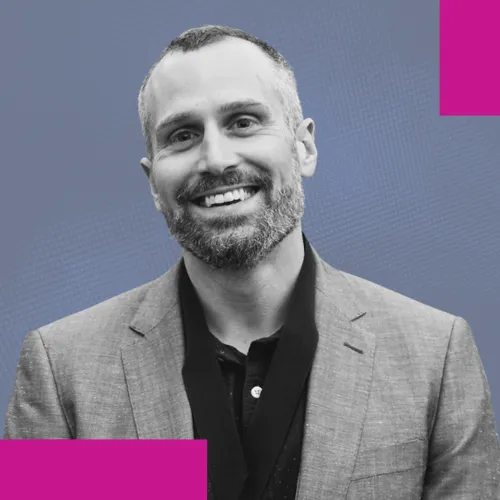
This week, Dana Hull, veteran auto and tech reporter at Bloomberg who has covered Elon Musk’s companies since 2009, joins us to discuss Tesla’s strategic pivot and uncertain future in an increasingly competitive EV landscape. Dana is a regular contributor to the Elon, Inc. podcast.
“The company’s product lineup is very murky right now,” said Hull. Tesla’s refreshed Model Y isn’t selling as well as expected, and more consumers are refusing to buy from a company whose CEO has become so closely aligned with Donald Trump.
With the Cybertruck underperforming and no affordable model in sight, is Tesla setting itself up for a painful reckoning? Or will AI and robotics justify the company’s trillion dollar valuation?
Credits: Co-hosted by Stephen Lacey, Jigar Shah, and Katherine Hamilton. Produced and edited by Stephen Lacey. Original music and engineering by Sean Marquand.
Get tickets for Transition-AI: Boston to see Open Circuit live, with Google’s Caroline Golin.
Open Circuit is supported by Kraken, the only proven, AI-powered operating system for utilities. Learn how Kraken helps unlock excellent customer experiences, increased innovation and reduced operational costs at kraken.tech.
Open Circuit is brought to you by On.Energy. As one of the fastest-growing battery storage IPPs, On.Energy delivers turnkey resiliency solutions for utilities and enterprise customers. Whether you’re managing data centers or local grids, we help bring storage to your fleet. Learn more at on.energy.
Transcript
Jigar Shah: So Dana, did you know that you were going to be on the Tesla beat?
Dana Hull: Yeah. The sort of sad thing about my life is that I’ve actually been on the Tesla beat since 2009 when the Recovery Act was passed under the Obama administration, a lot of money started flowing to Silicon Valley for clean tech. And so my beat at the time at the San Jose Mercury News was clean tech and California energy policy, and Tesla was this tiny little startup trying to make electric cars in the Bay Area, which everyone thought was crazy. And so I started covering Tesla back in 2009.
Jigar Shah: I remember, but I just didn’t know that you knew it was going to be your entire worldview for-
Dana Hull: Right. Usually people cover a beat for two years and then they move on to something else. But Tesla just became this incredible business story, and you’ll have to pry this beat out of my cold, dead hands, right? Because it’s like they-
Jigar Shah: I live for your take. I live for your take.
Stephen Lacey: From Latitude Media, this is Open Circuit. This week, Tesla’s Fork in the Road. Elon Musk is supposedly stepping back from DOGE to focus on Tesla, but have his political exploits done lasting damage to one of the world’s most valuable brands? Tesla’s sales have cratered, even as the EV market grows, and the company is facing brutal competition from BYD, which is selling more EVs, developing faster charging technology, and sweeping the global market. Musk is now betting everything on the Robotaxi. If Tesla is no longer a car company and Musk has lost his Tony Stark sheen, what does it mean for the company that spawned the modern EV and battery market?
I’m Stephen Lacey, Executive Editor at Latitude Media, welcome. Jigar Shah is my co-host, he’s a clean energy investor and former director of the DOE’S Loan Programs Office. And you are in the Dulles Airport lounge. Where are you going?
Jigar Shah: Yeah, they have this false wall in the United Club, and I was like, “Is there a room I could record a podcast?” She was like, “We have this false wall, you can have this whole room to yourself.” And so I’m like, that’s crazy. Anyway, I’m going to Toronto.
Dana Hull: Oh, good. I’m glad you’re not going to Newark.
Jigar Shah: Yeah, seriously, seriously.
Tesla’s relationship with the DOE Loan Programs Office
Stephen Lacey: The Loan Programs Office, which you ran for many years, helped Tesla build its first factory, but it was a major focus of DOGE. How do you hold that one in your head? The program that saved Elon’s company was a major target.
Jigar Shah: You don’t, right? I mean, ultimately when you try to create through lines with Elon and all these other folks, I think you end up really affecting your own mental health. And so you’re in this place right now where up is down and right is left, and it’s very rarely the fact that there’s actually a signal there.
I mean, there’s clearly a signal where DOGE I think went after everyone that hurt Marc Andreessen and his Bitcoin empire. But in terms of the Loan Programs Office, they came in expecting to see fraud and in every presentation was like, “Oh, that was really well-structured. We should do five more of those loans.” And so I don’t know what to say, except that, don’t have 19-year olds run things like this.
Stephen Lacey: So unfortunately, Katherine Hamilton had a last minute urgent matter and couldn’t be with us this week, but joining us to talk about Tesla is Dana Hull, a veteran auto and tech reporter at Bloomberg, who’s covered Elon Musk’s companies for over a decade and a half. She’s also a regular contributor to Bloomberg’s Elon, Inc Podcast, which I can’t recommend enough. Dana, thanks for being here.
Dana Hull: Of course, my pleasure.
Elon’s transformation
Stephen Lacey: So I have to start with a question that I’m sure you get all the time. As a reporter who has followed Elon for so many years. What the hell happened to him? Is he taking too much ketamine? Is he spending too much time online?
Dana Hull: Yeah, this is the perennial question. Whenever I go to parties and people ask what I do for work and I say, “I investigate and cover Elon Musk,” it’s like, “What happened to that guy?” And I think that it speaks to kind of the tribal politics and the polarization that we have in this country right now, where liberal Democrats in coastal states, like California used to think that Elon was “one of us,” like here’s this guy who cares deeply about science and climate change, and I’m going to buy his cars and his solar panels because I care about that too. And then he shifted really quite quickly to what many would consider to be the right, and it happened over during the pandemic.
So if you recall back in 2020, Alameda County’s public health officials closed the Tesla factory because of COVID, while the Detroit automakers were still open, and that really angered him. And he got on an earnings call and talked about fascism and said that people need their freedom. And I was like, whoa, I have never heard him speak like that before. And then you started seeing kind of these tweets that were flirting with COVID denial-ism or poo-pooing the vaccine efficacy. And then from there, it was like a hop, skip and a jump to endorsing Trump, campaigning with Trump, speaking at Madison Square Garden. And now here he is, the first buddy. I mean, it happened very quickly.
But I do think that Elon is someone who is incredibly online, and when you are in that stratosphere that he is in of being so incredibly wealthy, you are in a bubble that is not the real world anymore. I mean, you travel with security, you’re always on private planes, your true friends are few and far between. So I think it’s the story that still has not yet been fully told, what radicalized him.
Jigar Shah: Well, I thought that his oldest child changing their gender, I think had a big influence on him. And I also think that the Delaware court was patently unfair to him. I remember when he got that pay package, and both you and I were like, “He’s never going to earn that pay package.” Right? It basically was like, “We’ll give you a bunch of the company if you 10X the stock from a place that was already more valuable than most auto companies.” And you’re like, “That’s never going to happen,” and then he did it.
Dana Hull: And then it did happen, yeah.
Jigar Shah: And so then he got a pay package and the Delaware courts are like, “Ah, no, we just think that’s too much for anyone man to have.” And that was I think, triggering as well for him.
Dana Hull: Yeah, and then remember too, that Tesla, he moved to Texas in 2020, which is now five years ago. And Texas is very different. I mean, the tech community there is way more libertarian, anti-regulatory. And so he’s now, he’s not really a Bay Area tech titan anymore. He is an Austin, Texas tech titan, and I think that that’s had a big change too.
Is Musk really pulling away from DOGE?
Stephen Lacey: So there are two big questions I want to tackle. One is what the state of Tesla tells us about the company’s unique challenges and the broader competitive landscape in EVs. And the other is whether the company’s big pivot to AI and robotics will succeed, and what is the path forward for that strategy? And I want to just quickly reflect on DOGE for a moment. Firstly, I thought Elon was supposed to be limiting his time with DOGE and focusing on Tesla, Dana, but he’s in Saudi Arabia with Trump. What’s going on there?
Dana Hull: So I honestly think that this whole thing about limiting his time with DOGE is optics. Tesla’s stock and his own net wealth really cratered because DOGE became wildly unpopular and there was this big backlash to it. And so on the Tesla earnings call, he said he was, reallocating his time and would be focusing more on Tesla and stepping back from his day-to-day in Washington. That’s because he’s a special government employee and so there’s a clock where he can only work 130 days out of the year on DOGE or in DV.
And so, now the great irony is I guess he’s a remote worker? I don’t know. I don’t know, with him being in Saudi Arabia, does that count on the 130 days or is that separate? But he’s still very close with Trump, and he did not spend over $250 million of his own money to get Trump elected just to take his DOGE ball and go home. I mean, there is a reason why he invested heavily in the campaign. And I think that while he might not be front and center with DOGE, I think he’s got his people in place, he understands the systems now, and he will continue to have enormous influence and power.
Jigar Shah: I mean, part of this for me is trying to figure out, in the first Trump term, everybody was saying that Trump was owned by Russia or whatever. And now I think there’s this big fight with China, and it feels like Elon, part of the reason he wants to be so close is to manage the China stuff, because these tariffs hurt him more than it hurt a lot of people. And I think China is actually very important to Elon.
Dana Hull: Yeah,
Stephen Lacey: Yeah, that’s an interesting point also, that he wants to dismantle the agencies that regulate his companies too. So, what are the outcomes that Elon wants from this, other than just cutting employees?
Dana Hull: Well, he’s… so, to sort of back up for a bit. The China angle is huge because Tesla was the first and only automaker that was able to build a factory in Shanghai without having to do a JV with a Chinese automaker. And China accounts for a significant chunk of their auto sales and the tariffs really hurt Tesla. Tesla makes its cars that are in the United States in the United States, but when there’s a trade war, you’re going to see a backlash against Tesla in China. And so it’s very dicey for him. And Musk said on the last earnings call that he was, he’s not a fan of tariffs, he made his case to the president, but ultimately it’s the president’s decision. So there’s definitely tension there or differing opinions around that.
But DOGE really seemed to be much more culture war stuff, like going in and looking for any contract that mentioned diversity, equity and inclusion, and really canceling contracts that were all about DEI. I mean, that was a big thing that DOGE focused on. And then obviously getting access to the data and making the data more interoperable between agencies.
Stephen Lacey: And do you think that a lot of this is about dismantling agencies that do regulate his companies? What activity have we seen there that could be beneficial for his varying companies?
Dana Hull: I mean, so rockets and cars are regulated by a host of agencies, everything from the FAA, which has to sort of approve any Starship launch to NHTSA, which investigates autopilot, to the SEC. DOGE kind of went through a lot of agencies that didn’t really have direct impact on Musk’s companies. The first one that they really went into and “put into the wood chipper” was USAID. I mean, as far as I know, USAID has zero to do with Elon’s companies. I think the FAA is a big one, because there’s talk that Starlink will be brought on to help kind of improve the air traffic control system. That would obviously be a benefit to SpaceX. But it’s just sort of demoralizing the federal workforce and all of the attorneys who work for the SEC and the DOJ. I mean, yeah, that all could benefit Elon in the long run for sure.
The Musk myth vs reality
Stephen Lacey: Just one more question on Elon, because he’s such an important figure right now in business and politics. We’ve all been around long enough to see the entire arc of his career at Tesla, and it’s been really astonishing to see how he’s built this impenetrable, or up until recently impenetrable cult image among his fan base as this genius inventor. And he has this side that I think is less understood, which is, he’s a master storyteller who built Tesla based on a lot of deceptive promises. He’s really annoying and frustrating to many of his senior people who are actually making the product decisions, and he has a habit of blowing projects up based on his whims. And so I’m just wondering, Dana, how do you reconcile that side of Elon with the Tony Stark Elon that many of his supporters believe?
Dana Hull: Yeah, I mean, I think that there’s a lot of mythmaking that went into Elon that the tech press, frankly, really helped to build upon in the early days. And I always sort of joke around that if you think back to the timeline, Steve Jobs died and Silicon Valley is always, who’s the next Steve Jobs? Who’s going to fill that void of someone who really cares about design and how things look and is this kind of iconoclast? And Tesla was coming out with the Model S right at the same time. So it was like this perfect thing where then all of a sudden we had this kind of quirky entrepreneur from South Africa step into that limelight.
And to his enormous credit, no one thought Tesla was going to make it. I mean, in the early days of covering the company, I would go to Detroit and every automaker was like, “Oh, that company is going to go bankrupt. Americans aren’t ready for electric cars.” And then not only did Tesla did it, but people stood in line overnight to put down their deposits for the Model 3. It was like you could really feel the needle moving, and then every automaker in the world followed Tesla’s lead.
But Elon doesn’t always make the best decisions internally. And I think the biggest example is they were supposed to come out with a cheaper car to kind of compete with BYD, and instead they came out with the Cybertruck. So, not everything that Elon does is genius level. And he’s also spread very thin, he’s running four other companies and he’s working very closely with the president.
Stephen Lacey: Yeah, Jigar, do you want to comment on that? Because you actually made a comment in our live show about how you thought Elon was a bad manager and one or two of our listeners pushed back on it in the comments. And I’m just curious what you mean by that.
Jigar Shah: I think he’s clearly a bad manager. I actually don’t think anyone would disagree with me about the fact that he’s a bad manager. I think he could be brilliant and he could have lots of things.
I think one of the things though that I’m trying to figure out is, Elon didn’t really care that much about wealth. If you remember in the 2013, 2014, 2015 timeframe, he used to just say the stock price is way overvalued and this is not where the stock price should be. Right? He would be very admitting of that. I think there was a moment though during COVID, where he actually cared a lot about his net wealth and this was like versus Bezos and versus Gates and all that stuff. And that I think has made him a much worse decision maker than he was in 2013, 2014. So part of the reason, for instance, why he’s focused on the Robotaxi and the robots, is because it’s very obvious that just leaning into Megapacks and Powerwalls and selling more Model Threes or a $25,000 car, is not going to justify a $1 trillion valuation for the company. He needs weird stuff. He needs to actually be able to do those things.
Dana Hull: Robots.
Jigar Shah: Totally. And even there, he’s made terrible decisions. So when you think about, I love the self-driving features of Tesla, and so we only rent Teslas when we do long trips because the self-driving features are just amazing, and you can go anywhere with those things. But he refuses to use LiDAR, and it is really obvious that that is a huge hole in the way in which his self-driving cars will work, which is why Waymo is way better than Robotaxi. But my sense is, is that he just is in this warped place right now where he’s desperately trying to keep Tesla at a trillion dollar valuation and he’s not actually thinking about products well.
Tesla’s financial performance
Stephen Lacey: So, Dana, walk us through the top numbers in the company’s recent quarterly earnings. We saw automotive revenue down, we saw market share falling. What were some of the big takeaways from quarterly earnings?
Dana Hull: Yeah, so I mean, number wise, they still are sitting on a huge pile of cash. They’re not saddled with debt, so they’re actually doing okay on that front. But the growth story is what has changed. And Tesla used to promise 50% year-over-year growth, and now that is not happening. So a year ago, they pivoted to the Robotaxi and robotics and they’re in this stuck place where on the one hand, on the calls, and there’s tape of this, Elon is saying, “Eventually driving a car will be riding a horse.” But on the other hand, the bulk of their revenue is still from selling cars. So you have the CEO of the company basically, he sounds to me like he’s very bored of the car industry, and-
Stephen Lacey: Yeah, you wrote a column about that, right?
Dana Hull: Yeah, I did.
Stephen Lacey: A little while ago.
Dana Hull: I mean, and I think that if you think about his mind and the way it works, he likes to solve big problems. Going to Mars is a big problem. Full self-driving is a big problem. In his mind, I think he ushered in the EV revolution for the world, and that problem is solved, and now he wants to move on to AI and robotics and take on Sam Altman and do all these other things, and he’s just kind of bored of selling cars, which you’re seeing in the product lineup right now. And so where that future growth comes from really remains to be seen. And the BYD threat is huge, because BYD doesn’t just sell cars in China, they’re flooding the market all over. They’re all over South America, they are a global automaker, and so it’s wild.
And then at the same time, Elon went all-in with Trump, and that is really hurting the brand among the core constituency of Tesla owners, and that is Blue State, ZEV state drivers who will never buy a Tesla again. And if you look at Tesla’s lineup, the most recent car is they have the Cybertruck, and then they have the refreshed Model Y. The refreshed Model Y is awesome, but if you bought one, it means that you bought one post-inauguration. And there is no way that you can put a sticker on a new Model Y that says, “I bought this before Elon was crazy.” It means that you actually bought it knowing that he was “crazy.” So you’re not seeing the Model Y fly out the door the way that I think Tesla had maybe been expecting.
Jigar Shah: So I think the part that was so exciting about Tesla is that they weren’t a quarterly earnings call company, that they were a company that had these big bold ideas and napkins. And I think Latitude talked to Drew Baglino, I think on the Catalyst podcast around what that meant and the fact that everything was going to electrify and then we were going to power it with solar, and then we were going to do this math and figure out whether the numbers worked, and then we were going to use batteries, and all these other things. And I feel like they’re not marching towards that future anymore. Right? I don’t know what future they’re marching towards. Refreshing the Y and just selling more cars was not what I was told when I was told to buy a Tesla stock. It’s like, here’s the next plan that we’re executing on.
And when you talk to the people who work at Tesla, they still believe in that plan. Right? So if you talk to the people who run the Powerwall division or run the Megapack division or run some of these other things, they actually still believe that they’re on the cutting edge of bringing in virtual power plants, bringing in all these other things. Right? But I think that Tesla as a corporation, it’s not clear to me that they’re driving the future in the way that they were doing before. Right? And that I think brings a level of sadness to me and a lot of Tesla stock owners and others, because I think that’s what we were all buying into, it wasn’t quarterly earnings.
Dana Hull: The other thing is that Tesla, I mean Elon’s companies all overlap in these really wild ways. And so, one bright spot, earnings call, was that Tesla Energy is doing really well. But then when they filed the Q or they amended 10-K, you can see that part of that is because they’re selling Megapacks to XAI, which is Elon’s artificial intelligence company that has this massive data center and supercomputer called Colossus in Memphis, Tennessee. And that facility has come under enormous heat from local environmental groups and racial justice groups because they’re using gas-fired generators to get it up and running. And so now they’re adding Megapacks, and so that’s great from an environmental perspective. But just the fact that part of the bottom line is that Tesla is selling products to another Elon company. I feel like that happens within his empire a fair amount, there’s a lot of overlap.
And so, yeah, who is kind of leading all these different divisions? And Tesla used to talk about making 20 million cars a year by 2030, they no longer talk about that at all. It’s not in their impact report, they have completely backed away. So, how do you make money as a car maker when the CEO is all about robotics and AI?
The pivot from Model 2 to Robotaxi
Stephen Lacey: Can you talk more about the decision to blow up the affordable model, the Model 2? So it was about a year ago when Elon went to his team and said, “I don’t want to do this anymore. We’re going to put all of our chips on the Robotaxi.” And they had really accelerated in their product development plan and they were going to launch the car this year, I believe. And so, that was a huge decision, that was the real turning point for the company. I think a lot of people were really upset that Tesla decided that it wasn’t going to follow the original path, which was to create increasingly affordable electric vehicles. And then meanwhile, you have BYD just taking over the world with a bunch of different models. They have a faster supercharger network. You have other automakers rolling out increasingly cheaper models. What do you think we will say when we look back on that decision to ditch the Model 2?
Dana Hull: Yeah, I mean, it’s crazy because they had also, they were supposed to open a plant in Mexico. Right? I mean, there was this whole idea that they were going to have another factory in Mexico to make this low-cost vehicle. And then that Mexico plant is on ice, forever, I don’t think we’ll ever see it.
And my understanding of what happened internally was, so Tesla is not fully self-driving. They market a software called Autopilot, and then there’s a package of options called FSD. And people who drive it, love it, like Jigar was mentioning. I mean, as a driver assistance feature, it is pretty great. When I rent Teslas, I find Autopilot to be very helpful. And so as Autopilot made progress internally, I think Elon just got super excited about the premise of that. And he might’ve just felt like, this is where we win, we can take on Waymo and Uber. And the Robotaxi has always been part of the master plan, if you go back to the master plans that Elon has written over the years. And I mean, in 2019, he raised billions of dollars from Wall Street on the promise that 2020 was going to be the year of the Robotaxi. So-
Stephen Lacey: He said he would have a million cars on the road by then.
Dana Hull: Yeah, so he-
Jigar Shah: Well, he also was leasing the cars so that he could actually take them all back used and retrofit them into Robotaxis.
Dana Hull: Right. So I think he feels like he’s got to show that this Robotaxi is real. But the decision not to go down market with the cheaper cars is definitely one that’s going to… I mean, the company’s product lineup is very murky right now, because the Cybertruck is not selling, the Model Y refresh is all they have. The future is the Robotaxi, and then they’re going to have this Robotaxi event next month. But it’s not like the two-seater, pedal, no steering wheel, no pedal, “Cybercab” that they unveiled in the fall. It’s Model Ys that the company owns.
Stephen Lacey: I don’t get why you can’t do both. Why can’t you develop the Model 2 and the Robotaxi at the same time? Why does he have to blow up this really important product line? I just don’t get it.
Dana Hull: Yeah, I don’t know either. I mean, they were also very keen on this whole new unboxed assembly process, which seemed really neat. A way to just completely rethink the traditional assembly line and cut parts and cut processes and streamline manufacturing, and a lot of people were very excited about that. But now that seems like it’s applying to the Cybercab, but not the cheaper car. And the cheaper car might just be like a de-contented Model 3 and Model Y, because what’s going to happen at some point is, Tesla will have overcapacity at its factories. I mean, if they continue to lose market share and interest rates are still very high, consumers are worried about the economy. They have factories in Shanghai, Fremont, Austin, and Berlin. If they’re not running at full capacity, they’re going to have to start cutting shifts, and so, yeah.
Jigar Shah: I don’t have any problem with them abandoning the Model 2. I just think in general, going after the low margin stuff was not like where Tesla was destined to be anyway. The problem I have is I think they’re going to miss the window on the Robotaxi. It’s very clear to me right now that everyone who attends the Olympics in LA in 2028 is going to be in a Waymo. There’s not a single person who’s going to be in a Robotaxi, and that is a huge missed opportunity. Right? You have a global stage, everyone will be there, it’s the LA Olympics, it was theirs to lose, and they’re not even close, right? Waymo is going to be fully deployed in I think five or six major cities by the end of the year, right? And clearly, I think the Trump administration wants to open this up and let people legally do this in every city around the country.
And I think part of the thing that’s so amazing about this, is think about the future. Right? The future is that if you could pay $99 a week for your car, only if you hit a button after you’re at your destination and it gets to take riders while it’s parked, right? And then it comes to pick you up after you’re done with work, and that is the future. Right? The future is, is that instead of having cars that are stuck in a parking lot for 94% of the time, it’s actually out doing stuff. Right? And I feel like Waymo is just 18 steps ahead of Robotaxi right now, and that’s what makes me sad, is that we’re in this place right now where I think Tesla collected all this data. They had all this stuff, they were in the lead because of all these things, and I don’t see it. I just don’t see how they serve the LA Olympics in ’28.
Dana Hull: Yeah, and they don’t have… I don’t know what the business model is for servicing these cars and the customer service function and getting the app right. And Waymo, I mean, running a ride-sharing, a ride-hailing operation, there’s two issues. There’s the technical issue. Can the car really drive itself and deal with all these corner cases? And there’s the customer part of, do you have an app that works? We saw what happened to cruise. I mean, they dragged a pedestrian and that was the end. I mean, well, they dragged a pedestrian and lied to regulators about it, but that was really the end. I mean, one accident with a pedestrian or a cyclist, I mean, it’s very high stakes.
The future of Tesla
Stephen Lacey: What’s a bullish case for Tesla right now, Dana?
Dana Hull: I mean, the bullish case is that they launched this Robotaxi service in Austin, it’s successful. Elon “comes back” and starts talking more about the products. And then, I don’t know, and then Optimus starts getting to work, I guess in the factories? That seems they’re sort of training Optimus to be material handlers. I mean, I think Tesla, Elon has pulled rabbits out of the hat before. I mean, people have counted him out countless times, there have always been these pivot moments where people thought that the company was really going to go under and then he’s managed to pull it out. The stock valuation is still a trillion dollars. So I mean, for all of the problems with sales and the brand and his politics, he is authentically, he’s not apologizing for that, and you’re not seeing the stock price crater in the way that I think some people thought would. So it’s still a very valuable company.
I think there’s a lot of questions about the leadership bench and succession planning, and why don’t they have a COO and who’s the clear number two? And whenever anyone kind of rises into the clear number two position, they leave the company. So they don’t have a Gwynne Shotwell like they have at SpaceX. So, I think that that’s really important for investors.
And the whole issue of his pay. I mean, whether you agree with the Delaware judge or not, he needs to get paid for the work that he has done since 2018. And if he’s going to stick around as the CEO, they probably need to pay him something going forward to keep him. Because I think there are times when he just gets very frustrated, and I think running a publicly traded company is a high wire act that he has been doing for a very long time. He has been the CEO since 2008.
Stephen Lacey: Jigar, what’s your bullish case?
Jigar Shah: I just think we’re hitting a huge electricity crisis, not just in the United States, but around the world. And I think between Tesla Powerwall and Megapacks, but also XAI and all of the AI tools, etc, Tesla is in a unique situation to unlock vehicle to grid, virtual power plants, all these other tools to be able to get all of these utilities around the world back to an affordable place. And that culture change is what Tesla is amazing at, because this is really a culture change issue, it’s not a technology issue. Right? And you see that with Puerto Rico, where they have 400 megawatts of Powerwalls installed and they still haven’t been able to unlock the potential there in Puerto Rico.
And so, I really believe that cars and the batteries that power them are going to be this disruptive force all throughout the world. And the way we do things, it will be vastly different than the way we do things today. And Tesla could lead that entire charge, but I don’t know who’s leading that right now with Drew gone and Arushi Frank was leading virtual power plants and she’s gone. And I think the other people that are there are awesome, the people I continue to interact with, but I just don’t know who’s really leading that charge.
Key storylines to watch
Stephen Lacey: Yep. So to wrap up here, Dana, it’s easy to lose the plot when following Elon’s antics and hand waving. What are the storylines that we should actually be paying attention to when it comes to Tesla?
Dana Hull: Well, I do think that energy, I mean, Elon has always said that energy is going to be a big growth market, and we’ve got Megapack and Powerwall, but they also have this software called Autobidder, which is, it’s like autopilot for the grid. And I mean, I think that that’s a fascinating product. They haven’t talked that much about it, I’m not sure who’s leading it. I think the energy division within Tesla has always played second fiddle to the cars and has suffered from turnover at the top. But Autobidder could be a really awesome thing. And we have this antiquated grid and this incredible demand for electricity because of climate change and heat and more people getting air conditioning and AI and the need for compute. And so, what they’re doing in Memphis, adding Megapacks to this supercomputer, I mean, that’s hugely important, and I think that there’s strong business case to keep pushing on, but I would love to know more about Autobidder and what utilities are finding as they use that.
Other storylines. Just, it’s always the Elon show, and there are so many incredibly talented people at Tesla, like Lars Moravy and Franz, the lead designer, and engineers that have worked their asses off for years, and they are still very committed to the company. And so, how does Tesla move forward? I mean, is Elon still the CEO? Does he step back and become chief product architect? Do they find someone else to run the day-to-day? I mean, it’s a collection of different business units, but Elon has always been the driver and the force multiplier. So, how does he step back into the role of CEO, or do they find someone else?
Stephen Lacey: Dana Hull is a reporter at Bloomberg who covers Tesla, SpaceX, and Elon Musk. She’s a regular contributor to Bloomberg’s Elon, Inc. Podcast. Dana, I know you have to jump. Thanks so much for being here.
Dana Hull: Thank you.
Stephen Lacey: So back in 2010, Tesla got its loan for its Fremont manufacturing facility, and that was at a critical time when the company was close to bankruptcy, and it really helped the company scale. Are there other companies that you’ve seen come through the Loan Programs Office Jigar, that you think could accomplish 10, 15 years down the line or even less, what Tesla has accomplished, given the right support?
Jigar Shah: Yeah, it’s a great question. I mean, we certainly saw a tremendous number of companies get money in SPAC, etc, right? Think like Lucid, think Canoo, obviously Rivian, which we were able to give a loan to and close that loan at the Loan Programs Office. But also a lot of the battery manufacturing facilities that we funded, so we’re going to be on track to making 400 gigawatt hours worth of battery capacity here in this country. We funded lithium production facilities, so that’s coming online here in the United States.
I’d say that in general, the thing that I find fascinating with Tesla is really the customer experience. The whole movement away from the car as being piece of metal and four wheels, to software, was extraordinary. And I think when you think about where Rivian is today, it’s equally extraordinary. The experience in Rivian is so good that VW abandoned its entire software platform and paid Rivian to use their software in all new VWs. Right? So I think that’s one to watch.
The other thing that I’m looking at is form factor. So when you look at Canoo, which I think is largely gone bankrupt now, but the way that they structured their car reimagines the entire car for delivery vehicles, which I think there still is space for someone to do that. Aptera, I would say is similar, right? Like Arcimoto, those one passenger cars that are two wheels in front, one wheel in back to be a lot more stable. You’ve got other folks that are doing interesting things as well, like TELO, which is like mini trucks, work trucks, and their form factor is radically different than a regular pickup truck but it has the same functionality, and so they’re still in the early stages.
So I’m pretty excited about the fact that there’s a lot of people. Tesla did not reimagine the car from a form factor standpoint. Right? There’s no reason to have a hood and a front part of the car, right? There’s no need to have it, right? The whole purpose of it was to have the engine in it, and now it’s a crumple zone for safety, but there’s no need to have it per se. Right? So I just think that this entire space is ripe for re-imagining. I don’t think Tesla is doing that on the form factor, but I think there’s a lot of other folks that are doing that, and that makes me excited.
One other thing I would say is around aviation. So people like Joby and others who have the quadcopters that can use to more cost-effectively Uber from one place to another place that you might be able to reserve on Uber. I mean, that’s super exciting. And so, I’m bullish about the future of American transportation innovation, and I’m really excited about what came out of the Loan Programs Office the last four years, which is probably over $40 billion worth of loan authority. So, pretty exciting stuff.
Stephen Lacey: Well, I find it very depressing that Tesla climbed that ladder, and then Elon pulled up the ladder behind him, but the company certainly paved the way for other companies to think about their scale. So, this is a-
Jigar Shah: He tried to pull up the ladder, but the ladder is still there, right? So I think we’re okay. I mean, I just hope he’s okay. I feel like I want to make sure that he lives a long and healthy life, and it’s not clear to me that he’s taking care of himself.
Stephen Lacey: It feels like maybe he’s a bit lonely too.
Jigar Shah: Yeah. Well, he can come on the podcast anytime. Happy to give him a counseling session on the podcast.
Stephen Lacey: Jigar, good to talk to you. Safe flight.
Jigar Shah: So great to talk to you. I will. I’m excited about the future of Tesla and all the other stuff. I think there’s a lot of really cool stuff happening.
Stephen Lacey: Open Circuit is produced by Latitude Media. The show is co-hosted by me, Jigar Shah, and Katherine Hamilton. The show is edited by Sean Markquand, he’s our Technical Director and he wrote our theme song. Anne Bailey is our Senior Podcast Editor, and the show is hosted by Latitude Media. Latitude Media is supported by Prelude Ventures. And for more in-depth reporting on the topics that we cover on this show, go to Latitude Media’s homepage and sign up for our Daily, weekly, or AI Energy Nexus newsletter. And of course, give this show a rating and a review to help others find it. And you can find this show, of course, anywhere you get your podcast. So go ahead and hit subscribe if you haven’t already, and we will see you next week.