The climate tech investment landscape is undergoing a major recalibration. After a period of rapid growth and inflated valuations, investors and startups are now navigating a complex environment shaped by tariffs, shifting incentives, and economic clouds.
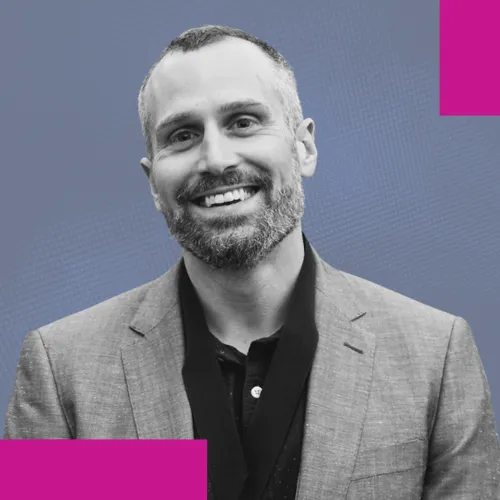
In this episode of Open Circuit, we examine the latest data and investor sentiment trends with Kim Zou, CEO of Sightline Climate.
Sightline’s data shows climate tech investment declined 19% in the first half of 2025, reflecting both macroeconomic pressures and sector-specific challenges.
The firm’s recent investor survey reveals how the sector is grappling with extreme policy whiplash, with tariffs leading the list of worries. The ongoing reconciliation bill debate adds another layer of uncertainty around IRA tax credits, leading investors to search for “policy proof” business models.
Startups are also facing a growing funding gap. Companies developing first-of-a-kind projects face a particular hurdle: they need infrastructure-scale capital but still carry venture-level risk, creating a mismatch that “most private investors aren’t really willing to accept,” said Zou.
That gap — what Zou calls “the missing middle within the missing middle” — is heavily weighing on companies ready to build their first commercial facilities.
Despite the headwinds, new opportunities are emerging: grid-enhancing technologies had their best quarter ever, driven by the growing power demands of AI; companies focused on cost savings rather than green premiums are attracting more attention; and innovative financing structures are evolving beyond traditional equity models.
Acquisitions doubled in the first half of the year, driven by bargain-hunting “where corporates and strategics are buying up companies at more opportunistic costs,” said Zou.
We also explore how U.S. investors and companies are increasingly looking to European markets, the practical challenges of scaling hardware-intensive technologies, and why some sectors are better positioned to navigate the current environment than others.
Credits: Co-hosted by Stephen Lacey, Jigar Shah, and Katherine Hamilton. Produced and edited by Stephen Lacey. Original music and engineering by Sean Marquand.
Open Circuit is brought to you by Natural Power. Natural Power specializes in renewable energy consulting and engineering, supporting wind, solar, and battery storage projects from concept through financing. Discover how we’re creating a world powered by renewable energy at naturalpower.com.
Open Circuit is brought to you by Sungrow, the trusted provider of PV inverters and battery storage. With over 605 GW installed worldwide and a BloombergNEF ranking of “most bankable” in power conversion and energy storage, Sungrow provides solar tech you can count on. Learn more at sungrowpower.com.
Transcript
Stephen Lacey: Oh, God. Jigar, the last time we recorded you were in Colorado ready to go out into the wilderness as soon as we stopped taping. What happened?
Jigar Shah: Yeah, I was staying with my cousin and he really tried to break me. I think we went on four hikes. One of them was down a canyon, over a bridge, bringing back up. He’s like, “What do you think about the sites?” I was like, “I need to focus on me right now. I need to focus on only giving 85%. I’ve got an old body here.”
Stephen Lacey: Katherine, you spend a lot of time in the mountains in Virginia and New York. Do you have any tips for Jigar on how to build those quads?
Katherine Hamilton: Yeah, I live at the top of a mountain. So you go down and then you go back up, or if you want to go side to side, you can go side to side, but at some point you always have to go back up. Yeah, and then when we go on vacation, we go to the Adirondacks, which is also mountains. So it’s all I know anymore. When I go to D.C., it really does feel like a swamp and I need to buddy breathe.
Stephen Lacey: Well, we can all insert our mountain climbing and survival metaphor for investors here.
Jigar Shah: Yeah, exactly. Exactly.
Stephen Lacey: From Latitude Media, this is Open Circuit. This week, a recalibration for climate tech investing. If last year was the start of a new normal for venture investors backing clean technologies, this year has been anything but, and that comes down to one thing that investors do not like but inevitably need to manage, uncertainty. And boy, do we have a lot of uncertainty swirling around, stemming from tariffs, possible IRA repeal, and macroeconomic clouds. We’re going to examine how investors are adapting, where the gaps remain, and what it means for companies ready to scale.
Welcome to the show. I’m Stephen Lacey, I’m the Executive Editor at Latitude Media, joined as always by my co-host. Katherine Hamilton is the Co-Founder and Chair of 38 North Solutions. Howdy.
Katherine Hamilton: Hey.
Stephen Lacey: Jigar Shah is the Co-Managing Partner at Multiplier and former director of DOE’s Loan Programs Office. Hey, Jigar.
Jigar Shah: Hey.
Stephen Lacey: And we’re joined by Kim Zou. Kim is the CEO and Co-Founder of Sightline Climate, a firm that tracks climate tech investment trends through data and sentiment analysis. Welcome, Kim.
Kim Zou: Good to be here.
Stephen Lacey: You are in London Climate Week right now. How are things shaping up over there?
Kim Zou: It’s interesting. So most people don’t know this because I obviously don’t sound British, but I moved out to London about three years ago from the US, and the last three years, London Climate Week, I was surprised at how little things were happening or maybe I wasn’t getting invited to stuff, so maybe that’s on me. But this year, it feels completely different. We’re seeing investors from the US, Middle East, Asia, Canada, all over the world coming to Climate Week and trying to see what’s going on in Europe for the first time.
Stephen Lacey: Is that partly due to the uncertainty in the US market?
Kim Zou: Yeah, I think, at least talking to people, there’s a few reasons behind it. Definitely the big driver is pullback in the US. Is there opportunity in Europe? That’s the big question everyone’s behind the scenes asking, “How are you thinking about Europe and rest of the world in terms of capital allocation?” And then I think from a just climate week standpoint as well, New York Climate Week has become so overrun, and then COP this year in Brazil as well seems like it’ll be harder to get to, so I think people are seeing London Climate Week as an opportunity to convene.
Investor sentiment shifts with policy uncertainty
Stephen Lacey: We brought Kim here this week to unpack how investors and startups are bracing themselves at this moment. Sightline’s editorial arm, CTVC, just released a survey of venture private equity and growth investors and it shows a lot of fear about policy whiplash and some planning for worst-case scenarios. It also shows a deepening gap for companies looking to scale that require too much capital for venture investors but aren’t big enough for infrastructure investors, and we’re going to get into what that missing middle looks like.
First, I want to pull out this word cloud from your survey, Kim. So I’m looking at the words now and I see in large print words like reckoning and survival, and in tiny print I see optimistic and raising. It’s a mixed bag. I do see resilience and opportunity in big letters as well. So what does this word cloud tell you about how investors are thinking about this moment?
Kim Zou: Yeah, the word clouds are always fun. I think it’s a bit elementary, but more than anything, it represents how people are feeling and what they’re thinking about. Honestly, the word that stands out to me the most is resilience. Resilience and from a few angles, right? I think there’s the sentiment of, “We’ve been through this before, cleantech 1.0, previous administrations, this isn’t a new thing. It’s who stays the course.” So there’s resilience from that angle of it’s the experienced investors, the experienced developers, the experienced founders who’ve been through this before, they’ll stay the course and maybe more of the tourists will retrench.
And then I think there’s also resilience from a climate standpoint that’s interesting now, and we can talk a bit more about this later, but I think we’re starting to see more interest from a climate solution standpoint at a more adaptation and resilience angle. So given the current administration as well, I think that resilience angle and how we think about hardening, how we think about infrastructure also starts to be a pretty interesting opportunity for the climate tech space. So I think that resilience stands out to me.
Stephen Lacey: Katherine, any words jump out to you and would you add any words?
Katherine Hamilton: Yeah. So I would add speed and flexibility, and speed from the point of the US. People right now, because of the policy uncertainty, are rushing to safe harbor projects, to acquire projects, to move as quickly as they can before anything changes. And then the flexibility piece speaks to what Kim was talking about, about those who are flexible enough to look elsewhere, who can go to the EU or go to the UK to look for investment. So I would add those two words.
Stephen Lacey: Jigar, any words you would add?
Jigar Shah: Opportunity, baby.
Stephen Lacey: Yeah, I see opportunity in bold here. Why?
Jigar Shah: Well, look, I mean, I think that at least from where I sit, I’ve never seen more opportunity. I think when you think about just how much people have retrenched, whether it’s top-tier companies that folks have never been able to get investment into, you can now put money into those companies and get a piece of what they’re doing, or existing assets, you can buy them for such low prices now that you can get much higher returns than you were able to get just two years ago. And so there’s a lot of opportunity.
I thought the survival and the lean piece were part of it though too. I think for companies, they have to make sure that they survive to the next tailwinds section, and that means cutting costs and figuring out how to get to the other side. But the other piece of this is really just understanding who’s going to buy you because that’s the problem. I think there’s a lot of people who think that all investors are billionaires who basically have very long-term money, and the reality is exactly the opposite. Most of these investors have five-year money, seven-year money, and if they raised in 2019 or 2020, they need to return cash back to investors by 2026. And so they’re like, “Wait, who are we going to sell some of these companies to?” And so I think survival is a big thing there too.
Kim Zou: Yeah. I mean, I think one of the things we’ve been looking at as well in terms of exits is acquisitions, and a bit of a sneak preview to our H1 report we’re about to publish, but we actually saw acquisitions double this half year, which is surprising because you think there aren’t really any exits happening, but majority of those acquisitions, about 50% or so, had undisclosed valuations. There were a lot of these bargain-hunting acquisition plays where corporates and strategics are buying up companies because some of them might be running out of cash, some of them might be looking for a long-term strategic home, but they can buy them up finally at much more opportunistic costs. So that’s definitely, I think, an opportunity.
I think investors who have been spending a long time in this space are also finding better bets. They can come in at lower valuations. I think 2020 to 2022, I was actually an investor at that time at Energy Impact Partners, and I can tell you firsthand some of these valuations we were seeing were insane, were wild, made no sense on paper. Most of these companies had no revenue, and so what are you even really valuing them off of? And I think that period of just hype and how to think about valuation, it just wasn’t sustainable. So now that’s coming back to earth, but there’s definitely some pain and shake-out with that as well.
Stephen Lacey: Katherine, you work with a number of funds. Just another setup question here. Does this feel like it resonates with their experience and what you’re hearing from them?
Katherine Hamilton: Yes, absolutely. We work with everything from VCs and private equity companies that are looking for us to help them navigate the policy landscape, but I’m also an advisor to a growth equity fund, MKB out of Montreal, and I’m seeing and hearing the same thing. And also from, and I’m sure Jigar is finding this too, and also the boards that I sit on for startups, a lot of them are in the same space of like, “All right. Now what’s next? What do we do?” And we dig into, “All right. Where do we go from here?” But certainly on the policy front, that’s what we focus on with a lot of these funds.
Stephen Lacey: Well, that brings us into the obvious wild card here, which is policy. So policy uncertainty was a top concern in this survey, Kim, far outweighing any other concerns. What are the areas of policy uncertainty that are causing the most concern or fear?
Kim Zou: I think with policy uncertainty, it’s always one of those things where it’s all of it. Everything and all of the above is causing fear. But I think surprisingly, or maybe unsurprisingly, 41% of respondents said tariffs were the most impactful policy lever above things like tax credits, funding, IRA. So tariffs, out of all the different policy pieces that are uncertain right now, was causing the most fear. And I think it’s not just in climate. I have friends who work in commodity supply chains and food and ag and they’re also dealing with tariffs firsthand. We track, from a product-type standpoint, we track all these different climate tech companies and 54% have some sort of physical product, hardware element, and of course tariffs are going to hit those the hardest, especially because all these supply chains that they’re reliant on are really, really complex.
The second and third are of course the Inflation Reduction Act and reconciliation. That’s obviously a big one, but it’s all really a domino effect. I think with a lot of this funding and tax credits that seem to already have been allocated potentially getting pulled back, private capital has been tied to that. We’ve talked about public-private partnership. If the public goes away, the private also feels uncertain about that. So there’s a lot of challenging pieces across all of this. It’s really a domino.
Stephen Lacey: Absolutely. And we’re going to see another round of tariffs possibly in early July, July 9th, I think. And then there’s this self-imposed deadline that Congress has to pass the “big beautiful bill,” this reconciliation bill that may roll back IRA credits. Katherine, we’re at this moment now where there’s a lot of verbal trading back and forth. The Senate is working on its version of the bill. Can you just update us on what the status is with that reconciliation bill and where the IRA potentially stands?
Katherine Hamilton: Yeah. In the words of the great Yogi Berra, “It ain’t over till it’s over.” So right now, the Senate had released their language on Inflation Reduction Act credits, which was better than what the House had released, and it gave more of a runway for all of the renewables. It gave a special carve-out for more baseload-type renewables. It had confusing, but less onerous FEOC, which is foreign entity of concern, language. But right now, there is a really kind of a death match going on and some of it has nothing to do whether it’s clean energy or not, but has to do much more with political positioning.
So nobody is celebrating now. Nobody is saying, “This is okay.” Everybody is really just continuing to try to run through the tape and make sure that Congress understands the impact because of course the impact is going to be massive, especially on Republican districts. The US clean energy project cancellations hit GOP districts absolutely the hardest of anyone, and that’s in addition to just the other stuff in the bill that we’ve talked about, all the healthcare impacts, rural hospital impacts. So there are a lot of other things that are in there that are at issue, but a huge piece of it is where are these tax credits going to land?
And I would say that part of this is just about getting them to land somewhere. It is more about uncertainty than it is about where this actually ends up, although of course where it ends up is going to have make a material difference, but part of this is just about how do you make sure that you’re able to ride through policy changes? You can’t really policy-proof yourself. You can’t really do that. You can make yourself less policy-dependent, but you can’t… Policy is everywhere. It’s not just in tax credits. It’s in every regulation that we have everywhere in the world. There are regulatory constructs, there are market constructs. All of those feed into what a given market’s going to be for any investment and any technology. And I think you can’t say, “I’m going to policy-proof myself” because policy is just part of the way business works, but you can try to make sure that you’re able to be, as I said, flexible at the beginning as we move forward, no matter what the policy is.
Stephen Lacey: And just to timestamp that, we are talking midday Wednesday. This will come out Friday morning. So who knows what will change between now and then over the next day and a half or so?
I’m glad, Katherine, you mentioned this term, policy-proof. It’s a loaded term, but in the Sightline survey, investors say that they’re focusing more on policy-proof business models. Jigar, what does that mean to you?
Jigar Shah: I mean, I have no idea. We’re in a place right now where the person who’s the most influential on this reconciliation bill right now is Alex Epstein. And you’re like, “Who the”-
Katherine Hamilton: He was on the Energy Gang.
Jigar Shah: And you’re like, “Who the hell are you? Why are you here? You’re a meme coin.” And so you’re in this weird spot where he has never worked in the energy sector. There’s not a single investor who’s like, “What does Alex Epstein think?” But Lord Almighty, he’s the one that Susie Wiles brought to a Republican senator breakfast and whatnot.
So you’re in this weird spot where we are at the precipice of the most exciting economic growth opportunity this country has ever seen with AI data center load growth and manufacturing load growth and all this other stuff. You’ve got everyone from the natural gas industry to the coal industry to nuclear to solar wind and battery storage going, “Here is what we have lined up ready to start construction on next week. Would you like for us to start construction?” And that was starting to have an impact on Republican senators who were like, “Yeah, we actually want to make sure that we don’t have rolling blackouts in our states.” And now folks are like, “Maybe we do want rolling blackouts in our states because we just talked to this guy who has a lot of Twitter followers and he seems like an expert.”
And so what’s weird to me is what kind of people actually have power in this space and which people are being listened to. And as an investor, you’re sort of like, “Huh, what’s the through line here? Should I have been able to predict this?” I don’t know, but I think it’s kind of a funky time.
Kim Zou: There’s no such thing as policy-proof because in clean energy, we talk a lot about tariffs and tax credits and funding, but there’s a policy in everything. There’s policy in AI, there’s policy in data, and so there’s no such thing really as policy-proof. I think it’s like how can you ensure your business isn’t reliant on policy? So maybe it’s like, rather than policy-proof, it’s policy-independent, right?
Katherine Hamilton: Yep, exactly.
Kim Zou: Yeah, exactly. And this is sometimes the trap with climate tech companies is a lot of these solutions are reliant on policy. A lot of these solutions are relatively nascent. And so how do you take something that’s pretty early-stage and have it compete with the Goliath and have the same costs from the get-go? It’s just not possible.
But I think now investors are looking more at solutions where decarbonization and policy aren’t the primary business drivers for the business, that there’s cost savings or efficiency in of itself as opposed to saying, “Oh, is the tax credit going to make this project cross the line?” So things like energy efficiency retrofits, waste heat recovery, or even an angle around security, that’s a big one now everyone’s talking about. So maybe it’s not just cost, but maybe it’s more safe, it’s more supply chain-secure. So it’s kind of like what are the other angles? What are the other drivers for this business beyond solely relying on a tax credit or a policy coming through?
Jigar Shah: That’s absolutely right, Kim. I mean, one of the things that we read earlier this year was that New Joule Order, which a lot of investors have read, and it’s really saying this is frankly what China and India have been doing for a long time, which is, “We don’t want to import fossil fuels. We want to have more homegrown solutions, and whether that’s coal or solar, wind, and battery storage. We want to reduce the imports of fossil fuels into our country.” And so I think you’re seeing a lot of investors actually look at that. I mean, clearly, Europe is all over that right now just given their extraordinary costs for importing liquefied natural gas and some of these other imported fuels.
And so it is a grand reshuffling that’s occurring, and I don’t know that everything has actually landed quite yet, and so I don’t think everyone has agreed upon the rules of the game, but maybe they’ll figure that out at London Climate Week.
Kim Zou: Well, it’s interesting you say that because actually tomorrow, Thursday, we’re hosting an event with one of the authors of The New Joule Order because yesterday they just came out with, I guess, their sequel called A New Marshall Plan focused specifically on Europe and applying that New Joule Order to Europe, so this may be a little advertisement to check that out.
But it’s an interesting moment where we’re calling the event Europe’s energy moment. I think it’s an interesting moment for Europe where the last few decades, Europe has really put environment first. The whole premise of The New Joule Order is it’s, one, security, two, economic efficiency, three, environment. And Europe over the last few decades has put environment first, which it has resulted in wins. Emissions have declined, renewables have increased, but also over the last few years, fossil fuel imports went from 38% to 54%. And when the Russia-Ukraine crisis hit, that was the Achilles heel in that strategy. And so yeah, now I think Europe’s kind of taking a step back to look at it more in that security, economic efficiency, environment order.
Stephen Lacey: We’ve talked about this on the show a couple of times, and I teed you up with London Climate Week because I was really interested to hear, to understand what you’re hearing about investors and US companies looking to European markets or other markets. Do you feel like there’s a real push for companies and investors to make a strategic pivot to some of these other markets?
Kim Zou: Yeah, it’s interesting because moving to the UK three years ago, everyone here was almost complaining that the UK and Europe behind, looking to the US as this beacon, there was a lot of sentiment of “we’re playing catch up.” It was funny, I was sitting in a round table this morning and someone said, “It’s frustrating that in the UK we have all this innovation happening and then the US swoops in and takes it.” And I think I just found that really hilarious because in the US, everyone’s saying, “There’s so much innovation happening. It’s so frustrating that China or Asia swoops in and takes it.” So it’s all, I guess, relative.
But I think the sentiment here has been that Europe has not been able to compete. There is a lot of early-stage capital, a lot of pre-seed, seed-stage investors. That ecosystem has matured, but the mature, the growth capital, even Series A, Series B capital to a certain extent, doesn’t quite exist in Europe. And so a lot of European companies historically, once they reach a certain size, they’ve had to go to the US to look for capital. And honestly, the missing middle in Europe is earlier. It’s at the Series A stage. Companies struggle to raise Series A, not even to mention Series B.
But I think for the first time ever, we’re seeing a lot more US investors not waiting for companies to come to them, but actually coming to Europe to try and find European companies that they can take to scale. And I think part of that as well, if I’m honest, is also just a fundraising story as well. So a lot of investors are coming to Europe not just to find companies, but to find LPs because a lot of that LP capital in the US may be less interested around climate and clean energy and some of these topics now, but European LPs are for the most part still really interested, but a lot of that are sovereign wealth funds, pension funds that require a specific allocation of that capital to go towards European companies.
So there’s these two overlay trends. One is more opportunity for European scale-ups, especially ones that have been able to raise a lot of that early-stage capital that exists here, and then two being LP dollars. There’s a lot more, I think… Investors feel like there’s a lot more European LP dollars here relative to the US.
Katherine Hamilton: And we’re seeing, with the folks we work with, that there are fewer EU companies wanting to come to the US. Now the US is much less attractive.
Jigar Shah: Well, I mean, I think when you look at the veracity by which the UK government has announced their National Wealth Fund plans, the GB Energy plans, I mean, I have many companies in the United States calling me saying, “Hey, should I be going to the UK to figure out how to scale up my technology there because they have all these public resources?” I think you’d see the same with the EU, although it’s a lot more confusing because it’s really at the France and Germany level, not really at the EU level. Australia just announced $30 billion of Australian loan monies to attract companies there, critical minerals, et cetera. I don’t know what Carney’s doing in Canada yet. They haven’t settled.
But I mean, I do think there is a… I think every ambassador in every consulate in the US now is chasing US companies going, “Hey, we look great over in our countries.” So it’s been a fascinating turn of events for sure, Kim.
Kim Zou: Definitely. I think the other… It’s funny being here as well. I think everyone always, it’s always the grass is greener on the other side. So sitting in the UK, there’s a lot of companies that are looking to come here, but companies that are already here, they’re complaining about, one, there’s just a ton of red tape. I almost think of it as Europe’s been tripping over their own sticks. So a lot of complexity, really hard to navigate, especially as a startup, scale-up. And then the second, the thing that I think the US does still have an advantage on is electricity prices. Because UK and Europe, electricity prices are a lot higher. You have to pay two to three times more than the average US household. And that’s another big challenge that I think companies are trying to figure out how to navigate.
The ‘missing middle’ grows
Stephen Lacey: So I realized, Kim, I didn’t ask you about deal flow and just the general atmosphere right now. So your 2024 assessment showed that we were settling into what you call a new normal for investment, but the 2025 investor survey calls out higher anxiety, this trickier, more tactical moment. So how different is deal flow and sentiment in the first half of this year compared with last year?
Kim Zou: Yeah. Well, we’re getting a sneak preview here because we’re actually about to publish something at the very start of July on the first half of the year. But to just give you the sneak peek, we’ve seen investment decline about 19% relative to the prior half year. And I think in a way, we’ve been… Originally, when we published our investment trends report for 2023, the headline was, “Wait and see.” It was unclear whether investment was going to return back to sort of pre-2023 levels. And since then, I think it’s less end of “wait and see” it’s more end of “see, wait and see.” I think it’s just “wait” at this point.
But honestly, it’s kind of a sign of the times. There was a lot of early-stage venture capital flowing in between 2019 to 2023, a lot of companies that were buoyed by zero interest rates and are now getting to that missing middle stage. If it’s a software company, they’re trying to get to scale, trying to get past 5 million ARR. If they’re a hardware or projects-oriented company, they’re trying to build that first-of-a-kind project. And so we have this massive cohort, massive wave of companies that are all around that same missing middle stage trying to figure out what the next phase. Is it how do we get that first-of-a-kind project done? How do we exit the business potentially because we’ve hit a ceiling with the business?
And so it’s not necessarily just a sign of political uncertainty or macro uncertainty. I think it’s also just a sign of the maturity of the overall market, that a lot of these companies now are reaching that inflection point, and some may shake out. That’s just the truth. Some may shake out, others may consolidate, and others may make it all the way to the finish line.
And so I think one of the big things we’re seeing is a flight to quality. There’s still a lot of these mega deals getting done, especially ones that tie into that energy, security, economic efficiency theme we’ve talked about, like lots of deals in nuclear and geothermal and critical minerals, hundreds of millions mega deals. But then there’s also a lot of bankruptcies that we’ve seen over the last half year as well, including some pretty notable ones, like climate tech darlings, if you will, the Northvolts and Li-Cycles of the world.
Katherine Hamilton: Yeah, I thought it was interesting, Kim, in your survey that the macroeconomic environment was the biggest slow-down rationale, but then the second was that there’s more prioritizing support for existing portfolio companies, and then it leads to “let’s make sure that what we’ve invested in is successful.”
And when I talked to Jesse Teichman, who is a partner at MKB, he said in his experience, and they’re a growth equity firm, the deals are taking longer, people are relying on existing investors, and the deals have a lot more structure in them to make sure that there are more protections built in for investors. And so there may be some capital based on revenue, but a lot of this is based on EBITDA and what’s the core profitability, the operational efficiency, and really digging into making sure that PortCos over time are being able to really have strong returns rather than going out and letting all seeds, all flowers bloom, really doubling down on what they already are doing.
Jigar Shah: Yeah, I’ve gotten a lot of folks that have called me around first-of-a-kind projects, and I’m just like, “You missed your window. I don’t know what you think is happening here,” but the ability for, as Kim suggested, the public to show up to actually help you with something where you’re not quite clear that you’re actually going to get rid of your technology premium and sell clean cement or clean steel or whatever it is at the level that would be competitive with the marketplace, I mean, there’s just such little appetite for that stuff today compared to the last four years. And so if you missed the window, you missed the window.
Stephen Lacey: Let’s talk a little bit more about why that funding gap exists. So I know some investors don’t always like the first-of-a-kind label, the FOAK label, since a lot of what startups are building is new, but it largely refers to infrastructure investments, and graduation rates from early stage to later rounds are improving, but more climate tech companies are reaching the point where they’re ready to build their first commercial facilities, and just as they hit that critical stage, the funding to support them is scarce. And investors in the survey, I believe, said that they expect it to decline.
So the Sightline research identifies what they call the “missing middle within the middle,” this $45 million to $100 million range that’s too big for venture capital, but too small for infrastructure investors. Kim, give us some more detail on what we’re talking about when we talk about FOAK. We’re seeing this potentially steep decline in first-of-a-kind projects. How do we define them? What kind of capital do they typically need?
Kim Zou: Yeah, that’s a good question. And I think I have this running joke where there’s been so many names for this gap. There’s been scale gap, valley of death, missing middle, first-of-a-kind. If we spent as much time working on it as we have been trying to define it and name it, maybe we would’ve done a bit more by now, but I do think there’s some nuance to it as well.
So I think missing middle to me is an umbrella term. Missing middle also encompasses software companies that are just trying to get across this missing middle. First-of-a-kind is a bit more specific to companies that are trying to build physical assets, trying to build projects, manufacturing facilities. And I think the nature of it is oftentimes, because these are relatively new solutions or new execution of existing solutions, oftentimes there’s that lab scale deployment. Does this thing actually work in the lab? Can I prove it at lab scale? And then after that, you have your pilot scale deployment, actually doing this in the real world and testing it, still at a pretty small scale.
And then after that, it gets a bit fuzzy, right? Some call it demonstration scale, some call it first-of-a-kind. That’s, I think, that FOAK category we talk a lot about, it’s really your first commercial facility. Is it a demonstration? Is it first commercial? Oftentimes companies do try to get some sort of offtake secured for that project. That’s how we define first-of-a-kind, your first commercial facility.
And the quote about “there’s a missing middle within the missing middle,” I think applies directly to that commercialization trajectory that, at the lab stage, or even at that pilot stage, if you need, call it $5 million to $20 million to get that initial test done, it’s doable. You can raise venture capital for that. Venture capital is meant to de-risk technology, or you can raise grant capital for that.
Then I think the deployment phase, that FOAK phase where you’re trying to build your first commercial project, your demonstration project, that gets you more to the $45 million to $100 million phase. And that’s the big gap that we see because once you really get to scale and you’ve built out multiple projects, like we’ve seen in solar and storage and wind, there’s tons of infrastructure capital, there’s tons of commercial debt available for those hundreds of millions of dollars kind of sizes, but that $45 million to $100 million, you’re still dealing with venture-level risk, but infrastructure-style returns. And so it’s high risk, low returns, and most private investors, most financials aren’t really willing to accept that type of risk-reward ratio. So that’s why that gap exists. It’s really in that missing middle of the missing middle.
Katherine Hamilton: Well, that’s where DOE, the Department of Energy at the US, was so crucial. That’s where it landed with all of the demonstration funding and the Loan Programs Office. And Jigar can dive in, of course, on this, but this with those programs being closed or shut down, some of those contracts being walked away from, that’s what you’re going to get. That is, again, that sort of missing middle piece that’s going to go away.
Stephen Lacey: Yeah. So Jigar, you have this new firm Multiplier that you co-founded with Jonathan Silver, also a former DOE Loan Programs director. Is this the area that you guys are focusing on? Tell me about the gap that you guys are specifically trying to fill.
Jigar Shah: Yeah, no, we’re definitely not focused on that gap because I think, I mean, the thing that I think people forget is this is not a logics problem. This is really a feelings problem. When you invest $45 million to $100 million into something, you want to know that somebody, as soon as you hit your milestones, is going to buy out your position because your goal here is not to own this for the next 10 years. Your goal is to bridge people to this next set of milestones and then get a strategic investor or somebody else to come in and take you out. And right now, what people are saying is they have no visibility on anyone taking them out anytime soon.
And so this is, yes, as Katherine suggested, the DOE is nowhere to be found right now, but part of this is also just like, “Am I going to get stuck with this position? If I put $45 million to $100 million in this, am I going to get stuck with this investment for five, seven, nine years until someone else actually wants to invest alongside me or take me out or whatever it is?”
So I think the stuff that Jonathan and I are doing is far more pedestrian, and I think what you’re finding in this marketplace right now is that people just never bothered to check to see what their exit was. They were just like, “Well, I’m hitting my metrics and I’m gaining market share and I have more customers and it’s great.” And a lot of what Jonathan and I are asking companies is like, “Well, who’s going to buy you?” And they’re like, “Oh, someone will buy me.” I’m like, “Who exactly is going to buy you?” And they’re like, “Oh, I haven’t actually thought about it.” “Well, you should think about it because you’re running out of cash, you’re trying to raise more money. You should know exactly who’s going to buy you.”
Because what you’re finding today, as Kim suggested, is there’s a lot of people who are exiting via acquisition right now, and some of those people who are there to buy you, can’t pay a lot. They can only pay, let’s say, $100 million. Well, if you just raised another $40 million round of capital, well, then you now have to sell for $200 million. You’ve now priced yourself out of your best acquirer, and that’s not great.
And so these are basic logic issues that frankly our industry hasn’t focused on since 2020 or 2019. And so a lot of folks are like, “Well, as long as I’m executing and I’m doing a lot of good in the world and people are buying my products, the exit will take care of itself.” And I’m like, “No, it won’t.” I’m like, “You need to spend a lot more time thinking about it.”
Kim Zou: Well, I think one of the primary challenges in the climate tech and clean energy tech ecosystem has always been we’ve often thought about it from an equity standpoint because it’s equity at the end of the day. You’re investing in exchange for ownership of a company at some proposed valuation that you, as the founder, and you, as the investor, agree on. But as we all know, a lot of these technologies are really capital-intensive, are asset-intensive. You have to build physical assets that just literally cost a lot of money.
And so historically, there’s been a lot of equity capital that’s been spent on physical assets rather than just the operating expenses, the people that software companies can focus on. And it’s just equity capital is not tailor-made to take hard tech to take physical assets all the way to scale because it’s really expensive, you have to raise a lot of capital, therefore your valuation has to be really high so you don’t get over-diluted and you don’t lose interest and walk away from the business. And so the math just doesn’t math, I guess, in some of these situations.
And so now, I think, the investor ecosystem is opening up to, “Okay. If it’s not equity, what is it?” Because project finance isn’t going to come into some of these technologies. And so now there’s a lot more open conversation around, “How do we think about non-diluted capital for bridging this gap?” And I think Fervo is a good example of this. A week or two ago, they announced $200 million for their project, Cape Station, and none of that was, at least I think none of that was diluted at the topco. It was a $60 million loan from Mercuria, a $46 million bridge debt financing from Excalibur, and then $100 million in project preferred equity from Breakthrough Catalyst.
So I think starting to see more of that understanding around what’s the right capital stack to build, especially at the project co level, rather than just pouring more equity capital onto the topco? Because to Jigar’s point, there aren’t that many cases you can point to companies raising hundreds of millions of dollars in exiting as a unicorn or exiting as an IPO in the climate clean energy space.
Jigar Shah: The one structure you are seeing a lot more of is the classic recapitalization. So there’s a lot of people, instead of raising a B round, you’ve got people like NGP or EQT or Warburg Pincus or some of these other folks who are actually just taking everybody out and saying, “We’re going to basically buy the whole company and we’re going to put $150 million of fresh capital in. We’ll get another $150 million from a pension fund that’ll co-invest with us. And now for five years, your job is to figure out how to de-risk your business, get it to profitability, do all the things, and then eventually, if you succeed, the pension fund who put in the $150 million worth of fresh capital as co-invest will actually just take you over.” So that’s think like Pattern Energy is owned by CPPIB or some of those folks.
And so you’re starting to see a lot more of that, which seed stage and A stage investors hate because they’re like, “Oh, I’m only making a 2x return on my original valuation,” but I think that they’re not really capable of taking these companies past the missing middle, and the people who want to put this amount of money in are saying, “We don’t want to bother with seed stage and A stage investors who are not really adding value anymore. And so we need everyone to come together to recapitalize the whole business and reset the vesting for the management team too,” saying, “whatever you thought you owned of your business, you don’t own anymore, and we’re going to create an entirely new vesting schedule for you to own stock in your business.”
And so I think that those are the kinds of models that switch you from the 10x return expectations from seed stage and A stage to the 16 to 18% interest rate return expectation from these infrastructure plus, plus, plus type investors.
Sectoral shifts and opportunities
Stephen Lacey: So this is a cross-sectoral gap. Are there any sectors where it’s hitting hardest, Kim?
Kim Zou: Yeah, I think this was Jigar’s earlier point. The sectors where they have historically been reliant on a green premium and customers willing to pay a green premium have definitely been challenged. I think notably there, it would be, top of mind, it’s things like industrial decarbonization and carbon removal. I think carbon removal in particular, it’s almost like at 100% green premium because you don’t have to buy it, and it’s always been a market that’s voluntary, reliant on one major buyer, which is Microsoft. And so you have a massive amount of startups and companies who are all vying after one buyer. It’s not really a recipe for success.
And so I think those types of sectors which have historically been looking for corporates or looking for customers who are willing to pay that 50%-plus green premium, that’s definitely a challenging area, unless there’s some sort of regulation in place. So one example of this, Stegra, which used to be called H2 Green Steel, over in Sweden, they have openly said, “Our green premium is 25 to 50% on our green steel,” and they have been able to make a case that customers are willing to pay for it because there’s the EU ETS, and when that does come into effect, it will be around 20 to 50% of a premium. And so for the customers buying their steel, Stegra steel, it’s less about, “Oh, I’m paying a premium.” It’s almost more of a hedging play in a way, that you can lock in these prices now as opposed to having to pay them out later on.
So there’s definitely exceptions to that, but I think broadly where those sticks and regulations don’t exist, that voluntary market willing to pay a green premium right now is definitely drying up.
Jigar Shah: The flip side of that is less about the technology premium stuff and more about the fact that we have so many companies that save so much money for customers. And so I think the other side of that is that the investors are doubling down on the companies who actually already save customers money and are really just scaling. And those opportunities are so plentiful that folks are, I think, just crowding more money into those sectors.
Katherine Hamilton: Yeah, I’m seeing two different things here. One is the things that are good to go, project finance, CleanCapital just purchased six projects, 27 megawatts of solar and 25 megawatt hours of battery. They have off-takers, they know where they’re going to go. That’s the kind of thing that’s easy to do. But then I think we’re seeing a lot of deep tech is really hard. That requires discovery. It requires a lot more early-stage investment. That one’s tough.
I looked at the World Economic Forum just released their top 10 emerging technologies for 2025. I think I was involved in the one from 2020 and mine was… I had offered electric aviation, sustainable aviation, so you see where that is right now. But the ones that they’ve mentioned, of those 10, five of them are either energy or energy-adjacent and it’s interesting because not necessarily in the space of deep tech.
One is collaborative sensing, making sure that whether it’s vehicles in cities and energy, that all this sensing technology, the software side. And I think the software side, I mean, you can see that’s going like gangbusters. Energize Capital raised $430 million. So that still seems pretty strong. Green nitrogen fertilizer is another big one. Structural battery component, so all those supply chain issues that we’ve been talking about. Osmotic power systems, which try to take advantage of the difference in salt concentration of different waters, whether it’s seawater and river water. So that was one of the emerging techs, and then also advanced nuclear, and that’s definitely what we’re seeing in the US.
So I found it interesting that a lot of these new emerging technologies are not necessarily dependent on discovery and more dependent on making things work that have already started being invested in.
Kim Zou: That’s super interesting. Well, one point, I haven’t heard of two out of five of those, so I got to brush up on my emerging technologies. Osmotic power sensing?
Katherine Hamilton: Systems, yeah.
Kim Zou: Osmotic power, got to look that one… Systems, got to look that one up. Very interesting.
But just to build on that point, I think one of the bright spots we saw in our H1 report was grid tech, grid-enhancing technologies. It had its best quarter ever. And I was at EIP three years ago, and grid tech was not cool. No one was talking about grid tech, but yeah, it had its best quarter ever in 2025, despite all the broader decline. And even talking to utilities that we work with, all of a sudden you’re seeing head of grid modernization. That’s a role now. And so yeah, I think that’s an interesting case study of rather than net new solutions, how can we improve existing solutions, like transformers and monitoring hardware and sensors, that can extend or expand capacity without having to invest a lot more dollars? Get more bang for your buck in a way.
Stephen Lacey: Yeah, and I presume that that is influenced heavily by the demand growth picture and particularly the expansion of AI. And more than half of investors in the survey said that they’re now factoring AI into their climate investment decisions. So talk about the AI picture, how that’s influencing investment strategies, investment choices, and I presume that grid tech is reflective of that.
Kim Zou: Yeah, definitely. I mean, we see AI as both the challenge and opportunity. There’s two sides to the coin. I think on the challenge side, everyone’s been talking about the load growth part of the story. It’s probably the number one most-said word this year in the climate tech ecosystem, but I-
Stephen Lacey: The AI boom is the most-said phrase.
Kim Zou: Yeah, different flavors of it, AI boom, load growth, clean firm power. So yeah, all these things we’re seeing, nuclear, geothermal, energy storage, grid tech, all kind of different flavors of “we need all of the above right now.” And I think it’s an exciting time in this space because yes, there’s all this funding gap and missing middle, but at the same time, there’s real demand emerging in energy.
And I think from a venture standpoint, historically, transportation has trumped energy in overall investment. In the last year, energy is clearly trumping transportation because all of a sudden you’re seeing a need for innovation again in energy. Not that there was never a need for innovation in energy, but a lot of times we thought it was solved. “We have renewables, we have lithium-ion batteries, we have all of these solutions that have scaled for the most part out of the innovation side of the spectrum,” but now all this demand that’s coming online that needs actual firm and reliable power, “Okay, maybe we need more innovation here.”
So there’s that kind of challenge side of AI or maybe opportunity side of AI from the power standpoint, and then I think broadly, just nerding out a bit on AI in of itself, it’s just such a game-changer for both software and hardware companies. We’re using AI in everything we do, both at the operational level, but also from an engineering standpoint. Over the weekend, I was tinkering with some of these no-code AI tools like Cursor, and I was able to build an AI chat over our data in a day. It’s not amazing, but it works. And so I think the ability for AI now too to be able to almost accelerate innovation, even just at the operating and non-asset levels, is really exciting.
The other quick point there though that I’ve been talking to a couple of climate tech investors on is, in a way, I almost think all this AI innovation, especially at the software level, creates another opportunity for hardware because all of a sudden, if you’re a pure-play software, it’s a really, really low barrier to entry to compete. If I’m building another pure-play FinTech company or sales marketing intelligence startup, it’s such a low barrier to entry, which I think now it makes a case again for hardware and physical assets or at least hardware-enabled software because then you have your barrier to entry.
Stephen Lacey: Jigar, are there any underserved sectors right now that stand out to you?
Jigar Shah: Well, I think it goes back to what we’ve been talking about, which is that there are so many sectors that save people money. And I think we’re in this weird spot where for a long time, no one cared about energy efficiency, for instance, but energy efficiency is back in vogue now because one in six households in the United States are behind on their energy bills. And so you’re like, “Oh, we need to figure out energy efficiency again.”
And I think you’re also similarly seeing a lot of these last-mile solutions. So for instance, multifamily housing for solar has always been difficult because you could serve the common loads, but you couldn’t really serve individual tenants. But then you’ve got virtual net metering programs that have been canceled, and so some of the ways of solving this on the policy side have gone away and so now you need hardware solutions to physically serve individual tenants with their own connection.
So I think that you’ve got all sorts of these niche solutions that are actually in areas, like Katherine was saying, they are still transacting, like CleanCapital buying existing solar and battery projects. And so you’re in this place where a lot of these niche solutions have been overlooked for the last four years as people are looking for dreaming big, and I think now folks are thinking again about dreaming small and getting more targeted exits without this trillion dollar theoretical market size.
Katherine Hamilton: Yeah, it’s interesting. Bloomberg published a piece where they asked four wealth advisors, “If someone came to you with a million dollars, what would you tell them to invest in?” And one said, “Infrastructure, water, power, transportation, comms. Infrastructure, that’s the place to go.” The second one said, “Real estate.” So it was like green and sustainable real estate was one of them. Data centers, of course. And another one said, “Dynamic go-anywhere funds, flexible funds with no benchmarks, go for that.” The fourth one said, “Healthcare,” which we’re not in that business, but it was interesting that three of them really do have a place in energy.
And I would say that when I was talking to Jesse Teichman, again from MKB, he was remarking on in the survey, Kim, that sustainable mobility and how low it was on the list was surprising because he said EV sales do continue to grow, if more slowly, in the US, and outside the US, it’s super accelerant. It’s on an accelerant, especially in China. And so the question is in that space and in that sector, which our “big beautiful bill” right now is trying to sell off all of the Postal Service electric vehicles and take down the charging stations, which will cost $1.5 billion of taxpayer money to just destroy, will the EV sector, which is now being taken down supposedly in the US, will we be pulled along by global dynamics or vice versa? How will that end up? And I think that’s an interesting place to watch.
Kim Zou: I think this is starting to get more attention, but we’ve been starting to think a lot more about adaptation and resilience, coming back to that resilience word. I think historically, the framework for climate and clean energy has been really around mitigation, decarbonization, avoidance. How do we make that emissions number go down? Now I think it’s also factoring in an increasingly warming world, a world where there’s just more risk, not to mention climate risk, but just more overall risk with all the geopolitical stuff that’s going on.
And so I think that’s an area we’re starting to try to understand. How do you build a framework for what resilience solutions look like, whether it’s grid resilience, whether it’s things like hardening the grid or wildfire resilience, or it’s maybe a bit more meta in terms of resilience, not just physical assets, but digital assets as well? So I think that’s an area we’re starting to think a lot more about is what do these climate resilience, what do these broadly energy resilience plays look like? But I think historically, investors haven’t really been putting that picture together as a sector to invest in.
Stephen Lacey: How do you all think we’re going to define this year? Kim, you have a little bit of a head start here. You can see the numbers. But with investments declining this year, with this growing gap in the missing middle, this middle, in the middle that you identified, how do you think this is all going to shake out for the rest of the year? And how do you think we’ll define 2025 as we look back?
Kim Zou: Yeah, it’s a good question. I do think on face value, it’s easy to look at the numbers and say, “Oh, no, it’s decreasing. There’s a gap. There’s a missing middle.” But at the end of the day, it’s not just about the funding numbers. The funding numbers are a means to an end. It’s about what solutions are scaling and whether these solutions are scaling or not.
So at Sightline, we actually look at it a bit differently. I mean, we do track investment, of course, but rather than just saying, “Investment good, investment bad,” we came up with a framework called the Sector Readiness Curve, which is maybe very inspired by the Adoption Readiness Levels that I think Vanessa Chan at the DOE came up with. And the idea behind this is when we measure success, we want to measure it a bit more broadly when thinking about commercialization. So the Sector Readiness Curve, we take into account things like technology readiness, things like financing, but also things like project deployment, demand, policy, economics. Are these solutions starting to get to cost competitive or not? As well as things like supply, is there an ecosystem of mature players in this space or is it still just startups trying to be vertically integrated?
And so that’s the framework we like to apply to specific solutions in the clean energy and climate tech space, and there’s a lot of bright spots here when we use that framework, things like we’ve talked about, energy solutions like grid-enhancing technologies. I think there’s, again, an increase in interest around things like DERs and VPPs and how can you apply that framework to it? Clean baseload power, there’s a lot of interest there now. We’re seeing project announcements. We’re seeing demand because of all these hyperscalers and data center developers.
And so I think when you look at it from that perspective, it’s not just a, “Oh, investment’s down.” Investment will be down this year. I don’t think that’s going to be a surprise to anyone, but we want to look at this broader Sector Readiness Curve. And if you apply solar and storage and EVs to that framework, you can see that they’ve hit that exponential part of the curve, that they’ve gone past this cost-parity threshold and are scaling now without the need for venture or growth investment to go up or down. So that’s how we think about the year and beyond is really looking at it from that standpoint.
Jigar Shah: Yeah, I generally look at these things in 10-year cycles. So I think when you look back to 2017, which was the start of the cycle, we were at $8 billion of total investment that year. So I think when you look at the compounded annual growth of investment broadly, it’s still remarkable to our sector. I feel like people are benchmarking us to the unsustainable $60 billion number from 2022, but we’re actually doing a lot right now.
And I think that the other piece to what Kim just said is that the culture change that we’ve been able to extract from people the last four years has truly been shocking. I mean, for you to get to one-in-four vehicles sold to be electric this year, think about it. I mean, everyone talks about China, but no one talks about Ethiopia. Ethiopia is not allowing any internal combustion engine vehicles to be imported into the country this year. Why? Because then they have to import gasoline and diesel, which they also don’t make. So this goes to The New Joule Order piece. They’re like, “Only electric vehicles can be imported into our country now.”
When you think about Pakistan and how, instead of actually turning to diesel when they had these huge power disruptions, they now are the first country in the entire world that sells solar as an appliance. Literally, the guy who has a bodega down the street will sell you two solar panels, a charge controller, and a battery, and you use your own YouTube video to put it together and install it. And they’re doing that at 12 gigawatts a year.
I just think that the amount of transformational change we’ve done within the Adoption Readiness Level framework is so large that people get caught in the weeds of what’s happening with green steel. I was like, “Who cares?” Honestly. When you think about the fact that the electric utility companies now have, as Kim suggested, the head of grid modernization, the head of grid flexibility, we now have Tyler Norris getting invited to an invite-only meeting with Chris Wright, which is I think the later part of this week, to talk about demand flexibility for the grid. I mean, we are in an extraordinarily different place where we now are mainstream. We’re not alternative anymore, and I just don’t think that the frameworks that we’ve used for the past six or seven years captures just how mainstream we are for government leaders, for the leaders of pension funds, for the leaders of all of these large capital flows.
Stephen Lacey: Katherine, final thoughts?
Katherine Hamilton: Yeah. I see technologies like geothermal that was always the stepchild now becoming like a real child and really getting to scale. I see microgrids, all of those grid-enhancing technologies. I can’t agree more on that. That’s just incredible. And then distributed energy. DERs are going to be a huge thing. And these are technologies that work, they’re proven, and now they’re scaling. And part of it is working, of course, because I’m a hammer, a policy hammer, and everything looks like a nail, we’re going to be working on policy, whether it’s state or federal to try to enhance those, but those are going to be deployed no matter what. I honestly believe that.
Stephen Lacey: So Kim, do investors believe we’re in some new macrocycle?
Kim Zou: It depends what investors you talk to, I guess. I think there’s the investors that are excited to stay the course and have been in the space for the last 10 years and will continue to be in the space for the next 10 years. Good investors will see the opportunity right now. And it might not look good when you look at overall funding numbers, but when you’re actually going deal by deal and you’re actually seeing deployment and good companies scale, that’s the measure of success.
Stephen Lacey: Kim Zou is the CEO and Co-Founder of Sightline Climate. Kim, thank you.
Kim Zou: Thank you.
Stephen Lacey: I really enjoyed this one. Jigar, good to see you.
Jigar Shah: Of course.
Stephen Lacey: Katherine Hamilton, see you later.
Katherine Hamilton: Yeah, it was great to be here.
Stephen Lacey: Open Circuit is produced by Latitude Media. Jigar Shah and Katherine Hamilton are my regular co-hosts. The show is edited and produced by me with Sean Marquand serving as our technical director. He also wrote our theme song. Anne Bailey is our senior podcast editor.
Latitude Media is supported by Prelude Ventures. And for more in-depth reporting on the topics we cover on the show, sign up for Latitude Media’s Daily, Weekly, or AI-Energy Nexus newsletter. Go to latitudemedia.com and hit subscribe. You can find our transcripts there as well. And I’ve noticed a bunch of new comments rolling in on Apple Podcasts about the show. Thanks to everyone who’s left comments and continue to rate the show. It’s hugely helpful to us. So if you haven’t done that already, please do that on Spotify or Apple, and send a link to your friends and colleagues. Spread the word around.
We’ll see you next week. Thanks for being here.