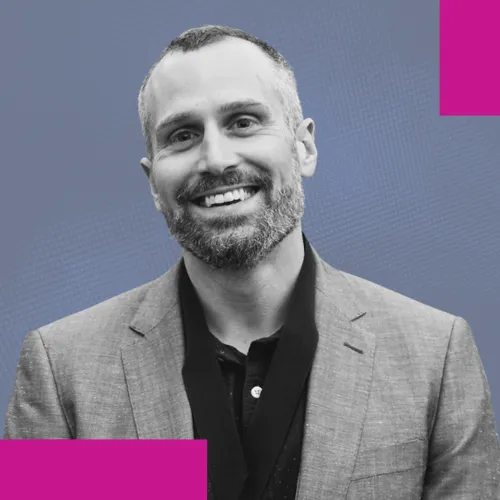
In 2004, Dr. Sarah Kapnick was a young banking analyst at Goldman Sachs when she spotted a blind spot: no one was helping clients understand climate risk. Two decades later, she’s the Global Head of Climate Advisory at JPMorgan, turning climate science into boardroom strategy.
Kapnick’s career path — from Wall Street, to NOAA’s chief scientist, and back to finance — mirrors the way markets are evolving: from ignoring climate risk, to struggling with it, to finally beginning to price it.
Without adaptation, large companies could face $1.2 trillion in annual climate-related costs by the 2050s; utilities alone could see $244 billion in yearly losses. But adaptation isn’t just about avoiding losses — it’s also a chance to seize opportunities.
Kapnick calls it climate intuition: the ability to think about climate risk the way we think about interest rates or labor costs.
In this episode, we dig into what that intuition looks like in practice. From infrastructure investors getting serious about resilience to consumer brands redesigning products, is climate finally becoming a normal part of doing business?
Plus, we also look at the deep data gap. Without strong regulation, will companies ever disclose or understand enough of their risks? And with government climate monitoring under threat, how will the private sector step in?
Credits: Co-hosted by Stephen Lacey, Jigar Shah, and Katherine Hamilton. Produced and edited by Stephen Lacey. Original music and engineering by Sean Marquand.
Open Circuit is brought to you by Natural Power. Natural Power specializes in renewable energy consulting and engineering, supporting wind, solar, and battery storage projects from concept through financing. Discover how we’re creating a world powered by renewable energy at naturalpower.com.
Open Circuit is brought to you by Sungrow, the trusted provider of PV inverters and battery storage. With over 605 GW installed worldwide and a BloombergNEF ranking of “most bankable” in power conversion and energy storage, Sungrow provides solar tech you can count on. Learn more at sungrowpower.com.
Transcript
Stephen Lacey: Katherine, Jigar, how are your mornings?
Katherine Hamilton: Great. How was your morning?
Stephen Lacey: Well, let’s just say today I have my own story about risks and probabilities. We live in an area with a lot of wildlife, I’m up in the Berkshires, and it is not uncommon to have bears walking through the yard, rummaging through the trash cans, foxes. We have a trap cam, so we catch all of this stuff. And we always have a policy in our house to always knock on the door when we let the dogs out, or to go outside physically and look. And after many mornings of nothing eventful happening, this morning at 5:00 AM. I walked outside with my coffee with a plan to read through the materials for this week’s podcast. And when I opened the door, both dogs rushed out to attack, what else? A giant skunk.
Jigar Shah: Oh, gosh.
Stephen Lacey: I got sprayed directly in the face and I had to pull them off the poor animal and I got sprayed and I dragged them inside. And I’ve spent my morning up until we hit the record button trying to eliminate the skunk odor from my house. And so I just thought, what a great metaphor for climate risk. We get complacent, we assume tomorrow is going to look like yesterday, and then we get a costly surprise.
Katherine Hamilton: Was your hedge tomato sauce?
Stephen Lacey: I keep skunk shampoo in the house.
Sarah Kapnick: That is smart. I need to get that.
Stephen Lacey: I’ve already adapted well to the smell though.
Jigar Shah: Oh, gosh.
Stephen Lacey: From Latitude Media, this is Open Circuit. This week, how climate is breaking down traditional risk models and how we build new ones. Investors are trained to weigh risk and return. Interest rates, labor costs, commodity swings, but what happens when climate extremes don’t fit neatly into those models? Dr. Sarah Kapnick, the global head of JPMorgan’s Climate Advisory says executives need a new kind of gut check; climate intuition. She joins us to explore how climate risk is shifting capital allocation and why adaptation may be one of the biggest growth stories for investors.
Welcome to the show, I’m Stephen Lacey. I am the executive editor at Latitude Media and I’m joined by my co-host, who after many weeks are finally back together with me. Katherine Hamilton is the chair of 38 North Solutions. How are you?
Katherine Hamilton: I’m doing great, thank you.
Stephen Lacey: You had a big announcement this morning.
Katherine Hamilton: Yes, indeed I did. I had to divide my time between preparing for this and preparing for the launch of a new organization called Common Charge.
Stephen Lacey: What is it?
Katherine Hamilton: We’re really excited. It’s a group of businesses and nonprofits and consumers that all kind of allied together to try to get distributed assets in the hands of consumers of all types to help on resilience, which we’re talking about today, and affordability, which we are really in crisis. So I’m really excited to do this. It’s going to build on what others are doing. It’s going to provide additional capacity where it’s needed, and we think it will really get distributed energy assets, which Jigar loves, into the hands of everyone.
Jigar Shah: The timing couldn’t have been better. Congratulations.
Stephen Lacey: Yeah, indeed. I mean, we’re facing a real serious affordability crisis and reliability crisis. And I’m looking at the website here and what I’m seeing are not your traditional solar panels and wind turbines and mock-ups of houses that look like they’re part of some digital grid. These are very much kitchen table pictures. So how is what I’m seeing here feeding into the actual mission of the organization?
Katherine Hamilton: We really want this to be accessible and interesting to everyone. So this isn’t just for regulators to try to get them to walk out on good policy, which we want them to do, but we also want this to be really accessible and kind of non-partisan for everybody out there who’s facing all these problems. We all share these issues and we want to get the solutions into everybody’s hands.
Stephen Lacey: Indeed. Jigar Shah is a clean energy investor. He’s the former director of DOE’s Loan Programs Office. How are you sir?
Jigar Shah: I’m good, I’m good, and well-rested. I did my traditional sort of pink eye flight from DC to San Francisco where you land here at midnight San Francisco time, so you’re like three in the morning and then you go to bed, wake up. So I’m good, I’m refreshed.
Stephen Lacey: You are miraculously fresh after your late night travel.
Jigar Shah: I’m a good sleeper.
Stephen Lacey: So we are so excited for our guest this week. We are joined by Dr. Sarah Kapnick, the global head of the Climate Advisory at JPMorgan. And Dr. Kapnick has such an interesting career. She sits at this intersection of climate science, finance and commerce, and she started her career as a banking analyst and then pursued theoretical mathematics and geophysical fluid dynamics, eventually becoming the chief scientist at the National Oceanic and Atmospheric Administration. And now back at JPMorgan, she helps translate climate science into investment strategy. And we’re thrilled to have you here. Sarah, welcome to the show.
Sarah Kapnick: Thank you so much for having me.
Climate science meets Wall Street
Stephen Lacey: So we brought you here to explore a few things, to talk about this concept of climate intuition, to talk about the state of adaptation investment and to look at how climate disruptions are showing up in insurance markets, supply chains, infrastructure. So we’re going to weave all those together. I want to talk first about how you came to this position. So more than 20 years ago when you were a banking analyst, you imagined the role or some version of the role that you currently have at JPMorgan, but it didn’t actually exist. So how would you describe your current role and what did you see then that others didn’t?
Sarah Kapnick: In my current role, I talked to all of JPMorgan’s clients around climate issues, and really all the science and technology that I have a background in having served as an OSG scientist. And it’s helping people make sense of how the world is changing, what that means for them and what they should do about it. And I saw this role needed back in 2004 when people weren’t aware of climate change at the level that they are now. You have to think back then, there was a lot of discussion around uncertainty, if it was happening or not, in the media. And I actually started studying climate as I shifted out of theoretical math and into both finance actually and geophysical fluid dynamics, which were the areas that were really mathy that I could easily apply my skills. And so I was looking back at the time at market pricing models and Monte Carlo methods for trying to understand the markets.
But then in climate science I was learning how physics and the models of the earth could actually tell us what the future looked like. It wasn’t something where you were looking at a wide range of statistics, you were actually, some of these things are actually knowable. And so that really became real for me as I started thinking about how climate would affect everything else I was doing. So I took a class of Middle Eastern studies and all I could think about was how, if the world got hotter and water more scarce, it would drive conflict? Or I was taking another class on catastrophe modeling and how to think about the future. And the fact that it was all based on historic analysis of loss where, by definition, with climate change, you’re going to start experiencing things you’ve never experienced before. And so if you’ve developed your entire model only on the past, you won’t have a true representation of risk today, let alone risk in the future.
And so when I was working at Goldman Sachs and I was really digging into this, about how catastrophe models are built, about the insurance markets, the reinsurance markets, catastrophe bond structuring, it made it really real for me how understanding the future could start entering into financial models, but also how it wasn’t at all at that point. And that was starting to worry me because people kept telling me that this was a distant problem. And something’s a distant problem until it comes into the present. And so I thought as more people became aware there would be a need for solutions based in science, based in knowing what the future looks like, to help navigate through that change. But also to navigate through that never before experience world. And so I embarked upon a scientific career because I wanted to be one of those experts that could help guide people through this new world.
Stephen Lacey: So much has changed in the last 21 years over that period. What would you say is the biggest impact of climate risk on financial markets or corporate strategy that you’ve seen?
Sarah Kapnick: I would say over the last five years I’ve seen this across financial institutions, and I’m also seeing it across corporates, that people are actually integrating risk specialists with climate expertise. And I’m seeing it happen in various ways. It’s either data scientists that are then able to pull information that are strong on financial models or I see climate scientists going into banks like myself. But on the risk side, in banks, in insurers, in credit raising agencies, there have all been hiring up people with expertise to build out these models. And so there’s been this jump forward in how these models are starting to incorporate information. And decisions are starting to change around that. And there are individual examples of that. But I think as more of that information gets integrated as well as events happen, it will accelerate further the use of that and the use of that in decision-making.
And I think until recently, it’s been hard for people to make those decisions because they’re so used to this paradigm of making decisions about present and future risk based on past experience, that it’s hard sometimes to integrate in that future information about the changing statistics because it hasn’t happened yet or they haven’t experienced it yet. And we’re in this time period now that I call the new climate era where sufficient climate change has now happened that we’re going to start seeing these events that we’ve never experienced before. And so that changes how those risk profiles, what they are, but then also how people need to start reacting to it. And as people get more experience with these types of events that haven’t happened before, with these new scenarios of volatility and pricing and something, that’s when you start seeing change that people realize that in order to stay ahead, they have to actually start evolving their models in ways that they haven’t before. And actually have that lead to decisions.
Jigar Shah: Well, I mean what I’m still trying to understand is… Was it 2015 or so? When Tom Steyer and Hank Paulson and Mike Bloomberg got together to write the Risky Business Report and talked about how we needed to start looking at all these real estate models and figuring out which parts are going to be under water and where we should put solar and wind. I think you’re starting to see some of this data coming into the modeling work, but then they’re not actually translating into best practices. So when you buy umbrella insurance policy, they force you to deploy some sort of Ring insurance, Ring alarm system, and they make you test it and they do all this stuff, but they don’t separately give you a checklist around whether your sump pump works or whether it’s backed up or whether all these other things… When do we get checklists from these players that say, “We’re not going to insure your property unless you’ve met these best practices,” or, “we’re going to double your insurance premium until you’ve implemented all this stuff”?
Katherine Hamilton: Yeah, and I would jump in, Jigar, on realtor.com has what they used to just do flood risk, but now they have a whole category for every single listing on realtor.com for homes, it has environmental risk, and it has flood, wildfire, heat, wind, air quality, a whole host of them. I looked at my property because I’m like, “Well, I don’t have any flood risk.” And then realized, oh, I’m like wildfire and heat risk instead. How does that translate, as you’re saying, into how we deal with homeowners insurance and that whole side of the industry because the metrics might be there or the risk profile might be there, but what does that mean, Sarah, when we translate that?
Sarah Kapnick: Yeah, and there’s been academic research as that data has started to come online at all the different realtor websites that has led to differences in property values or time on the market as a result of that information being out there. And then on the homeowners insurance market, I’ve written about this for JPMorgan, part of the difficulty is climate risk is a factor in rising prices, but there’s also inflation, is a major driver, construction costs and people building in places that are more vulnerable now. And so it’s masked a bit, the climate piece, with all these other factors. However, we know because climate change is going to continue and what its effects are going to be that it is going to grow in its impact. And the insurers themselves have been writing about this as well, putting it out there, starting to actually disclose how much they see the rising prices due to climate, how they see that happening also in where they’re writing policies or not writing policies.
But it hasn’t necessarily started translating into what Jigar was saying around fully writing out what you have to do potentially in terms of resilience to be able to maintain policies. But if you continue to have climate change risk and you continue to have un-insurability, that is a likely path as people try to make sure that they continue to have insurance. And I was really struck recently, some of the insurers and reinsurers are starting to put their data out there for their assessments of risk so that people see risk on a location basis and they can look through the data and understand it based on their assets. And that’s the same data that is also used in their pricing models. One of the companies that’s starting to put out more data is Swiss Re on this information. And I think as more insurers and reinsurers start putting out more data that feeds into the models, so they’re also not separate anymore where you don’t have access to that, people are going to be able to explore it and understand what their physical risk is, and how that they can prevent.
Stephen Lacey: Let me jump back from insurance for a moment and ask, what sectors are most at risk today? What are you mapping? If we look at the more than $1 trillion in yearly costs from climate impacts that could play out by the 2050s, where do you see those risks being most acute and those costs adding up?
Sarah Kapnick: Most of the analysis that I see show it happening in the utility market. And that’s energy utilities, there’s also water utilities. Those are industries that have physical assets. Their revenues are directly affected when you have extreme events, and they were built for a climate that is in the past. And so they already see actually the pressures of extreme weather and climate change on their revenues today. A lot of the analysis as well it’s not just wildfires, it’s also sea level rise. And actually a major factor for them is also extreme heat. And I know Jigar has probably a lot to say about this, that the extreme heat leads to spikes in energy demand, but that also leads to wildfire outbreak. It stresses the grid, causes needs for brownouts or blackouts, and without planning for that, going forward, and how the statistics of heat are going to change, they will experience losses. And so there’s a lot of planning happening in that sector right now, particularly as they’re also building out for a new grid.
Jigar Shah: Yeah, I mean that goes to trying to figure out how to make this into an investable asset class. When you think about resilience bonds or parametric programs that link to measurable sort of outcomes. Part of my challenge is that I worry that after Risky Business was written in 2015 that we’re in this situation where the different bonds that utilities are putting out are not trading at different… Based on climate that I can tell. And the same thing is true for mortgages. If you’ve got a concentration of mortgages that are in places that have more sea level rise risk or other things. I am wondering, when does some of this really get integrated into financial products at a true portfolio scale?
Sarah Kapnick: I think it takes events happening, but also that data going into those credit models. And we’ve only seen a few cases of actually changes in ratings due to resilience. The most notable one being a few months ago it happened for PG&E with all their resilience spending, they actually got an upgrade in their bonds. And as more of that happens, you can then also have companies justifying doing their resiliency spending because then it actually matters for their access to capital.
Katherine Hamilton: And I’ve noticed that utilities are hiring up many more meteorologists and having much larger teams to try to collect that data. There are companies out there with some pretty cool technologies, AI tools, to try to do some predictive modeling for meteorology and meeting with utilities with them, the utilities are just, they’ve got beefy teams. And they’re trying to then translate that into putting together their resilience plans. And I think that that link from the data to what’s being deployed is going to be really important.
Jigar Shah: So then I think when you think about where we’re headed, there was this huge backlash against ESG and some of the stuff that was going on there, and certain states were saying, “We’re not going to leave our money with BlackRock anymore because they might do ESG stuff.” In this case, what you’re saying is, there’s real data that links to real risk and that changes the pricing of financial instruments, et cetera. But I guess what I’m trying to figure out is, whether you look at these first large pools, you talked about utilities, but you can imagine housing or municipal infrastructure. What disclosure or verification standard should we all be backing first?
Sarah Kapnick: The other two sectors that are really affected by our needs in real estate is anything with physical assets tied to a location that’s not easily moved. And the information to knowing what their exposures are, a lot of that actually you don’t even need disclosure. You can actually take information of whether on climate data and understand what the exposures are in a location. And it’s that tied with local building codes and adaptation that’s taken place or not, how the entire infrastructure in a location has been planned for this to actually get a whole picture. So it doesn’t necessarily need to be disclosed, but investors may demand more of this. And actually in discussion with investors, I’m seeing greater demand about understanding physical climate risk now and trying to search out for that information and trying to bring it in than previously.
Taking ‘climate intuition’ from theory to practice
Stephen Lacey: Can you talk more about this concept of climate intuition? How are you defining it and how would it work in practice?
Sarah Kapnick: Yes. So on climate intuition, the idea is that people just are aware of climate change and they bring it into all of their decision-making that they have, in the same way that they think about inflation or they think about labor costs. It’s just one other thing that needs to be added to strategic thinking and businesses to be able to plan for it. It’s just like anything else. And when I also describe that to boards or to CCB leaders, it transforms in how they’re thinking about it. This is just something along with everything else that I need to be thinking about because it is something that’s changing that we actually know and that we can actually manage once we realize that it is something that is just like anything else that we have to deal with.
Stephen Lacey: So when I listen to Jigar, I’m hearing him, he’s being somewhat pessimistic here. How optimistic are you that companies, investors, boards are building climate intuition into their decision-making? Can you give me some real tangible examples?
Sarah Kapnick: Well, Jigar may have pessimism, but I’m out there talking to clients and having client demand asking me to come. And so I’m seeing it first-hand going into boards and talking to see C-suits about what they’re seeing and what they’re trying to figure out. So for me, it’s very real in my day-to-day. And the reason I have a job is because there’s demand for this. To talk about specifics, I see it popping up first in a lot of industries where either people have experienced an issue, and so they’re trying to make sense of it and think through it. So a commodities business has recently seen a spike in one of their raw materials that they need and they’re thinking through, do we need to do the traditional things? Do we need to do futures hedges on this? Do we need to be worried about the price volatility of this product in a way that we do normally?
Or is there something more systematic here where our access to this product, to this raw material, or the Volatility or the price of this is going to change over time in a way that we need to respond totally differently? Do we need to be thinking about geographical diversification? Do we need to get out of this product? Do we need product diversity now because that product line will not make us the money that it has in the past and we need to be worried about that for our growth story going forward. And so there’s these much more nuanced conversations depending on the company and depending what they’re facing. With utilities, for example, part of the reason that they’re so focused on the resiliency issue is because there’s also regulatory requirements for business resiliency and being able to come back online really quickly. And so as a result, with extreme weather, in general, they have to be managing extreme weather, but then they’re seeing that their costs for that are growing.
And then they also saw that there has been bankruptcies in the industry due to extreme weather events and they’re concerned that they don’t want to be the next one. And so they’re thinking through, how do we ensure that we are as resilient as possible? What are other people doing, but also, what should we expect going forward in terms of various types of weather phenomenon and then what can we do about that? So there’s these whole rich conversations around what to expect in the future, what others are doing, what they can do, and then also how they should be talking about these things, talking about the challenges they see, and also how should they start planning for this and how should they be funding it because as you said, Jigar, it’s not necessarily in all the modeling and so they don’t necessarily get the benefits if they start spending. But they know they need to start spending if they want to be in a better position five or 10 years from now.
And I think that’s the real challenge of this place we’re in right now is that people are realizing there’s risks and they’re realizing they might need to start preparing that those times of preparation may be five to 10 years, which can be beyond the lifetime on a board or beyond the time that a CAO is in a certain position at the five to 10-year point. But they’re also realizing if they don’t start preparing, their company may be in a worse position five years from now if they don’t start preparing. So it’s this overall strategic thinking about what do you need to do and how do you start planning and then how do you start communicating that? To be able to set yourself up in the position, continuous position, for growth and what you need to do and dealing with this climate issue.
Katherine Hamilton: It’s interesting because when you use the word climate intuition, it wasn’t intuitively obvious to me. Oxford says intuition is the ability to understand something immediately without conscious reasoning. And yet a lot of what you do as conscious reasoning. So one of the things that you talk about in one of your pieces, and they’re all really good, people should go and read them all. The blogs are amazing. Is that there are different kinds of adaptation postures, and you’re talking about people having to try to figure out what the risk is and then manage that. And the four different things are you’ve got people who are early adopters or companies that are early adopters, more cautious, amortizers, procrastinators and then status quo. How is that manifesting? What do you see as kind of the breakdown of those groups?
Sarah Kapnick: Yeah, I see it as most people for a very long time were status quo. They were not dealing with the problem. They were thinking this is something I need to do in the future. And I’m seeing a shift towards some procrastinators, but I get invited into the room because people are curious and they want to talk about the issues. So they’re generally the procrastinators, or there’s someone who really wants to start doing something but they aren’t sure what the speed will be. And so I’m seeing a shift of people moving into the amortizing space where they’re starting to figure out how can I deal with this and what do I need to start planning? And what is generally my one-year to three-year plan that I need to have? Or what does the world look like five to 10 years on my long-term strategic plan? And so they’re moving into that space of the amortizing slowly and trying to do this.
The people that are really at the forefront and are thinking of it ahead of everyone, they’re ones that either see, I want to be the first in the market on new products or thinking around what the climate looks like, and I think I will capture market if I am there first. So they’re either more of a growth company, so they’re trying to be able to actually be there when people needs to be ready or they’re someone that either has a very passionate board member or a visionary leader who’s thinking through what the risks are and what the opportunities are. And they’ve made this decision that if they don’t start acting now, they’re going to have fewer options later on. And so they need to act faster.
And you’re starting to see it play out in how certain companies are talking about it where you have certain insurance companies, particularly in Europe, are starting to be much more vocal about how they see its effect on their business because they’re a little bit further ahead. They’re the early adapters that are trying to figure out this problem because they see it as a big issue. But some of them also have these much longer term views based on how they invest their money as well through their asset management businesses.
Jigar Shah: I love this work and certainly have followed the work that Jay Koh and some of his folks have done, Sanjay Wagle, et cetera, and adaptation finance. And so I am a huge fan of the work that everyone’s doing here. What I don’t quite understand is how it’s going to prevent us from the next financial crisis. It’s very obvious to me that the vast majority of banks in the United States have been told by the Federal Reserve that real estate is a tier one asset. And so they love investing in real estate in all these places. And then separately people are like, “Jigar, Miami’s going to be underwater in like 20 years.” Or there was a recent house that got sold in Nantucket that used to have a hundred yards of frontage and now is down to 20 yards of frontage and is clearly going to drop into the ocean soon. But it wasn’t like the bank refused to give them a mortgage.
And so I’m just trying to understand, when does all of these quiet conversations that people are having now turn into a resiliency footnote in their 10K? When does it say, “We have this real risk where our company could go out of business if these three things occur in the next 15 years”? When are they required to tell investors who are not going to have a climate intuition, they’re just not going to, right? They’re like reading analyst reports and they’re saying, “This one’s a buy, this one’s a sell, this one’s a this, this one’s a that. This one’s triple A, this one’s single A. Should I buy this bond? Should I not buy this bond?” They need something to be disclosed to them.
Sarah Kapnick: And I think that is a regulatory question of when everyone does it, it’s usually regulation that is forcing of it. But for those leaders that see it as a risk and a material risk to them, they’re disclosing the aspects of that that are material risks as they’re required to by law.
Stephen Lacey: And can we make meaningful change without significant changes in regulation? How far can we go without rewriting the disclosure rules?
Sarah Kapnick: I think the question that we have here also is, what is the speed of adaptation versus what is the speed of risks? And as in certain regions of the world in certain sectors, the speed of adaptation may not be fast enough to deal with the speed of risks. And that’s when you get these crisis points, these bankruptcies. And I think as more of those events unfortunately likely happen, that is when there’ll be more knowledge and modeling and capability and understanding and better pricing of it based on where the models are, it’s not necessarily priced everywhere, but that pricing will evolve as more knowledge comes in about how to deal with this.
Jigar Shah: I just don’t see how we get from here to there with folks like Katherine looking up realtor.com and looking up all their risks. At some point it feels like banks have enormous financial risks that they’re holding on their balance sheets through the mortgage portfolios and other assets that they have investments in, where they should be proactively writing letters to people saying, “Here are the risks that you have for your real estate. We would love to work with you to actually solve this problem.” I just think that part of my challenge is, I have these conversations regularly and I’ve had them for 20 years, and I’ve had lots of conversations with people who are super smart doing this work, and I still can’t tell you what that process looks like.
Does a bank go, “Okay, I’m going to map out all of the real estate that I have mortgages on.” They identify where that risk is, they identify who those most vulnerable homeowners are, they reach out to them. Do they then identify a suite of products that they might be able to install that protects their investment? For many people, this is the largest investment in their entire net worth. So presumably they care about these things. I worry that we’re just sort of saying, “Well, when another disaster happens, I think that the regulators will catch up.” And when enough people lose their house that maybe we’ll actually get more people checking realtor.com. Like, I just don’t understand how that’s the way that we’re going to get from here to there. When do people have a responsibility to take all this data and write me a letter?
Sarah Kapnick: I think what you’re outlining is the likely evolution of the sector. As more information comes in and people are more aware of what measures and how much it costs to be able to do resiliency measures and what the exposures are, I think we’ll get more information, more transparency, and more actual things to do. And I think Jigar, you and I live in this world where we are very much more aware of the risks than the average person. And it’s a matter… That’s why I call it climate intuition, where I just want everyone to have this in their mind every day. Like me walking down the street in Manhattan, I see different communities and I see what is going on and I think about, okay, this is a place that has flash flood risk, this is a place that has heat island risk, this is a place that has sea level rise risk. But most people aren’t like us. They’re not walking around doing that on a daily basis, but they don’t have these… I call them-
Jigar Shah: That’s why they’re able to keep their sanity.
Sarah Kapnick: I know, but I call them climate-intrusive thoughts. But that is the world that I live in with all of my [inaudible 00:33:30]. And I’m trying to give it to people not as you joke there, as they’re able to keep thinking and not worry about those things, but I’m trying to give it to people and empower them to then make the decisions based on that.
Stephen Lacey: We’ve been talking about climate risk as something to manage and avoid, but I want to talk about it not just as a defensive strategy, but maybe an offensive play that investors should consider. So we talked about climate intuition, and it’s not just managing downside, but potentially spotting upside. So walk us through how a company might use that intuition to see how they make adaptation investments not just as a hedge but as a growth strategy.
Sarah Kapnick: So in a world where everyone else is a status quo thinker and doing the same that they’ve always done, it’s the opportunity to be first in the market. And so some companies are seeing that as the opportunity to be first. Examples that I’ve seen of this in consumer preferences realizing that drought risk and water availability is getting worse in certain parts of the world, particularly even here in the United States and California, with the droughts that we recently had. People are realizing people are taking shorter showers. For shampoo, you can’t lather for five to 10 minutes and then let it sit and then remove it. And so certain consumer product companies are now actually developing shampoos that you spray it in, you put it in really fast, it comes out within a minute, so you can take a shower under five minutes because they’re realizing that consumer behavior is changing and so people will not want their product if there are requirements to take short showers.
And so some of those companies that are starting to experience that and see that are the ones that are starting to develop totally new products based on what they’re expecting future conditions to be. And they’ll be the ones that then are ready, they figured out the chemicals or the makeups of what they need to have, and they already have a go-to market strategy. So when that hits and when that consumer shift happens, they’re ready to capitalize on it before others because they’ve already done the R&D, they’ve already done the planning and they’re already prepared. And they often, as Katherine was saying, they’ve done the analysis around the world and they know where those conditions are and where they’re going to start breaking out more. So they already also have the supply chains ready to be in those markets when they have those droughts and those changing conditions. And so by strategically planning they’re then ready for that.
Jigar Shah: Are you seeing differences in the way in which different asset classes view this opportunity? So I mean that’s sort of more on the consumer packaging, CPG companies. But you’ve got GIP going out aggressively buying utility companies. JPMorgan Infrastructure is buying utilities. There’s others that are doing stuff on the private equity side. Are they actually looking at this as an opportunity? Do you think that certain asset class owners, whether it’s obviously most investor-owned utilities are publicly-traded, so you’ve got institutional investors that are invested in them. But then you also have folks who’ve taken some of these utilities private, and then they’re doing a bunch of stuff there. I mean, I’m curious whether you’re seeing more proactive strategies from some asset classes versus others?
Sarah Kapnick: The asset class is really more thinking on this right now is infrastructure where I’m seeing a lot of that and thinking about it. And I’ve seen strategies and interests on the water side, I’ve seen it on the energy side for different reasons of what they’re seeing start to grow in that. And the other asset class I’m starting to see it in is also real estate where there’s the analysis that’s starting to come in of understanding the physical asset risk. And it’s also, it’s much easier to connect the climate risk to that, so they’re able to make those connections. And then certain structure products in the insurance market are also seeing interest and growth in this space. We’re actually seeing a growth in the size of the catastrophe bond modeling, or catastrophe bond market. And that is because people are seeking out non-market risks due to geopolitics and shifts that are creating market risks, but also because they have conviction about where the risks are and they see pricing that is good in the catastrophe bond market versus the reinsurance market and other types of products.
Jigar Shah: Is this a place where there is a different level of sophistication in different parts of the world? Like we talked about Europe and the US I think a little bit in this podcast, but what about China, India, Australia, places like that?
Sarah Kapnick: I’m starting to see a lot more sophistication in parts of Asia than in parts of North America and the Americas. The investors are talking about adaptation very differently. Like I’m actually going to be in Singapore in a few weeks. There is a lot of demand for discussing this across many different types of investments and many different types of business practices. I’m also seeing a lot more sophistication out of Middle East developing on different climate topics. I’m getting really complex questions and requests for discussions out of the Middle East.
And in Europe, the shift, there’s a lot of questions about how this intersects with security. And I think something that, based on what they’re facing right now, they’re also asking a lot of questions about national security and homeland security related to climate and extreme weather. Which, from my background at NOAA, and working on thinking through disaster, disaster responses, but also physical assets around the ocean, there’s a lot of questions around planning. And then actually, that ports piece was written because I was getting a lot of questions out of Europe about ports and about infrastructure. And I’ll be speaking at some national security events around port resilience because it is becoming a really hot topic.
Katherine Hamilton: One thing I would bring up about security is Department of Defense has, for a long time, looked at climate resilience. I worked at the Federal Energy Management Program designing and energy audit program for federal buildings way back during the Clinton administration. And we were trying to get them to think about resilience, climate, how do you put metrics on it? And over the last 15 years, they’ve done a lot of work on it. So they look at the percentage of installations that are exposed to hazards. These are all their bases, whether they’re here or globally, that have risk from flooding, wildfire, drought, sea level rise, etc. They have an indexing program to look at the measures of physical resilience like their hardening, redundancy, ecosystem resilience, so wetlands or buffers and adaptive capacity, how can they move who they need to deploy mission-based based on climate and based on this resilience indexing?
And then they come up with metrics. So they have installation, energy and water plans, resilience and adaptation plans. And what that means is that an installation, a base for example, can report, “All right, we can support X number of days of critical missions without grid power, for example, flood reduction risk achieved through doing levy elevation, for example. And then 85% of facilities evaluated for heat stress risk.” So their climate resilience at our Department of Defense looks at the risk exposure plus adaptation planning plus infrastructure hardening and in a way that’s pretty nuanced and isn’t like they look at context in addition to all of these pieces of it. And I’m just wondering if there’s… When you think of national security and you think of or just security generally globally, how entities like the military are able to think about it and can we transfer some of that knowledge into the private sector?
Sarah Kapnick: Yeah, I spent a large part of my career working at that intersection. And something that most people didn’t know… Do you know what a heat index is and the wet-bulb temperature?
Stephen Lacey: Yes.
Sarah Kapnick: What the feel-like temperature is and your likelihood for getting heat stroke. We actually know about that and created all the modeling around it to understanding heat index, likelihood of heat stroke, when you shouldn’t be outside, how long you can be outside before you get sick, before you die. That actually came out of marine training camps. That research came out of defense. And so a lot of the advancements in understanding stress and understanding your ability to continue operations actually came out of the connection of whether information with defense information, making sure that you constantly have operability, this concept of constant operability for the mission.
There is a lot that has come out of that over the years on trying to make sure that you continue to think through operations and you have this long-term strategy because it also has long-term strategy, it’s not a one-year or two-year problem, it’s a multi-year problem that you are constantly planning for. And the way that defense plans happen around the world, and that timing of when you’re making those plans and strategies, coincides with climate change strategies as well because you know that you have these changes over longer periods of times that you need to plan for. And actually, so there’s a timing match there, which has lent itself to being able to develop a lot of the thinking around how to use weather information and climate information for advanced planning.
How does one plan for infrastructure along the ocean? Because NOAA’s operations were all along the ocean. It was something I had to deal with and we had to think through, and all of our planning for our buildings and our ships and our plane flights and all the assets that we have, and it was just fundamental; this was an issue that people would have to grapple with. You would have to plan for it, you would have to spend money on it, and if you didn’t plan for it, you were not going to be able to operate in the same way and you would have a loss of mission. And so I’m seeing this start to be a concern in terms of global trade and shipping and supply chains, that if you don’t start planning for it now, there will be disruptions down the line that you knew would’ve happened, but you didn’t start planning for it today. Because major infrastructure problems, you’ll often have a multi-year planning period and then you have a multi-year, multi-decade implementation period for that infrastructure.
So if you don’t start today and the changes are in a 10 to 20-year period where it affects you, if you don’t start planning today and implementing today, you know that you’re going to have a disruption in 20 years.
Katherine Hamilton: I’m curious, I am most worried in all of this as to whether the data will be available and whether we are going to continue to have good data to be able to make these decisions. And Sarah, you were at NOAA, and I certainly worry every day about whether the scientists there are going to continue to give us good numbers that we can then use to make decisions.
Stephen Lacey: Yeah, can you comment on that, Sarah? I’d like to hear a little bit more about whether there are worrying gaps in data coming out of agencies like NOAA and what that does to preparing the private sector.
Sarah Kapnick: Right. Now, with budgets being cut for certain types of data, if that data has commercial value, I see the private sector stepping in for many of those data products to be able to produce it. But generally what we see when that happens in times the budget crisis is like in Canada a few decades ago when they cut a lot of environmental information, private sector didn’t move in in every single place to produce the data that they used to have. And they’re still trying to rebuild the availability of certain data sets that they now realize that they need, particularly for climate resilience and understanding. So I think that there will be a disruptive point now if certain data sets are no longer available, and I think we should be expecting that certain data will not be available. And I’m starting to see a trend where my clients are figuring out what data really matters to them, either publicly-available data, but also is there an augmentation of that at a hyper local scale that they need?
And people are actually starting to invest in their own weather monitoring systems. They’re also investing, as you were saying, in drone technology, to be able to monitor conditions in ways that they haven’t previously because they’re realizing that that access to the data is so critical for their operations that they can’t, and they have a fear that they won’t have access to it, that they’re starting to invest in it themselves. So it’s increasing costs as well as people are realizing that they may need to support their own data streams that they haven’t previously had to. And I’ll also add, this is a big question that I’m also seeing at the international scale, around the world, and I sit on a science advisory board for the World Meteorological Organization that access to data, information of data, all of this is super important around the world because if there’s also this massive shift towards AI models, those AI models will not perform as well in locations that are data poor. So if you don’t have the data, fundamentally those models will not be as good as they could be.
Stephen Lacey: So you have moved back and forth between two interlinked but different worlds, the world of climate science and Wall Street. They are now becoming more inextricably linked. What have those two cultures taught you about how humans or how companies, organizations think about risk?
Sarah Kapnick: I would say that everyone can talk about things theoretically, but the majority don’t act until they start experiencing events. So this is where I have a little bit of Jigar’s pessimism on climate action, is that often… And behavioral science also shows this, that people have a really hard time assessing the risks that they’re going to face, particularly when they’ve never experienced them before. And so what I’ve learned both on Wall Street but also at NOAA and the federal government, tabletop exercises, particularly for things you’ve never experienced are really helpful for people understanding problems as they unfold. But also understanding themselves and their decision processes and what they are during those events to then figure out what is the planning we need? How should we make decisions differently? Do we need to pre-position assets or have a plan off the shelf that we can pull off and dust off when we need it? To be able to actually act.
And that, with the climate issues, that is really important because we’re going to see events, we’re going to see conditions that we’ve never experienced before and it can really help people understand what they don’t know. I actually was at an investor meeting a couple of months ago where we did a tabletop exercise that I helped lead and set the stage for, and I had a bunch of different types of companies, companies in defense, in fisheries, in agriculture, a consumer brand. After we did the tabletop exercise, they were going to go back and have their strategy team walk through the same exercise because they thought through different issues that they would face that they hadn’t thought before and they realized that they needed to do it for themselves.
And I’ll add, this is brought across society even with people that only think about risks all day. When I spent time with the national security council in my previous job, that was a really big thing that I learned. That even if you think about risks all day, you need to have action plans when those events happen because sometimes when an event happens, it’s too late to have your optimal outcome that you want, and so you have to have that planning in advance. It’s just human nature across every single sector. And that is why I’m ultimately trying to really help through the work that I do to make sure that people have the ability to start thinking about this much more proactively than they have in the past.
Katherine Hamilton: It’s like you almost want people to internalize this risk in the same way they internalize buying health insurance or saving up for retirement, where you want this just to be the part of what everybody does because they have climate intuition.
Sarah Kapnick: Couldn’t have said it better myself.
Stephen Lacey: Dr. Sarah Kapnick is the Global Head of the Climate Advisory at JPMorgan. This was really informative, fun. Thank you so much, Sarah.
Sarah Kapnick: Thank you for having me. I listen to you guys every subway ride, so I feel like you’re my subway buddies.
Jigar Shah: Oh my gosh.
Sarah Kapnick: So it’s wonderful to actually be on the show, thank you.
Katherine Hamilton: I’m so grateful for you.
Jigar Shah: Anything we can do to remove those climate-intrusive thoughts.
Stephen Lacey: Jigar, Katherine, catch you next week.
Jigar Shah: Take care.
Stephen Lacey: Open Circuit is produced by Latitude Media. Jigar Shah, Katherine Hamilton are my co-hosts. The show is edited by me, Stephen Lacey. Sean Marquand is our technical director. He wrote our theme song. Anne Bailey is our senior podcast editor. And you can go to Latitude Media for more in-depth reporting on the topics we cover on this show. We also make a show in collaboration with GridX called With Great Power. And there’s another great interview with Dr. Kapnick as well that you can listen to. You can find that on our website. And you can sign up for our daily, weekly, our AI Energy Nexus newsletter, and find transcripts of this show. So you can find it all there on the home page, and hit subscribe to get our emails. And you can find this show anywhere you get your podcasts. Please give us a rating, review if you can, if you haven’t done that already. And we thank you so much for being here with us. We’ll catch you next week.