For a half century, fusion has been a scientific story playing out in national labs, government research budgets, and peer-reviewed journals. Every so often, a bold claim captures the public’s attention, and then leads to disappointment when people realize that limitless energy from the stars is very hard to produce on Earth.
But now fusion is evolving into a commercial story. This spring, Commonwealth Fusion Systems became the first fusion company to file a generation interconnection request with PJM. The company has a site in Virginia, customers in Google and Eni, and a timeline that could put power on the grid in the early 2030s. That’s roughly the same window as a conventional power plant built today.
The science is far from done, and fusion has burned optimists before. But for the first time, the conversation has shifted from “can this ever work” to “can this work on a timeline that matters for today’s grid planning?”
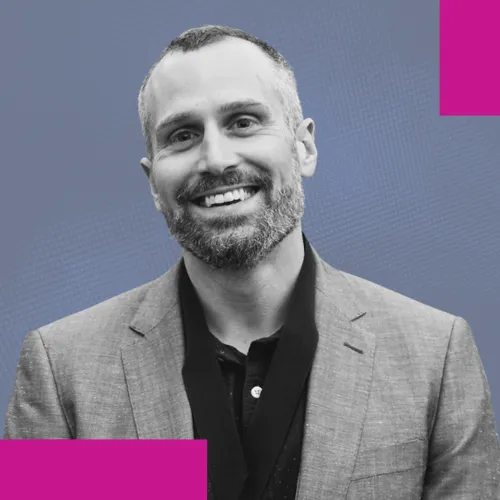
This week, we interrogate that timeline with Rick Needham, chief commercial officer at Commonwealth Fusion Systems.
Credits: Co-hosted by Stephen Lacey, Jigar Shah, and Caroline Golin. Produced and edited by Stephen Lacey, Sean Marquand, and Anne Bailey.
Open Circuit is brought to you by FlexGen, a leader in integrated battery energy storage solutions and energy management software. FlexGen helps owners and operators gain greater visibility and control across complex energy systems to maximize performance. Learn more at www.flexgen.com.
Transcript
Caroline Golin: I don’t have to debate with Jigar this week.
Rick Needham: Funny that he isn’t here because I know he would’ve probably done some ribbing, but that’s fine. It’s all good.
Stephen Lacey: Jigar spits a lot of verbal fire so we had to find someone who is used to operating at temperatures of a hundred million degrees or so. That’s why you’re here.
Rick Needham: I love it. But we can handle very high heat, 100 million degrees, but we can also handle the cold shoulder at like 20 kelvin. So we’re good.
Caroline Golin: Oh, there you go. There’s your dad puns coming out.
Stephen Lacey: From Latitude Media, this is Open Circuit. For more than a half century, fusion has been a scientific story playing out in national labs, government research budgets and peer reviewed journals. Every so often a bold claim would capture the public’s attention and then maybe lead to disappointment when people realize that limitless energy from the stars is very hard to produce on earth.
But now fusion is evolving into a commercial story. This spring, Commonwealth Fusion Systems became the first fusion company to file a generation interconnection request and it has a timeline for getting power on the grid in their early 2030s, which is basically the same window for a conventional thermal power plant today. The science, of course, is far from done and fusion has burned optimist before. But for the first time the conversation has shifted from can this ever work to, can this work on a timeline that matters for today’s grid planning?
This week we’re interrogating that timeline. Are we on the cusp of commercial fusion? That is coming right up.
Welcome to the show. I am Stephen Lacey. I am the executive editor at Latitude Media. Caroline Golin is my co-host. She’s the chief growth and policy officer at NRG. How are you?
Caroline Golin: I’m great. I’m great. It’s nice and balmy in Atlanta today. So we’re great.
Stephen Lacey: Well, Jigar is out this week and in his place it is Rick Needham, our friend, the chief commercial officer for Commonwealth Fusion Systems. Rick, welcome. How are you?
Rick Needham: Great. Thanks, Stephen, and thanks Caroline for having me on board. And I’m not here to fill Jigar shoes, but maybe to provide some perspective on fusion, but I’m super excited to be here. Thanks for having.
Stephen Lacey: Absolutely. And you’re a well-known figure in the energy industry, but your resume is far wider than energy. It goes nuclear submarine officer, robotic prosthetics, commercializing large scale renewables, and then commercializing fusion. I’m sure I missed some things in there. Most people pick a lane. You seem to have picked the hardest ones.
Rick Needham: Well, I like to tell people my career has been, I guess, non-linear. When looking forwards, each opportunity came as a result of the previous one. But when looking backwards, it kind of can make sense and kind of all tie it together in trying to address big problems, focus on big areas that do that, doing first of kind things and fusion, what could be bigger, what could be better, what could be more impactful. So I’m super excited to be where I am today and the path that led me here.
Stephen Lacey: All right. So look, we’re talking to largely a pretty technologically sophisticated audience, but I don’t think we can have a conversation on fusion without defining fusion and fission. And since you’ve literally operated a fission reactor, I’m just curious, what’s your preferred way to distinguish between fission and fusion? How do you simply describe it?
Rick Needham: Yeah, there’s a relatively simple description, which is fission is a splitting apart of a large atom and outcomes a bunch of energy. Fusion is the combination of small nuclei and outcomes a lot of energy. They’re both reactions that result in an enormous amount of energy because of the conversion of mass to energy in Einstein’s famous equation e equals mc squared and the reactions both have smaller mass afterwards. Both of them are literally millions of times more energy dense on a mass basis than burning something, coal, gas, oil, whatever, because of the nuclear reaction. Fusion’s actually four times more energy dense than fission, but fusion is basically what happens in the stars. It’s a combination of very light nuclei into slightly heavier heavier ones, but a little mask gets lost and outcomes an enormous amount of energy. The difference really is fission is a chain reaction that we can control.
Every nuclear power plant today is a fission plant and that’s a controlled chain reaction. Fusion is not a chain reaction. It’s a reaction that happens when the conditions are right. The conditions are hard. It’s what happens in the stars. It’s really hot, it’s really dense and then you hold it together long enough and it’s fuel, which is in the form of a plasma, which is from your high school physics class. The fourth state of matter, which is when a gas gets heated up so much, the electron strip from the nuclei and it forms a massive charged particles. When you get that all to work and combine together the positive ions combined, you get a lot, a lot of energy. And this is why magnets are important because you can use them to control the plasma. We’ll talk more about that later. But the other really important difference is because it’s not a chain reaction.
It’s covered under a much different regulatory regime as well. And so we can drive into that. But the big deal, why is fusion so exciting? It’s because it has some of the aspects of fission. It’s clean and it’s firm, but it has a bunch of other ones. It’s scalable in how you build it and how you deploy it. It’s secure. It has no geopolitically fraught supply chain upon which you’re depending, whether that’s digging stuff out of the ground or it’s uranium mining or whatever and it’s safe. It’s not a chain reaction. There’s no long-lived radioactive waste. There’s no chance of a meltdown, no decay heat. So it has all the aspects that you want. The only thing it doesn’t have, which I’m sure we’ll cover is it’s not here today and we’re working hard every day to make that happen.
Caroline Golin: Rick, if we’re all stardust and this is what happens in the stars, are we all a product of nuclear fusion? This is a really deep question.
Rick Needham: The answer is yes. In fact, 99.99% of all the energy we’ve ever experienced as a race as a planet is from fusion. It’s courtesy of our local fusion power plant, the sun, whether that’s solar electricity landing on a panel or it’s biomass that had formed millions of years ago, got crushed, turned to oil and got dug up. It’s basically all from our local fusion power plant. And we’re just trying to bring that down to earth and break the local monopoly of our sun and allow us to directly convert that power to electricity.
Caroline Golin: Yeah. Playing God, same thing. Yeah, I love it.
Rick Needham: Yeah. You said it. I didn’t say it.
Caroline Golin: Yeah I know. I said it. It’s fine.
Stephen Lacey: And fission and fusion are different enough that you guys have really dropped. I mean, I think the industry generally has dropped the use of the word nuclear in it and they’re really separating nuclear, traditional nuclear fission from fusion itself. And just one more 101 question, why haven’t we figured out commercial fusion when we’ve had commercial fission for so long?
Rick Needham: Yeah, it’s a great question because fusion’s hard. Going back to a fusion happens when you have the right conditions, but those conditions are pretty hard to achieve. The stars have a very natural advantage in that they have a lot of gravity and they’re already in essence burning, they’re already fusing. So the three conditions you need, just to level set everyone, is you need it to be hot enough. And when I say hot enough, like really hot, like 100 million degrees plus, it also needs to have enough fuel around, needs to be dense enough and you also need to hold it together, contain it long enough. So it’s hot enough, dense enough, contained enough. Those are colloquially referred to as the triple product or the loss in criteria, those three things. It’s kind of the figure of merit for how well you do fusion. And the stars are really good because of the gravity, but we have to basically simulate that or make that happen on earth.
And there’s a couple different ways to make that happen and there’s two ends of the spectrum and stuff in the middle, but the two ends of the spectrum are one is you pound something so hard and so fast that has no chance but to fuse. That is called inertial confinement or pounding something really hard. That’s by the way, what the national ignition facility out here in California did when they achieved that energy gain at the end of 2022. 192 of the world’s biggest lasers pounding this little tiny pellet of fuel for a now second, you got one energy out than in, which was a great achievement. We actually achieved it on earth. The other end of the spectrum is you hold that plasma together for a longer period of time with big, strong magnets and that’s kind of the regime that we’re in. And there’s some versions in the middle that are also inertial plus magnetic, but we have to do that because we don’t have the gravity of a star to hold that fuel together.
But the order of that figure of merit, it’s been hard to get to the point where we’re getting more energy out than in, but the progress over the last 50, 60 years has been very rapid, faster than Moore’s law, in fact, on that figure of merit. It’s just that fusion had a long ways to go, many, many orders of magnitude to show that it could reach that point. And we’re just at the cusp. We’re just at the cusp of proving it. In fact, it was proved out at the national ignition facility. We’re just about to show it with magnetic confinement. We’ll talk about why we’re going to hop over that performance curve and do it in a smaller machine by using big strong magnets. And that’s been our approach.
Stephen Lacey: Naturally, when something is this difficult, there’s a mismatch between maybe the scientific progress and public expectations. And so we’ve seen a lot of improvements in the science, obviously, but there have been a number of companies or researchers that have made big claims that have not been backed up and so you inevitably see this peak of excitement and then disappointment. But in reality, the science has continued to move forward. Maybe we just start with what makes this moment in particular different. There has been this long history of claims that didn’t materialize. If you put on your fusion observer hat, what makes this moment different?
Rick Needham: Yeah, it’s totally fair to ask because fusion has had a long history of the science advancing and pushing and seeing if we can get there and some claims about, oh, we’re very close. I mean, it’s kind of sobering to think about even a hundred years ago, humans had no idea how the stars worked. It was that short ago, like a century ago. Sir Arthur Eddington, astrophysicist, mathematician in the UK, theorized the stars must be doing something like fusion because otherwise they would’ve burned out basically. And he was right, but no one had yet even proven that. And it was a woman that then helped prove that. So it’s kind of fascinating.
Caroline Golin: As always.
Rick Needham: Caroline, that was an ode to women. Thank you. But it is fascinating. That was only a hundred years ago and yet the progress over the last 50, 60 years, as I mentioned, has been pushing the science further and further and understanding. But we’ve had a lot of advances that have really enabled us to get to this moment where commercial fusion can make sense. And that’s been advances in materials, it’s been advancements in compute and understanding of plasma, better and faster models and understanding us and actually discovery as you get to these boundaries as you’re improving performance of how that plasma operates and how we could control it. And all those advancements have come to the fore at this point. And some of those materials and equipment advancements have been things like for us like high temperature superconductors to make big strong magnets that didn’t exist before.
Those won the high temperature superconductors won the Nobel Prize in 1987, only became available in any production capacity in the 2000s, but it’s also big lasers or capacitor banks or materials that can withstand what the fusion elements. So there’s been a lot of advancements, but we’re now at this point where we had been sitting at this cusp and we kind of stalled because of limitations on some of those things, which we’ve now seen the ability to get through as well as the understanding of the plasma, the compute models and things like that. So for magnetic confinement, it was magnets, but for others, it’s some of those other things. I think we also have, it’s funny, the person who actually coined the term tokamak, which is Russian, it stands for tooidal magnet confinement, basically a device that a bunch of magnets can contain in a torid also was asked the question, so when will Fusion be ready for electricity production?
And he probably presciently said, “Well, fusion will be ready once society needs it.” And boy, society sure needs it now. And that was like, I don’t know, I’ll probably get my dates wrong, 70 years ago, 80 years ago, something like that. So very prescient, but probably right.
Stephen Lacey: So we’re going to get into the commercial piece a little bit, but CFS has a partnership and PPA deal with Google that we can talk about. But were you looking into fusion when you were at Google, Caroline?
Caroline Golin: Yeah. I mean, we were looking into everything. I think that our interest in fusion was one part of our twenty four seven goal and that was basic. We knew if Google was going to continue to grow, if we were going to decarbonize the grid, if we could help make fusion possible, that was a radical change for everybody else. And if we could be part of that story, then we want it to be. I mean, it was a much bigger and I think more romantic story. If we’re coming from stars and star dust, it was a much bigger and more romantic story than maybe some of the other technologies that we were looking at that we knew were going to be a piece of the puzzle, but might not have had the opportunity to fundamentally change the grid and society. I think Rick and I have talked about this before and Rick, I’d love for you to talk more about it, but fusion is more than I think a game changer for the grid.
It’s a game changer in the way we think about building industrial processes, when we think about commercialization, materials, transport, everything, which is more so than when we thought about commercializing offshore wind or solar, not that those weren’t important, but this just had such more broad reach in terms of the fabric of society and the fabric of the economy and Google loves a challenge and so we thought it was great. And it was actually after I left Google, it was on my sabbatical that Rick brought me up to the Commonwealth headquarters just north of Boston. And there are a few times in my life where I have really been wowed by science and this was one of those times. And when you really sit there on the floor and you look at what Commonwealth is building, you really start to kind of believe in the ingenuity of human beings and the ability of us to do great things again as opposed to sometimes I look at what we’re engineering and where we’re putting our brightest minds and I’m like, “Why?” So I think it was a romantic inspiring story.
It was certainly part of twenty four seven, but I think for Google it was a little bit bigger on this changes the world. We need to be part of this.
Rick Needham: When you talk about fusion, it’s really hard to be hyperbolic. It really is. It’s hard to be over index on what its possibilities are because it is in essence the final energy solution. I don’t know, maybe we’ll someday harness dark matter, I don’t know. But fusion is the final answer. It is shown to us in the universe. Billions of years ago, the universe decided this is the reaction that is the most energy dense reaction known. And if we can master it, we actually have clean firm power you can put anywhere that is inexhaustible, has an inexhaustible fuel supply. It basically is filtered water and a little bit of lithium when compared to EVs. Those are our basis of fuels and it provides permanent energy security. And that’s also reason every sci-fi series, book, movie, what’s the human relationship to energy some years out we’ve mastered fusion.
It is the final answer and we say the only thing that beats a fusion power plant in the future is a better fusion power plant. And that’s why we’re working on our version, but we actually have a core capability in the magnets that allows us to participate and work with other approaches as well.
Stephen Lacey: Yeah. So there are dozens of companies working on completely different approaches. Make the case for why the tokamak approach with high field magnets is the right horse to bet on. And then have you heard any skeptical arguments against it that are convincing or worth paying attention to?
Rick Needham: Yeah, sure. I mean, the whole basis of the foundation of the company was choose an approach that is the most well understood and well characterized and then apply one new innovation to it, big strong magnets that allow you to hop over the performance curve using the same plasma physics and understanding of those machines and then build it in a much smaller version. That’s the foundation of the company. And we picked the tokamak because it is the most studied approach to fusion. There have been 150 of these machines built over the last 50, 60 years. They’re very well characterized. You kind of know what you’re going to get when you build it and you don’t have a huge hop to go on the plasma physics. I talked about that key criteria, the loss in criteria, the triple product. Tokamaks are right at that cusp of net energy gain.
The problem that had limited it was the next version that would get you over the performance curve was to build it really big and that’s because magnets, you could make them only so strong. And this is before the invention of high temperature superconductors. And I’ll give you a little bit of a side trip here that high temperature superconductor, it’s different than a low temperature superconductor, not just in the name, you can operate a higher temperature. So yeah, instead of four kelvin, you’re talking 20 to 70 Kelvin. It’s still really cold. The big difference is that the superconductors will continue to superconduct under very strong magnetic fields. That’s what had limited magnets before. That’s why the big construction project in Europe, Eater, biggest construction project in all of Europe, is as big as it is because they had these older version of magnets. This is the key innovation that CFS had, which is like if you build it out of high temperature superconductor, you can get a much stronger magnet and the power of the fusion plan is the fourth power of the magnetic field.
It is a huge lever to pull. So you not only hop over the performance curve and get an energy gain, but you do it in a smaller device. So that’s the whole reason we’ve gone with a tokamak and apply these big strong magnets. Other approaches have started from a different perspective, which is we’re not even going to build something unless we know it can be small. And so some other approaches have focused on let’s do something that can be small, but they still have a ways to go up the plasma physics curve, that triple product to show that it actually works and get into regimes that they haven’t yet explored that tokamaks have. So that’s the whole reason we’ve gone with tokamaks. The hit on tokamaks, the skeptical person would say, yeah, but they’re big machines and they rely on these really strong magnets that are probably expensive.
Well, on the big side, that’s the whole reason we’re focused on using these bigger, stronger magnets. It allows us to build it much smaller. So 140th the size of that construction project in Europe started 10 years later, we’ll probably finish 10 years before. But on the magnets, what’s fascinating is we used our series A to go show that we can build one of these magnets at a time where there was not even enough of this material in the world to get anywhere close to building such a magnet, but we went out. We talked to every single producer of this high temperature superconducting material. We told them this is what our plan was. We ordered the material. We helped to scale up that industry reinvested in some of that supply chain. We made it happen and built a magnet that people said was impossible. When we showed that it worked, that’s what allowed us to raise a 1.8 billion series B because people said, “Oh my God, you’ve built that magnet.” Now, if you build a machine that has a bunch of those magnets, that’s a new version of a fusion power plant that’s actually small, it’s financeable and using the existing best plasma physics, it will work.
So we now operate a magnet manufacturing facility twenty four seven. What started taking us to build one part of a magnet, a pancake took us like two months to build the first one. We can now do two a day. So we are on a manufacturing scale up already. We haven’t even built a power plant, but we’re at a manufacturing capacity already that has come down a cost curve, increased production curve, increased quality curve. That’s kind of fascinating because it’s one of our larger cost elements of a power plant. We’re already seeing reductions and the material, like the high temperature superconductor material is made in a process that’s similar to thin film solar and a unit of measure of that tape is like a meter and we have thousands of kilometers in a single plant. Think of right slaw, think of the production curve you’re coming down in a single device and we’re talking about deploying hundreds or thousands of power plants. What industry has scaled thin film solar from expensive to dirt cheap?
Well, think of first solar. That is the kind of curves that we’re going to be on. So the hits against tokamaks are all large machines that rely on these magnets, but we’re already working on those and we’ve already proven in some sense the ability to build those magnets. Now we’re going to prove that we can get on a production curve and drive down the cost.
Stephen Lacey: You’ve won the confidence of investors because of the way you’ve tackled a lot of the hardest problems first and sort of worked problem by problem. You’ve got two plants in the works, your SPARC plant in Devons, which is what, 80% built, is that right? That’s your commercial demonstration plant.
Rick Needham: When you say 75%, but appreciate you rounding that up.
Stephen Lacey: Okay. Yeah. 75% built and then you’ve got the ARC plant later in the 2030s in Virginia. And you guys are really confident, right? You’re really confident in this SPARC plant and I guess just I’m just curious, why do you know? Why are you so confident that when you turn it on it’s going to be a net positive energy facility?
Rick Needham: Totally fair question. I think part of the confidence comes from operating in a regime that is well understood. And so there’s no real extrapolation from current plasma physics to the performance of SPARC. It is operating in the range of all other tokamaks that have been built and that’s on purpose. That’s very much on purpose, but it also will then show us how this operates, how a much more compact device works and the mechanisms of the plasma so that extends then into build the ARC power plant. It basically de-risks that understanding, but the SPARC performance is well within, it’s not really extrapolated. We also have confidence because it’s not just us telling people. We very much pride ourselves on transparency and sharing what we’re doing in order to better improve what we’re doing. So we have published a series of dozens and dozens of papers about our approach.
We just recently released the basis for the physics and ARC power plant papers, like five papers that were just released a couple weeks ago. There’s 58 authors on that from other institutions from leading labs and national labs and universities as well as CFS folks. And that’s because we think it’s really important to make sure that we’re shining a light into those places where we might not really … Maybe we haven’t spent all the time and there might be things that we could take a harder look at and to get the ecosystem bought into what we’re doing and understanding that it also looks like it’s going to work. So it’s kind of funny that in the world there’s probably a small cadre of people who really understand this well and believe this is going to work. And if you ask those people, their response is like, “Yeah, that’s going to work.
They just need to build it.” So then that puts us in an engineering and execution risk area. And of course it’s hard to build a complex machine, but that’s what we’re doing right now. But we’re not in the, I just don’t know if the plasma physics is going to work because no one’s ever done something like this. We’re not in that regime and that’s on purpose. But again, we invite the world to kind of explore it with us. We invite feedback and many fusion companies do this, not all do and we just would always caution people and working with fusion companies that aren’t kind of sharing what they’re doing, sharing results and willing to shine lights on what they’re doing because that’s a place that becomes very difficult to convince people that what works works. And some investors are okay investing in that area, but we have built up, as you mentioned, Stephen, a host of very, very supportive investors across the three billion that we’ve raised who understand very well what we’re doing and we share that widely and they become big, big supporters and continuously investing and ongoing supporters.
Stephen Lacey: So let’s say SPARC works, the net energy gain is real, you’ve just begun proving the demonstration machine is a huge deal, but that’s one thing, building another commercial power plant on a grid that hasn’t ever connected a fusion facility with a supply chain that you’re still building for customers who need power on a specific timeline, that’s a whole nother ballgame. And so you’re simultaneously working to prove the technology works, you’re building the supply chain in the volume at commercial scale, you’re signing customers up for a plant that still hasn’t been built and you’re trying to position what the next plants are after that. These are all huge undertakings on their own. How are you managing the tension between all of them?
Rick Needham: We manage the tension with a great bit of care and thinking very carefully about what we need to actually lock down now and what are things that we call our late locks. Like what is the actual material that sits in the ARC power plant? We don’t need to know that right now. We need to know it when we order that material and put a piece of apart into the ARC power plant, but there are things that we do need to do now. For example, submit for an interconnect and PJM given the timelines for how you would connect the power plant. So we’re very thoughtful about what are the things that we need to do right now and we know we need to do these things in parallel if we’re ever going to have a chance of fusion power getting onto a grid and impacting our energy system writ large.
Our goal, we have an ambitious goal to deploy thousands of these plants, not just a one, not just SPARC, prove that works, not just the first ARC so the power plant works, but deploying thousands of them. And to do that, you really have to think about what can you do in parallel, what are the right times to do those things? You mentioned supply chain. Yeah, we’ve been working with the supply chain for quite some time. We actually have over a thousand global vendors across 30 different countries. At any one point in time, there’s probably about a dozen CFS employees sitting on the floor at our supply chain partnering with them, doing fast cycles on things that are being produced that are literally going to spark. So we’ve been very, very thoughtful about that. We probably have a bigger supply chain than many people have in their companies.
The plasma physics, we work carefully with national labs, as I mentioned, universities and making sure we’ve got the best minds thinking about that. There’s still R&D that we need to do. Again, mentioned, what are the materials that go into the plant? How to do robotic maintenance in such a plant? How do we think about how do we keep the capacity factor up? Those are things that we’re going to find out when we build the first power plant. Those are all really, really important. But I think it all comes back to a team, team that really thinks about this and operates with an ethos of collaboration and partnership. We have built a team that has many talents and skills and have drawn from many parts of the industry that have done big, crazy things that people thought were not possible. We have a lot of large continuum of SpaceX employees.
We have people from Tesla, we have people from space companies, of course, we have people from national labs. We have people who’ve operated tokamaks and fusion plants all over the world. And we have people who have built millions of things from Harley-Davidson to BMW to Ford to GM. And it’s this team that’s come together, has this basis of skills and the ability to build things in the past, but understanding we’re a multidisciplinary team that needs to make many things happen in parallel. And then you get to, people ask the question, why has CFS been able to raise so much capital? And I say it’s really because of our approach. We talked about that, the most proven scientific approach, apply one new innovation, but it’s also the team and its execution and a team that executes and gets past these first of kind, we call them first encounters, things that you could step back and say, “Oh my God, if we don’t figure this out, we’re dead in the water.” We’ve solved those things six months later than the rear view mirror we’ve had dozens of those.
So a team that does that repeatedly also builds a confidence to then approach the next problem and know that they’re going to figure it out. And fusion has a lot of those. We’ve done a lot. There’s more to come, but we’re confident we’ll get through them.
Caroline Golin: Rick, I mean, you and I have talked about this so many times, but even thinking about our, I think our show last week, I don’t know, time is a vacuum. Y’all’s approach was really focus on upstream, focus on the supply chain, ensure that that is in and of itself profitable in the long run as opposed to focusing on as the chief commercial officer, I guess sort of the commercial offtake structure that was going to make this scale, which I think is very different from what we’re seeing in the rest of the industry. I mean, we were talking about this before, which was that part of the problem in the US in general is that we divested in upstream manufacturing fabrication for the energy industry. It all went to China and now we’re in this interesting blockade situation where China’s not willing to allow some of its monopoly on solar production to leave the country and they’re using it as a geopolitical tool, which I think is really interesting and really smart and really strategic.
But I wonder if you would talk a little bit about the other major issue that every energy company is facing in this country, which is the NIMBYism of building stuff anywhere and everywhere. And one of the things that we’ve talked about at nauseum is that we understand the pushback on really reckless and irresponsible data center build out, but that has somehow permeated building anything that involves steel or a permit. And so talk to us a little bit about y’all’s approach because this could seem pretty scary to a community that has seen what’s happened in Japan, seen what’s happened in Eastern Europe and been like, “We don’t want that in our backyard.”
Rick Needham: Yeah, that’s a very, very important question. And I’d be happy to also circle back just on the geopolitical thing, but let me answer your NIMBY question, which is an extremely important one because I think a lot of communities have been kind of on the brunt end of like, “We’re going to go develop something in your backyard and we’re going to go talk to someone in a closed door room and get a deal and then you just deal with it.” And that’s not a great approach. And for fission, there’s obviously concerns whether they’re warranted or not, and I say this as a fission fan, there’s certainly concerns about building a plant that could have an accident and be a regional disaster in some sense. Now the designs are such that nuclear fission actually has a very, very strong safety record across all of its production. It does have singular moments that were not good. So the beauty of fusion, and I think the beauty of our approach, and this is one reason I really like working at CFS, is we thought very early about how do you engage effectively with a community when you’re going to be building this infrastructure litter in their backyard.
And Caroline, when you came and visited, I think we probably pointed out that our closest neighbors about 300 yards away, meters for other ones. So they’re very close. And what we did was we engaged with that community early. We said, “This is what we’re building, this is what fusion power is, this is what it is not, and this is what our ultimate goals are.” And we invited them in and talked to them about before we decided to go build in their backyard and people talk about wanting public acceptance for their technologies and we talk about not, that is a low bar. We want public excitement. We want people to say, “I want this.” Not just, “I’ll accept it, but I want it.” And our experience in Massachusetts has been fantastic and I think we have a very welcoming community there. We invite them in every quarter to tour the facility to see what we’re doing to get the latest updates.
I think we’ve converted people from being fusion curious, like, “What is this?” To then fusion informed and now to fusion evangelists. When we announced our site for our power plant in Virginia, we also did the early hard work of making sure we’re talking to that community in advance. Obviously the state and the county, of course, but also the people, the people who live there. And of course, I think we had very, very good first meetings with them. We made sure they really understood what we’re doing and they invited us in with open arms and we’ll have to continue to earn that trust, tell them what we’re doing, inform them. And yes, it’s a construction project. So we’ll be trucks running around, big piece of equipment, but I think they understood what it is that we’re trying to achieve and what it could mean for the human race writ large, but also for their community in a local context.
And they’ve been very, very supportive so far. And that allowed us to get the conditional use permit in Virginia for our power plant, something that a gas plant on the same site did not get. Like this community said no to a gas plant. They said yes to a fusion plant. They even conditioned it. It has to be a fusion plant and we were okay with that. So it’s an important, I think, aspect of how to build out the infrastructure we’re all going to need, frankly, whether it’s power plants or data centers, talk to the community, make sure they know the benefits and people sometimes say, “Well, it’s really risky. What if they say no?” It’s like, “Well, what if they say no after you spent 10, 20 million trying to develop a project? You’re out 10 to 20 million. Why not get that information in advance and then go to the place that they really want you?” And then not only are you less likely to say no, but they’re going to be supportive along the way. So we think that’s really important.
Stephen Lacey: And also the safety considerations are very different with fusion as well, right?
Rick Needham: Yeah. Thank you, Stephen. I think Caroline was asking that question. We talked about because the reaction is really very, it’s completely different than fission. There is really no chance of a community level event for fusion. It’s impossible to have a meltdown. The worst day for a fusion power plant is something crashes into the facility and when that happens, the reaction just stops because if you don’t have one of those three conditions, hot enough, dense enough, contained enough, it just stops, just stops. Someone had asked our chief science officer, “What do you do to protect the environment from the plasma?” And he said, “Well, you’ve got to kind of flipped around. We have to protect the plasma from the environment because the moment something comes up, literally you blow a breath of air into this machine. It stops. It just stops.” So that has also led to a regulatory approach that is very, very different. So in the US and the UK, fusion power plants will be regulated and licensed under a different regime than vision.
Stephen Lacey: On the state level?
Rick Needham: Yes. The US NRC voted unanimously back in April 23 that fusion power plants will be regulated like particle accelerators, because that’s essentially what they are. They’re accelerating particles, which is done at a state level. So they basically said states will be in charge of licensing these plants and it’s licensed on the basis not of the design, not of the operations because it doesn’t have a chance to have a community level event. You’re licensed on the basis of properly handling the materials on site. And some of those materials are radioactive. One of our fuels, Tritium is lightly radioactive and some of the metals that get hit by the neutrons will become activated. As long as we responsibly handle those on site, there’s nothing that becomes a huge issue. And so for those in the technical world, it’s not 10 CFR 50, 52 or 53, which is what fission is under.
It’s 10 CFR 30, which is a byproduct materials basis. So that does two things for us that allows us, and this is for any fusion power plant, that allows a fusion power plant to get a license much more quickly, but it’s still safety appropriate. So on the order of roughly a year and less than 10 million versus for a fission plant under those other code of federal regulations, that would take five to 10 years and 500 million to a billion. That’s just the approval to go build that plant on that site. That’s not the capex, that’s the approval. I know this administration is trying to shorten that and reduce that for vision. And how do we know that it takes only a year and less than 10 million? Because we already have it. We have it in Massachusetts and it fits in a manila folder, not in a wall of file cabinets that you literally have to keep up to date and have someone whose job is just handling paperwork.
And that’s for fission because it has the chance of having a community level event, that is important, but for us it doesn’t. So not only does it allow us to go faster to get one licensed and built on a site, it also allows us then to even change the machine over time. So on fission, if you had a better reactor coolant pump that you came up and it’s better on every single criteria, it’s cheaper, it’s safer, it’s lighter, it’s les materials, it’s completely recyclable, whatever. Every single version of better you had, you still couldn’t put it in because your license is for that design at that site and that’s a new pump. For us, we’re not licensed on the design. So if we have a better material, we swap it in. So for an existing plant, we can continue to improve it over time without having to change our license.
So this is an incredible advantage for fusion. And when I said scalable, we’ll manufacture them and make the modular and scalable in the manufacturing side, but it’s scalable on how you deploy it too, because we don’t have these long cycles for having the ability to go license at a site.
Stephen Lacey: So you’ve got this power purchase agreement with Google with Eni, you have a partnership with Dominion. I want to talk about these commercial arrangements a little bit. Caroline, first to you, how different are these commercial arrangements than say working with a more conventional energy technology? How does a partner like Google even approach this kind of technology compared with something else?
Caroline Golin: Well, eight years ago, Google along with a number of our peers in the industry started standardizing the solar and wind PPA, right? We did that very quickly with the least resistance and innovation into commercial terms and we scaled it and we drove down the cost of solar and wind all over the country because we just took, “Oh, here’s the PPA you’ve seen in PJM and SPP and CAISO and we just replicated it.” These weren’t capex intensive technologies at the time. The supply chain had been there. They needed capital and Rick did this at Google. In fact, Rick, you should be giving this speech, not me. And they didn’t need a lot of capex upfront. They needed firm offtake to get financing, right? When you get into some of these more advanced technologies, geothermal, long duration energy storage, vision and fusion, it’s a question of balancing upfront capex versus a premium offtake agreement that allows for additional financing to build out.
What I think we see, and this is an important distinction with Vision, was that the barrier was pre FID capex. We needed to contribute a billion dollars to even know if we could build something to then have a premium offtake agreement. And we’ve talked about this in the show before. That structure changes a little bit for fusion. However, the offtake, because it isn’t proven and we don’t have a reference points like we built Vogel, we have nuclear fission running on the grid has a different range on it. And so it’s a balance of capex upfront to drive down the long-term premium on the offtake and it’s different between the technologies. And so we at Google balanced that different ways. In some cases we were willing to put capex down. We were going to put capital down in order to lock in pricing or to secure a more, I don’t want to use the term reasonable, but a smaller margin between what we would take as a wholesale agreement and what that bilateral offtake would look like.
And in other cases, we weren’t because the risk of putting that capital down and not seeing any return on it was too high, which is part of the reason why in general the vision conversation has been difficult because before you can even talk about real commercial terms in the way a customer offtake thinks about it, we were a billion dollars out. So that was a trade off.
Rick Needham: When we engage with customers on fusion, we’re like, “Listen, you’re going to sign up as a customer, but any customer on a first fusion power plan is in essence a partner because this will be the first one ever in human history. Things are going to go sideways in some places and maybe they’ll go great in other places, but you’re signing up to be a partner. And so what that means is no, we’re not going to take the standard offtake agreement and just fill that in and substitute fusion in for solar. That’s not going to work. We’ll have to think about what could work.
Caroline Golin: Which to be honest, Rick, that’s a barrier because you have- It is a barrier. A lot of this capital is not dumb, but it is stuck in its ways because it’s moving so fast. It has to be, right? It needs to be looks like a duck, walks like a duck, quacks like a duck.
Rick Needham: Exactly.
Caroline Golin: Great. Go.
Rick Needham: They’re like, “This is what we know how to do. Fit in this box and we’ll do it.” We’re like, “sorry, we don’t fit in that box. We’re different. We’re a star on earth. Sorry, we’re a little different.”
Caroline Golin: I love that. I’m your new marketing lead. We’re going to do a whole thing about stars on … Okay, sorry, tangent.
Rick Needham: And we’re all made up of star dust in Caroline’s parlance, but not every team can engage in that fashion. I think Google, we’ve been blessed and I’ve known a bunch of the people on the Google team on the off-take side who can engage in this way and think about things differently and be true partners and how we can strike an agreement. And when Caroline mentions we live in a day and an age where doing a first of a kind thing, it used to be, oh, a hyperscaler could sign a PPA and their job is done. That project can go with then get financing and get built. But for first of a kind things, that’s necessary but not sufficient. We also needed additional capital into the project. We need additional support to show it can get done, all those things. And Google came in as a big investor in our latest round.
They were an investor in a previous round. Any our other off-taker is also thoughtful this way. The CEO of the company has decided Fusion is like the thing that their company is going to go do. They actually have a bigger Fusion team than most Fusion companies and they also were a continuing investor coming into the last round. So we’ve signed PPAs, but we’ve also partnered with them as partners, as investors. And then on many other fronts too, like part of our agreement with Google was also working more closely with Google DeepMind. We’ve been working with them for like a year and a half or two years, but we didn’t announce it until after that deal was struck because we now have a deeper relationship with DeepMind who’s going to help use AI to improve our understanding of plasma, to potentially become an operating system in essence for the ARC power plant.
So there’s a whole bunch of stuff happening, but to bring forth the next and final energy solution, these aren’t just customers, they’re partners, but they also, in essence, some of these companies really want that affiliation with helping to pull forward a fusion future. And we recognize this too. Yes, we’re selling electrons. Yes, we’re selling attributes of that energy that’s clean, but more so than that we’re selling an affiliation to a future that will basically remove a huge bottleneck for the growth of their business, but frankly, it elevates the human race to a new era. At the top level of these organizations, that is, as Caroline mentioned, a romantic vision, but one that can be realized in our lifetimes. That’s a legacy of how the human race changes. Think about there was a before and after for the steam engine for space flight, for rockets, for vaccines.
This is the next level before and after. If there’s anything that’s worth putting time and effort into, this is it. And to be part of that can be incredibly motivating. We still have to go get commercial terms, still has to be approved by management and the board, but the promise, the promise is as big as it gets.
Caroline Golin: I think you’re going to see a lot of change from that mindset, not just from Google, but from other big players and hopefully towards fusion, but also across the energy ecosystem in general. I think that a number of players are getting wise to the fact that load is no longer just passive on the grid. It’s got to look at the grid and electricity as a critical asset into the way we build and think long-term about what that exposure means. And you’re going to need to make some bets. You’re going to probably do some things in the short term that you’re going to regret later, but you’re going to make some bets on the long term. So I actually think you’re going to see a huge shift over the next couple of years in the market in general from moving just from a passive off-take agreement and thinking about energy as a passive input into much more demonstrative sort of financing.
And the trend is not going to just stay with the big private equity banks. I think it’s going to grow. Yeah.
Stephen Lacey: So Rick, we hinted at the geopolitical dynamics here and obviously the Chinese are putting a ton of money into fusion research. I think they’re spending more now on fusion research than the US is. Talk about how that race may shape up. Will China start to pull ahead or is the US still dominating in innovation? How do you see that playing out and where are the geopolitical pressure points?
Rick Needham: It’s been pretty clear now for several years that there is a race and the race is on, like on button, big on, big red on button for fusion. And it’s frankly not just China. China, yes, of course. China’s estimated as to invested six and a half billion conservatively, maybe 13 billion in fusion and not just research. Yes, they’re building out research facilities. They’re literally building a copy of NIF in China right now. You can see from space. They’re also focused on commercial fusion, but also so is Germany, billion dollars in UK, couple billion dollars in Japan is focused here. There’s a bunch of nations that realize this is the final energy solution and it is one that leads to permanent energy security. And when I say that, I don’t say that lightly. It’s like it is a power source that literally uses filtered water and a little bit of lithium as your two primary fuels, lithium gets hit by neutron, makes trivium.
So deuterium from seawater, tritium from lithium that can basically, it’s inexhaustible and it’s available everywhere and it’s super cheap. You could actually cart the deuterium, one of the primary fuels into the plant on day one in the back of a truck in gas canisters, the same ones you’d find at your local grocery store that fill up helium balloons, but if you fill it with deuterium, truckload of that, put it in the plant, you’ve got your fuel for life, no input into the plant, no input. That is a romantic version of what energy security is. This is why we have investment from Temasek, from Singapore, why you announced a consortium of 12 different Japanese companies investing in this in the last round because it is truly … When you talk about geopolitics, the ability to stop importing energy and make it your own and control it within your borders is the same reason why renewables are effective and interesting because those resources fall on your shores.
This one, you basically make a machine that makes energy, heat or electricity and its input is filtered water. It’s an amazing vision, but it is true. It kind of breaks the mind that it uses so little fuel. It literally turns grams into gigawatts and does it with a fuel source that’s unlimited in essence and available everywhere.
It’s fun to think about this writ large. What happens when fusion power is available and obviously it has to be affordable and become cost effective, but when you live in a world that’s like that, the world changes. Actually, one of our customers, one of our potential customers asked us a question, when do you think, not when are you, but when do you think you can show a path to something like 50 bucks a megawatt hour? And we say, “Well, this is when we think we’d be able to show up. Why do you ask the question?” I said, “I asked the question because I think at that point, when you have a price that’s reasonable but you have a path to that, I don’t think anyone would ever build a natural gas power plant in the rest of the world.” Why? Because you’re getting the same thing.
You’re getting firm, dispatchable power clean. And in essence, looks like a gas power plant with no fuel coming in, no emissions coming out and you don’t have a volatile fuel price that you’re relying on that could be controlled somewhere else. We’re seeing not just a theoretical exercise, but the real one where the straits of hormones shut off 20% of the world’s energy flows. Imagine being a country that depends on that, like in Asia and in a couple decades time saying, talk to the hand, I don’t care because I own my own energy. I have fusion power plants. I’m done. I own my destiny.” That is an amazing vision and this is why countries are investing so much in trying to commercialize fusion. And we talk about the US and the US has been supportive and there’s a new roadmap that was just published a couple weeks ago and we think we’re excited about that roadmap.
It’s more detailed and comprehensive and covers some of the industry’s inputs and kind of infrastructure we’d need to drive commercially focused research, but we think we could do more. We really do. And instead of the US being the place where innovation happens, but building happens in China, instead of seeding the innovation with an S and then ceding it with a C to the rest of the world to get all the benefits that come from it, jobs, GDP, Caroline mentioned geopolitical power. Why don’t we do this? Why don’t we flip the narrative and say US innovates and the US builds? And we could do that. We could do that with a conviction that’s necessary to punch through this innovation. The industry has a request into the government for 10 billion, which sounds like a lot, but it’s a blip. What helped push through space flight, internet from space, vaccines, CRISPR, genetic therapies, all these things. We now live in a world that’s after those things have been punched through. We could live in that world for fusion and for not that much.
Caroline Golin: Yeah, but can you put it on a data center and space?
Rick Needham: This is the most important question. The most important question of the entire session.
Caroline Golin: Not a real question.
Rick Needham: We might use the intermediary of a panel, which is fusion to electricity up in space.
Stephen Lacey: Yes, exactly.
Caroline Golin: Good, good, good, good.
Stephen Lacey: Fascinating times that I think there’s a lot more that we could go into on sort of the economics of the commercial plant. Really exciting moment for you and we’ll be following closely over the next couple of years in particular headed into the early 2030s. Rick Needham, the chief commercial officer of Commonwealth Fusion Systems, this was a lot of fun. Thanks for being here.
Rick Needham: Thanks so much. It’s been great talking to you and come visit, Stephen. I know we talked about you and Jigar should come visit too.
Stephen Lacey: Yes. I really need to get over there. I’m in Western Mass and I just need to travel a little bit east and get in there. So absolutely. And Caroline, are you a believer?
Caroline Golin: Absolutely. Oh, yeah. I’ve been one for quite some time. I even have the … Rick, you didn’t wear a pin. I should have worn my-
Rick Needham: Move smart.
Caroline Golin: Nice.
Rick Needham: Move now. Move together. Caroline has that.
Caroline Golin: I actually use them as disciplinary tools from the children.
Stephen Lacey: All right. Thanks to both of you. Open Circuit is produced by Latitude Media. The show is edited by me, Sean Marquand and Anne Bailey. Find all of our episodes on Latitude Media’s YouTube channel. You can find Open Circuit and Catalyst there. And of course, all of our episodes on audio podcast apps as well and our transcripts are at latitudemedia.com. While you’re there, check out our newsletters and get all of our industry coverage where we cover many of the topics in depth that we discuss on this show. Thanks so much for being here. I’m Stephen Lacy. We’ll catch you next week.