It’s really hard to build infrastructure in America. And it’s particularly hard for clean energy, which is overwhelmingly stalled by outdated and onerous permitting.
But we have never been able to get to the root of the problem. And that’s why a new bipartisan federal permitting bill is such a big deal.
The bill sets hard deadlines for environmental reviews, limits lawsuits, and makes it harder for a president to block permitting processes. It also gives federal regulators new authority to approve transmission and open up markets to distributed resources. And it puts the cost of grid upgrades squarely on large data centers.
For builders in clean energy, it’s a deal they’ve been dreaming about for years. For many green groups, it’s a deal with the devil that will overwhelmingly benefit fossil fuels. Why is there such a deep split?
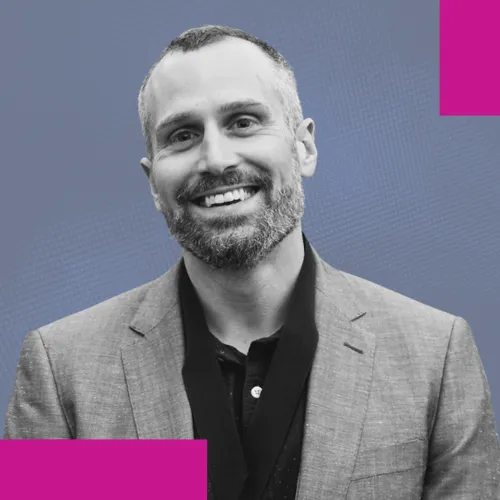
This week, Jane Flegal joins the show to talk about how permitting reform is taking shape. We’ll explore the details, the debates, and the trade-offs.
Then, we’ll revisit President Trump’s ratepayer protection plan. Tech companies and utilities signed onto the White House’s pledge with great fanfare, but critics say it hasn’t worked at all. Can the permitting bill bring some needed accountability to the plan?
Open Circuit is brought to you by EnergyHub. EnergyHub works with more than 230 utilities to coordinate over 2.6 million DERs and more than 3.6 gigawatts of dispatchable flexibility through a single platform designed to perform when it counts most. See what that looks like at EnergyHub.com.
Open Circuit is brought to you by Giving Green. Giving Green researches the climate nonprofits best positioned for the next big climate win, and sends 100% of every dollar donated to the Giving Green Fund to them. Make your first gift before 2027, and it’s matched up to $500. Go to GivingGreen.earth/Circuit or select Open Circuit at checkout.
Open Circuit is brought to you by Everyday Electric. Everyday Electric simplifies savings at home, helping support a more reliable, affordable grid. Operating the country’s largest residential VPP, it coordinates 6+ GW of capacity across connected products. Learn more at everydayelectric.com.
Transcript
Stephen Lacey: Some people can’t wait for the NFL draft. Some people can’t wait until Apple rolls out its latest product. But for Jane Flegal, it’s permitting reform.
Jane Flegal: I’m feeling good. I got to say, I’m feeling pretty good. This is maybe more for me, my Super Bowl halftime show.
Jigar Shah: But we’re not in the Super Bowl yet, right? We’ve only won the AFL championship game. No, that’s right. And now we’re in the two weeks that you have to wait for the Super Bowl to start. And we’re in the commentary section of who’s going to win? Which quarterback is more successful? Is the kicker capable of kicking for the 50-yard line? I don’t know about the defense.
Jane Flegal: You know what? Stop asking questions and just root for the team.
Jigar Shah: Just hope that they don’t have a power outage during the Super Bowl.
Jane Flegal: That’s right. That’s right. That’s right.
Stephen Lacey: From Latitude Media, this is Open Circuit. For years, we’ve been having a national conversation about how hard it is to build big things in America. For the last two decades, we’ve been consumed by debates over tax credits and arguments over which industries the government should back, and we’ve seen presidents using their power to favor or strangle energy infrastructure. But we have never been able to get to the root of the problem, a deeply broken federal permitting process that adds years to timelines and can drive up costs 30%. And at a time of immense load growth and rampant inflation, we are finally at a breaking point. So that’s why it is so important that a bipartisan group of senators finally reached a deal on a bill that would streamline federal permitting and hopefully get us to a place of sanity and reason in how we approve energy infrastructure.
For builders in clean energy, it’s a deal they’ve been anticipating for years. For many green groups, it’s a deal with the devil that will overwhelmingly benefit fossil fuels. So this week we’re going to look at how permitting reform is taking shape. We’re going to explore the details, the debates, the trade-offs, and the hope that we’re about to get to a more rational place. Plus, how’s that ratepayer protection going, Mr. Trump? Tech companies and utilities signed onto the White House’s pledge with great fanfare, but it’s not really surviving contact with the real world. We’ll look at why a toothless pledge is, well, creating the results you’d expect. That’s coming right up.
Welcome to the show. I’m Stephen Lacey. I’m the executive editor of Latitude Media. I am here this week with Jigar Shah and Jane Flegal. Jigar is the co-managing partner of Multiplier. Hello, sir.
Jigar Shah: Hello.
Stephen Lacey: Are you and Jane in a battle to see who can do more podcasts on permitting reform?
Jigar Shah: No, because I would never win.
Jane Flegal: I’ll dom that one, for better or worse. It’s my time. You can have VPPs.
Jigar Shah: Oh my gosh.
Stephen Lacey: Always. Yeah. I’m sorry I missed your fake birthday party at Climate Week, Jigar. It sounds like it was quite the time.
Jigar Shah: It was pretty awesome. Yeah. It’s one of those things with Climate Week where you go and then you never see any of the people you actually want to see. And so then —
Jane Flegal: He’s saying that because we didn’t hang out.
Jigar Shah: Well, you were invited.
Jane Flegal: That’s true.
Stephen Lacey: Though you were there, Jane.
Jane Flegal: I wasn’t. The thing I learned about myself during this Climate Week is that I’m too old and I have no stamina. And I don’t know how anyone does this. I can’t —
Jigar Shah: Me, on the other hand, I’m still a young chicken.
Jane Flegal: Yeah, apparently. I can’t do it when you’re running around all day and then everyone wants to go to happy hour.
Jigar Shah: Did you see that my shoes were featured in Axios?
Stephen Lacey: No.
Jane Flegal: Oh, what shoes?
Jigar Shah: I had custom-made Energy Empire shoes.
Stephen Lacey: I saw the shoes, but I didn’t realize they made Axios. Was that the “seen somewhere” column, or how were they featured?
Jigar Shah: It was the Axios Energy newsletter. I was the coda at the bottom.
Stephen Lacey: Nice.
Jane Flegal: Incredible. I’ll have to go look so I can either make fun of you or compliment you, depending.
Stephen Lacey: Well, one of our favorites is back. It’s Jane Flegal. She’s a senior fellow at the States Forum and the Searchlight Institute, and she has been heavily involved in and consumed by this permitting conversation. Jane, you were in Washington when the bill was unveiled, meeting with lawmakers. How did you come out of those meetings feeling about this long-awaited bill?
Jane Flegal: Incredibly energized and I think sort of surprisingly optimistic. I think we were in this period where everyone was sort of like, should we release text? Should we not release text? When are we voting? Are we voting? Do we have text? Do we even have text? What’s happening? And I just feel like the vibe shift when the text was released was palpable. I think there’s a lot of momentum here and people really want to do the right thing. So I felt great about it, and then I took a nap.
Stephen Lacey: Well, there’s a lot to get through. My podcast feed and Twitter feed are filled with lots of rundowns, takes, and debates on the legislation. Lots of good takes from you there on Twitter, Jane, and I want to tackle some of those conversations. So let’s just first run down what’s in the bill. It speeds up environmental review for virtually anything that needs a federal permit: energy projects, mines, pipelines, highways, et cetera. And there are hard deadlines on those reviews, so we can’t extend them over many years as is the case now. And it prevents the federal government from weaponizing the federal review process. It seems to be particularly helpful to geothermal and hydro, which both face a labyrinth of permitting. It tackles the grid. FERC gets more power to push interstate power lines. It opens up regional market access to aggregated distributed resources, i.e., virtual power plants.
It pushes FERC to even use AI to analyze transmission, which is interesting. So it opens up more data for transmission planning. It requires hyperscalers to report their data center energy use to the federal government, and it prevents data centers of 20 megawatts or more from cost-shifting grid upgrades to ratepayers. So I want to jump through each of these. And as you said, Jane, I think generally the reaction among folks who’ve supported this has been very positive. So does this bill match your hopes and expectations and work on this, Jane?
Jane Flegal: I’m really not just saying this because I’m a blind cheerleader, but it exceeds them on almost every measure. I was really, really quite shocked when I saw the text, actually. And maybe at the highest level, you laid out a bunch of stuff that’s in the bill, Stephen. If you asked a normal person, what’s in a permitting bill? I think they would probably not describe 75% of what you just outlined. It’s a really ambitious bill. And also, I think we tend to assume when there’s a bipartisan deal on something, it’s going to be super lowest common denominator. And this is not that. This is ambition on all sides, which I think is really interesting. And maybe the last thing I’ll say is I felt like we sort of knew as the negotiations were evolving that there were three buckets. There was the transmission title, there was going to be stuff on traditional environmental review, litigation, et cetera.
And then there was this bucket on permit certainty. But all of the stuff on data centers is pretty novel, I think, and I did not imagine would be in the bill. And then some of the technology-specific stuff on everything from VPPs to geothermal to hydro was also a surprise to me, a happy surprise.
Stephen Lacey: Yeah. I think I saw someone on Twitter say that usually when you have a bipartisan bill, stuff starts coming out, you make compromises, but for whatever reason, everybody threw everything into the mix and it just worked. So Jigar, you interviewed Senator Martin Heinrich of New Mexico on your podcast, Energy Empire, one of the co-sponsors of the bill. How did he characterize the balance of the bill and how it came together?
Jigar Shah: Well, I mean, Jane, I think, summarized it wonderfully. I think we’re in a situation where optimism exceeds pessimism. And I think that for so long, people just want to think the worst of everybody. And I get it because we sort of live in today. But in general, really we do have this ability to do big things, whether it’s make up for all of the shut-in capacity that Qatar has on the Strait of Hormuz with our LNG exports, to figuring out how to build data centers and other loads at scale here in this country, whether it’s new manufacturing or EVs and that kind of stuff. And what was happening is that many different people were weaponizing what were routine processes within the federal government. It was never intended to be the case that these things were politicized. It was supposed to be that all of these things were done by the book.
You really actually figure out whether there’s an environmental harm and you characterize what that environmental harm is. You give people the chance to participate in an open process. None of those things were taken away by this bill. But once that process is done and the experts have done their work and published their findings, it has to be settled. It can’t be that that then gets manipulated for other purposes. And I remember you and me and Katherine Hamilton talked about this when Obama, I think, made the critical mistake of taking away the permit for the Keystone XL pipeline when a lot of the fracking stuff was happening. And I think we predicted then that a lot of those things would be used against solar and wind, and it is exactly happening. And I just think that for those people who are characterizing this as eviscerating NEPA or whatever it is, it’s not. Senator Heinrich worked his butt off to try to maintain the spirit of what those laws were and take away the ability to weaponize them.
Stephen Lacey: Yeah. Jane, I gave a brief rundown of what’s in the bill. Do you have any favorite or underappreciated pieces of this legislation?
Jane Flegal: Yeah. Okay. Maybe just to talk a minute about the data center stuff, which I think has been underappreciated. Rob Meyer had a great piece on it yesterday, actually. But I think the bill is incredibly ambitious when it comes to these questions of how do you make sure data centers pay their fair share? And in fact, as I have been pushing, it goes beyond fair share. So the way that I’ve been describing what the bill does to people is that if you think of the grid like a toll road where everyone pays a toll to use the highway that’s already been built, when a data center needs a new on-ramp, the old rules, like the existing rules under the FPA, said that it could pay for the ramp or the toll, whichever would cost more. And this bill requires that they pay for both. It’s a really big deal, actually.
And so that I think is really important. I also think there are provisions in here that should encourage more flexibility and non-firm interconnection, which is really important. They basically get — there are kind of now non-firm services that are recognized as their own tariff category, which is a really big deal. It allows states to give large loads queue priority in competitive open seasons, which I think is really important. That’s all very good for ambitions, incredibly good for emissions and costs. And then maybe one more thing I’ll say that I think is underappreciated is — and look at me, not shilling for utilities, but I’ll just say it is true that if you look at the studies of what’s driving a lot of the price increases in states, much of it is local transmission and distribution spending. And there’s lots of arguments about how much of that is or is not gold plating.
And I think one of the things that the bill does that’s interesting is establishes a federal role in overseeing local transmission and distribution spending. So a state can refer a utility to FERC if they think that the utility is spending imprudently. That’s a huge deal. This is such a good bill. It’s shocking to me how good the bill is. And then of course, I love all of the transmission provisions, which I think most people in our community are enthusiastic about, but the data center stuff, I think, and the local transmission and distribution oversight thing, I think, are particularly compelling.
Stephen Lacey: Yeah. Jigar, what’s your read on the data center stuff? So you have these changes to how we revise transmission pricing policy, so data centers pay for both the embedded and incremental costs of new transmission. And then it essentially, as Jane said, creates this federal national connect-and-manage policy to bring in more data center flexibility. What do you make of these pieces?
Jigar Shah: So first of all, I just want to say the staff in the Senate is ridiculously talented, just so talented. I love Senators Whitehouse and Heinrich and Capito and maybe Lee, but in general, they’re not doing this work. It’s the staff that does the work. And I just think when you think about just how particular they are on these things, whether it’s grid utilization or VPPs or others, or exactly what the failure mechanisms are and how one might remedy these things through FERC, et cetera, these are things that we’ve been talking about for a long time around reopening the Federal Power Act, reopening some of these other things which were considered sacrosanct. You could never reopen them. And I’m still a little bit concerned that the utilities will go through a manager’s amendment to try to close some of these things that we’ve been able to open up.
But the thing about the data centers that I find weird is that people are characterizing this as good for the data centers. Some of them are characterizing it as bad for the data centers. It’s neither. Ultimately, this is really unequivocally good for doing big things in America.
And people are holding the data centers accountable to paying, which, by the way, was never the data centers’ fault. When you look at what was happening at Entergy Arkansas or what’s been happening in Duke’s territory or Dominion or other places, this was the utilities taking a good-faith effort by the data centers and saying, “We would rather you not actually pay for all of this stuff because we don’t want you to pay for it. We want to rate base it.” And this is giving the data center companies a mechanism by holding the utilities accountable so that when they make these offers, they can force the utilities to do what’s right for the ratepayers. I just think the complexity with which the staff understood this and put it and codified it here. The other thing I would say is I did a big podcast with Chris Shelton at AES and the Grid 2.0 Task Force, and the whole point of that was moving away from this firm capacity obligation to serve.
And that is wholeheartedly endorsed within this bill. They’re basically saying that it doesn’t make any sense for the utilities to rate base this stuff for 26 hours a year of peak. And we can use words like gold plating or platinum plating or whatever it is, but it’s not really that. It’s more that the utilities deliberately use this as a way to build more infrastructure that we don’t always need. Now, sometimes we do need it, to be clear, because we’re going to double the size of the grid over the next 15 years, but sometimes we don’t need it. And this bill provides a mechanism by which we can thoughtfully figure out whether we are in a place where we need it or whether we don’t need it and it’s gold plating.
Jane Flegal: It’s also just like, yeah, so many of the arguments we’ve been having — this should really help take care of the “is it or is it not gold plating” argument. Do we need this investment or not? And even the requirements on forward-looking transmission planning — this should all help our country get out of a situation of artificial electricity scarcity, which is what is happening. And that is actually the core of the problem when it comes to prices and the reliability of the grid right now.
Jigar Shah: One of the other provisions that I think people didn’t spend a lot of time on is this backstop authority, where for a lot of long transmission lines, you’ve got sufficient generation capacity here, you have sufficient load on the other side of the transmission line, and then you’ve got states that have to accommodate the transmission line through their state, and then they use that as a way to kill a transmission line. This provides a mechanism by which to overrule states who don’t want a transmission line to go through. It gives them a shot clock and it gives them a process by which they can complain, they can reroute the transmission line, they can do the things that they need to do, but they can’t do it in a way that actually prevents the project from being built. And this is something that we’ve been arguing over since the 2005 and 2007 Energy Policy Acts passed. And so it was fantastic to see that methodology in here, and I expect that to be one of the biggest things that the utilities fight.
Jane Flegal: And maybe just, sorry, just one thing on Jigar’s point about how amazing the staff is. I also just want to say one of the sources of opposition or pushback I hear right now from Democrats is like, “Let’s wait till after the election so we can negotiate a better deal.” Stephen’s looking at me like he was going to ask this later anyway.
Jigar Shah: God damn it, Jane, just let me ask you the question.
Stephen Lacey: Keep rolling.
Jane Flegal: Let me just say you cannot say enough about how incredible these negotiators have been, and Heinrich and Whitehouse in particular and their teams. And the notion that there are going to be major substantive or negotiated improvements with other people, I think, is quite frankly facially ridiculous. But I will stop there so that Stephen can tee it up later.
Stephen Lacey: You brought us perfectly into the questions and criticisms that we’re hearing on the left. So this is a good time to address some of those. A couple reactions from those who oppose it. Again, like you said, some are saying, “Why don’t we just wait to get a better deal after the midterms, when the Democrats could maybe take both houses of Congress?” Many enviro groups are staunchly opposed, saying that anything that speeds up fossil fuel permitting makes the whole deal a disaster. So Jane, how would you characterize the left’s opposition right now?
Jane Flegal: I think there’s this argument about an imagined counterfactual world where we might be able to get more stuff. So that’s one thing. So let’s put that aside. I think the other is genuine anxiety about the — I actually think no one is really fighting about the relative ambition of the transmission title, which I think everyone has been correctly positively surprised about. I think the truth is that there have been groups who have been using the tools that Jigar elaborated to block fossil infrastructure, and there’s a lot of anxiety about a bill that constrains some of the, particularly the judicial review processes around these laws. Now I should say, there are not changes — there are not big substantive changes to the Clean Air Act or the Clean Water Act in this bill. I mean, there are changes to the Clean Water Act, but they’re more procedural in nature.
Everyone is still going to have to obey the letter of substantive environmental laws. But I think what makes people nervous is deadlines for litigation. And now if you sue a project for something that was wrong in their NEPA process or some error, it will be much harder to do that to stop the project forever. What’s going to happen now is that the project will get remanded back to the agencies, who have an opportunity to fix the issue at hand. So at some level, at the very heart of this is just this disagreement about whether the primary strategy that the environmental movement should be pursuing in light of climate change right now is stopping fossil or enabling clean.
Stephen Lacey: And the third criticism I’ve seen, to put it crudely from one commentator: what’s to stop the administration from just wiping their ass with this? Are they really going to follow it in the first place? And so I’ve seen some skepticism.
Jane Flegal: This I also have very low tolerance for, and also this especially comes up in the permitting certainty discussions. And again, I just think it’s really important to be honest about the counterfactual here, which is that he is wiping his ass. It is bad. What is currently happening is bad. The notion that legislating constraints is somehow going to make it worse makes no sense to me. Yeah, I actually don’t even understand it logically as an argument, frankly.
Stephen Lacey: Jigar, how do you read the critiques and criticisms?
Jigar Shah: Well, first, you forever ruined my day by having me think about Trump’s ass, so let’s stop doing that. Look, I think when you think about some of the pushbacks, I want to make sure that we’re acknowledging them a little bit. One is that when we did the 2015 compromise on oil exports, it really did increase the amount of investment in the fossil fuel industry. I think that’s a good thing. I don’t think that we should have wanted gasoline to be at $5 a gallon or diesel to be at $7 a gallon. So I think that in general, we need to provide affordable solutions to Americans. So I think it’s fine, but I can see why environmental groups think that these kinds of things are going to increase the amount of fossil fuel production. I think the second piece of it, though, for them is that you have this ability to issue permits that cannot be revoked.
And so if the EPA issues many, many, many, many permits for natural gas power plants, for coal power plants, for whatever, you could imagine there being a trading mechanism in the future of those permits that were issued under the Trump administration being not able to be revoked and just constantly sold in the marketplace between parties that want to pollute more in the future. And so I think that there is some concern over the way in which that was structured. But look, I think that the bottom line with the environmental groups — and these are all friends of mine that I’ve talked to over the last 24 hours — is that when we had the first Earth Day, 10% of the entirety of the United States of America came out for the first Earth Day. It is unclear whether 10% of the American public today would come out for any issue on the environmental side of the ledger.
And so this esoteric blocking of projects using NEPA or using these sorts of environmental rules is not actually causing them to have real American support for their positions. And a lot of what I’ve been counseling my friends on is to say, you need to get back to a place where 10% of Americans actually believe your point of view. And so whether that means you have to soften your point of view, whether that means you have to explain it to them more carefully, you can’t just win esoteric court decisions like the Center for Biological Diversity does or some of these other people do. You actually have to win them over to your side. And that, I think, is the next phase of what this bill does: it tells the environmental groups, go shore up American support for your positions.
Stephen Lacey: One thing I was really struck by was the White House getting behind this. And Senator Heinrich talked about this in your interview, Jigar. He explained how this really started coming together when the White House moved with more urgency. What do you think is going on here? Is it that the reality that obstructionism is just not going to meet the moment was finally hitting them? Do either of you have any insight into what you think the White House’s motivations were here?
Jane Flegal: I’m curious what Jigar thinks, but maybe I’ll just say, look, anyone purporting to know anything about the White House’s motivations or thought processes probably needs to be taken with a grain of salt. But this goes to, again, why I think there’s a real urgency in this moment to get this done. Jigar rightly points out all of the ways that monopoly utilities are going to have issues with this bill, and it’s not like we’d never tried to fix this stuff before, but right now these utilities are on the back foot in lots of ways, in part because their influence is counteracted by other actors in the economy who are consumers of electricity and are like, “What the hell? We have to be able to build energy in this country and connect to the grid.” And I think in this moment, so much of the administration’s — to the extent they have any theory of the economy — is bound up with the success of America’s support for artificial intelligence, and that’s going to require a lot of electricity.
And I think they’re getting a lot of pressure from those folks to fix the status quo. But again, to me, that just means move with swiftness to get this bill passed, because the opposition is going to get stronger, not weaker.
Jigar Shah: I guess I’d ask Jane a follow-up question, which is that what I don’t understand is — I’m not an expert at all on politics, but as I understand it, this is something that you would want to have passed before the election, right? Because then the president could say, “Hey, I’m doing stuff here. What the hell?” And the fact that it’s going into the lame duck bothers me, because I just think the president’s going to be like, “This election was stolen from me. The Chinese interfered with the election.” And then I just don’t know whether he’s still going to care about forcing Mike Johnson to get this done.
Jane Flegal: Yeah. It’s not my preferred timing, but let me just say, I think it would’ve been great if this had happened a few weeks earlier and we had the opportunity to have a vote before the election. And I have lots of questions about the strategy here on all sides, but I think at the moment, as I said, we have text, we have momentum. I think the key thing for me is between now and then, how do we get as many commitments as possible to move this very quickly in the House when everyone comes back? It should be the top of the pile, not the bottom of the pile. And I think what that means is everyone who wants to see this get done between now and then needs to be making loud public statements of support and continuing to build momentum and pressure for this to get done so that we can improve our country.
Jigar Shah: Yeah. I mean, the one other thing I’d say, Stephen, on this is that, having talked to a lot of folks in the last 24 hours, I’d say that our industry is at a turning point, and I don’t quite think they really understand it. I just think that we are dominated by risk managers now in our industry. So when you look at the whole board of ACP or some of these other folks, they’re like European utilities or they’re NextEra or whatever. And so the number of people who look like Sheldon Kimber or Dan Shugar or those kinds of people is a much smaller group of people now. And so when you look at the oil and gas side of the ledger, it looks like they’re still willing to take more risk than our side of the ledger. And so part of the challenge in this moment, whether it’s the work that Tom Matsey is doing on holding Freedom Caucus members accountable, or whether it’s now that you have this law, if it passes, are we going to take a whole lot more risk to make sure that the cost advantages that we have are fully realized in this moment?
Are we going to deploy VPPs at scale? Are we going to deploy grid-enhancing technologies at scale? Are we going to take it to governors and take it to state legislatures to actually finish the work? And I think that there’s a lot of people in the White House and other places who are betting against our industry rising to the occasion.
Jane Flegal: It’s part of what makes the whole deal possible, right? Yeah. Is that we’re just betting against each other. And as I said earlier, we’ll win because I always win.
Stephen Lacey: I mean, the oil, gas, and mining provisions take effect pretty quickly, almost immediately. The transmission and market reforms are much longer term. Is this better for fossil fuels in the short term, with the benefits for clean energy coming much later?
Jane Flegal: No. I mean, again, I think we need to be clear about the counterfactual here, which is that what’s happening is that a lot of off-grid gas is getting built, among other things. And so I’m just like, the things that determine whether or not any given fossil or mining projects get built are going to be far broader than the specific changes that are relevant to those technologies in this bill. So I’m not worried about some huge flood of — in fact, I think even leaving transmission aside, I think all of these changes are structurally likely to benefit clean energy, which goes to Jigar’s point about who you’re betting on here. It is true that the law takes time to implement, but let me say again, that is why we have to do it now. Let’s be clear, it’s going to take a couple of years for this to work itself through the system, particularly the judicial review provisions.
And if a Democratic president comes into office in 2029 and we haven’t cleared the decks on this stuff and we don’t have the fiscal space to do the kind of spending we want with public money, we’re in real trouble. We have to get this done before 2028, in my view.
So that’s what I would say there. I guess I just also would encourage everyone to take a big step back. I think sometimes in the climate movement, we get a little bogged down in this “draw a boundary around a given geography and then stop as many fossil projects in that geography as you can” as a way to measure climate ambition. And to Jigar’s point, that just doesn’t make sense in terms of physics. That’s not how climate change works. These are often global markets. Even if it were the case that a few more natural gas pipelines get built to the Northeast as a consequence of this bill, I think that will pale in comparison to the clean energy deployment upside. And what matters for the climate is global emissions, and we still have Clean Air Act and Clean Water Act protections for local impacts of this stuff. So I don’t know.
Stephen Lacey: Let’s dig into the data center portion one more time, and I actually want to do that in the context of a related story, which is the president’s Ratepayer Protection Pledge. It’s been seven months since Trump unveiled that voluntary protection pledge with executives from all the big tech companies. All the hyperscalers have signed on. The White House says that 200 other utilities, cooperatives, and data center developers have signed on as well. And the White House claims that this now covers 80% of all power users. If you look at the website, it’s filled with gushing quotes from utility executives saying how proud they are to work with the president on this. But it has no teeth, and we’re seeing why that matters. And I think that brings us to why the data center portions of this permitting bill matter. Before we talk a little bit about the permitting bill again, which does have teeth, I want to unpack the ratepayer protection pledge.
Jigar, you’ve been talking about this a little bit. You mentioned Duke and Entergy earlier. One of the big criticisms is that this is non-binding, of course, and it does nothing to address the natural position of utilities, which is they want to build as much as possible and rate base it. So where are we seeing that contradiction play out?
Jigar Shah: Well, across the country. I think that there is a huge body of law basically in the United States around customers paying for their own upgrades, whether it’s the steel industry or the aluminum industry or other people. And there is a process by which they can put that money in and offset rate base from the utilities, and the utilities hate it. They’re just like, “We are in the business of putting capital out the door. We are not in the business of basically being a contractor for a data center. And so we don’t want to make these upgrades unless they actually hit our balance sheet.” And a very high-profile case just occurred in Dominion’s territory, where Microsoft offered to pay for a lot of upgrades and Dominion said, “Hell no,” and went to the SCC and said no. And to the credit of the regulator there, they ruled against Dominion and said, “No, you will take this money and you will help ratepayers.”
Jane Flegal: Regulators. Sometimes good at their jobs.
Stephen Lacey: Yes, indeed.
Jigar Shah: Yeah. Now Entergy has a law in place in Arkansas that sort of allows the utilities to go through this process without really getting regulatory approval. I think we have shamed Entergy so much in the last two weeks that they are now rediscovering the fact that they shouldn’t hate their ratepayers as much. And so in that case, Google paid for part of the cost of a new solar project, but not all of the cost of a new solar project. And Entergy is like, “Well, because Google didn’t pay for all of it and only part of it, because some of it was for normal load growth in Arkansas, we’re going to view Google’s payment as a prepayment of services in the future and rate base all of it.” And then as a result, they got an increase of $5.77 a month for every 1,000 kilowatt-hours you use, which is basically an average monthly utilization for a homeowner.
And so I think everybody from the Cato Institute to AEI to others was up in arms over this. And so I think you’re seeing in real time people recognizing that this is not working, that the data center companies, in my opinion — and obviously I’m sure that there are exceptions to this rule — are trying their best to meet the pledge, just because why not? And everyone hates them, and so you don’t want to give them more reasons to hate you. But the utility companies are doing everything in their power to stop them and getting away with it.
Most of the polling data shows that the voters are blaming the data centers over the utilities. And so part of, I think, the calculus here from the utilities is that they’re going to be able to hide underneath the hatred of the data centers. But as I keep reminding my utility CEO friends, I’m like, “That is only going to last so long. At some point, the data center companies will actually hire real marketing and comms people and they are going to put it right in your lap. I don’t see how this is going to last forever.” And there are 36 governors running for election this fall, and every one of them actually is promising to solve the problem. And so villainizing data centers when it’s not their fault — eventually they’re going to get smart to the fact that it’s their monopoly utility companies that have been screwing them all along.
Jane Flegal: I also just think, honestly, if we take a big step back, so much of the fight on affordability and whatever — we really are living in a country that is in an electricity scarcity environment, which makes no sense given our industries and our technologies. And anything we can do to fix that is going to put downward pressure on the politics of affordability and the actual affordability crisis.
Jigar Shah: Yeah, it’s all about plug-in solar.
Stephen Lacey: Do you see the utilities lobbying against this or trying to lobby for major changes? They already are. I mean, obviously their lobbying power is diminished a little bit because everyone sees utilities as more toxic, but do you think that their lobbying power has diminished enough that they may not have the power to make these changes, whatever changes they want?
Jane Flegal: I just want to put on a Flegalton hat and suggest something here, which is that these people aren’t stupid and they’re going to try to lobby through other venues. And whether that’s NGOs or unions or whatever, we all just need to be very clear-eyed about the various strategies they’re going to try to deploy. And we’re not going to be able to control it, which is why we just need to be out there, loud. This is not a moment for people to sit on their hands and be like, “I don’t know, maybe we’ll get a better deal later. I don’t know. The bill’s really long. I haven’t had time to read it yet.” It’s unacceptable. If you care about climate change, if you care about clean electricity, everyone’s going to have to get off their asses and fight for this bill.
Jigar Shah: Yeah, no, look, I agree with you completely. And I think this is where Senator Heinrich was very clear on the podcast, which was that he’s like, “This is going to create a huge amount of IBEW work.” And he is absolutely working closely with the unions, from the laborers to the National Association of the Building Trades and others. He is working hard to make sure that that coalition stays together. And he was very articulate about it. He was like, “Look, they are going to try to separate people out and we cannot let them do that.” Because look, and I think the utilities are amazing people and they provide an extraordinarily valuable service, but in this —
Jane Flegal: Heard it here first.
Stephen Lacey: He says that before he winds into deep criticism.
Jigar Shah: I say that regularly, but I think it’s important to recognize that there’s decades of literature that shows that monopoly organizations have a really hard time adopting new technology. That’s why the permitting bill had to be so explicit about some of these new technologies that they need to adopt. And so old habits die hard, and we are moving in that direction, but I totally agree with Jane that they have so many ways to impact these things. And the way that you will see this impacted, I guarantee you, is through a manager’s amendment. It is not going to be through an amendment on the floor of the House or the Senate. It is going to be through the package of amendments that go through Senator Whitehouse directly or some of the other managers.
Stephen Lacey: I just don’t have a handle on the congressional calendar or politics right now. What are the big uphill battles right now after the midterms? You talked about some risks. If Trump gets sidetracked or if priorities change, how big are the potential risks, and do we actually think that there are good chances that this will pass?
Jane Flegal: Look, there are risks, and in the face of risks, you do everything you can to mitigate them, knowing that there’s uncertainty and it’s kind of unknowable. So I think what we really need to see now and over the next several weeks is very loud public statements of support for the bill as it is written from everyone with political power who wants to make it happen. And I think we should all be pushing for that. Anything we can do to build momentum going into the lame duck is really crucial. I think what is going to matter here is continuing to make this a priority. The lame duck is very short. Even if there was not this risk that the president would be distracted by other things after a midterm defeat, the lame duck is just really short. So anything we can do to say this has to get done, this has to get done fast, do not get distracted by false promises of some imagined future better deal. Democrats need this in 2029. We need it today to constrain the president’s attacks on renewables. We need it now, and we just need to keep saying that.
Jigar Shah: Just 10X whatever Jane just said. I just think we are in a place right now where there’s a lot of people who think that this bill is likely to pass. It is not likely to pass, to be crystal clear. When you think about just how uphill the climb is to just get it passed through the Senate, let alone the House taking it up, and Trump getting distracted by Iran and all these other things, it is unlikely actually to pass, but it is the very best chance we have ever had to solve these issues. And so if you are not 100% all in on passing this bill, then you might as well be against the bill. So anybody who gives me hedging, milquetoast language is against the bill. And I think everyone should view everybody who is hedging or is careful or is not crystal clear that they’re 110% behind the bill passing as against the bill.
Jane Flegal: And can I just say also, surely there are things that could be strengthened and improved and whatever, this is just how it is. But if the argument for not doing it is that Democrats are going to win all of the elections and be able to do something “better,” let the better thing be improvements to a bill we’ve already passed.
Stephen Lacey: So final question on this. Assume this does pass. In, say, 2035, what do you think is built more because of it? Is it transmission lines? Is it renewables? Is it pipelines and mines? What do you think the balance of infrastructure looks like?
Jigar Shah: I think that in general, we are in a place where transmission has been extraordinarily difficult politically. I think that there actually were a lot of authorities that the Biden administration had from the 2005 and 2007 Energy Policy Acts, et cetera, that it took way too long to fully implement, and all of those things. But the reason that that was the case is that it’s politically just really difficult to go up against states’ rights and all these other things. This permitting bill basically gives the next administration a mandate to fix all of it, and it also gives it a mandate to get large loads online faster. It gives large loads a mandate to be flexible grid assets to help the rest of the grid operate. These are all things that Texas, frankly, has done extraordinarily well and all of the rest of the independent system operators across the country have done a horrible job of.
And so if this bill passes, that will be a very clear signal to everybody in the country that you need to be a lot more like Texas. And that includes Base Power and residential battery storage. It includes grid-enhancing technologies and advanced conductors. It includes everything that you possibly wanted to do but forgot was your top priority. All of it is going to be helped by this. And I think that the thing that people, I think, just have such a hard time understanding is just how beat up a lot of the entrepreneurs in our country are. For all of the craziness around the Reindustrialize conference and this and that and whatever else, we absolutely have this broken system where we invent everything in this country and then don’t systematically have people that are supposed to help you deploy them at scale. And I think this permitting bill sends a signal that we’re supposed to actually care about America doing big things again, and that matters. The vibes matter. All of that matters.
Jane Flegal: Yeah, I think I totally agree with Jigar. At the highest level, we do need as a country, not just for climate but for all sorts of reasons, much more robust investment going into energy infrastructure. And there’s a thing here about capital allocation, which is that today, if you’re deciding where to put a dollar, you may put it in energy infrastructure, but you may put it someplace else. And the biggest cost in a lot of these projects isn’t bits of kit or steel or whatever, it’s time. And every year a project is just waiting, investors are paying. So if you cut the wait time and the risk and the uncertainty, all these projects are going to be much cheaper to finance, and we’re going to just get a lot more capital into building — not just faster, just in general into building.
Stephen Lacey: Jane Flegal is a senior fellow at the States Forum and the Searchlight Institute. I know it’s been a really busy week or couple of weeks for you, Jane. So grateful you could come on. Love having you here. Good to see you.
Jane Flegal: Thanks so much for having me, you guys. Great to see you both.
Stephen Lacey: Jigar, you’re pretty good yourself too.
Jane Flegal: He’s the best. Look at him.
Jigar Shah: I am not a PhD. Oh God. And honestly, Jane, I think that the work you did to get the permitting bill to this point right now is nothing short of heroic. And so I appreciate everything that you did to make us successful here.
Stephen Lacey: Absolutely. Thank you, Jigar.
Open Circuit is produced by Latitude Media. The show is edited by me, by Sean Marquand and Anne Bailey. You can of course find all of our audio episodes on Apple, Spotify, or wherever you like to listen to your podcasts. Go to latitudemedia.com for our coverage on permitting reform. We’ve got a lot of pieces there, and of course check out our newsletters and our industry coverage across the board. We also have our AI-Energy Nexus newsletter for those following AI and energy. And of course, subscribe to us on YouTube. Latitude Media has both our podcasts, Catalyst with Shayle Kann and Open Circuit, and you can find years of our episodes on YouTube. So thanks so much for being here. I’m Stephen Lacey. I’ll catch you next week.