For the past decade, data centers were welcome guests. Communities competed for them with tax breaks, cheap land, favorable permitting because they meant jobs and economic development.
That era is over. Community pushback is now the rule, not the exception. Residents are showing up to planning meetings angry about water consumption, rising electricity rates, and industrial campuses dropping into their backyards. Permits are being denied and projects are stalling.
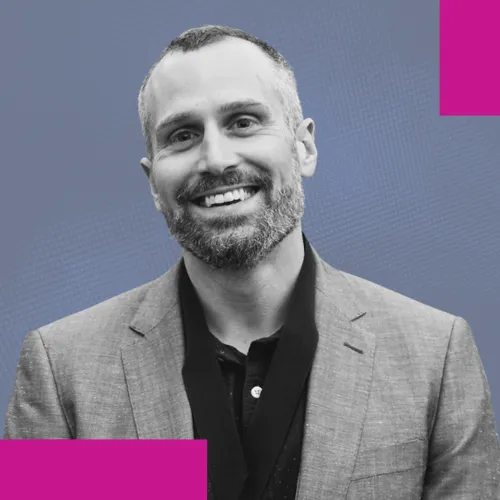
The industry’s default response has been to barrel forward and ramp up PR. But Christian Belady thinks that’s the wrong diagnosis entirely. Christian spent decades at HP and Microsoft. At Microsoft, he helped build one of the largest data center footprints in the world.
He invented PUE, the efficiency metric that became the industry standard. And now he’s arguing that the way out of this community crisis isn’t communications, it’s engineering.
So how do we make data centers assets to the communities they operate in?
Credits: Co-hosted by Stephen Lacey, Jigar Shah, and Caroline Golin. Produced and edited by Stephen Lacey, Sean Marquand, and Anne Bailey.
Open Circuit is brought to you by FlexGen, a leader in integrated battery energy storage solutions and energy management software. FlexGen helps owners and operators gain greater visibility and control across complex energy systems to maximize performance. Learn more at www.flexgen.com.
Tune into Critical Capital, a brand new podcast from Crux and Latitude Studios. Hosted by Crux CEO Alfred Johnson, Critical Capital explores the interlocking forces powering clean and critical infrastructure. Join us every other Tuesday for in-depth conversations at the intersection of energy, government, finance, and global markets. Listen here, or wherever you get podcasts.
Transcript
Stephen Lacey: For the last decade, data centers were welcome guests for the most part. Communities competed for them offering tax breaks, cheap land, favorable permitting because they meant jobs and economic development and the grid capacity was there. Well, that era is over.
Community pushback is now the rule, not the exception. Residents are showing up at planning meetings angry about water consumption, rising electricity rates, and tech companies generally. Permits are being denied, projects are stalling, and the industry’s default response has been to barrel forward and sprinkle in some better PR. Christian Belady, a former Microsoft executive, says that isn’t remotely going to cut it anymore.
Christian Belady: Now we’re scaling a hundred, a thousand, 10,000 times bigger than 20 years ago and we’re still building the same thing. At the end of the day, we have to rethink and look at all of this differently.
Stephen Lacey: This week we’ve got a conversation with Christian on how to rethink data center design and what it will take to make them welcome again. That’s coming right up.
Welcome to the show. I’m Stephen Lacey. My regular co-hosts are out this week and in place of our normal episode, we have a conversation with someone who I think everyone at the intersection of energy and digital infrastructure should listen to, Christian Belady.
Christian was one of the most influential people in the data center industry through the first hyperscale era, this time from the mid 2000s until the early 2020s. He helped build Microsoft’s data center strategy and eventually became the VP of cloud infrastructure strategy and architecture. You may have heard the term PUE or power usage effectiveness to measure the efficiency of a data center. He created that metric and he did the same for water and carbon.
Today he consults for the energy and data center industries and he writes a lot about ecological design, community integration, and rethinking data center development. I had the pleasure of taking the stage with him at our recent Transition AI conference and I wanted to know how do data centers regain their social license. So here’s that conversation.
I want to just start with the arc of how you have seen the change of perception around data centers. So tell me about how they were once perceived in communities and when did you notice the shift?
Christian Belady: Well, until recently, no one even knew what a data center was. I think many of you have been in this industry, you’d be at a ballgame for your kids or something. People would ask, “Well, what do you do?” I build data centers for Microsoft. And it was like talking to the wall. They had no idea what that was. And I try explaining, “Well, it’s about 20 times the size of a football field and it’s full of computers and they’ve never even seen one.” But if I look back, the first data center we built was in Quincy 2007.
And everyone wanted us then. In fact, in a lot of places we got free land and we got tax abatements. It was all about how do we get a data center into the community. It was a great time because everybody wanted us. I have so many great stories about landing in a country trying to go in secretively so no one knew we’re looking to acquire land because then prices would go up by the sellers and so on. But the minute I landed, I would get a call from the prime minister or the president of the country and I’m sitting like you and I are in some president’s house and I’m kind of thinking to myself, I’m just a frigging engineer. What the hell am I doing? It was a very surreal time in the early days, but people really wanted the development of, or at least the municipalities really wanted the development of data centers.
But then that started changing and I started going out to sites and even I was starting to get alarmed because I look at in San Antonio we had our first two data centers were kind of down in a void kind of in the rolling hills, but then we had to expand and of course when it was in the void, no one saw it really, but then we had to expand up the hill and we had to flatten the hill and then we built our data center there and I’d go out there and I’d look. I’d look on one side of the street and the other side of the street. There’s some nice homes over there and some kid’s bedroom is looking on the wall of the data center on the other side. I’m like, “Hmm, I wonder if this is going to cause issues.” And I started seeing these things or I started getting into these weird discussions like we have a home that’s a quarter of a mile away in Dublin and the person’s complaining and they’re going to the meetings for the permitting and they’re causing trouble there.
We need to do something about that. I’m like, “Well, what are you going to do?” And in the end, he was worried about the noise from the generators and we replaced all his windows with triple pane windows. So we started seeing these little canaries popping up. Going back to San Antonio, we ended up the next time I went down, we had painted trees on the side of the data center and I’m like, “Huh, they can’t enjoy looking at these things that are painted with a big white paintbrush to make it look like trees.” So these were the things we started seeing and more and more pushback. We were seeing more issues with power. And in 2018, I took a sabbatical and decided I wanted to look at the non-linearities of the future with data centers, which was power, which was how do communities perceive us?
How do we actually design in a much more organic way? And so that’s what we started doing. And now that I see everything here, everyone’s like, “Oh, we’re surprised, we’re surprised.” I think it was we were not listening. This was not a surprise. It was easier for us to just bulldoze forward and kind of try to explain it with PR. This is important to the future and all this, but we really never sat down and thought about what’s relevant to the person. I would not want my house across from a data center. How would I design a data center if it was next door to me? So it became this pivot in my mind is how do we look at what’s relevant to all the stakeholders that we’re affecting, not just the ones that were hosting their data, but the ones who are hosting us, if you will, in their neighborhood.
Stephen Lacey: I think you had a provocation for the crowd, right? You wanted to ask the crowd a question about-
Christian Belady: Oh yeah. Yeah. Well, I always say when people are complaining and it’s a PR, we should do better job with PR and explain to them what data centers do AI or the cloud, this is the future. It’s allowing you to do things on your phone and all that. And my question is, and usually I’m in a room with a bunch of executives and my question to them is, like I had said earlier, would you build your house right next to a data center? And if the answer is yes, it’s probably a good design that has become ecologically invisible, that kind of blends into the environment around it, it’s offering services and so on, which I could also talk about.
Stephen Lacey: Well, maybe we start with just some of the more conventional approaches and then get into your bigger ideas. So just one question to kind of work up to the ecological design that you’re talking about. When you heard this pushback in communities and you changed the generator profile or you painted trees or whatever it was, what are the more conventional approaches to listening and responding to community feedback and what works actually?
Christian Belady: Yeah. So a great example for us was in Amsterdam. Let me preface this by saying one of the things I was starting to realize when I came back after my sabbatical and started the R&D team, I wanted us to think differently and we would be looking to hire people and my team would come to me and say, “I need this kind of engineer. I need that kind of engineer.” I go, “Why do I need that kind of engineer? Aren’t you one of those engineers?” We need people who think differently, people who aren’t used to building data centers. And so one of the things we did in 2018 was we hired a biomimic to kind of bring in the biological perspective. We hired a neuroscientist to bring in how networking is done because we wanted to break how networking works and the brain is a network essentially and it reprograms, it creates new pathways.
And so I was really fascinated about the brain and how can we apply that to how we design networks of the future that could morph and change with time depending on the need of the applications. So we were really starting to be interested in looking at how to do these things different. Well, it just so happened as we were starting our designs and we were hiring some ecologists to come look at our designs and how we can improve it, we were stuck in permitting in Amsterdam. We had already built, I don’t know how many, maybe 120 megawatts, 128 megawatts, but we probably wanted to do the next 128 and it was stuck. The community wouldn’t really approve it. We were just constantly trying to figure out what to do. This is when I was in R&D and there was someone else leading the data center team and I went to those folks and I said, “Look, we’re working on this project where we’re trying to come in and we’re using this tool to assess the impact to environmental services relative to before humans touched it and what happens after you develop it.”
And we developed with these guys a metric. I’m into metrics. As you had stated, I was involved in PUE and started the PUE in the late ’90s and it’s become a metric that’s improved. The minute we had a metric, it started improving data center designs. They became more efficiently. And it was really the same thing in that case I told the team, I don’t want just, you should do this kind of thing or that kind of thing. I want metrics that tell me how much am I impacting the environment? And they developed this tool to do that and went in and did the assessment. So I proposed this to the guy leading the data center team at the time or leading that project, “Hey, I’ve got a team, this is a tool we’re using. Let’s do the analysis and see what we come back with.”
And we did the analysis and essentially all we did was change the landscaping, which you plant landscaping to make the site look nice, to actually using trees that absorb NOx, because of course they were worried about the diesel emissions once a month that we ran them, didn’t absorb all of them because you need a lot of trees for that, but it had some effect. And then we planted habitats for pollinators, those kind of trees that were good for bees, the birds and the bees and we went back with this proposal and the permitting went right through because now we were looking at what’s relevant to them. What was relevant to them was the fact that their yields were going down because of pesticides that were killing all of the pollinators. And so they were getting lower and lower yields year over year, even though they were trying to fertilize and everything.
And here we come in and we created kind of this oasis for pollinators. And so that kind of changed the perspective. So now we’re coming in with what’s relevant to the community and the permitting went through. Now, why is that important?
Every day the schedule slips because you’re stuck in permitting is $10,000 per megawatt. That was the revenue hit. So that’s per megawatt. So if you’re talking a hundred megawatts, that’s a million dollars a day of lost revenue forever. Now, if that’s a 30-day thing, that’s $30 million. Now, how much do you think just the changing of the kind of landscaping that we planted made? So when people say it’s a luxury for us to do things in a sustainable way, I would argue if you broaden your picture and you don’t look at just your cost, but you also look at what the overall cost is to your schedule to lost revenue to things like that, you start realizing very rapidly that some of these small changes we make in how we approach things is transformational in terms of what you can do for the world around you.
And so that was kind of the beginning for us to realize, wow, this is a really powerful thing. If we think much broadly, much more broadly and we think bigger, all sorts of new opportunities arise. As an example, another thing we’re looking at is water. That was something that we started looking at when we were building a data center in South Africa and the community was going to run out of water in 25 days. The last thing you want to do is open your data center and start consuming water. So we shut that down. We waited six months until the rains came through and whatever, but it made us realize that water is another resource we have to be really careful about in communities. And so we started thinking about that differently as well. Now more recently with the water side, I started thinking, well, what if I start thinking beyond the walls of my data center industry?
I truly love this industry. I think it’s a fantastic industry, but we tend to be somewhat siloed. How could we look beyond our industry? What about agriculture? Agriculture, 85% of the world is using flood irrigation. Flood irrigation, if you look at water use, agriculture uses more water and most of it goes to evaporation because of flood irrigation. How can you actually change that? Well, farmers can’t afford to change to new technology like drip irrigation. And yet here we come in and now we’re designing data centers that we’re trying to design data centers that aren’t using water because we’re going to scarce places. But in reality, the more you’ll talk more about that, that actually backfires too by designing less efficient data centers. Water makes data centers much more efficient. But put that aside for now, you go to the farmers and you go, okay, as a hyperscaler, I’m going to go, I’ll pay for your drip irrigation so that I can save a lot of water and neutralize my costs or my water usage.
You’re essentially doing water replenishment credits directly with the farmer. Now, that’s just the shell game. I’m changing your technology from flood to drip so I could do whatever the heck I want. No, but there’s more to that because it’s so cheap to do that for a data center. It’s in the noise of the costs. What data centers should be doing is going and doubling whatever their water usage is in terms of replenishment credits and giving back water to the community. So now here I am, I’m creating a data center that contributes to the pollinators and to the community around us. I’m also creating a data center that creates water abundance that didn’t exist before. And then I mean, you could just keep going down the line. I see the grid care guys are here. They wrote this paper that if you actually flex capacity of the load capacity of the data center, you’re actually monetizing unused capacity for the utility. That monetization could actually be used to, of course, pay for the extra costs for the energy for running more plants or whatever the case is, but a portion of that can actually go back to the community through lowering energy rates.
So what if I came to a community, I built my data center and I’m improving their yields in their crops. I’m creating water abundance for the community so they no longer have water scarcity and I’m lowering their electrical rates. And this is virtually at no cost to anybody, but it’s all additive. And I think if people start thinking that way and thinking much bigger, you just change the whole thing. This is not a PR thing. There are things we can do. We should be evolving technology with nature. We should be evolving technology with communities. All stakeholders should thrive. And frankly, we can’t live in a thriving world unless everyone is thriving. You can’t have one dimension thrive. That’s not thriving. Driving is having everything coming along. And I do believe that’s really the infinite game here. And so at the end of the day, I think we just have to think bigger, think outside of the box and there’s really simple things we could do early on to fix these problems.
But I think if we really start having the mindset of thinking broadly and thinking around ecosystems, we could make it so the farmers do better, the ag industry does better, our industry does better, we get less friction in building data centers. There are other industries we should be working together with. One of the previous presentations were about, well, what if data center comes to the site to a location and then they start putting little data centers in everyone’s backyard and it gives them resiliency if the power outage is there, but they also use the infrastructure that they’re not using and improving utilization and providing free electricity in that case. These are the things we should be thinking about. Base power is putting batteries everywhere. Sorry.
Stephen Lacey: Yeah, no, no, this is great.
Christian Belady: I could go on. I’m starting to get fired up.
Stephen Lacey: This is what we want you here for. And I think we talked about the Minnesota example yesterday with Google and deploying batteries and going to the utility and saying, where do you need the capacity using distributed batteries? And I think those are important ways of engaging the community. So that was a great spectrum.
Christian Belady: Yeah, can I say one thing? I don’t think it should be just one technology. It should be a breadth of technologies that we come to this.
Stephen Lacey: Absolutely. And so I think that was a very nice spectrum of possible scenarios. And so I could imagine maybe someone from the tech industry saying, “Christian, that sounds great. I am locked in a multi-trillion dollar race to build a Machine God. I don’t have time to go engage with farmers and stuff. I need to stand up my shell in record time and build whatever I can.” So what do you say to that?
Christian Belady: How’s that working out for you? I mean, it’s that simple. I mean, all I’m hearing is permitting delays and all this. Imagine if you will, and this is one of the projects I’m working on in a region in the US, imagine if you will, that you actually work with the local officials and develop a permitting process that says, look, if I do the drip irrigation, I create abundance of water. If I work with flex loads so that I could lower the rates of the community, if I do it in a way where I’m going to actually help and plant for pollinators, I’m just using this, there’s dozens of these things and create that checklist. And if a developer comes to that region and goes, “I’m going to develop a data center here.” Well, here, you could use this checklist or you could do it your own way.
Use the checklist, it’s six months to get your permit. It’s 18 months if you do it your own way. I think this is how things will change in the future where you will get special provisions if you follow a more community-friendly approach versus one where you’re just trying to bulldoze your way in. And like I said, I’m actually developing that with a group of folks that are very well funded to change the way we actually develop large campuses. We had the campus discussion yesterday. This is about changing the game. How is it that we feel that we’re just going to do what we did when we built our first data center in 2007? I would argue you could go into a data center today and it doesn’t look very different. Now we’re scaling a hundred, a thousand, 10,000 times bigger than 20 years ago and we’re still building the same thing.
Imagine if chip technology didn’t change and the number of transistors you put on a dye is still the same as it was 50 years ago. We’d be buried in these big things trying to carry around this big phone. I mean, at the end of the day, we have to rethink and look at all of this differently and invest in it.
Stephen Lacey: Give us any more takeaways. I think a lot of the people in this room come from the clean energy industry. They’re really trying to do right by this transition. What are some other tangible things that you can leave them with if you’re thinking about how to develop the kind of programs that you’re talking about? What are the actions that they can take?
Christian Belady: Well, one of the things I think we really need to do, and I think this conference is a great example of that, is we have to do the handshake between data centers and utilities. Up till now, it’s been purely transactional. I mean, you heard Brian Janous talk about this yesterday. We would just go and we’d just do a contract. There is nothing. It’s like I have a TV, it’s 300 watts, I plug it in the wall and it works, but now I have a TV that’s 30 kilowatts. I can’t plug that in the wall anymore. And so I need to understand, well, what’s on the other side of that wall? How’s that connected to ultimately to the utility? How many breakers does it? I mean, I have to understand the other side’s issues better. When I look at in the early days when we were just starting our data center program, everyone was a systems engineer.
Everyone knew what every team did and as we get bigger, we tend to silo ourselves. Well, we are a bunch of siloed industries. This goes back to this whole thing that we have to shake hands and we have to understand, well, I’m listening to different kinds of utility or energy people up here and I’m listening and they’re talking about what the customer wants. I go, “Well, how come I’m not up there?” And I could tell you whether that is what I wanted or not because I was that customer. So I think for me, the big thing is collaborating across the boundaries we never really crossed before.
Stephen Lacey: Absolutely. And that is one of the reasons why we’re having this conference. Christian Belady, thank you so much. Really enjoyed it. He has written a lot about some of these ideas so you can search for his name and find some of his articles. You’ve done some really great stuff. So thank you very much.
That marks the end of the show. Open circuit is produced by Latitude Media. The show is edited by me, Sean Marquand, and Anne Bailey. This particular episode does not have video form, but most of our other episodes do and you can find them all on YouTube, just subscribe to Latitude Media and you can find the audio version anywhere you get your podcasts, of course. And our transcripts are available for every episode at latitudemedia.com. Of course, go to Latitude Media and subscribe to our newsletters so that you can get the coverage that we talk about all the time on this podcast, what is happening around the industry with market reform, business strategies, the AI energy nexus, all of it.
Thanks so much for being here. We will catch you next week.