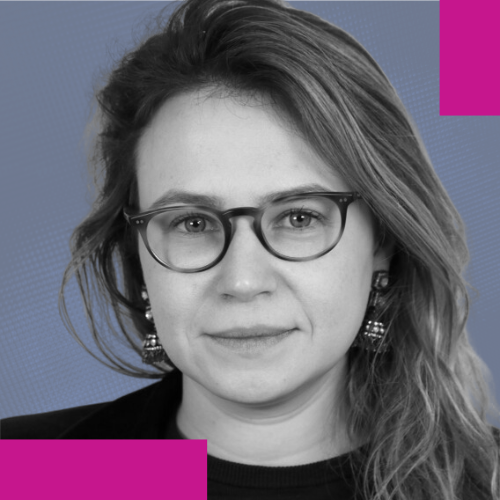
Odyssey Energy Solutions has raised $74 million to expand its platform, which streamlines the financing of distributed renewable energy projects across Africa, Asia, and Latin America, the company announced today.
The funding includes $27 million in equity from investors such as Broadscale Group, FMO, and Al Mada Ventures, as well as $47 million in debt from the British International Investment and BIO, Belgium’s development finance institution, among others. It comes some three and a half years after the U.S.-based company raised a $15-million Series A in March 2023.
Odyssey promotes distributed energy deployment by connecting the more than 6,000 solar installers and EPCs on its platform with financing institutions and equipment suppliers. Emily McAteer, the company’s co-founder and CEO, told Latitude Media that the idea is to make the otherwise daunting process of building thousands of small energy projects as efficient as possible. On Odyssey’s platform, an installer can line up post-construction financing, such as a PPA, from development finance institutions, international banks, and regional lenders.
Odyssey also helps installers procure equipment. By aggregating orders, it can both meet the minimum quantities that most manufacturers require for orders — a barrier that would otherwise shut most small buyers out — and negotiate better pricing. The installers can then buy the equipment from Odyssey itself on extended payment terms, with a small deposit upfront.
“You buy from us and we embed credit directly in that order, so you’re solving your working capital and your procurement challenges in one swift transaction,” McAteer said. Odyssey charges fees on the equipment it supplies, rather than interest, and retains ownership until it’s fully paid out, so that it can reclaim it and redeploy it if a project runs into problems.
So far, the company has helped unlock 1.5 gigawatts of distributed energy projects.
The new funding comes at a moment of great expansion for distributed energy in emerging markets. “Deployment is massively growing, because you’ve got accelerating energy demand that has already outstripped the power grid supply,” McAteer said.
Changing geopolitics
Countries like Nigeria and India, two of Odyssey’s largest markets, for example, have historically relied on diesel generators to bypass the shortcomings of their national grids, McAteer explained. But the spike in diesel prices caused by the Iran war and the ongoing closure of the Strait of Hormuz has made bolstering the economy with the fuel untenable. As a consequence, increasingly cheap solar and storage — which in Africa was already starting to be installed at scale — has become even more attractive.
“The crisis has highlighted the challenge of reliance on fossil fuel imports. There’s even more of a government push to turn to renewables, and distributed energy is a huge piece of that,” she said. “It’s a fascinating time for distributed energy, making it even more of a no-brainer than it was a year ago.”
That’s particularly true in light of the fact that in emerging markets, distributed energy is “core energy infrastructure,” McAteer noted. “That’s a different dynamic than in the U.S., where often these distributed energy resources are coming online to a grid that’s already meeting demand,” she added. “It’s basically a critical path infrastructure versus a nice-to-have.”
Now that the urgent increase in energy demand risks outstripping supply in the U.S. as well, things might change, McAteer said. “Sometimes we joke that the U.S. is starting to experience what we’ve been experiencing in emerging markets for so long, which is ‘How are we going to meet growing energy demand?’”