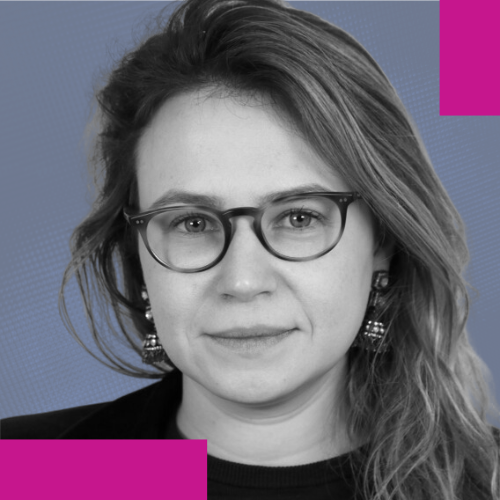
For 14 years, Hecate Energy has been a pure-play solar developer: building and interconnecting projects across the U.S. to then sell them to long-term owners. Today, it has over 40 gigawatts of projects under development.
Lately, however, the company, which is in the process of going public through a $1.2 billion SPAC deal, is considering a major pivot in how it does business: from developer to independent power producer. And as Hecate president and CEO Chris Bullinger told Latitude Media, opening up some of its solar developments to co-location with data centers might be the best way to do that.
“Co-located energy campuses require us to be on-site for an extended period of time,” Bullinger said, noting that the idea would be to co-locate with smaller data centers, and scale up the generation infrastructure as the data centers themselves scale up. “As a developer, we’ll be on site for many years more than we normally would have been, which enhances our ability to move into an IPP business structure, should we choose to do so.”
Hecate has been mulling the IPP transition for a few months now. In a presentation to investors in early February, executives laid out their plans for a hybrid developer-IPP model, where they develop certain projects to sell, and keep others so they can earn returns across a plant’s entire life-cycle.
Hyperscalers’ speed-to-power push — and their resulting interest in co-location — could help these plans along.
While an alternative way for the company to become an IPP would be to operate small power plants spread out across multiple sites, Bullinger hopes to instead make one or two large, co-located energy campuses the “foundation” for the pivot.
These would have the added benefit of being value-enhancing for the company’s portfolio. “We have a site that might have been solar and battery intended to serve the PPA market, but now the additional customer — the data center — places a premium on the electrons,” he added. “[Co-location] adds potential value to the site that it might not otherwise have had.”
‘The energy campus is our status quo’
Bullinger says that once data centers started showing interest in co-location, targeting them as customers was relatively easy.
“When we saw that the load was able and interested in coming to our sites, it was really pretty simple,” he said. Most of Hecate’s sites, he added, were already equipped with solar and storage, which meant the company only needed to assess them to see if they had gas, fiber, and water access.
“We have about 20 sites that can accommodate [a data center], and we have about half a dozen that are most advanced,” Bullinger said. “We’re talking about eventually supporting a couple of GW of compute at these sites… starting at 300-megawatt blocks, and scaling from there.”
Most importantly, the sites were designed from the very beginning with interconnection in mind. “The long-term goal of each of these sites is to interconnect,” Bullinger said. Solar assets and data centers could help each other out, starting to produce and consume power, even without yet being grid-tied, as they wait in the long queues.
Rather than “islanded” data centers, he likes to think of them as “more of a peninsula”: “We believe that starting islanded and then interconnecting when the interconnection studies are complete, and systems upgrades are completed, is going to be the plan.”
Hecate is in discussion with potential data center development partners, but hasn’t yet gone public with the specifics. Going forward, the company will take into consideration the possibility of an energy campus for any of its new sites. “For the foreseeable future, the energy campus is our status quo,” Bullinger said.
This relatively straightforward strategy is complicated by how much cooperation with local utilities it will require, especially given that regulations regarding co-location are still in flux and tend to change from place to place. In most cases, even if the energy park starts out as islanded, authorities still need to see that the utility is involved from the get-go, both because laws require it and as an assurance that interconnection is going to happen at some point.
“It’s a lot of discussions, and it requires collaboration. It’s very tough for anyone to move ahead without cooperation from the others, so it really does require some lead work upfront,” Bullinger said. “But I do find that this particular aspect is moving relatively quickly, given what a long lead time capital-intensive industry that we’re in.”