The playbook for powering artificial intelligence has focused on large-scale infrastructure: new gas plants, recommissioned nuclear facilities, and co-located renewables. But as utilities race to unlock new capacity, some are instead eyeing smaller, easier-to-deploy resources.
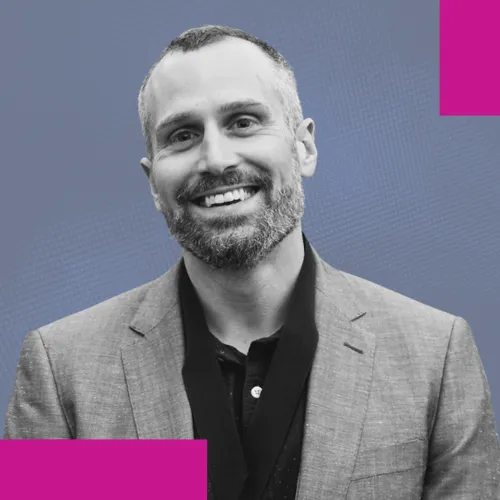
Specifically, argues Sparkfund CEO Pier LaFarge, the buildings and infrastructure that already exist across utility territories — including distributed energy resources — could provide much-needed capacity.
“Utilities are realizing they can put hundreds of megawatts — or gigawatts — of DERs into their central planning to prevent transformer overload, improve feeder health, and lower the cost of needing a bigger substation,” LaFarge told Latitude Media.
LaFarge has been advocating for taking a central planning approach to distributed resources for years. Not everyone has agreed with him that utilities should lead deployment of DERs. But now, as the U.S. faces a need to double the size of the grid, a lot more people are taking the idea seriously.
Through a model called distributed capacity procurement, or DCP, Sparkfund helps utilities deploy networks of solar arrays, batteries, and backup generators hosted at customer sites. Rather than asking customers to purchase and manage these systems, the utilities themselves own and operate them as core grid infrastructure.
While building a new gas plant might take three to five years from planning to operation, distributed resources can be deployed in months. More importantly, they can be strategically placed where the grid needs support most: near constrained substations, along stressed feeders, or in areas seeing rapid data center development.
“Utilities realized they had all these near-term needs — and that DERs were actually exactly the fastest, most affordable and reliable way to solve them,” LaFarge said. “They quietly were like, ‘if we just paid for these DERs, could you get them out there really fast and do it right?'”
In the fall of 2023, Jigar Shah, director of DOE’s loan programs office, laid out a clear case for distributed resources as a way to meet load growth in an opinion piece for Latitude Media.
“The fastest, least-cost path to a higher capacity, more efficient, and cleaner grid will require integrating distributed assets like VPPs that can be deployed quickly, while centralized assets like nuclear and geothermal are constructed and interconnected to the grid over time,” Shah wrote.
LaFarge said more utilities have embraced this message over the last year. “We’re talking to 15 utilities right now,” he said. “We’re inbounding requests from a utility per week, and we’re almost unable to handle the level of interest.”
The DCP model is already moving from concept to reality across several major utilities. And each is taking a distinct approach to implementation.
San Diego Gas & Electric has demonstrated the model’s potential for rapid deployment. In the utility’s territory, LaFarge said, Sparkfund has placed batteries, solar, and gensets in roughly 1,450 homes, with a 94% customer acceptance rate.
Georgia Power is also pursuing its own version of the model. The utility is at the epicenter of data center growth, and needs to add 31 GW of capacity by 2030. Georgia Power has drawn attention for its plans to meet much of that load growth with new gas plants, much to the alarm of Microsoft, one of its major customers. But it’s also exploring DERs.
“Georgia Power had filed a 250 megawatt distributed energy tariff already before this moment occurred,” LaFarge noted. “They have a public filing from their commission to bring a solar and storage pilot in this next phase.”
The most comprehensive framework is emerging at Xcel Energy in Minnesota. Rather than just deploying assets, the utility is working to create a comprehensive regulatory model for distributed capacity procurement. Xcel’s filing to create a virtual power plant came last August as a result of “their own understanding that to grow their grid fast enough to meet resource adequacy, DERs would be critical in that 1 to 5 year timeline,” said LaFarge.
This shift is happening mostly within utilities that can capture value across generation, transmission, and distribution.
“The ones that are in the best position to do it are, somewhat counterintuitively, the vertically-integrated ones who can do transmission, distribution and generation, full marginal pricing, full central planning, full capitalization,” LaFarge said.
Sparkfund is also increasingly talking to data center developers. For data centers specifically, distributed capacity procurement could be a faster path to power than waiting for new transmission and generation.
LaFarge offered this comparison: “If you could build accredited, rated capacity on one building — so call it 1.6 megawatts of solar and storage, rated down to PJM’s ELC rated capacity — you’d only need to do that on 800 buildings to have another Three Mile Island.”
LaFarge argues that customer-sited assets are moving from the periphery to become core infrastructure. “These worlds, data centers and energy, are truly fused at this point,” he explained. “We are getting very lucky that these hyperscalers recognize that the U.S. electric grid can be a system partner, a platform that lets them get the right power on average.”
These worlds, data centers and energy, are truly fused at this point.
Utility-owned distributed resources could also make power providers better able to address local complexities on the grid. As Sayles Braga, senior partner at Sidewalk Infrastructure Partners, explained in a recent interview, there is no single U.S. electric grid; rather, the country has “a series of local generation, transmission, distribution and demand balancing acts that are happening everywhere at all times.”
Most utilities face capacity constraints during just a few hundred hours each year. But as baseload fossil plants retire and intermittent renewables replace them, those constraint periods could expand to 4,000 hours a year, according to Braga. Adding new 24/7 loads like data centers on top of these constraints risks system fragility, potentially leading to blackouts or brownouts.
The idea behind the DCP model is that DERs could help unlock significant untapped potential in the existing system. “There’s a lot of trapped efficiency across the board in these systems today,” Braga said. “There’s a lot of generation that’s not fully utilized today. There is a lot of demand that isn’t actually being utilized today.”
But by building bigger networks of distributed resources, LaFarge argues, utilities can optimize the system in ways that weren’t possible when these assets were purely customer-controlled.
“Chapter one was the climate-driven clean energy industry proving that this stuff works and can get cheap,” LaFarge concluded. “Chapter two is going to use the utility system to take that success and scale it precisely through a public purpose regulated monopoly system that has access to historically cheap capital and the value of central planning.”