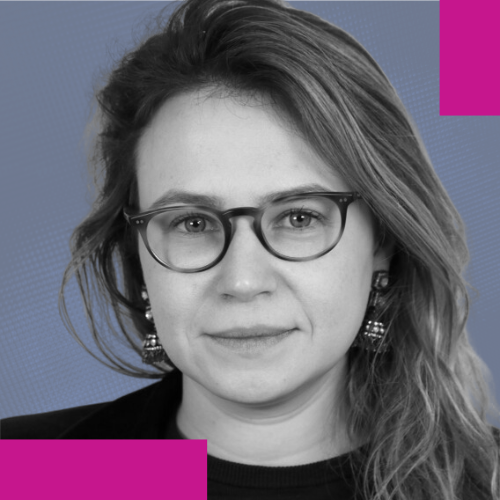
For a startup looking to finance the development of a first-of-a-kind project, non-dilutive funding is precious. It allows the company to de-risk its early work without sacrificing ownership or tapping into expensive equity, and helps attract additional investors.
But it is also hard to find, so much so that Avra van der Zee, COO of nonprofit climate tech investor Elemental Impact, describes it as “the holy grail” of early commercialization.
“Until you can show that a project has de-risked and can rinse and repeat, it’s very hard to bring in the type of investors that are willing to take the right risk,” van der Zee told Latitude Media. “So companies raise money at the corporate level, often taking highly dilutive capital, to then fund [FOAKs], because there’s no way to do project finance yet.”
It’s a “void of development capital” that amounts to at least $150 billion globally, according to an Elemental Impact report released in 2024. So for the past year, to address at least part of that void, Elemental has been implementing its Development-SAFE mechanism, a new investment tool designed to provide non-dilutive capital to climate tech startups setting up their first projects. (Earlier this fall, the company made a D-SAFE template and a guide available online for broader use.)
D-SAFE is structured so that a startup receives funding for a project with a list of milestones tracking its successful outcome. If the milestones are met, the startup can repay the investment as debt, without having to give up equity or control. If the project fails and the milestones are not met, the funding can be converted into equity, so the startup isn’t burdened with debt. The tool is designed specifically for small, early-stage financing, covering pre-construction work such as permitting, engineering, or community engagement, and acts as a catalyst for further investment.
“The idea is that it’s a fast, flexible instrument that can be the short-term bridge to get the other investors to come in to hit the milestones, so that it can then be repaid back as debt,” van der Zee said.
It is part of the growing collection of creative solutions implemented by climate investors to back new and hard-to-scale technologies, such as Mark1’s “developer-as-a-service” model, or using tax-exempt philanthropic capital and investing it as a venture capital fund, like Azolla Ventures does. The fact that it’s non-dilutive, however, distinguishes it from most other types of early-stage capital.
And unlike a traditional grant, which is also non-dilutive funding, the investor gets its money back with interest if the project is successful, putting the investor and the startup on the same page in a “unique and innovative way,” according to van der Zee. “D-SAFE has the flexibility of an equity investment and enables aligned incentives at the project level.”
Trying and testing
Elemental has used its D-SAFE tool across nine investments to date, including in carbon removal company Capture6, organic fertilizer producer Nitricity, and geothermal startup Fervo Energy.
In the case of Nitricity, Elemental made a $2 million D-SAFE commitment targeted at helping the company secure project sites, complete engineering designs, and obtain regulatory approvals. The commitment unlocked $3.6 million in additional funding for Nitricity’s FOAK facility in California. It was repaid in just six months — and according to Elemental, “it helped pave the way” for the closing of a $50 million Series B funding round, which the company announced in September.
Similarly, Elemental’s $1.3 million D-SAFE commitment into Capture6 was followed by $13.5 million in development capital from investors, including from California Energy Commission.
Overall, Elemental says $7 million in D-SAFE investments unlocked over $70 million in private and public sector dollars in a little over one year.
The nine companies Elemental used D-SAFE with were already in its portfolio. “We were looking to identify if this tool was useful. We knew those companies well, and we knew exactly the type of projects they were looking to expand or fund,” van der Zee said. But now that the tool has been tried, tested, and refined over months of use, the company is looking for opportunities to use it for new projects.
“The tool is only as good as the project — it has to be customized in every instance,” van der Zee said. “And we’re also looking for ways where we can go in together with another investor on a D-SAFE, bringing two D-SAFEs into the mix. That’s something we’re actively working on.”