Sunnova Energy is fighting for survival. Earlier this month, America’s second-largest residential solar financier issued a “going concern” warning that sent its stock plummeting — pushing it closer to bankruptcy.
With $8.46 billion of debt and dwindling cash flow, Sunnova is blaming high interest rates, cooling demand for rooftop solar, and political uncertainty for its troubles. The company’s struggles come amid the residential solar industry’s first annual contraction since 2017.
But Sunnova’s woes have political implications that extend beyond the company itself.
In 2023, the Department of Energy awarded Sunnova a $3 billion loan guarantee for Project Hestia — the federal government’s single largest commitment for solar power and its first for a virtual power plant. Congressional Republicans quickly pounced, with Wyoming Republican Senator John Barrasso declaring that “Solyndra is going to look like chump change compared to the amount of money that’s been wasted by this administration.”
As Sunnova’s outlook worsens, it is highly likely that Republicans will use it to ramp up attacks on clean energy yet again.
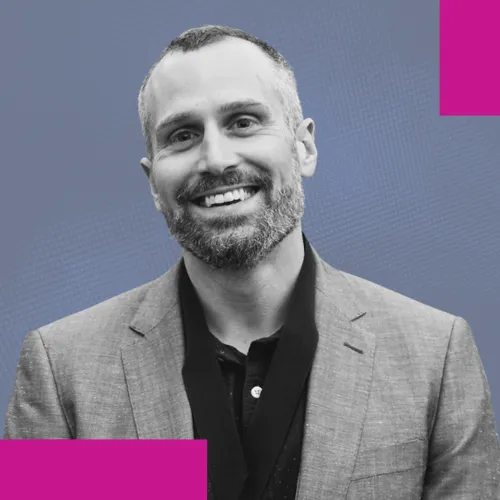
On this week’s episode of Open Circuit, co-host Jigar Shah, who led the effort to back Project Hestia, talked about the structure of Sunnova’s loan guarantee — and whether taxpayers are actually at risk.
“Well, let’s first get out of the way that I personally have never owned Sunnova stock or made money on Sunnova, although I get accused of it,” Shah explained. “But I think it’s important to understand what we actually did.”
The Sunnova guarantee was unlike other loans, where the government directly backs a manufacturing facility or commercial-scale project; the government did not directly loan the company money.
“What Sunnova does is provide loans to customers to buy solar, or they might do third-party owned systems where they raise tax equity and debt,” Shah explained. “Then they go to Wall Street and ask the credit rating agencies how much of their cash flows are considered creditworthy.”
The DOE guarantee backs the bonds associated with these consumer loans — not Sunnova’s corporate operations. And according to Shah, those bonds remain healthy despite the company’s broader financial struggles.
“Today, as of this taping, the bonds are still trading at par, which means that no one believes those bonds will fail,” he said. “Everyone still wants to buy those bonds.”
When asked directly about whether there is taxpayer risk, Shah was unequivocal: “No, not as of now. The way the guarantee is structured, we would need to have a financial crisis on the level of the 2008 global financial crisis before the government would have to pay out.”
According to previous Latitude Media reporting, Sunnova has only tapped “a small percentage” of the loan guarantee thus far. “The portfolio is performing well,” a company spokesperson said.
The Project Hestia promise by Sunnova
Project Hestia was designed to expand solar access to disadvantaged communities. The $3-billion loan guarantee was intended to back between $4 billion and $5 billion in consumer loans, bringing down interest rates for lower-income customers who might otherwise struggle to afford rooftop solar and battery systems.
DOE estimated that the guarantee could support solar-battery installations for up to 115,000 homeowners across the U.S. and Puerto Rico, delivering 568 megawatts of solar and batteries over 25 years.
But Project Hestia was about more than just expanding solar access. It represented Shah’s vision for transforming residential solar companies — from mere panel installers into providers of grid services.
On Open Circuit, Shah argued that this transformation remains essential to the industry’s future, regardless of Sunnova’s specific fate.
“When you think about what the utilities need, they need batteries so that they can shift load to get more utilization out of the distribution grids,” he said. “In general, the solar industry needs to be solving a problem for utilities, otherwise they’re going to lose the license to be able to deploy this stuff quickly and there won’t be enthusiasm on the utility side.”
The answer, according to Shah, is virtual power plants where residential solar companies aggregate customer resources. “I want to talk about how we get paid for the essential services that we provide as an industry,” he said. “Our products are the best products on the market.”
This vision would require a fundamental evolution for residential solar, from a product primarily focused on individual bill savings to one that offers broader grid benefits. The question, especially amid market turmoil: can the industry pull it off?
For more of Stephen Lacey’s conversation with Jigar Shah and co-host Katherine Hamilton, listen to the whole episode of Open Circuit, which covers Sunnova’s debt problem, the troubles facing rooftop solar, and the role of solar microgrids for serving AI data centers.