The story of climate change is usually told through fossil fuels — pipelines, coal plants, oil companies. But there’s another story that accounts for nearly a third of global emissions: agriculture. And we’ve barely begun to grapple with it.
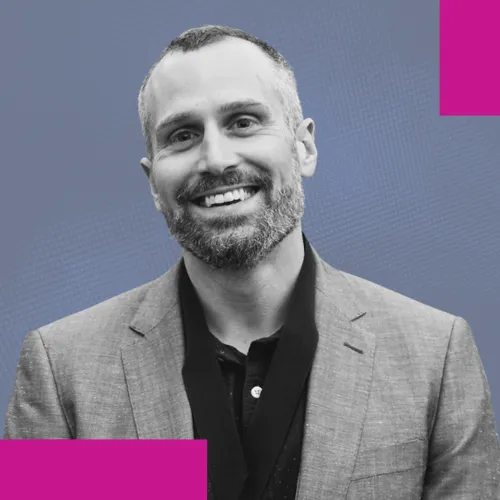
In this episode of Open Circuit, we’re joined by Michael Grunwald, longtime journalist and author of the new book “We Are Eating the Earth: The Race to Fix Our Food System and Save Our Climate.” Grunwald spent years investigating why agriculture lags decades behind energy in decarbonization, and what it would take to catch up.
First, we tackle food-based fuels. Grunwald profiles researcher Tim Searchinger, who discovered that biofuels accounting ignored land use. While ethanol was hailed as a homegrown climate solution, it was actually worse than gasoline once you factored in the “carbon opportunity cost” of using land for fuel instead of food. Why did it take so long to recognize?
This land use blindness persists today. Despite the science showing the climate impact of biofuels, the government is backing a sustainable aviation fuel program with tens of billions in new biofuel subsidies — including explicit language preventing regulators from considering land use impacts.
Then, we tackle feel-good agricultural solutions like regenerative agriculture, vertical farms, and local food systems that may have ethical benefits, but often don’t have meaningful emissions impacts.
Finally, we ask what ag tech can learn from energy’s scaling playbook: How do we deploy high-yield agriculture and synthetic biology solutions in a rapid, ethical way?
Credits: Co-hosted by Stephen Lacey, Jigar Shah, and Katherine Hamilton. Produced and edited by Stephen Lacey. Original music and engineering by Sean Marquand.
Open Circuit is brought to you by Natural Power. Natural Power specializes in renewable energy consulting and engineering, supporting wind, solar, and battery storage projects from concept through financing. Discover how we’re creating a world powered by renewable energy at naturalpower.com.
Open Circuit is brought to you by Sungrow, the trusted provider of PV inverters and battery storage. With over 605 GW installed worldwide and a BloombergNEF ranking of “most bankable” in power conversion and energy storage, Sungrow provides solar tech you can count on. Learn more at sungrowpower.com.
Learn more about 38 North Solutions’ Policy Pulse, providing highly curated, actionable snapshots of the political developments shaping the clean tech landscape.
Transcript
Stephen Lacey: So there’s this little nuance to the production side of things. It’s very common to ask when testing microphones what the guest had for breakfast. So this is the first time I actually get to air the answer. Michael, what did you have for breakfast?
Michael Grunwald: I had nothing for breakfast. It’s 7 A.M. in San Francisco.
Stephen Lacey: That is the most climate-friendly breakfast I have ever heard of.
Michael Grunwald: Exactly. No emissions, yet.
Stephen Lacey: From Latitude Media, this is Open Circuit. The story of climate change is often the story of fossil fuels, of pipelines and coal plants of oil companies and electric cars. But there’s another story. It’s about agriculture and land use and it’s one we’re only just beginning to grapple with. A new book, We are Eating the Earth, tells that story. Agriculture accounts for nearly a third of global emissions and we’ve barely begun to grapple with them.
This week we’re going to talk about the hidden cost of biofuels and what they tell us about land use. We’ll explore why other feel-good solutions we’ve championed, regenerative egg, vertical farms, localization, are not enough. And we’ll look at some of the technologies and practices that could take a bite out of emissions.
Oh my god, these food puns are too easy. Our conversation with author and journalist Michael Grunwald is coming right up.
Welcome, I’m Stephen Lacey. I’m the Executive Editor at Latitude Media. I’m here, as always, with Katherine Hamilton and Jigar Shah. Catherine is the co-founder and chair of 38 North Solutions. How are you?
Katherine Hamilton: I’m doing great. And I’m sitting of course in Virginia farm country, so I’m really excited to talk to Michael this week.
Stephen Lacey: You were up very late last night finishing Michael’s book.
Katherine Hamilton: Yes, I was determined to get to the gory finale of, are we actually going to do anything? But it was a great book, just super impressed and I learned a ton.
Stephen Lacey: Oh, you look very well rested. No worse for the wear. Jigar Shah is the co-founder of Multiplier. He’s the former director of the Department of Energy’s loan programs office. Hello, Jigar.
Jigar Shah: Hello.
Stephen Lacey: Did you sit on the beach reading Michael’s book?
Jigar Shah: No, but I did stay in a Holiday Inn Express last night and took it all in. But no, it was a great book and I actually did finally use that AI thing that you told me to try to use, but I also caught the Monty Python references and so I did a number of things to get through the book and it was frankly an amazing book.
Stephen Lacey: And the author of that book is with us. It’s Michael Grunwald. He’s a longtime journalist. I have been following him for a long time. I started reading him nearly two decades ago when he was writing about policy, politics, and energy, and he’s got a few books under his belt. The newest is We Are Eating the Earth, the Race to Fix Our Food System and Save Our Climate. Michael, welcome.
Michael Grunwald: Oh, thanks. It’s so great to be back with you guys and thanks for all those kind words.
The hidden climate cost of biofuels
Stephen Lacey: So this show is devoted largely to energy, but we invited you here to talk about the book on food, land, agriculture because there is so much crossover with energy and you’re asking a pretty simple but profound question. What if we decarbonize the energy sector but still come up way short? So when did agriculture become your journalistic obsession?
Michael Grunwald: Well, it’s funny, I was one of you guys. I was an energy and climate nerd and I guess six or seven years ago I really realized, as you mentioned, food is about a third of the climate problem. It’s a much bigger percentage of our biodiversity problems, deforestation, water pollution, water shortages, and I didn’t know squat about it.
I tell the story in the introduction of how I had written a story about my own green life, how I had gotten solar panels and an electric vehicle. And the point of the story was that I wasn’t some eco-saint that I was doing this because it was really economically sensible and that this stuff was ready to go mainstream. And so I had a line in there about how I didn’t line dry my laundry, I don’t unplug my computer at night, I still eat meat to show I wasn’t an eco-saint, just this eco-mercenary.
And I realized I wasn’t even sure if meat is actually bad for the climate. So I called this guy I knew who worked on agriculture and climate, Tim Searchinger, and I asked him, “Is meat really that bad?” And he said. “Yes,” and then he said, “duh.” And I figured if I was this spectacularly ignorant, then probably other people were, too, and that was really the beginning of the journey.
Jigar Shah: You clearly still are one of us.
Michael Grunwald: In my heart, Jigar, in my heart.
Stephen Lacey: So Michael Pollan’s rules of eating weren’t enough for you?
Michael Grunwald: It’s funny, my wife is a psychedelic counselor, so I always say that we have a mixed Michael Pollan marriage. He unfortunately writes so beautifully about food that I think he’s convinced a lot of people of a lot wrong ideas.
Stephen Lacey: Yeah. Well, we’re going to get to what some of those ideas are a little bit later in the show. But let’s turn to Tim Searchinger. This is not a heavy-handed book where you’re scolding people. You have strong character development and good story, and Tim is at the center of this book. He’s a former environmental lawyer turned carbon accounting obsessive who helped reframe how we understand the true climate cost of farming.
And one of his insights was that the land itself carries this carbon opportunity cost and that using it to grow fuel or inefficient food unlocks hidden emissions that we’ve long ignored. And so I want to start to where this revelation began, which was with the rise of corn ethanol. Obviously this is something that has been long hailed as this homegrown environmental savior. Ethanol became this case study of good intentions gone wrong in a lesson in land use accounting. So who is Tim? Why does he matter? And what was this moment that changed his perspective?
Michael Grunwald: Let me start with a little bit about Tim because he is a unusual, maybe a protagonist for a book like this. But to step back to where we started, the energy and climate problem, which is a really big crop problem and you guys do an awesome job talking about it every week, but it is at this point, we know what we need to do. We got to electrify the global economy and run it on clean electricity, and we’ve actually started to do that. We’re not doing it fast enough or consistently enough, and obviously the mess in Washington right now has been a setback, but energy is now a political problem.
While food, particularly when I started this, we didn’t even know what we needed to know, so it’s really an analytical problem. And Tim is, above all, an analyst. He’s a facts guy, a data guy, a science guy on his front porch, the doormat says, “No dogmas allowed.” So he’s not into groupthink, he’s not swayed by ideology. He’s just a guy who does all the reading, gets into the details and doesn’t understand why everybody else doesn’t.
So that’s the backstory. Used to be he was a wetlands’ lawyer when he stumbled into ethanol and he was fighting to protect, basically, Midwestern wetlands from cornfields. And he saw that they were talking about a new ethanol mandate and he said, “Huh, that’s going to mean more cornfields and that could threaten wetlands.” So he looked into it and he thought maybe climate would be a way in.
He didn’t know anything about climate, but he saw the big study that had been done at the Argonne National Laboratory that found that ethanol was maybe 20% better for the climate than gasoline. And he was like, this is super weird because most of the study was talking about how inefficient ethanol was and how producing ethanol through fertilizing corn and running the tractors and harvesting the corn and then brewing the ethanol that it produced way more greenhouse gas emissions than just producing gasoline.
And you realize that the trick was that while gasoline, you burn it in a car and the carbon goes up into the sky, corn, you burn it in the car and the carbon goes up into the sky, but then you grow corn in the field and that absorbs carbon from the sky. And so therefore, ethanol was better. And Tim’s insight was, wait a minute. It was already absorbing carbon from the sky when it was just a corn field growing food. And if you grow fuel instead of food then somewhere else you’re going to have to grow more food. And that’s probably not going to be a parking lot. It’s going to be a forest or a wetland or something that stores a lot of carbon already that you’re going to lose it.
And that basic insight that climate analysis was completely ignoring land use was really the beginning of this long dive, first into biofuels and all bioenergy and ultimately into the larger problem of agriculture and meat.
Stephen Lacey: And it sounds so simple in retrospect. Catherine, you were involved in the biofuels industry around this time. Do you want to reflect on what was happening and how this debate unfolded?
Katherine Hamilton: Yeah, it’s interesting. When I started reading the book, I was like, well, I’ve been a vegetarian for 30 years and I don’t even have that much dairy. And then I was like, oh no, I’m part of the problem. I started reading about biofuels and I was working, I was co-directing the American Bioenergy Association with Megan Smith from 2000 to 2003. So it was early, it was even earlier than this book started.
And our hypothesis was there were a lot of ways to make things incrementally better, one of which was to make corn ethanol better by using cellulosic biofuels. And this was about taking all the junk that wasn’t being used, the corn stovers, all of the sugar cane bagasse, all of the waste, the wood waste that was out there and turning it into something useful. And that could have been cellulosic ethanol. We had both come out of NREL, so NREL was doing a lot of work on that, that we were taking to the hill. Megan was testifying before Congress about this.
We also looked at and biomass power, I was working on co-firing with coal just to reduce the emissions of coal, because we knew coal was bad. It’s like, all right, well maybe we can clean it up by using biomass, too, or using gasification, making biomass into chemicals or using it for refining.
And what ended up happening was that the corn ethanol industry is just huge. The cellulosic ethanol business was just not going to be able to fight the corn ethanol folks no matter what they did. And the big plant in Jennings, Louisiana that was touted as like this is the first big plant. It was eventually bought by BP and then closed about 10 years ago and it had been a ten-year project trying to get it going and trying to create a market out of it.
The gasification stuff is like this is the McNeil plant in Burlington, Vermont that everybody hates and it’s like the most polluting plant that they have in the state. It’s still considered a renewable energy plant. So a lot of what we did early on was trying to make a difference around the edges and it was really hard to do because of existing industry. And I’m sure Michael, in reading through your book, that is a huge impediment.
Jigar Shah: The thing I don’t understand, though, is why California loves ethanol. When you think about the low-carbon fuel standard credit program, 80% of all of the proceeds basically goes to biofuels. And so they’re taking existing plans saying, we’ll ship the physical ethanol to California for the blending and giving the credit. And so what I don’t understand is that if this insight was so ubiquitous, and we certainly saw it at the loan programs office, there were lots of people who had great scores on their carbon intensity score in California. And when Nettle looked at it, we were like, no, this is worse for the planet. You’re not getting a loan. So we figured it out of the life cycle carbon analysis, but why is California ethanol pilled?
Michael Grunwald: Well, Katherine, you nailed it. I talk about in the book about how searching or went to the guy who was running the low-carbon fuel standard, he was really his baby. And that guy said to Tim, basically, “You are absolutely right on the substance, but it’s not politically realistic and that if we try to take on farm-based biofuels, we are going to lose our entire low-carbon fuel standard that the politics just won’t sustain it, even in California.”
So it was a combination of the farmers who wanted to make sure that basically, there was no real analysis of any farm-grown fuels, as well as some of the people pushing the advanced biofuels that Katherine talked about because they use land, too, and they don’t really pencil out. It turns out to be, in some ways, a good thing for the planet that some of these switch grasses and other ideas never really worked technologically and economically, but they were lobbying the Governor Schwarzenegger directly and saying, “You shouldn’t even be looking at indirect land use change, that’s going to hurt our products, too.”
And so as you said, I tell the story about how in Congress when Tim was trying to, early on, lobby against the early ethanol mandates, and he went to Senator John Corzine’s office and he figured, here’s a liberal Democrat from New Jersey, which doesn’t grow a lot of corn. He’s arguing to his aide that this is going to increase food prices and increase gas prices just to make some agribusinesses in the Midwest rich. And the guy says, “I got to stop you right there, Tim. We can’t do anything that’s going to offend Iowa farmers.”
And Tim is like, “Wait a minute. Corzine used to run Goldman Sachs, does he honestly think that he’s going to be President of the United States?” And the aid says, “Tim, they all think they’re going to be President of the United States.” So it’s just very tough taking on the ag industry in any state.
Stephen Lacey: Tim got pushed back from environmental groups. You mentioned that there was concern about pushing back against the ag industry, but they didn’t come around to these findings at first. When did his findings start to break through? Were there other factors that contributed to environmental groups sticking their heads in the sand, so to speak?
Michael Grunwald: Sure. Well, as you suggested, this is 20 years ago and at the time there really were no alternatives to fossil fuels. There was wind and solar were in their infancy, there was just been a documentary called Who Killed the Electric Car? GM had literally scrapped their initial EVs. And so there was this desperation for something new and different that I find understandable. And obviously, this was an alternative to fossil fuels and people were starting to understand the danger of fossil fuels. That said, it turned out to be when you did the math, it was worse than fossil fuels.
And Tim published, even though he was not a scientist, he published a piece in science that showed that it was about twice as bad when you incorporated the land use. He’s now published 10 articles in science or nature, the most prestigious journals, even though he is still technically not a scientist.
So I think there were, and I tell the stories of how there were some scientists and some environmentalists who realized they were wrong, and that is not something that humans are really great at. And so I wanted to call them out and give them some credit because that was not everybody’s reaction. And I think a lot of people who worked on biofuels as a climate solution, they didn’t want to say, “Oh wait, I just wasted 10 years of my life,” or, “all of my professional credentials are really useless because this is not going to be part of the solution.” It’s hard to get people to admit things like that and so there was a real circling of the wagons.
Stephen Lacey: So you describe the rise of corn ethanol as this well-intentioned disaster, and now here we are in search of sustainable aviation fuels with another looming disaster potentially ahead. Talk about the state of fuels policy today and why we haven’t learned our lessons.
Michael Grunwald: Well, this is a big problem for the corn and soy lobby because electric vehicles have panned out and they’re really a threat to we don’t really need to put corn and soy into our cars anymore. So they’ve realized that there’s another potential market and that’s putting corn and soy into our planes, but that doesn’t pencil out at all if you’re doing any kind of decent climate analysis.
And there were really intense fights inside the Biden White House and throughout the administration to basically how are we going to do these models? How are we going to account for land use with Secretary Vilsack and USDA pushing very hard to essentially ignore land use as much as possible to make corn and soy look better? And ultimately, it still didn’t pencil out corn in particular and soy barely.
So the big beautiful bill, which as you guys have done such a great job talking about cuts, about a trillion dollars worth of actual clean energy subsidies, has tens of billions dollars of new subsidies for sustainable aviation fuel. And at the same time has language essentially saying that since soy and corn aren’t penciling out, the government needs to put down their pencils. And that when they do these analyses of what’s actually sustainable, you cannot look at land use, which of course is the whole problem with biofuels. So it’s very depressing. And another example of what Catherine was talking about, the incredible power of the farm lobby.
Jigar Shah: But this time the EU isn’t on it. The markets here for sustainable aviation fuel is not the United States. There’s a little bit in California and a little bit in some of the other markets that have passed state policy like Illinois, but the vast majority of the volume is going to go into the EU requirements for sustainable aviation fuel blending. So all flights from the East Coast to the United States or anywhere in the United States that land in Europe will have to contain biofuels to land or they have to pay penalties. And so what I don’t understand is how the EU got into this whole racket.
Michael Grunwald: Well, I tell the story of the initial EU foray into biofuels everybody, or at least a lot of people behind the scenes acknowledged searching earth science and said that, “Oh, this land use is a real problem.” And back in early 2008, the guy who was putting together their renewable energy directive basically said, “Hey, we’re going to scrap this entire renewable energy directive and all your goodies for wind and solar if you insist on this language taking land use change seriously.”
So that really started the biofuels movement in Europe, though I will say that when it comes to sustainable aviation fuel, they have a rule that you can’t use crops.
Jigar Shah: No, I saw that, and so the facility-
Michael Grunwald: Which is a change to me, it’s an acknowledgement that, well then why are you using crops at all? And they’ve capped it for passenger fuels. But again, it’s like, well, if it’s bad to put it in a plane, why would it be good to put it in a car?
Katherine Hamilton: We work with a company called 12 that uses electrochemically, basically hydrogen produced fuel from CO2 water and renewables, and they use up to a thousand times less water, 30 times less land, of course with 30% more reduction in greenhouse gas emissions. And they have a partnership with Alaska Air, which hopefully can get us to at least begin to understand that there are solutions that do not involve using land.
Michael Grunwald: And that’s the problem. Look, biofuels, because of some of these concerns that have been raised, they haven’t taken off quite like people expected, but because of the aviation fuel stuff, they’re in Indonesia, in a lot of Asia, they’re looking at a massive expansion, and it’s a problem. Right now, biofuels are already eating about a Texas worth of the earth. Now, again, we will talk later, livestock are eating 50 Texases worth of the earth, agriculture is eating 75 Texases worth of the earth, but there are better alternatives. They shouldn’t be eating any of the earth.
Jigar Shah: Yeah, I think one of the big challenges, as you correctly pointed out from 20 years ago, is that there does seem to be this desire for everybody to clinging on to hope. And so this is where a lot of this is coming from. People don’t really want to cut back on flights. And so they’re like, how do I make my flights feel better? I think one of the analysis that we did in the sustainable aviation fuel liftoff report was whether it was actually just cheaper to pay for DAC credits and just burn avgas. And I think it turned out basically, yeah, it’s basically better just to pay 400 bucks a ton for DAC credits. It was sort of on the bubble.
And so part of what I’m trying to understand is how much of this is really just a fight between people not wanting to make real changes to modern lifestyles and the free use of the ecosystem?
Michael Grunwald: Well, general, what I would say is, and this goes to what you just mentioned, is that I do think there is this desperation for change. There’s a sense that fossil fuels are bad and we need something different. But a lot of people who are looking at this stuff, and this is relevant to your audience, they’re energy people and they want to solve energy problems and they don’t think about the land sector problems.
So I would make the case for your listeners who are in this energy world that you can’t dump your problems onto the land sector. That has been a little bit of what’s behind a lot of this endless push, even after the numbers don’t work. I do think the hope is understandable, but at the beginning when I started writing about how biofuels suck and people would say, “Well then what should we use instead?” And I was like, I don’t know, gasoline. And now, of course, I can say electric vehicles.
It takes solar panels produce on one acre as much energy as if you can had 100 acres of ethanol to run a car. And actually because electric vehicles are so much more efficient, it would run about 250 miles for every mile of ethanol. So now we’re in the same situation with jet fuel, and people say like, “Well then what should we use in instead?” And I’m like, “Jet fuel.” Right now, and I think you can electrify some short flights and hopefully Katherine’s green hydrogen solutions will catch on, but we shouldn’t jump to a worse solution just because we want a solution.
Feel-good agricultural solutions vs. the carbon reality
Stephen Lacey: That moves us nicely into this broader menu of solutions, vertical farms, plant-based burgers, regenerative grazing. And I want to ask a question, which is, are we investing in what actually works or just what sounds good? Because for all the hype, as you point out, a lot of these ideas fall apart when you run the carbon math. And some of them, like meat alternatives, are not scaling in the way that we believe they would. So you write that agriculture is a couple of decades behind energy when it comes to decarbonization. Why?
Michael Grunwald: Well, that’s the good news, is that we see how far energy has come in 20 years and 20 years ago, as we said, energy was nowhere, there really weren’t alternatives to fossil fuels. And now with food, and this is why I dove into this topic, as you said in the introduction, this is not an issue that people have really grappled with. Agriculture is eating the earth. It’s now two of every five acres of this planet are either cropped or grazed. And it’s extraordinary. It’s like only one of every hundred acres are cities and suburbs.
So we are losing a soccer field worth of tropical forest every six seconds. And that is a huge climate problem, not only because those forests store carbon, but also they absorb the carbon that our fossil fuels are pumping into the atmosphere. So I always say that trying to decarbonize the planet while you’re continuing to vaporize trees, it’s like trying to clean your house while you’re smashing your vacuum cleaner to bits in the living room. You’re making a huge mess and you’re crippling your ability to clean up the mess.
So this is something that we need to deal with now. And as you said, I think it’s very exciting. I write about dozens of really promising solutions with incredibly smart people who are working on them, on the science, on the business, but also, I’m pretty upfront that none of these solutions really have a lot of traction, yet. And that particularly over these next four years in America where it doesn’t look like we’re going to have a lot of positive climate policy, this is a really important time to us to figure out what works, what’s never going to work, so that once there is climate policy, we can start as Jigar would say, “Deploy, deploy, deploy.”
Jigar Shah: But aren’t we back to culture change again? We wrote a bunch of work on this when I was running the Carbon war room. In Brazil, the big challenge is rotational grazing that they just need to put in some minor fences and actually do real rotational grazing and then they could get three times or four times the amount of cattle per acre of land that they’re currently getting. And folks are like, “Well, but why? Why don’t we just cut down more of the Amazon? It’s a lot easier than doing rotational grazing.”
I think that part of this is just understanding that some of the basic solutions that we’ve already come up with are just not palatable to the folks who are there. And that’s why, for instance, the United States, we have the Farm Bureau and all these things that we use to educate farmers around cover crops and all the other things that people could be using.
I guess I’m just trying to understand that it feels like that culture change is so weaponized in this political moment where people can say, “We don’t need to do any of this stuff at all.” And if you vote for this other person who’s asking you to change your multi-generational practices, then you’re basically a socialist. You should decide to stick with me. I won’t make any changes.
Michael Grunwald: Well, it is going to be hard. That is where I start. And certainly behavioral change is really hard. As a species, we don’t seem really awesome at making sacrifices for the good of the planet. We’re not great at being nice to each other, but we’re really good at inventing stuff and we’re pretty good at solving problems when we set our minds to it. So I think there is hope, but as you suggest, I think a lot of it is going to depend on having the right incentives in place and the politics will matter.
Look, just as electric vehicles a while back were seen as Obama mobiles and that made it really tough to get widespread adoption. I think right now you see fake meat is seen as Biden burgers, and that’s toxic. You don’t want to become woke meat or woke energy. You want this just to compete in the marketplace.
And when you point out that the politics suck on these sorts of things, all I can do is say, “Yeah, if it were easy, it would’ve been fixed already.” I do think when you, Tesla’s an example of, if you do build a better mousetrap, it doesn’t mean in solar, too. Not everybody’s going to instantly adopt it, but some people will, and that’ll help get to scale and drive down the costs and make it more attractive to consumers and ultimately, maybe change the politics, as well.
So I do think there are a lot of exciting technologies just as the government was important in the energy transition, I think that will be true in the transition to sustainable food and agriculture, as well. And I’m not going to pretend it’s easy. I do quote a democratic pollster in my book who says that taxes and other restrictions on meat are the least popular policies he’s ever polled. He said, “It’s up there with veterans benefits for ISIS.” So not easy.
Katherine Hamilton: Yeah, I did a little poking around just to figure out how many people in the world are vegan and vegetarian and how many people in the US are. So the US, about 2% or around 2% are vegan, 4 to 5% are vegetarian. But interestingly, 41% say they’re reducing their consumption of red meat. So that’s a big piece and that is a big piece of emissions is folks switching the way they’re eating.
Eating is a very intimate thing. Telling people what they can and can’t eat is really difficult, but telling them something else, like it’s healthier for you to do this, it will help your body, it will reduce your cost, it’s still delicious. Those are things that I think some of the ways we need to approach solutions.
I also noted, Michael, in your book that all these folks who came up with all these different solutions, they’re all dudes. Sorry, they’re all dudes. And when I looked at the stats on women and who buys food, guess who buys the food and prepares the food in homes, for the most part? Women say between 56 and 78% say they’re the ones that make the food decisions. So we need to figure out how do we get to the people who are buying the food, who are preparing the food, in ways that are really approachable and don’t make it look like it’s a moral issue, but that there’s some other way to disrupt it.
Michael Grunwald: Katherine, that’s such a great point. I would also note that particularly in this alternative protein space, most of the people running these companies are also vegans and they’re trying to make meat for meat eaters, which is because making fake meat for vegans, what’s the point? That’s not, in terms of the environment, that’s not helping, vegans aren’t the problem. But yes, it’s absolutely they have really failed to meet the market and essentially, the dogs didn’t like the food.
I started my reporting for this book at the Good Food Conference in 2019, and this was the convening of all the different alternative meat. People are making it out of plants, out of animal cells, out of fungi, they’re making alternative dairy and they’re all there. And it was just absolute pandemonium because Beyond Meat had just gone public, it was suddenly worth a third as much as Tyson Foods, it stock was on its way up to $250 a share. There were serious conversations about whether it was going to take 10 or 20 years to get rid of meat. My joke was that I thought I was going to accidentally raise a series A round in the drinks line. It was just the exuberance was off the charts.
And then of course, it turns out that these initial plant-based burgers, they were better than those old vegan hockey pucks, but they weren’t better than meat. So people tried it, but then they didn’t keep buying it. And Beyond Meat went from $250 a share to $2 a share, and investors just ran for the hills.
And I went to the back when I was finishing my reporting to the Good Food Conference in 2023, and it was doom and gloom. It was, Ugh, this was a fad. What were we thinking taking on this trillion-dollar industry? But honestly, I think that’s a little excessive, too. I think as you guys know, that technologies tend to go through the Gardner hype cycle where you have the peak of inflated expectations and then the trough of disillusionment, which is, you are here, but cows are a pretty mature technology and this stuff is going to get better, it’s going to taste better, it’s going to get cheaper, it can even get healthier. And once there’s a compelling use case, I think then people are going to buy it.
But as you said, Katherine, it’s not just going to be because like, “Hey, this is better for the planet,” or even, “Hey, this is better for animals,” because every year there’s been a lot of new information about how meat is bad for the planet, and you see new videos about the horrible way that animals are treated, and every year the world eats more meat. We’re up to 350 million tons a year.
Katherine Hamilton: I do have a question here, which is how can farmers help us do better? I say this because I live in Culpepper, which is a farm community, and I go to farm days every year. I go to, just this weekend, I went to the farm show, which is Culpepper Madison, Rappahannock Counties. It’s like the 4H Club where all the young people, the kids bring their favorite cow, pig, sheep, goat, bunny, one of them had a peacock. They bring all of their animals and get awarded prizes, and they’re so proud of it. There’s a big cooperative extension network. There are land grant colleges in Virginia, like Virginia Tech, Virginia State, that are really helping these communities find new techniques.
I have, my neighbors are farmers. We buy all, any meat that we buy, we buy from them. And they use techniques like they move their cattle from every single day. So at the end of 30 days, they’re back to the original field. They never have to feed them grain. They don’t use that much space. And it feels like the farmers who are producing this and who love what they do and know the most about the land could help us find those solutions and use technology.
Michael Grunwald: Well, I agree with that, Katherine, in fact, and as Jigar suggested, some of that rotational grazing is really effective and can help increase stocking rates, which essentially increases productivity. And right now, beef is, from a land use and emissions perspective, about 10 times worse than chicken or pork. And I visited ranches in Brazil where they’re doing it way better. And so it’s only three or four times worse than chicken or pork, and that makes a huge difference. If they’re 10 times more efficient than the average degraded ranch in Brazil, then they’re using one 10th as much of the Amazon, and that’s really important.
Now, I should also say some of those ranches while they were doing rotational grazing and they were integrating their cattle with their cover crops in ways that Michael Pollan would really love, they’re also fertilizing their pastures and they have feedlots, which Michael Pollan wouldn’t like at all. And again, they didn’t read Michael, they’re just doing whatever they think it takes to create kick yields. But that is really what I would say to farmers is that, that is important. You need to make more food per acre because otherwise, you’re going to need more acres to make the same amount of food, and that’s what’s eating the earth.
So I do understand people love their old, the diverse farms with the red barns and they’re pastoral and they’re rustic, and they treat the soil nicely, and the animals have names instead of numbers, but if they’re not efficient, they’re not helping the earth because the real environmental tragedy of agriculture is not the transformation of those rustic, bucolic, kinder and gentler farms into the evil chemical drenched monoculture farms, the factory farms.
There is an environmental cost to that, don’t get me wrong, but the real disaster, the real loss of carbon, the real loss of biodiversity is when nature becomes those nice diverse farms in the first place.
Stephen Lacey: Well, this brings us to a more controversial topic, and that is around the role of industrial scale agriculture to solve the problem. And this brings us to one of those solutions that has been lionized regenerative agriculture. There’ve been tons of documentaries about it, and it’s in corporate ESG plans. And you say it’s mostly hype and that sort of coming out of the Michael Pollan era of writing about food, people thought that localization of food, getting their food from small farms, while it has tons of economic and ethical benefits, is not the climate solution if you’re just looking at the carbon math.
So can you talk about some of the feel-good agricultural solutions a bit deeper and why they have caught on and why people think that they’re a solution and what the actual reality is?
Michael Grunwald: Sure. What I would say is I try not to be prescriptive about how people should farm the specific practices, whether you should be regenerative or industrial, but I do think it’s really important that it needs to be productive and efficient and high yield because otherwise, we’re going to eat a lot more of the earth. We’re going to need 50% more calories by 2050. Right now we’re on track to deforest another dozen Californias worth of land to feed nearly 10 billion people, and we just don’t have another dozen Californias worth of forest to spare.
So what I do say is that you cannot hand wave away this yield problem and that these glorified gardens that are sometimes regenerative ag, it’s absolutely nicer for the soil, but if it is not the kind of regenerative ag that is promoting powerful yields, then it is. I think that is an ethical problem because remember, climate change, it isn’t just a question of whether your farm looks nice. That’s going to be devastating for indigenous people in the Amazon for smallholder farmers in Africa, for poor people living in the floodplains in Bangladesh.
So I do think that this idea… I did a debate at Berkeley with this professor of agroecology who was pushing a lot of these kinder and gentler more natural practices and was suggesting that yields don’t matter. And Alice Waters, the famous chef from Chez Panisse is like does part of this regenerative, slow food, organic movement. She was sitting in the third row glaring at me the whole time like I was the big evil industrial guy. But the fact is there are absolutely problems with these factory farms where they treat people badly, they treat animals badly, they use too many antibiotics, their politics suck, they’re lobbying against environmental regulation and climate action. But one thing factories are really good at is manufacturing a lot of affordable commodities.
And that is agriculture’s number one job over the next 30 years. We’re going to have to make more calories over the next 30 years than we made over the last 12,000. And so I think factory farms are going to have to change. They’re going to have to make a lot more food with a lot less mess. But this idea that we can just get rid of them and transform to a global agroecological paradise, I think that’s a faith-based transformation of agriculture that could sacrifice not only the wellbeing of billions of people in the developing world, but it’s going to tear down a lot of forest.
Jigar Shah: I think that we’re in this place right now where a lot of the narratives that were being sold to people around why they should be hopeful are turning out to be less ideal than, I think, were originally provided, whether it’s around solar, wind, and battery storage, or whether it’s around small farms where you’re paying three times the cost of what you normally pay at farmer’s markets to make yourself feel better.
I think one of the things I’m curious about, though, in this moment is the politics of it all. Because part of the challenge I see is that we are increasingly going into a place where the established providers of solutions have a huge amount of money to try to keep things the way that they are. And the folks who are promoting new solutions have a lot less money. So to the extent that they’re under the radar screen, they might get away with it or less objectionable to the people in power. But once you start becoming real, then you start getting in the crosshairs of some of these folks.
So when you think about the fossil fuel industry did try to tear down the biofuels industry in the first Trump administration. Remember they tried to get a lot more exemptions for the ethanol, blenders credit, et cetera, and they got their ass handed to them by the ethanol industry, and so I don’t think they’re trying to do that this time around. And so I’m curious how you think the power dynamics work? The other piece of this obviously was in the first Trump administration, you had this trillion trees effort that people were backing. And so how does this work, not just from a technology standpoint, but from a politics standpoint?
Michael Grunwald: Well, it’s hard. And the ag industry, yeah, they’re way more powerful than the oil industry or Wall Street or any of these lobbies that are often used as shorthand for power in Washington. They’re nothing compared to the 1% of Americans who grow food for the other 99% of us. I had an op-ed this weekend in the New York Times where I did call for a new kind of food and ag politics that’s more centered on eaters rather than growers, particularly for Democrats who at least, Republicans, you can understand why they’re sucking up to these farmers who are the biggest funders of their campaigns and are the biggest suppliers of their votes. Democrats are throwing money at these guys who will never vote for them in a million years. So you think they would be open to at least a grand bargain where, okay, we’ll keep giving you your money, but there are at least going to be some strings attached.
And I do think globally that is part of the answer, and it’s again an idealistic answer, but the agricultural industry gets $600 billion worth of subsidies worldwide every year. And I think it’s probably unrealistic to say that we’re just going to take them away, but it’s not entirely unrealistic to say that. Well, maybe we could try to steer some of that towards making them do some good stuff with it.
And I will point to what just happened in Denmark where they passed an agricultural reform that is essentially the Mike Grunwald dream reform, and I know it’s Denmark, they’re the model nation. It’s only 6 million people, but they could be a model for the world. And I would first say that they’ve done such a great job decarbonizing energy, that suddenly ag was an outlier, and they were the only ones with no path to zero emissions. And environmentalists there were starting to say, “Let’s shut down our pork industry. Let’s shut down our dairy industry.” So the ag guys came to the table, but they’re really powerful.
Denmark has a larger percentage of its land devoted to agriculture than any country except for Bangladesh. And they passed a tax on agricultural emissions. They passed a law that’s going to require a million acres of Danish farmland to return to nature, but they also have a lot of government assistance to help them increase yields so they can be even more efficient. They’re not forcing them to shut down their pig farms and their dairy farms and outsource all their pollution and deforestation to the developing world. Instead, they’re going to help invest in climate friendly technologies, the feed additives that’ll help their cattle burp less methane, and the gene edited crops that’ll grow with higher yields and drought tolerant and flood tolerant to feed to their pigs. So I think they’re going to do all the things, and it shows that it can be done, even if it isn’t being done in a lot of places.
Katherine Hamilton: And Michael, you want to appeal to the pocketbook, as well, the pocketbook of the farmers. So if you think about, of course, you want the footprint to be smaller, so you’re not just continually tearing up forestry to provide food, but getting more food per acre to fill more stomachs. That, to me, sounds like more money. Also generating fewer greenhouse gas emissions. So we got that covered, we can figure that out.
And I would just say there’s an interesting example from ALEC, the American Legislative Exchange Council, which is a right wing group, Coke brothers funded group that does legislative proposals in various states, and they have a resolution in support of farming and energy production. And this is all about community solar and farming and trying to get the greenhouse gas emissions down, but not because of greenhouse gas emissions, but because of productivity and because of being able to make money and doing two things for the price of one, being able to multi-use the land, be able to produce several things with one piece of land.
So I’m interested in how do you, from a policy standpoint, yes, you want to get the accounting rules right, but that feels like a stick for the farming folks. Putting tax on emissions is a stick and you’re saying we need to support. So all right, grants are fine. But also, how do you actually allow these folks to feel like, well, we’re going to actually do better and make more money if we can produce more?
Michael Grunwald: That’s a great question, and one thing I would point out is to go back to the alternative proteins a little bit. Companies like Cargill and Tyson, they’re all in on this stuff. They love it because particularly you look at the Cargill business model, they have unbelievably tiny margins. They’re just dealing with such massive amounts of grain and meat that they really do make it up on volume. But selling the feed to feed cells instead of cows, these high value, high margin commodities, they would love to get into that business. And JBS is building a cultivated meat factory in Spain. So I think that’s one example.
I do think you’re right, and the Biden administration did take an all carrots approach to dealing with the farm industry. Secretary Vilsack and his aides were just like, we are not going to convince these Republican farmers wearing John Deere caps that we are not going to tell them what to do. It just won’t work. We’re going to just pay them to try to do the right things. And they put $20 billion into climate smart agriculture. Now, I would argue that some of it was, most it was focused on these soil carbon solutions, these idea that if you do regenerative farming, that all that carbon that we pumped into the sky will magically be repatriated into the soil. And I think the science on that is terrible, and that’s not where I would’ve put the money.
But I think the idea that we are going to make it in farmer’s interest to do things that we consider climate friendly is certainly the right idea because as Jigar keeps pointing out, they are a very powerful lobby. And the idea that you’re going to muscle them on farm policy, which all the political science about how intense interests pay more attention to policy than the diffuse interests, the 1% of growers watch farm policy a lot more closely than the 99% of eaters. So I think you’re absolutely right that carrots are going to be very important.
Learning from energy’s scaling playbook
Stephen Lacey: So Michael, if we think about whether agriculture can learn from the scaling playbook in energy, are there any lessons that you have drawn over from your reporting and experience in energy that you think can be applied to some of these technological solutions in ag?
Michael Grunwald: Sure. Look, food we vote on three times a day, so it is really personal, but I do think some of those larger energy stories that we talked about where solar was nowhere for decades, before Jigar got involved, but also government got involved. And so the importance of research, the importance of figuring out what works and then deploy, deploy, deploy what works, that I wrote, my last book was about the Obama stimulus, which tried to let a thousand clean energy flowers bloom, poured $90 billion into all kinds of solutions and really helped with solar and wind and LEDs and electric vehicle batteries helped jumpstart that when the market wasn’t interested so that the market could get more interested.
And then also had a lot of failures with the famous Cylindra solar manufacturing.
Stephen Lacey: Wait, what company is that? Never heard of it.
Michael Grunwald: The guys doing the concentrated solar in the desert, and A123 with batteries, and the next gen clean coal plant, and a bunch of biofuel refineries that didn’t work out. But failure is part of it. And I think that you have to be okay with that. That’s certainly a lesson. And then that policy matters that you do have to get the incentives right.
If you look at, we talked a lot about the difference between productive ranches and degraded ranches in Brazil. Right now, if you are running one of those productive ranches that use 1/10th as much of the Amazon and can put 10 times as many cows per acre, the smartest thing you could do to access the carbon markets would be to re-degrade it. Because right now, the carbon markets think you have more emissions because you have more cows and you’re fertilizing your pastures, so you have nitrous oxide emissions and you’re getting no credit for the land use miracle that you’re creating and the savings that are outside the four walls of your property.
So I do think what I bang my spoon on my high chair about is this idea that land matters. Land is not free. Every acre is sacred and that we need to think about that when we do policy. And also in our individual lives. The average American eats the equivalent of three burgers a week. If we ate two burgers a week, we would save the equivalent of a landmass the size of Massachusetts every year. So I’ve cut beef out of my diet, not as good as going vegan, but we all find the level of hypocrisy that we’re comfortable with. And I think not everybody’s writing a book about food and climate, but like I said, maybe one meal a day, you don’t have meat, maybe you have a little less beef. And I do think even though these are drops in the bucket, the drops fill the bucket, particularly on food issues. So I think it’s not hopeless, but it’s really hard.
Jigar Shah: One of my best friends is Suzanne Hunt, who has been doing this kind of land issue work and biofuels research for a long time, was on the advisory board for Monsanto and Bayer and trying to figure that out, too. And look, I do think that one of the things that I’m taking away from this is that your book is seminal and everyone should read it, but more importantly that we actually don’t have a clear plan on how to reduce emissions here. And people actually need to start doing charrettes and gatherings locally to have this conversation because it does feel like people are bringing a lot of priors to the table that are not necessarily science-based, and they are not going to be happy reading an op ed from you or me or Katherine or anybody else, and rallying behind that as their policy prescription for two years from now.
I feel like people actually need a lot more education, a lot more engagement to get to a set of policy prescriptions that they believe are the right ones to work with Big Ag in some cases and work against Big Ag in other places, and work with Big Fossil in some places and work against Big Fossil in other places. I do think that part of what you’re bringing to the table is an entire rethink of the best practices that people thought were going to get us to a decarbonized ag sector.
Stephen Lacey: Well, that’s a really nice closing thought, Jigar, and I guess that brings me to one final question, Michael, which puts you on the spot a little bit. The people who listen to this podcast are overwhelmingly doers. They’re people in the industry, they’re inside companies building tech, they’re deploying tech. If you were to focus on any one part of the agricultural system or in food tech or whatever it is, where would you suggest, where would you put your attention and where are the areas that you think people need to put more attention?
Michael Grunwald: Well, beef is such an outsized part of the problem. In the United States, we use half our agricultural land for beef that provides 3% of our calories. And we’ve actually, there’s hope there, too, because we’ve reduced our per capita beef consumption by a third over the last 50 years because, not because we care about the climate, but because we’ve started to eat more chicken, but we still eat four times as much beef as the global average. So I think there’s so much room for change there, whether it’s through alternative beef on the demand side or better beef on the supply side. That, I think, is a really fruitful area to work.
Food waste would be another one where we waste a quarter of our food, which means we waste a quarter of the farmland and water and fertilizer and emissions we create to grow that food. And there are a lot of exciting technological and behavioral and political solutions that I think could, there’s no reason for us to be using a landmass the size of China to grow garbage. The average American family wastes $1,500 a year on food that doesn’t reach their stomachs. And so the incentives are nicely aligned. So I think that would be an exciting place to work.
And just generally, I think in the same way that the initial Green Revolution was about chemistry, and that’s how we tripled crop and livestock yields so that we’d otherwise use three times as much land to produce the amount of food we do, I think the 21st century is going to be about biology. So I think all of these synthetic biology solutions, whether it’s fertilizers or pesticides or crops, or even edited livestock, I think that’s where a lot of the excitement and opportunity is.
There are guys at the University of Illinois literally reinventing photosynthesis with artificial intelligence and gene editing and big data, and they think they can increase crop yields 50% just by editing out the inefficiencies in this three-billion-year-old process.
So I think there’s a lot of exciting things, and that’s one of the reasons I have hope is that you do see young people who want to change the world going into this field in a way, maybe 20, 25 years ago, more of them were saying, “Hey, I’ve heard that there are problems in energy and there ought to be an energy gang to talk about it.” Now that’s become a more mature field, which is awesome. And food is the start-ups.
Stephen Lacey: The book is We are eating the Earth, the Race to Fix our Food System and Save our Climate. The author is Michael Grunwald. Thank you so much. This was great. I loved the book. I know you’ve been working hard on it for years, so congrats.
Michael Grunwald: Thank you so much. And you guys do such a great show. I really appreciate you having me on.
Stephen Lacey: You’ve given us a lot to digest. A well-done conversation. You might say you peeled back the layers on the food climate problem.
Jigar Shah: Oh, my.
Katherine Hamilton: How rare.
Stephen Lacey: Okay, I’m done. I’m done. I’m done. Katherine, thanks for dishing with us.
Katherine Hamilton: Oh gosh, yes.
Stephen Lacey: It’s so [inaudible 01:01:34].
Katherine Hamilton: It’s a rare treat, for sure.
Jigar Shah: Oh, my goodness.
Stephen Lacey: Jigar, you brought the heat today. Thanks for not melting under pressure.
Jigar Shah: Oh my gosh. I feel like this is overdone.
Stephen Lacey: Nothing half-baked about this crew. All right, I’m really done.
Open Circuit is produced by Latitude Media, Jigar Shah and Katherine Hamilton are my co-hosts. The show is edited by me. Sean Marquand is our Technical Director, he wrote our theme song. Anne Bailey is our Senior Podcast Editor. Latitude Media is supported by Prelude Ventures, and of course, if you want transcripts or other supplementary materials, go to Latitude Media and you can subscribe to our newsletters, read all of our coverage. We’ve got a daily, weekly and AI Energy Nexus newsletter there. Just hit the subscribe button on the homepage and go find this show if you’re not subscribed already, which I assume you are, but for those of you who are finding this for the first time, you can find us anywhere you get podcasts. We will see you next week. Thanks for being here.