As America faces a surge in electricity demand, the federal government is working hard to slow the very resources needed to meet it.
The “One Big Beautiful Bill” is expected to slash clean energy deployment by as much as 60% over the next decade — bringing back hard tax credit sunsets, introducing tight construction deadlines, and imposing strict foreign entity restrictions.
Meanwhile, a DOE reliability report warns of a 100-fold increase in blackout risk in high-renewables scenarios. And a new permitting order now puts decisions on fencing, road construction, and land grading under the direct authority of the Interior Secretary.
It’s a moment of cognitive dissonance in Washington, as policymakers talk about building energy faster, while quietly dismantling the tools to do so.
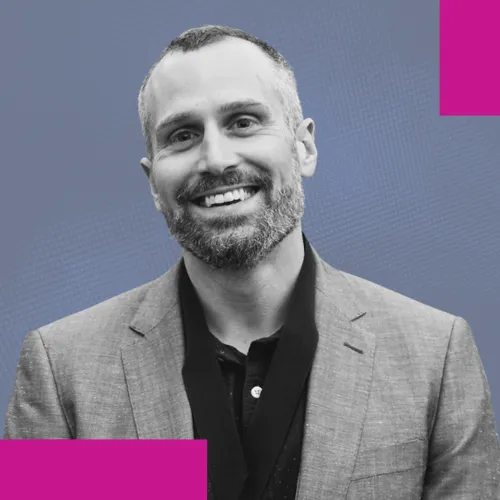
In this episode of Open Circuit, we’re joined by Costa Samaras, director of the Scott Institute for Energy Innovation at Carnegie Mellon and former White House climate and energy advisor, to make sense of the moment.
We unpack the contradictions at the heart of the GOP’s energy agenda, explain why the post-IRA tax landscape is still favorable for some sectors, and explore how the politics of permitting could shape developer decisions for years to come.
Later in the episode, we dive into the DOE’s blackout modeling, and explain why the report’s assumptions are so misaligned with the on-the-ground reality.
Finally, Costa lays out his vision for a Grid New Deal, explaining why AI fast lanes, public investment, and smarter grid interconnection rules are essential to meeting this demand surge with clean energy.
Credits: Co-hosted by Stephen Lacey, Jigar Shah, and Katherine Hamilton. Produced and edited by Stephen Lacey. Original music and engineering by Sean Marquand.
Open Circuit is brought to you by Natural Power. Natural Power specializes in renewable energy consulting and engineering, supporting wind, solar, and battery storage projects from concept through financing. Discover how we’re creating a world powered by renewable energy at naturalpower.com.
Open Circuit is brought to you by Sungrow, the trusted provider of PV inverters and battery storage. With over 605 GW installed worldwide and a BloombergNEF ranking of “most bankable” in power conversion and energy storage, Sungrow provides solar tech you can count on. Learn more at sungrowpower.com.
Learn more about 38 North Solutions’ Policy Pulse, providing highly curated, actionable snapshots of the political developments shaping the clean tech landscape.
Transcript
Stephen Lacey: Doug Burgum was on Capitol Hill this week encouraging Republicans to keep focusing on slashing Biden-era clean energy programs. And it made me wonder, I haven’t heard anything out of the dominance council that’s meaningful.
Costa Samaras: I mean, I think a good question to ask Secretary Burgum is, which wind turbine hurt you, bro? Why are they so mad at wind turbines?
Katherine Hamilton: 40% of the generation in North Dakota is wind. What happened?
Stephen Lacey: Don’t you feel bad for the guy, though? I mean people know him as Secretary of the Interior. He’s Chair of this National Energy Dominance Council, but now he has this third role, which is America’s most overqualified clean energy permit reviewer.
Katherine Hamilton: He’s gone from Theodore Roosevelt National Park, which is the only national park in North Dakota to Teddy Roosevelt Island, which is very, very small.
Stephen Lacey: Trump has such a unique way of humiliating people.
Costa Samaras: I just can’t imagine getting that many emails to approve stuff. Just at some point it’s just like, “All right, fine. Just deal with it.”
Stephen Lacey: From Latitude Media, this is Open Circuit. This week, the great recalibration, just as power demand is exploding a new law, the One Big Beautiful Bill is expected to slash clean energy deployment by up to 60% over the next decade. At the same time, the Department of Energy is warning of massive blackout risk, lamenting the growing gap between demand and timelines for developing new resources. But brand new restrictions imposed by the Trump White House will make it harder to build the very resources that could close the gap. The result, a strange kind of cognitive dissonance, Washington is saying go faster and slow down at the same time, creating a high stakes bottleneck for developers, utilities, and large energy buyers, we will map out the contradictions, the possible impacts, and some alternative solutions.
I’m Stephen Lacey. I’m the executive Editor at Latitude Media. Welcome to the show. Katherine Hamilton is with me. She’s the co-founder and Chair of 38 North Solutions. How are you?
Katherine Hamilton: I’m great. I’m back to sitting on my floor today just for the day.
Stephen Lacey: Jigar Shah is away this week and in his place is Costa Samaras. Costa is director of the Carnegie Mellon Scott Institute for Energy Innovation, and he’s a former Chief Advisor for Clean Energy at the White House Office of Science and Technology Policy. Costa, welcome back.
Costa Samaras: So great to be back with you. I hope to not embarrass myself further this time like I did last time.
Stephen Lacey: There’s a reason why you’re the fastest repeat guest we’ve ever had in the history of this podcast.
Costa Samaras: I think it’s because I answered your email immediately, probably.
The One Big Beautiful Bill and clean energy’s recalibration
Stephen Lacey: So after two years of tailwinds from the Inflation Reduction Act, developers are now facing a pretty different landscape. The One Big Beautiful Bill the OBBB is dialing back tax incentives, imposing hard construction deadlines, and bringing in strict new sourcing rules on foreign equipment sourcing. Meanwhile, the Department of Energy is out with a new report on reliability, which blames renewables for increasing outage risks and is seen as a smoke screen to help keep aging fossil plants alive. And I first want to just start with framing, actually. I’m thinking about this moment as this great recalibration, shorthand for the policy shifts that we’ve seen unfold in recent months and weeks, and also the new demand drivers that are impacting renewables and battery deployment. How would each of you think about this moment with these two competing forces, Katherine?
Katherine Hamilton: Yeah, I was trying to think of some phrases that come to mind other than, “Ah.” One is, “Back to fundamentals. Don’t take anything for granted. Survival of the fittest,” which sounds a little cynical. But then also true value. So really having to dig into what is the actual value that all of our technologies are giving to the grid and to the customers because that is going to really matter as we move forward.
Costa Samaras: And I think it’s a best of times, worst of times moment, lots of headwinds artificially placed in front of clean energy, but lots of opportunities for the clean energy technology progress that we’ve seen to continue to accelerate in the market. I think about this moment as a Etch-a-Sketch moment, and if you remember Etch-a-Sketch, it was this little box that you drew on with these knobs and then you would shake it and then all your picture would go away. And the reason I think about an Etch-a-Sketch right now is one of my VC friends who works in climate tech, he’d said we’ve left the world of rational politics and entered a world of irrational partisan desires. And so all of the old rules, the ways that we thought that politics worked, the way that we thought that incentives worked, the passing of the One Big Beautiful Bill seemed to shake that all and really cause us to think about the world in a different way.
Stephen Lacey: We have two Etch-a-Sketches here and I like to sit down and make some really beautiful designs and then my daughter just grabs it from me and shakes it up. So I like that analogy, but it feels like right now the Etch-a-Sketch has been shaken up, but there’s still some residue on the screen. We can still see the picture. And so that’s why I’m thinking about it as this recalibration, right? There are certainly hard stops for incentives for wind, solar, electric vehicles, but for many of the long-term decarbonization solutions, tax credits continue. There’s tax credit transferability. This is not a wholesale change to incentives. So let’s actually talk about how much that picture is shaken up to bring this analogy to its logical conclusion. Katherine, when you look at the impact of OBBB, what are folks saying about the impact and where are the incentive changes going to have the greatest impact?
Katherine Hamilton: There’ve been a bunch of different analyses and I’ll just cite some of them. So on investment deployment and generation, the Rhodium Group says that there will be a decrease in clean energy capacity additions of 57 to 62% by 2025. The Princeton Repeat Project says there’ll be a decreased cumulative clean energy and fuels capital investment of half a trillion between 2025 and 2035. And they say also at Princeton that there will be reduced clean energy generation by 820 terawatt hours by 2035. Electric vehicle share looks like it could go down by 5%. That’s a Wood-Max study. And then Rhodium also says between 20 and 34% fewer EVs as a portion of the light duty vehicle mix. And then a big number is going to be household energy costs, both Rhodium and Princeton project between $80 and $300 increases a year. Energy Innovation says like $170 a year by 2035.
That is hitting people in the pocketbooks. And then greenhouse gas emissions, of course, between eight, 9% depending on whether you follow C2ES or Rhodium Group, looks like they could go up. And then one of the other big impacts will be jobs. So three quarters of a million jobs lost by 2030 says Energy Innovation and 1.7 million by 2035 says C2ES. So these are all projections. We’ll have to see what actually happens, but that’s kind of what we’re watching as we start scaling down on some of the credits that we had in place with the Inflation Reduction Act, let’s see where it goes. Maybe we can create a new Etch-a-Sketch ourselves and create a new story, but right now that’s what the analysts say the impacts could be.
Stephen Lacey: So we’re certainly not going to see a collapse of wind and solar development, but I think I heard Jesse Jenkins describe that over the next decade or so, we’ll be taking out a nuclear fleets worth of new capacity. So it is a big deal. We will be stripping a lot of much-needed capacity out of the picture. Costa, what are you focused on at the Scott Institute? Are there any particular impacts that you’re keeping your eyes on as a result of the OBBB changes?
Costa Samaras: Because the internet has ruined my brain, the thing that immediately jumped to me when I looked at the final text of the bill was the meme where the guy is riding the bike and then he takes a stick and puts it through the front spokes and flips over and is hurt on the ground. And the U.S. clean energy economy is us on the bike and the One Big Beautiful Bill is the stick. It’s a artificial slamming on the brakes of some of the most important technological progress, and jobs, and opportunities for the U.S. economy and all the numbers that Katherine just went through, I was trying to think through how I would internalize that.
And the word that kept coming back to me is “half” and so we’re getting half. And so we’re going to cut the amount of new clean power capacity by half over the next decade. We’re going to slow investment in clean energy by half a trillion dollars. And Jesse Jenkins and Princeton in the Repeat Project showed that we’re going to add about half a gigaton per year of greenhouse gas emissions by 2035. And again, all back to for what? What is the theory of the case here that we’re artificially damaging the environment, raising people’s costs, and slowing down an exciting and important new industry in the United States? For what?
Stephen Lacey: Yeah, I mean I think the “For what?” is a simple answer and it is retribution, but we’ll talk a little bit more about the case that they are making through that DOE reliability report. I think that is one of the ways that they are making the argument for ending these subsidies, but I don’t think there’s much more to it other than retribution and sort of vindictive policymaking. Let’s talk about the differences in policy. So we talked a little bit about our reactions of the bill when it passed, and I don’t think we did… Katherine, you did a pretty helpful breakdown of what’s in it, but can we talk about the difference in incentives today compared with the IRA and compared with pre-IRA? Because ultimately, we ended up in a better place than we were before the IRA with some nuances. So I think it would be helpful to walk through where we were before the IRA and where we are now compared to those changes that we saw through the Biden term.
Katherine Hamilton: Yeah, there were a lot of credits that were not even on the table before the IRA. We really just had solar and wind. I had been working forever to try to get an energy storage tax credit since 2009, and finally we got it in the Inflation Reduction Act. We got credits for any number of technologies. We also got bonuses for building in energy communities in low-income communities. There were just so many ways in which this bill brought in new technologies into the mix and really supercharged them. So this was like, “All right, we’re all going to be going. We’re all going to be investing including in manufacturing.” So there was a manufacturing credit that had never been in place. There were new credits for homes, for homeowners, for cars, you name it, the IRA put it in there and it was really an all-of-the-above clean energy strategy and there were some things that didn’t make it into the bill, like transmission didn’t make it into the bill.
I was very disappointed in that. Distributed energy, there was not a portfolio standard for clean energy. That was something I was really interested in working on. But in essence, it really got everybody going, investors, banks, developers in one direction. And then it started being implemented. We didn’t have that much time to implement it before the new administration came in, however, and really decided we’re going to do the opposite of what President Biden did. Anything President Biden did is now bad and we’re going to do the exact opposite of that. And so started tearing those down.
Well, in the end what happened was not completely a teardown. So you still have credits for geothermal, hydropower, nuclear, a pace. You still have the manufacturing tax credit in place. It’s the solar and wind credits that are going to be stopped earlier. They still have a bit of a glide path rather than just going over a cliff. The new piece that is going to be interesting to see how it pans out is this Foreign Entity of Concern (FEOC), because those rules are going to potentially hang up people in their supply chains, in their ownership structures. And I think just causing a lot of uncertainty right now. But generally we are still in a way better situation than we were before the Inflation reduction Act.
Costa Samaras: As an optimist, I’m with Katherine on this, that the baseline in this administration that we were going to lose everything and we didn’t lose everything. There’s some very important things that are still law today. The challenge is the Foreign Entity of Concern and the other kind of red tape that is going to artificially challenge projects that are out of favor. I think that is a much more dangerous provision going forward than what was taken out is the ability for an administration to disfavor certain parts of certain technologies because they don’t like them in a way that hinders clean energy growth in the country.
Stephen Lacey: Why are these Foreign Entity of Concern rules so much more strict compared to what was enacted under the Biden administration? They were used as a very precise tool and now they are much wider in scope, and I don’t think we quite know how the rules are going to play out, but how damaging could they be and which supply chains will they be most difficult for?
Katherine Hamilton: This is interesting because actually the FEOC rules were on 30D, which was the car credit, and they actually weren’t super clear. I think there was still a lot of question as to where exactly the buck stopped on ownership and parts. And I think that some suppliers to the OEMs, the car companies were a little confused as to who was in charge, who actually had to make sure that they were in compliance. I think that’s the crucial thing. So interestingly now the car, if you buy an electric car and you’re not going to get the credit after September, but you’re also not going to have to comply with any of these FEOC rules that companies don’t have to comply with those anymore because they don’t exist. But for these other credits, what they’re going to need to do is set guidance that is very clear that details exactly what pieces of equipment you have to track and who has to be in compliance.
That’s going to be a big issue is where does the buck stop? Because people right now are trying to figure out, developers are trying to figure out, “Where are my supply chains? Where do they come from?” The ownership structure is a little bit, I think, clearer in that, but the guidance is going to be really important. And one piece that I think about, and Costa you may think about this as well, is that during the Inflation Reduction Act implementation, the Department of Energy staff worked very, very closely with Treasury to develop rules because DOE had the technical expertise. So we spent a lot of time talking to DOE and to the program managers there about here’s how things could work so that industry could actually do what it needs to do based on the credits.
We have so many fewer staff at DOE now, so I’m not exactly sure who over there is going to be in charge of making sure that these are written in a way that technologically they can work so that logistically they can work. So you have much reduced staff at Treasury and at Department of Energy. So I’m hopeful that they will get done quickly, but it doesn’t bode well given the cuts that they’ve already had to capacity there.
Costa Samaras: In Washington, delay is also no. And I think what the industry is concerned about right now with these Foreign Entity of Concern rules is exactly what Katherine was saying is that the uncertainty is high. There may not be a resolution to any uncertainty which may just stop projects right away. And it also provides another veto point outside of legislation that either the administration can have at Treasury or in other agencies that can say, “The way that we’re interpreting this is this way and your project that used these types of components is now ineligible for the tax credits.” And that just creates a environment of disinvestment. And maybe that’s by design, probably that’s by design, but it also gives way more control to Treasury and executive agencies to interpret and layer on red tape to stop different types of investments in clean energy in the country.
Katherine Hamilton: Interestingly, because they don’t take effect until next year, the next two quarters are going to be a boom.
Costa Samaras: Totally.
Katherine Hamilton: People are trying to close deals right away as quickly as they can.
Stephen Lacey: Yeah, they’re going to close deals and they’re going to hoard a bunch of equipment too under Safe Harbor rules, so you’ll see a lot of activity in the lead up to getting hopefully some clarity on these rules. What is the best case implementation scenario for these FEOC rules? If they were used as a legitimate policy tool and implemented well, I think we all agree we want to see more clean energy supply chains built here in America and there’s a place for these kinds of rules. What is the best case scenario for implementation?
Katherine Hamilton: Yeah, I think you want something really clear, something that may not be easy but will be not impossible to comply with, and then a pathway to being able to change over time and to be able to source. And they do have, because there is percentage differences over time for compliance. There is a pathway to having more investment, bringing more equipment in from the U.S. but that also assumes that we’re going to have manufacturing growing in the U.S. that will provide all of the equipment that everybody needs.
Costa Samaras: The spirit of this is one, to encourage domestic manufacturing, but two, to counter any security concerns from covered foreign entities, namely China, that may exist in certain parts of the supply chain. But nuts and bolts or nails or other products that are commodities are not going to be a giant security concern for different types of clean energy projects. And what these rules as written do is give the executive agencies in the U.S. government another veto point to create uncertainty and red tape for clean energy investment.
Stephen Lacey: So what are the other areas of uncertainty? I guess the first would be commenced construction. The White House has said they’re going to be very strict with the rules that allow you to engage in a little bit of construction activity and then qualify for the tax credits when you finish the project down the road. What are they going to put in place? What are they suggesting they’re going to put in place?
Katherine Hamilton: Yeah, we don’t know exactly. I think they could do this one pretty quickly because it’s clear right now what commenced construction means. There are rules in place. So like Safe Harbor, just as you said, 5% is the Safe Harbor number now, but there is precedent in previous tax code for 10%, so they could raise it to 10%. That would be something that would be not completely unreasonable. Of course it increases the need to hustle to get all this done, but I think that’s something they could look forward to. Also, we would hope that these would be prospective not retroactive so that this would just be looking ahead, which is typically what Treasury does. Then the other piece is the physical test. So they could have to make sure that construction is continuing, they could have more audits in the field. That will be interesting because there are so fewer auditors for the IRS now in the field.
So I’m not sure how they’re going to manage that, but there are different ways that they could do it to try to, as Costa says, create more red tape. The good news from where I sit is that the folks that are assigned in Treasury to writing these are not dogmatic. They are people who’ve worked on the Hill, who’ve written legislation who I think are not going to be predisposed to change statute in the regulation. So even though they may increase and make more strict what commenced construction means, I don’t think that they’re predisposed to make it worse in a way that is outside of the statute.
Costa Samaras: In the before times, the commenced construction determination was pretty easy to understand. You started building something, you’ve paid a portion of the initial project cost and you were able to deliver it within a certain time period. Now again, nothing can be taken for granted that industry and finance look at the opportunity at each of these veto points inside of the administration to say, “How likely are we going to pass this red tape gate in order to get the tax cuts that currently exist in the law to make our project in the money?” And there will be a non-zero amount of projects that look at that risk and think about the timelines, and think about the supply chain, and think about the Foreign Entity of Concern, and think about the permitting and say, “I don’t know if we’re going to make it.” And they’ll just put their money elsewhere. And that’s to our detriment as a country.
Stephen Lacey: And on the permitting side, we alluded to the new directive that requires any solar and wind projects being developed on federal lands to go straight to Secretary Burgum for review. How do we expect that to play out?
Katherine Hamilton: I mean, it’s already so hard to do. It’s already so hard to build on federal lands. I mean the potential that NREL finds is something like 12.5%. You could build on public lands of solar and wind and there’s only 4% there now. And I work with a lot of geothermal companies that are trying to do work and you have folks in these remote locations. I think solar and wind have enjoyed a little bit more of a focus area because they had at Interior, some processes set up in place for them. But in a lot of situations you’ve got somebody who’s got a fishing permit, a snowmobile permit, a geothermal power plant permit, which ones are they going to approve? I mean there’s just the entire capacity at Department of Interior for approval for public lands is already really difficult to get through. So I’m not sure how they’re going to… I think this could potentially slow them down. I think it’s just a huge resource that goes to waste if you’re not able to develop on public lands in an efficient way.
Costa Samaras: The public lands are ours. They belong to us. We’ve invested in their care as a country and it’s important that we steward those investments and protect the environment, and protect communities, and protect cultural resources, all the things that make public lands great. What worries me is now the permitting environment is only going to get worse for clean energy and it’s not going to be able to protect the environment in a way that we want it to. And the government right now is not picking winners, which is bad enough. They’re picking losers. And so how do we, as the clean energy community, come to the table and say, “These are the outcomes we want. We want clean energy, we want a protected environment. We want clean water, clean air, and we want a lot of opportunity to reduce greenhouse gas emissions.”
And I think it’s important that we don’t let the permitting reform conversation get kicked down the road because permitting reform is happening right now. This is happening without us. I mean they have reformed permitting in a way that makes it harder to do clean energy. We need to make it easier to do clean energy while protecting the environment and building transmission and building storage. I worry that we, in the climate community, have approached permitting reform in a way that lets us throw up our hands and say there’s nothing that we can do. And that’s not true. We really have to approach the way that we build things in this country to align with the outcomes that we want in the timeline that we have.
Stephen Lacey: What do you mean? Are we just not exercising the right levers of power? Are we not making the right demands? What do you mean by that exactly?
Costa Samaras: There is very appropriate concern that if we make it easier to build energy, that we’re only going to get dirty energy and that we’re going to have broader environmental challenges than we have right now. And I believe there’s always going to be trade-offs in energy development, but I believe that the current status quo is untenable. It’s unaligned with reaching net-zero emissions. We won’t build enough clean energy, and enough transmission, and enough storage to reach our energy goals. Notwithstanding the current policy environment, I’m talking about over the next 25 years. Without a radically re-imagined approach on how we build fast, clean, cheap, and with communities. And there’s trade-offs in that space and the status quo now, which is we’re going to put up roadblocks to stop as much things as possible are not going to align with our climate outcomes. And there’s a lot of good ideas out there about how to move forward. There’s very big nervousness, especially in rural communities and tribal communities, appropriate nervousness. We have to come together and find a way to build fast, clean, and cheap.
Stephen Lacey: So Katherine, 38 North puts out this biweekly analysis called the Policy Pulse, and in your latest edition you touched on how the Bill is now going to work its way through agencies for implementation. We touched on a few of the ways that that implementation is going to start to happen. What are some other big unknowns as the law gets absorbed by government?
Katherine Hamilton: Yeah, I think we have to see how much the public is able to participate. I think people are already starting to talk to the Treasury and IRS folks, talking to the agencies, looking of course at their supply chains to see where everything comes from and trying to, of course, safe harbor as fast as they can. So the way we see it is people need to be engaged. Don’t give up right now. This is not the right time to do it. I think showing that the way to get things done quickly and cost-effectively for the taxpayer is going to be important. I do think it’s going to be tricky because solar and wind are seen as not the chosen technologies right now. I think it is harder for a solar company to make a case than it would be, say, for an investor.
So an investor could go into Treasury and say, “Hey, I have all this money I’m trying to invest. I think these are really good technologies. They’re good for the taxpayer, they’re good for the bottom line, they’re good for customers, they’re good for everybody. Here’s how we need to have it work so that I can invest more in this country.” So I feel like sometimes having that voice is really important. So we are working, of course with all of the companies that we work with to try to influence the process or even just help make the process more smoothly for companies. I think different voices have a different level of excellence.
DOE’s reliability report: manufacturing a crisis?
Stephen Lacey: So, just as developers are recalibrating to new tax rules, some supply chain restrictions, permitting bottlenecks, the federal government just dropped another curveball. This DOE report warning of a 100-fold increase in blackout risk thanks to renewables, according to the DOE. It’s a headline that seems tailor-made for cable news, but under the hood, when you take a look at the assumptions, the report freezes storage growth, it underplays transmission, it assumes a grid that’s way less flexible than what many utilities in the industry are building toward. And it lands at the same time that the administration is cutting off NOAA’s ability to assess climate risk, removing key scientists and delaying tools that help agencies and utilities plan for the very disruptions that we’re trying to avoid. So Katherine, to you, the report warns of this 100-fold increase in blackout risk. What are the assumptions the report is making and how do they exaggerate the risks of clean energy?
Katherine Hamilton: Yeah, so one thing, just by way of background, the president issued two executive orders that led to this. One was on day one of his administration declaring the national energy emergency and then this executive order in April on strengthening reliability and security of the grid. And what that executive order told DOE to do was come up with a uniform methodology to measure risk and understand resource adequacy. So that’s what they tried to do, doesn’t mean they did it quite in the right way. There was a little bit talk about not using a scalpel. This was much more of a sledgehammer approach. So they assumed that there would be 104 gigawatts of plant retirements by 2030, 210 gigawatts of new generation, only 22 gigawatts of which would be what they call firm reliable dispatchable generation. Another thing was loss of load hours. So outages, they said that we would go from eight hours a year to 818 hours a year and that we would need 100 gigawatts of new peak capacity by 2030, 50 gigawatts of which would be attributable to new data centers.
So there were kind of three big pieces. One is that they really overstated the blackout risk. That was just huge numbers. Part of that is because they did it from a national level and all of these things are done at very local and regional levels. These things don’t occur the same everywhere. The other thing was they of course vastly undervalued the contributions of renewables to reliability. And we’ve talked about this before where Urquhart says they’re way better off on energy, reliability and resilience as a result of solar and batteries. And then finally they say, because of these two big pieces, that leads us to the conclusion that we need more fossil fuels. So they’ve overestimated the risk, underestimated the benefit, and then put their thumb on the scale of the solution.
Stephen Lacey: Costa, you’re incredibly good at analogizing stuff like this or applying some internet meme to it. How would you describe this report?
Costa Samaras: We will have to come back to me on what… I’m memeless at the moment. I guess the top line is if I were in the White House or DOE and the staff brought me this report and said, “We’re going to have a bunch of blackouts and because of the growth of data center load and because of retirements,” what would a rational policy executive do at that moment? It would be, “We better go build a bunch of batteries and solar and [inaudible 00:34:51] right away.”
Katherine Hamilton: We do everything, yes.
Costa Samaras: We should do doing virtual power plants. It would be press conference like Emergency Reconducting of the Tennessee Valley Authority right now, right? I mean if that was really the case, then the actions that they’re taking at the end of the report, which is, “Oh, and by the way, we should keep some coal online,” that’s not going to cut it. And so, I think that all of this, there’s a very capable and competent staff that contributed to this report at the labs and at headquarters, and the retirement of legacy fossil assets and the bottleneck to get new clean generation online is a challenge.
The solution is not going to be keep old dirty power plants online forever. The solution is to unlock the dominant source of new generation in the country, which has been clean energy, and do that in all the places that you’re worried about. Into the assumptions part, I want to actually say that they weren’t aggressive enough in one area. And they said, “We looked at these historical weather days and tried to model how the grid is going to react when the different temperature and other weather conditions happen.” And that is not the weather that we have now or will have over the 50 years of the assets in the electricity grid. Climate change because of, as we know, human-caused emissions has affected how hot it is, how intense the rainfalls are, like how intense the storms are. All these directly affect the electricity grid.
And actually recently, representative Leger Fernández in Congress introduced a Weather Safe Energy Act that asked DOE to say, “Hey, you all should come up with a high resolution weather platform to say how should our electricity system plan for extreme weather in the future.” So they’re using old weather information to try to prop up old power plants in a new, digitalized environment. All that is to say if blackout risk is 800 hours a year, there is a much bigger both political, economic and national security problem than the solutions to this report are saying that we should do.
Stephen Lacey: And to your first point, what is so interesting to me when we look at the top line figures is just how differently these administrations are interpreting some of the same basic facts. So the Department of Energy during the Biden administration put out a report showing we need 200 gigawatts of new capacity through 2030. And the Biden DOE said, “Well, we have the resources to meet much of that in a cheaper flexible way. We could build 80 to 160 gigawatts of virtual power plants and here’s how we could do it.” And the Trump DOE is like, “This is just going to be an extreme blackout risk. The only thing that can save us is more fossil generation,” and it sweeps this entire category out of the picture. And so, it’s just remarkable how differently you can interpret these basic facts.
Costa Samaras: Well, and gas turbines right now have a backlog, although that may be easing a little bit, but it’s not clear to me that the solutions of build a whole bunch of new gas and even oil, I’m not sure why they even threw that in there. We don’t even use oil in the continental United States to make electricity much anymore, that those aren’t going to solve the reliability crisis in the way that flexibility, efficiency, clean energy and storage can make an immediate contribution.
The other thing if I want to add to this is there is a need for clean firm power. We need to have clean firm power in the country. We won’t have clean firm power at the levels that we need if we don’t have a functional, robust and funded Department of Energy, Loan Programs Office, Clean Energy Demonstrations Office and other opportunities inside the Federal Government to go and deploy a whole bunch of new nuclear power and geothermal, and recapitalizing hydrodams. There’s opportunities to increase the amount of clean firm power that we have in the country. And they’re saying we need this on one hand and they’re taking away all the tools on the other hand.
Katherine Hamilton: So if you remember back in the previous Trump administration, there was a report done on resilience that Alison Silverstein was brought in to do the sort of technical review on and she-
Stephen Lacey: It’s the piles of coal report?
Katherine Hamilton: Yes, it was the piles of coal report. But here are the things that were right that she highlighted, which is first of all, base load generation is an operational mode, not a type of power plant that no natural gas, low natural gas costs and low electric demand growth are principal causes of retirements. So that was at that point there was low demand growth, but many of these power plants were used as generation, but their capacity factors had been completely shot and they no longer served as this operational mode of base load. And so, they were really talking about using characteristics, metrics, benefit and compensation to be essential to make sure our system is resilient. I mean, planning is crucial. The issue is that this administration’s mode is, “This is the answer I want so you have to create the report to match what I want. And what I want is more coal.” That’s really what they want.
Stephen Lacey: Well, to that point, how does a report like this start to influence the market? Does it give planners, regulators, utilities, cover?
Costa Samaras: I mean there’s some truth to a big PDF like this that we call a waiving document. And what it is a regulator can say and wave that PDF in the air, “DOE said we need more coal.” And then the Public Service Commission or the PUC or others would say, “I guess they said it, I mean it’s a PDF, what do you want us to do? It’s a PDF.” I mean, so there is a danger that the recommendations from this report rather than the highlighting of the need for increased reliability and resilience are going to be the takeaway.
Katherine Hamilton: Yeah, I think the mitigating factor Costa is going to be that rates are going up and keeping these coal plants running is not going to help.
Costa Samaras: We are on the precipice of an electricity cost crisis in the country. And a lot of that hasn’t been from generation. It’s been because of the disinvestment over many years of transmission and distribution. And I think that the administration thinks that they’re going to be able to blame it on renewables. And I don’t think that that’s going to work because it’s going to be very clear that in places where we’re ramping up fossil fuels, in places that we haven’t invested in transmission distribution, that rates are going to continue to have pressure on. This One Big Beautiful Bill act is a make-your-electricity-costs-go-up act. And I just think that there a lot of folks are misreading the two to six year politics of what One Big Beautiful Bill does and that is raise electricity prices.
The Grid New Deal: building infrastructure for the AI era
Stephen Lacey: So we’ve been talking about the limits that Washington is putting into place, but what would it actually look like to unleash new supply? And Costa, you’ve been out talking about this concept called the Grid New Deal, and now that you’re here, I want to unpack it for us. So the Grid New Deal is this large scale federal initiative that would match grid infrastructure investment with the scale of electrification and digitalization. What are the core elements of this vision?
Costa Samaras: We like to think about the electricity sector as the century’s highways. All the ways that we’re going to be building and creating new growth, new wealth, new opportunities in the century in the United States is going to have an electricity component to it. And whether that’s manufacturing, or if it’s services, or if it’s other opportunities for new businesses, electricity is the core component, but yet we’re still treating electricity and the electricity infrastructure as this side, unpaid attention to infrastructure that is almost entirely privatized, that doesn’t have long run vision for recapitalization and reinvestment. And that puts a lot of the work and a lot of the cost of reinvestment on the rate payers. It’d be like charging tolls to build the original Eisenhower highway system before we built it in a way that would always stop us from getting to what we want. So what is the Grid New Deal?
It’s new energy supply, new transmission, new distribution, new demand management, all that can lower prices, increase resilience and lower emissions. Now that sounds at the high level, what does that mean? But those are the objectives, right? I mean the objectives is bring new clean energy supply on quickly, reinvest in the bottlenecks that are causing costs to go up in transmission. We just live with this. It’s like, “Oh, I guess we just can’t do it. So everybody’s going to pay higher prices.” Well, those higher prices hurt working families. They hurt new businesses, they hurt schools, they hurt municipalities. And it’s like we shouldn’t have to live with dirty energy and high prices just because we’ve thrown up our hands and said we can’t do this. I think there needs to be a new imagination of what our infrastructure should do for us. And if it’s not going to come from the federal government, then we should be experimenting in the states.
And this could be unlocking new clean energy supply and transmission with public private partnerships. It could be finding new ways for communities to have lower cost and benefit by hosting infrastructure in their communities and not repeating the same mistakes of the past when we were building at the highway system of just rolling over everybody and causing a big challenges in equity in frontline communities. Those are the principles that which we, as a country, could start to ascribe to and then fill in and leverage investment to make those things a reality. We want cold beer and hot showers. We want cheap electricity and we want no pollution. That’s not unachievable. We should have that.
Stephen Lacey: Well, I want to peel back the layers on how it would work, but first let’s just talk about the demand piece and the urgency for an idea like this. And Katherine, I want to turn to the data center piece specifically because it’s such a huge part of new load growth. So in your latest policy polls, you kind of outline a lot of the timing urgency around this new demand. Why is it creating this mismatch between current policy and what’s going to come online?
Katherine Hamilton: Yeah, it’s super interesting because there’s a little bit of we don’t exactly know how fast everything is going to come on. Because you don’t know if maybe AI can temper the load growth. So there are a lot of X factors in there, but certainly EIA is up to estimating an 8% overall electricity demand increase by 2030, 20% by 2035. And part of the issue on timing is that NEMA, which is the National Electrical Manufacturers Association, they think there would be a 10%, so like say eight to 10% by 2030. They’re saying that 90% of this projected data center demand growth would be in the next decade.
Blackstone CEO Stephen Schwartzman says over the next five years there’s going to be a trillion dollars of U.S. capital investment and data centers. What does that mean? That means, so data centers take about seven years from the initial steps of building to when they’re operating, and the reconstruction activities, all they have to do, siting, trying to figure out where their power is coming from takes the first two thirds. So there’s a misalignment between that timeline and when you could build what you need to power those centers.
If you look at legacy, and we’ve talked about this before because in Virginia a lot of those data centers, and there are some that are being built very near me, they’re trying to just draw from the grid, from what’s already out there. But what does that mean? That puts upward pressure on prices for everybody. So that’s not dedicated generation or resources for those centers, they’re just drawing from what the grid needs. But that means the prices could go up for everybody else.
But then if you look at do we want to build nuclear? Do we want to build or geothermal, or do we want to make sure we build a new gas plant? All those take time, they’re going to take longer than it takes to build a data center. So what do we do in the meantime? And I think that’s what people are trying to get their heads around. It’s like what is the infrastructure? And I love Costa that you put this in terms of infrastructure, because that’s what we need and we want infrastructure that serves the load we need in a way that doesn’t put upward prices on everybody else, but that also doesn’t leave us with a bunch of stranded assets at the end if the demand doesn’t actually happen.
Stephen Lacey: Yeah. And Costa, one more question about the load piece. You’ve said that the AI boom is a stress test of the grid. What do you mean by that? What’s ahead and why is this moment just an indicator of the stress to come?
Costa Samaras: Well, where Katherine’s at in Virginia, data centers are already upwards of 25% of electricity demand, in any other countries that’s not the case. In many other parts of the country, that’s not the case. But how we handle the rapid growth of AI and data center electricity demand is going to basically tell society how we’re going to handle the rest of electrification of cars, and homes, and businesses and factories. And we wrote a piece in MIT Tech Review that said, “AI’s energy impact is still small, but how we handle it is huge.” Because if we get this wrong… I think what Katherine said, it’s like if we just go build a bunch of fossil plants, and we load up rate payers with infrastructure costs, and we impose new emissions on communities, and we suck up a bunch of water, if we do this wrong, the public will be justifiably skeptical and angry about electrification, period.
And if we don’t get electrification of cars, homes, businesses, and factories, we don’t deal with climate change. We’ll never meet our emissions objectives and we’ll never get to net-zero. And so that what we’ve been basically saying is not just that we have to get it right, we have to be at the table right now demanding how we handle load growth in the United States in a way that is affordable, reliable, clean, and equitable. And I think that those conversations are now starting to be had, but I think it’s on balance. I think we can come back to this in a year or two, but I think it’s a good thing that Mark Zuckerberg knows what the interconnection cue is.
I think it’s good that these companies are seeing energy as a core input to their business and they also have climate targets, and that they’re thinking through about how to do both private investment and how the government can do public investment to help grow electrification grid large in the country. Now, that’s not a blank check to just go do pollution and go suck up water resources. That’s why we have to get it right. And then that’s why there’re clean energy tariffs, sorry, clean transition tariffs, and flexibility, and virtual power plants, and reinvestment, all of these ideas that come from the clean energy nerd community apply to how we build out and think about AI energy demand.
Stephen Lacey: So let’s make this more concrete. Going back to the Grid New Deal, this was an idea that you established, was it in 2024?
Costa Samaras: Yeah.
Stephen Lacey: You’ve been talking about it for about a year. Specifically what agencies are you talking about leveraging? And then how are you drawing in this Smart AI Fast Lanes concept? So walk us through it in a more concrete way.
Costa Samaras: So the overall Grid New Deal is how I was thinking about Department of Energy, FERC, Department of Transportation, Department of Interior, EPA, Commerce, DOT, DOD, all the federal agencies that both rely on electricity for their mission, but also help enable the country to achieve our national aspirations through electricity, need to be thinking about electricity system as a national innovation imperative that we are investing in growing, modernizing, and getting to zero emissions. The Smart AI Fast Lanes piece is a policy that I published this year that was saying, “In the absence of new giant federal legislation, what could we do to help manage the growth of AI as well as achieve our objectives in trying to get it clean?” And where I landed was, and this is kind of the wonky part of this conversation, so I’m going to make it hopefully a little bit wonk light. Where I landed is who can do stuff right now?
The private sector, nonprofits, philanthropy, and some parts of the government can actually get some stuff done. And the Department of Energy has a foundation, the Foundation for Energy Security and Innovation. It was established in the Chips and Science Act and lots of other agencies have had foundations for a long time. And so the Fish and Wildlife Foundation and others, they will help do conservation areas around defense installations or they will help grow supply chains in times of national emergencies by pushing in private and philanthropic resources.
And so what I was saying is, “Hey, why doesn’t DOE’s foundation be this conduit to help push in private and philanthropic resources in communities that need new investment for clean energy, for transmission, for distribution, for data centers?” And so this Smart AI Fast Lanes concept is projects could opt in almost like a connect and manage. The way that ERCOT does, things in Texas is projects could opt in, they could potentially pay fees, but the private sector and the philanthropic sector could say, “If you do these projects these ways that achieve objectives for the community, we will plus up the investment. Come to us with an opportunity to build a bunch of clean energy and we’ll double it. Come to us if you need transmission and distribution infrastructure for your data center and we will add in the transmission and distribution infrastructure that this community needs so that prices don’t rise.
And then really it’s like who is doing data center flexibility like Tyler Norris has proposed in his Duke paper? Why aren’t we pushing in Jigar’s famed virtual power plants at every place that we’re doing data centers? And so what this Smart AI Fast Lanes framework can do is use the private sector and philanthropy in this moment of policy uncertainty to get the outcomes that the companies say that they want, the communities deserve, and that kind of parts positions our electricity system for the type of clean growth and equitable growth that if we don’t have, we won’t deal with climate change.
Stephen Lacey: Does this feel like an idea that could get pulled off in this current political environment?
Costa Samaras: I mean, I wrote Smart AI Fast Lanes for this moment right now, which is policy uncertainty, potentially actively hostile against clean energy from the federal government and not as much resources from the public side as there were in the past. And so I think that this is something that could be bipartisan, that could be good for communities and is actually achievable. The thing that we talk about in policy a lot is efficiency, but we need a whole bunch of different things to line up for policy to be good. We need things to be efficient, we need things to be effective, we need things to be equitable. But the last one is also very important is it has to be doable, what’s called administrable.
And that’s why when we come back to the FEOC stuff and some of the permitting stuff, making a process that is easy for agencies and states to adopt quickly and not have a bunch of red tape behind it is a fast track to getting the outcomes that we want. If we’re thinking about those as policy objectives, efficiency, equity, effectiveness and administrability, those are the platonic ideal of a policy design and something where we could push in private and philanthropic money to communities right now that are trying to cope with this rise in electricity demand. Seems like it could be a doable win-win
Katherine Hamilton: Costa, it’s really interesting because this Foundation for Energy, Security and Innovation, from when it was being developed as the foundation adjacent to DOE was the same time I was helping to craft the Greenhouse Gas Reduction Fund, which was the National Green Bank. And it seems like this could have been very, very complimentary where you have some tools that aren’t… The LPO can do senior debt, but that’s it, or a loan guarantee, but the Greenhouse Gas Reduction Fund and all these state green bank entities can do a lot of other things and crowd in private sector investment. And it seems like it could sit very well. And I still think that the state green banks could do this, sit really well next to and help feed off of each other this DOE structure or the DOE adjacent foundation. Is there any risk that the foundation will go away because of the administration change or is it completely separate?
Costa Samaras: So the foundation exists, they’ve received an initial appropriation, but they are ramping up and they don’t need a federal appropriation to operate, but they do need partnership with the administration to help unlock things and do things that a traditional foundation can’t do. One of the things that I put in this Smart AI Fast Lanes piece was prizes. A lot of times prizes are seen as a punt to actual doing real work, but in this case I think it’s like, “Hey, show up with a data center that doesn’t use any water or uses rapidly higher, efficiently on a workload basis and either DOE or the philanthropic community will award innovation prizes, will give you money.” I mean, those are the types of things where we have unstructured… We have a structured policy goal is make data center and AI use less harmful to the environment and to communities, but we don’t really have a great idea of the specific cases that we want to pursue.
A prize is a very good vehicle for that. It’s like go do something good and the public or philanthropy or the private sector will plus up your investment and give you that incentive to do that. Right now we’re just like we don’t want to look back on this 90% of data center developments going to happen in the next X years and say, “Wow, we really messed that up. Oh, we should have done this.” We’ve been doing that with transportation infrastructure for 70 years and saying we shouldn’t have done this like this. We have agency right now to not do that with both data centers first and then electrification coming right behind it.
Stephen Lacey: Dr. Costa Samaras is director of the Carnegie Melon Scott Institute for Energy Innovation. Costa, thank you so much. You just earned yourself a regular spot on this podcast. If you ever want to come back again, we love having you here.
Costa Samaras: Is there a T-shirt or something that I can get?
Stephen Lacey: There is. We have Open Circuit merch and we are going to-
Costa Samaras: Oh, we got merch.
Katherine Hamilton: Yes.
Stephen Lacey: Yeah, we’ll send you one. So yes, no, you earned yourself one.
Katherine Hamilton: Yeah.
Stephen Lacey: A T-shirt or a hat, and listeners will hear more as we start to release it. But we are going to have links to the Smart AI Fast Lanes concept in the show notes. We’ll have a link to your Grid New Deal piece. And we really appreciate you being here.
Costa Samaras: Thank you so much for having me. It’s such a pleasure. You all are doing some of the best work in this space by breaking down these really tough to grapple concepts and letting folks understand how this affects their lives.
Stephen Lacey: Katherine, we’ll also put a link to the policy polls as well, where can people find that?
Katherine Hamilton: Awesome. Yeah, on our website, 38northsolutions.com.
Stephen Lacey: Absolutely. All right. Look out for it. That’s bi-weekly analysis on what’s happening out of Washington and in this States. And we want to thank you all for being here. Open Circuit is produced by Latitude Media. The show is edited and produced by me, Sean Markwand is our technical director, and Bailey is our senior podcast editor. Latitude Media is supported by Prelude Ventures and for more in-depth reporting and links to our coverage, go to Latitude Media or read our daily, weekly or AI Energy Nexus newsletter. You can find transcripts of this show on the website as well. We’ll catch you next week. Thank you all so much.