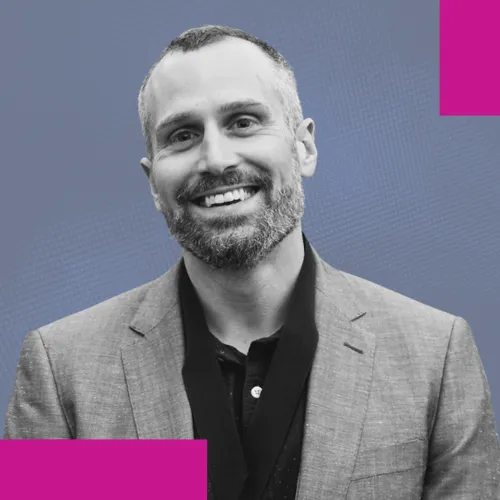
This week, we’re doing something a little different: we’re turning to Jigar’s social media feeds and listener questions to guide our conversation on the latest news in clean energy.
First, we tackle the affordability crisis. President Trump recently posted on Truth Social calling renewables “the scam of the century” and blaming them for rising prices. We look at how his policies are making the crisis worse, and why Trump now owns the problem.
Then, we look at how VPPs are hitting a tipping point, explaining how companies in the space are now selling “pain medication” instead of “vitamin pills.”
We also look at some big stories in solar. New tax guidance is making utility-scale harder to finance, but it gives small systems under 1.5 megawatts a safe harbor. Could that unlock more commercial rooftop capacity? Plus, we look at Pakistan’s DIY solar revolution, and the barriers to $2 per watt solar.
Finally, we talk about building real political power. Jigar outlines an idea for creating a community trust for the clean energy industry that will strengthen local connections and increase the industry’s clout.
Credits: Co-hosted by Stephen Lacey, Jigar Shah, and Katherine Hamilton. Produced and edited by Stephen Lacey. Original music and engineering by Sean Marquand.
Open Circuit is brought to you by Natural Power. Natural Power specializes in renewable energy consulting and engineering, supporting wind, solar, and battery storage projects from concept through financing. Discover how we’re creating a world powered by renewable energy at naturalpower.com.
Open Circuit is brought to you by Sungrow, the trusted provider of PV inverters and battery storage. With over 605 GW installed worldwide and a BloombergNEF ranking of “most bankable” in power conversion and energy storage, Sungrow provides solar tech you can count on. Learn more at sungrowpower.com.
Transcript:
Stephen Lacey: Did you see Elon today on X making fun of LinkedIn?
Jigar Shah: No, but bring it. I will defend LinkedIn until I die. I think even you bad-mouthed me in an earlier Energy Gang episode about my LinkedIn game, but I have been investing in LinkedIn since 2012. It is my go-to platform.
Stephen Lacey: From Latitude Media, this is Open Circuit this week. It’s the opposite of doom-scrolling. We’re going to turn to Jigar’s social media feeds to decode what is happening in clean energy right now, from spiking electricity prices to new tax rules that could reshape solar to the breakout moment for VPPs. We’re going to tap into the stories of the day one Tweet and LinkedIn post at a time. Plus, we’ll sprinkle in some listener questions. So let’s get into it.
Hey, everybody, I’m Stephen Lacey. I’m the executive editor of Latitude Media. Welcome, Jigar. Hello to you. Jigar is my co-host. How are you describing yourself these days?
Jigar Shah: A man of leisure. I am in the dog days of summer and it has not been feeling leisurely. I have had to do a lot of travel, but we just did finish a vacation, so that part was awesome.
Stephen Lacey: So you were traveling a ton over the last six months, a lot of international travel. You’ve teased it a little bit on the show, but what are people asking about?
Jigar Shah: Well, it’s this weird thing. I mean, I think as you know, the entire world order, which was we all want low tariffs and here’s how we want to subsidize clean energy and all that stuff, has really been thrown out the window. And I think that people are passing policies in the UK, and the EU, Australia, and they’re saying, “Great, now what’s the rest of the playbook?” And there is no answer to that. I mean, there’s all of the experiments that we ran at the loan programs office around having 40 full-time staff doing outreach and business development becoming the front door to most of the Department of Energy. We had the Deploy conferences, which people still today talk about how they were the only conferences where all 20 sectors come into the same event. There was a Liftoff reports which people continue to rave about how important they were.
But when you talk to these governments, they don’t have a strategy by which to pick up the mantle and take clean energy commercialization the rest of the way. And so, they’re calling because they need help to try to figure that out. And so, we launched a new nonprofit called Constructive, led by some of my former LPO staff, Susan Kish and Jonah Wagner. And so, I’ve been flying on their behalf to figure out how to be helpful to these governments in this moment of peak chaos.
Stephen Lacey: I mean, it’s surprising to me because after the IRA, we kept hearing about how governments were stepping up to try to meet what the US was doing. Are you saying that that wasn’t fully baked?
Jigar Shah: So the policy part of it is pretty well baked. I don’t know that anyone needs any advice from me on policy, but the winning the win stuff is all just a tagline. If you ask people, do you even know who the top 500 companies are in the CleanTech space? The answer is no. Who are the 50 of the top 500 that you think are perfect for the UK? I don’t know. Are you going to cold call them? Wait, why would I need to cold call them? We have the National Wealth Fund, we have GB Energy, why wouldn’t people cold call us?
I was like, that’s not how it works. These people are largely libertarian. If you don’t cold call them, they’re not going to use these services. I mean, people didn’t want to apply for loans in the loan programs office unless we cold called them and convinced them that a public private partnership was good. But also when you talk to the investors who are experts in solar and wind investing, and say, “Have you thought about the circular economy or have you thought about next generation batteries? Or would you invest in hydrogen or clean steel?” They don’t have the data necessary to make that decision. So the Liftoff reports are critical to doing that. And I just think that in general, people don’t know, because we haven’t done it for 40 years, how to really create this public-private partnership that accelerates outcomes.
Trump now owns the electricity affordability crisis
Stephen Lacey: So unfortunately, our guest got sick this week. And so, Jigar and I are here alone and I was sitting around trying to figure out what we were going to talk about, and this is a great chance for me to scour Jigar’s feeds and let the algorithm and Jigar’s choices guide our conversation.
Jigar Shah: Always a bad idea.
Stephen Lacey: So I have been all over your social. You didn’t say anything too provocative. I feel like you have strong opinions, but there’s nothing embarrassing there.
Jigar Shah: Well, we’ll see. We’ll let the jury decide.
Stephen Lacey: But I thought that you’re actually, the stories that you have been talking about are stories that we probably would’ve talked about on this show. So they’re really tapping into some of the big themes of the moment. Before we get into that, I wanted to give a shout-out to Kip Pastor over at Pique Action. I took that opposite of doom scrolling motto from him. That’s what they do. I thought that was a clever tagline.
So I want to start first, not with your post, but with something from the president that came in this week and that was over on Truth Social where you once had a burner account and you were no longer there. So you probably didn’t see this post, but Donald Trump wrote, “Any state that has built and relied on windmills and solar for power are seeing record-breaking increases in electricity and energy costs. The scam of the century.”
So he is out there trying to be on the offensive, but clearly on the defensive about electricity prices. And this is a really interesting moment for me where we’re seeing the administration over-rotate. And this moment is the administration has won. In a sense, they have successfully steered the entire US conversation toward all of the above approach. Even clean energy advocates are talking about the importance of all of the above and where clean energy fits into that, but they’re not going to stop there and they’re doing everything they can to halt the construction of new clean energy facilities.
And because of that, we are likely to see electricity prices rise considerably and suddenly the president is worried about this. The energy secretary was out talking about how they were going to get dinged on this, and it has caught the attention of the administration. And so, this affordability piece I wanted to bring up because it is like the story of the day, and we saw a report come out just this week about just how far electricity prices have already climbed up. So I wanted to get your take on this in particular, the administration is responding to something here. How important is this affordability issue right now?
Jigar Shah: Oh, it’s super important. I mean, when you think about the way in which the American electorate views electricity bills and gas bills, they view it as a tax on their lives. They’re like, “Oh, I have to pay my electricity bill.” And if their electricity bill goes up by 40%, they’re like, “Well, crap.” Remember in the 2007, I think it was, governor race in Maryland, Martin O’Malley won because of the 39% rate increase. And so, they’re starting to see that this is getting into governor’s races. In the New Jersey Governor race, the Democratic nominee talked about the PJM capacity market and the fact that the rates are going up. So I think-
Stephen Lacey: Yeah, do you think governors are going to lose their jobs over this?
Jigar Shah: I think that they think that they might lose their jobs. And I think that when you think about what this administration is doing on purpose, they’re taking the technologies that have added 85% of everything that was added to the grid last year and predicted to be added over the next three years and saying, “We are going to have a high-profile war against these technologies.”
So they are basically creating self-inflicted crisis. And it is not just that they’re creating a self-inflicted crisis, they’re actually trying to make sure that this becomes a cultural fire point. Think about the Solar for All program that just got letters to all 50 states. Remember, the way this works is those programs could have been [inaudible 00:09:17] in February. Governors and senators came to Lee Zeldin who is the head of EPA and said, “Please leave them in place because it’s very important.”
They did leave them in place. And now, Russ Vought at the Office of Management and Budget is saying, “I need another win because I’m failing so miserably at cutting the Defense Department and cutting Social Security and Medicare that I need something to distract people. We’re going to kill the Solar for All program.”
But not just there, but the REAP program at USDA just got canceled. You’re talking about Department of Interior saying, “We’re going to use these obscure approvals that we have to provide to wind and solar farms, and we’re going to kill the solar and wind farms at the Department of Interior using obscure rules.”
So now, on the one hand, they’re saying, “We don’t want to be blamed for higher electricity prices.” And on the other hand, they are doing everything they can in a high-profile fashion to advertise to their constituents that we hate solar and wind. And I think it’s because they, in their heart of hearts, believe that the barriers to running the entire country on natural gas don’t exist. I think they actually believe that we can just run the whole country on natural gas.
And time and time again, people are reminding them that we have a shortage of turbine manufacturing capacity. We have a shortage of natural gas pipeline capacity. Hell, we just have a shortage of the ability to move natural gas from the Marcellus to where they’re exporting LNG. So I think that they have people that work there that know this, but my sense is they are going to get tagged with this self-inflicted crisis because they’ve been bragging about creating the self-inflicted crisis.
Stephen Lacey: Do you think it’ll stick though? We’re in this moment now where clearly, so the energy secretary was out talking about how this was Democrat’s fault. They’re on their back foot because they know that people are talking about this. Trump is out there on Truth Social now saying that the days of stupidity are over in the USA and that crushing wind and solar is actually going to be better for affordability. And so, we’re at this moment where they can continue to blame it on the previous administration. At some point, they cannot. And I wonder what that inflection point is.
Jigar Shah: The inflection point is now. Look, I think when people’s energy bills go up, whether it’s gasoline at the pump or whether it’s the bill that actually comes into their mailbox, then it is the sitting administration who’s at fault. Remember, the sitting administration could instead say, “Look, we still hate solar and wind, but we’re going to do, we’re lean all in on demand flexibility,” ala Tyler Norris paper at Duke University, or, “We’re going to lean all in on virtual power plants,” and the Liftoff report wrote there. We’re going to lean all in on grid enhancing technologies and the transmission grid, which Chris Wright talked about during his confirmation hearing being important. But what did they do instead? They killed Grain Belt Express.
And so, I don’t know where they can turn where they’re not going to get blamed, because you and I both know that electricity bills are going to go up. And it’s one thing to say, “It’s a previous administration’s fault, but we’re fixing it.” But they’re not even saying that they’re fixing it. They’re saying, “It’s a previous administration’s fault and we’re going to deliberately make electricity more expensive by keeping expensive coal plants running,” by using this obscure 202 thing, which we know from all the previous work that people have done are running in an uneconomic way. They’re running at 9 cents a kilowatt-hour even though it’s not low cost. We’re going to force them to run anyway because it makes us feel more manly.
I mean, at some point you can’t be saying that out loud on this side, and then when someone opens their bill, they’re going to be like, “Oh, no. But it wasn’t Trump’s fault. It was clearly solar winds’ fault.” The other thing, just to be clear, is that solar and wind have an extraordinary gauntlet of approvals they have to go through from engineers at MISO, at PJM, at ERCOT, at SPP, at California ISO, to get approved. So it’s not like they don’t actually have to prove that they don’t raise rates. If they did raise rates, like all the people say, “Well, they use transmission lines inefficiently, et cetera.” Well, then, the ISOs can change that. The PJM just changed the way in which their process works to prioritize all the natural gas turbines over solar and wind to be able to do stuff.
So it’s not like the ISOs can’t change the way in which they make their rules to prefer non-solar and wind resources. But even when they do that, the solar and wind industry are like, “Oh, well, we can meet that standard by adding four hours of batteries. All right, let’s do this.” And so, this whole thing is going to crumble very quickly. There’s no way to meet our AI ambitions and our economic development ambitions without a crap load of solar and wind getting deployed.
What’s driving price increases?
Stephen Lacey: So EIA showed that we’ve seen household electric bills rise about 10% nationally this year. We’ve seen almost $30 billion in utility rate hike requests in the first half of this year alone. What is driving these particular increases?
Jigar Shah: Well, the main driver of increases, as we’ve talked about, is the fact that in the 1980s when we all added air conditioning, the US had very little air conditioning in the 1970s, we really started taxing our distribution grid with lots of air conditioning loads. And for whatever reason, the utility companies only invested about 1% of their installed base in maintenance. And so, FERC had recommended 2.5%, and so they were just under invested in distribution grids forever. And now, they’re going to EVs, heat pumps, other stuff in the distribution circuit, new manufacturing loads. And so, the utilities are finally like, “Crap, we need to catch up on distribution system investments.” So they’re investing huge amounts of money in distribution of the system investments, and that’s fine. No one’s against having reliable power, but it’s causing great rate increases.
Now, what we’ve shown the utilities is in fact, they can use the distributed energy resources and the distributed capacity procurement that Sparkfund’s doing with Xcel Minnesota, and they can use some of these things that Base Power is pitching now. They can use these new deals that Voltus is signing with the hyperscalers. There’s lots of things that they can do that are 90% cheaper than upgrading distribution circuits. I mean, Brattle just came out with their report showing that in California they can save $13 billion if they embraced it. California, I mean after five years of beating them up, is finally practicing VPPs at scale. So both Tesla and Sunrun started bragging about all the stuff that they’re doing on VPPs at California. I’m here for it. I think that’s great.
So there’s lots of that that can be done, but that takes huge cultural change, not just from the utilities, which I think are bought at hook, line, and sinker, and the utilities are now all in on flexibility, but the regulators who are not all in flexibility, I’ll give you an example. So Baltimore Gas and Electric is leaps and bounds ahead of almost everybody in the country at demand flexibility, and they just saved their grid last week. Latitude Media had a great article that Maeve wrote on the fact that they had an unexpected closure of their coal plant and they went into emergency mode and all of their DG and DER pilots were opened up and it saved the grid. They are in front of the Public Service Commission right now to expand those programs all the way across their territory, and they’re not sure whether the Public Service Commission of Maryland is going to approve it.
Stephen Lacey: So I put out the call for listeners to submit questions, and we have a listener, Blair Wilcox, who asked about what this means for the type of price increases we’ll see. So we obviously have a grid getting a lot of cheaper renewable energy, but the cost of maintaining the grid is increasing. So are we going to see more price volatility, he asks, or across-the-board increases?
Jigar Shah: Well, remember when kilowatt-hour sales were flat from 2003 to 2023, then anytime you invested money, it basically had to be spread across that flat number of kilowatt-hours. But today in 2025, we’re seeing 2.5% load growth. So the denominator of kilowatt-hours that we’re selling is going up. So now, those investments don’t necessarily have to increase rates. Those investments, if done correctly, could actually decrease rates over time. But what that means is you have to not replace old lamps with old lamps, but instead replace old lamps with new lamps. So when you invest in the grid, you should be doing advanced conductors using CT or TS conductors like new conductors where you’re taking that line that is 50 years old, replacing it with a new conductor that can carry twice as much electricity over that same right-of-way. You have to deploy dynamic line ratings. You have to deploy…
Just to put dynamic line ratings in perspective, because I think people just have a hard time wrapping their brain around this, the entire state of Texas would cost $50 million total to do dynamic line ratings for the whole state. That is nothing. That is one quarter of base powers like Andreessen Horowitz investment in their last round. It would unlock 30% more capacity in the state of Texas for $50 million. It’s no money at all. But instead, we’re like, “I don’t know. Is this affordable? Is this going to raise rates?” No, it won’t. If we keep growing at 2.5% a year, then we can actually make smarter investments that are the ones that won’t increase rates. But instead, 90% of what we’re doing is the stuff we did 10 years ago and 10% of the stuff we’re doing is the stuff that’s new. We need to move all 100% of their investments to next-gen stuff.
The VPP tipping point
Stephen Lacey: Let’s zero in on that flexibility piece. So on LinkedIn, you shared that piece from Maeve. She wrote it for Latitude Media showing how VPPs are becoming this core reliability resource. And so, Dana Guernsey, the CEO at Voltus told us they went from dispatching 362 days a year to every single day. And she said that they’re treating distributed resources and demand response more like traditional generators. So you’ve been bullish on this space for a long time and you said it is the space that will probably do the best in this current environment. Is this the tipping point that we’ve been waiting for?
Jigar Shah: Yeah, I mean, unfortunately the way you get the most amount of progress is when people are in pain. People like to pay for pain medication, they don’t like to pay for vitamin pills. And so, for a long time, we’ve been selling vitamin pills. We are now selling full on pain medication. If you’re the governor of New Jersey and in the gubernatorial campaign, but also Virginia, and you just saw the capacity markets in PJM have another doubling of cost to the cap that was negotiated by the governor of Pennsylvania, that means a 20% rate increase is next June for your constituents. What could solve that problem? The way this works is you’ve got 100 and so gigawatts of total capacity in the PJM, and then you’ve got a reserve margin that’s sitting in there. And so, we now have FERC order 2222, which says that you have to treat batteries and flexibility the same way that you treat natural gas peakers.
And so, if you built all of that flexibility and you got it unlocked, you got it controlled by software, you actually have it tested, which we’ve now tested for 10 years, you actually give it an effective load carrying capacity. I get it, downgrade it a little bit and then give it a better score every year as it proves itself. If you did that right now, you could eliminate that 20% rate increase. What other ideas do the governors have to do that? Name one other idea that they could do in the next 12 months before the next auction to solve that problem? There are zero ideas. This is the only idea you have. So now, do you want to save your voters 20% on their electricity bill or on the generation part of the electricity bill? Yes, you do. Well, this is the answer. So all those people that are going to have their big conference on Governors Island at DERVOS in October, this is their moment. They’ve been working towards this moment for 10 years.
Stephen Lacey: Do you think that we’re on path for VPPs serving 20% of US peak electricity demand by the end of the decade?
Jigar Shah: I do. I mean, I think it’s honestly, it’s so stupidly easy to hit that number that the only reason we’re not hitting that number is because the utilities and the system refuses to pay for it. People are buying Jackeries. I went to my cousin’s house the other day and I was like, “What’s that box on the ground?” He’s like, “Oh, that’s my Jackery.” I’m like, “Why do you have a Jackery? You live in Denver, Colorado?” He’s like, “I don’t know. It looked cool. It was like Father’s Day sale and it was like 3,000 bucks. And so I got me one of these big old batteries and it’s awesome. I can power a television in my backyard with this thing. “And I was like, “Why are you buying this thing?” But now that he has it, he can stick it in his house. If he loses power, he can just plug his refrigerator right into it.
Everyone is buying these things for reasons that are not to save the grid. They’re buying them because they’re damn cool. And now, the question becomes, if the utility says, “Hey, I’ll give you a 20% discount on your electricity bill if you keep it plugged in and you let me dispatch it for you,” they’d be like, “Yeah, I already paid the money. Sure. I already bragged about it at the last poker game with the dads. Let’s just put this thing in and get a 20% discount on the bill.”
And so, you’re starting to see a bunch of people do that, but also every single water heater that people are putting in now has that connectivity built in. And we’re replacing, I don’t know, 1/17, 1/12 of all the water heaters in the country every year. So by 2030, most of them will be flexible. So I don’t actually think hitting the 20% flexibility by 2030 is going to be hard at all. I think the reason why it won’t happen is because this administration is not providing the technical assistance that the utilities and the ISOs and the regulators need. They need to be brought up to speed on exactly how to do this. And all of those experts live at the national labs and live at the Department of Energy.
And so, that’s why they have to take full responsibility for these electricity bills, because look, I mean, whatever. The Biden administration did whatever it did, the Trump administration is now. But at this moment in time, these 50 state public service commissions and the utilities that are regulated by them, they don’t have all the expertise within their employee base. They need a lot of the experts from the DOE platform to be helpful right now.
Stephen Lacey: I love that analogy. Vitamins versus pain management. I think I’ve heard Duncan Campbell of Scale Microgrids calling their projects pain killers.
Jigar Shah: No, but that’s exactly right. When it was like, “Well, it’s going to save 5%,” nobody want to do it. When it’s like, “Oh, you have a three-year interconnection from your utility. If you want to get connected next week, you got to do a microgrid.” People are like, “All right, fine. I guess we’ll do it.”
Will new tax guidance benefit the commercial solar market?
Stephen Lacey: So I want to go over to Bluesky now where you were out talking about Treasury’s new tax guidance and how it potentially opens up a massive market for commercial solar. So let’s talk about the guidance. So Treasury put in a new physical work test that replaces the 5% cost threshold for most projects in order to qualify for the tax credits. And also, small solar under 1.5 megawatts will get a 5% safe harbor. So you wrote on Bluesky that there are 450,000 flat, open, sunny roofs of medium and large warehouses and distribution centers that are perfect locations for solar panels with almost 16.4 billion square feet of rooftop space. So let’s narrow in on that solar piece. If we just think about below that 1.5 megawatt threshold, what kind of opportunity does it open up?
Jigar Shah: Well, first, I think it highlights the complete failure of my career.
Stephen Lacey: How so?
Jigar Shah: I mean, isn’t this what we started with SunEdison was rooftop solar? And now, we’re still talking about how we need to unlock this opportunity because it has still not been unlocked. So thanks for the gut punch. But look, I mean, the way that the Treasury guidance came out, and there’s lots of people who are way smarter than me that have written all of the articles on it, so I’m not going to go through all the details of it, but I do think that first we have to acknowledge that the Treasury guidance did materially make it more difficult for folks to build all of the solar that they want to build over the next four or five years. So let’s just be crystal clear on that. I think that-
Stephen Lacey: But we’ve had physical work tests in the past, so why is it so hard? Is it just because the standard for what constitutes the work is murky?
Jigar Shah: Well, I mean, I do think that they made it a little murky. So they said the site clearing and some of that stuff doesn’t qualify, so it has to be real physical work. And so, that means the projects have to get started really here over the next 12 months, otherwise they’re not going to qualify. And so, that means that projects that start over the next 12 months and then take, whatever, another 12 months of construction is your timeline. That timeline means that we get all the stuff built this year, stuff built next year, and maybe stuff built in ’27. But it cuts off the stuff that was going to be built in ’28 and ’29, which you gotten out of the 5% test. So I just want to make sure we’re all crystal clear that that’s what it did.
Also, if you have the 5% test, then by definition you’re paying a pretty high interest rate. If you go to your local guy and say, “Hey, I want to buy some transformers to meet the 5% test.” Now, if that test is going to be 20% or 25% or no test at all, well then, that becomes much more expensive. So I just want to make sure that we don’t miss the fact that the Trump administration did make it more difficult to do business in the country with the Treasury guys, because I think everyone’s like, “Well, we dodged a bullet.” I’m like, “Yes, this is not Dick Cheney shooting me right in the face during a hunting trip, but it’s still pretty bad.”
I think that to go into the 1.5, so in the 1.5 megawatt threshold, what they did was they said that we can maintain some of this safe harbor work, and that’s why you saw a massive spike in the stock price of Sunrun and some of the other folks when that came out. And so, that means that they actually are going to have a little bit longer lease on life for residential and small commercial.
But I think the other piece of this, which I want to make sure that we’re being cognizant of is that when you build a utility scale solar farm, by definition, you’re building that solar farm. You’re then transporting that power via an upgraded transmission line to a substation, which then travels via an upgraded distribution grid to the load that’s been growing at 2.5% a year. When you build something on a warehouse, that by definition provides you with energy on the distribution circuit itself, which is being taxed.
Now, if you add intelligence around battery storage and some of the other stuff, well then this can be a distributed capacity procurement like Sparkfund’s doing with Xcel, Minnesota. So now, you get all this solar and battery storage on 450,000 rooftops, which is roughly 200 terawatt hours. To put that in perspective, our country uses like 4,500 terawatt hours or so a year. So 200 terawatt hours is a lot. It’s all of the growth that we expect from data centers between now and the end of the decade. So that’s not nothing.
And then, if you add battery storage to those projects, well now the utilities can control how to shift the peak using those batteries, and the batteries can still also save on demand charges and save on other stuff. And the cost of putting these 1.5 megawatt AC projects on rooftops is almost the same as utility scale solar. They’re maybe 20% different. And so, it’s not the same as residential where a lot of those projects are at $4 or $5 a watt, which we do need to also fix and get down to $2 a watt. But a lot of the Walmart store roof tops are sub $2 a watt installation costs.
Stephen Lacey: But the cost of finance these systems is higher relative to these utility scale systems. I mean, nobody’s really quite solved that challenge.
Jigar Shah: No, I mean, I think the cost of the financing is dependent upon the credit rating of the customer. So Walmart gets much cheaper, and if you did it on a bankruptable LLCs warehouse, which is most of the warehouses are bankruptable LLCs, they don’t want to sign it at the Prologis headquarters rating. They want to sign it at the building owner rating, and that means that they want the financer to take vacancy risk. So if there’s a tenant in that warehouse for five years, and if the tenant leaves and the building goes empty, well then there’s no one to sell the power to. And so, you’re taking that risk. But that’s also something we’ve studied for years. That’s called the commercial mortgage backed securities market. So if you do a commercial mortgage backed securities financing, you are only taking the risks that the building, it stays full.
So there are entire industries of people in the United States that do vacancy risk analysis. So you could say, “Well, if I do 100 warehouses, what’s the chances that that portfolio falls below 80% vacancy?” You can do that analysis. So I don’t actually think that this is going to be difficult to do. And remember, their electricity rates have gone up 40% since 2019, and so the cost of power in the commercial sector is high, and so you’re getting paid a much higher price than you are with utility scale solar. With utility scale solar, you’re getting paid whatever it is, $40, $50, $60 a megawatt hour. Here, the value of this power could easily be $130 a megawatt hour.
Stephen Lacey: Are you seeing more batteries folded into these commercial deals?
Jigar Shah: Every single deal has batteries now, because remember, the way that some of these commercial tariffs have worked is because they want to keep the kilowatt-hour rates lower, they’ve jacked up the demand charges. So in California, you’re now up to $37 a kilowatt for demand charges. When I first started SunEdison, the average demand charges were $5 a kilowatt. And so, if you want to save that $37 a kilowatt in demand charges, California makes you shift your load during a three-hour block to another block. And so, you need a battery to do that. You can’t just assume that your solar panels will do that, especially because the peak is now moving obviously when the sun’s not shining because there’s so much solar in California. The peak is coming from 6:00 to 9:00 P.M. now, and that’ll keep shifting around. So you need a battery now. And I think the entire industry, frankly, after the OBBB passed now considers itself the storage plus solar industry. I don’t think anyone views themselves as solar plus storage now. It’s now storage plus solar.
Building local political power for clean energy
Stephen Lacey: Okay, let’s hang on Bluesky for a little bit longer. And you were rallying the troops a couple of weeks ago and you wrote, “The industry is filled with builders of projects, companies, careers and futures. Now, we must build political power too. That means starting small, scaling fast, and staying with it for the long haul. Let’s bring our skills to organizing and show what happens when clean energy fights back.” You were in a roused mood when you wrote that. So that was pointing to this piece that you wrote in Trellis with your colleague, Arnab Paul, about focusing on local priorities. This is something that you have discussed extensively on this show. You had a great interview with David Roberts recently where you talked a lot about building local political power.
You had this great quote where you said, “It took a decade to start banning books, and we need that same kind of ground game.” It’s like you put people on local school boards, and it literally was a decade of local work to get to the point where you have this massive movement inside schools and libraries, et cetera. So talk a little bit about what you’re arguing in this piece and why you are trying to rally people around this local game and clean energy. What is the local game?
Jigar Shah: Yeah, look, I think that our industry is filled with extraordinary people with big hearts who I think have joined the industry for the right reasons. But I think when you look at our political game, our political game is one of convenience. So we’re basically saying, “Hey, we’d like to stay off the radar screen. And behind closed doors, we’d like to make these four tweaks so that our industry is fine.” You’re seeing it even now with the way in which we’re fighting the Trump administration. I think the problem with that is that we’re now 85% of everything that gets added to the grid. I mean, you can’t be like, “Oh, let’s just take things on the margins.”
The other challenge we have is a lot of the people that are in our industry have somehow got lulled to sleep because of the consistency of policy, and they have been financializing the assets. So if you go to some of these communities where people genuinely did a lot of great work to get their permits, et cetera, what you find is that they don’t have a 25-year plan to remain active in the community. We really need a community trust. We need to make sure that when we put solar panels in a community and we’re paying that farmer double or triple what they would’ve made if they farmed land, that there’s some percentage of the revenues that we’re making that go into that community that pays for the Boy Scouts, pays for 4H camps, like figures out how to sponsor T-ball teams.
But instead, because we’ve financialized those resources, that money that’s in the spreadsheet out 25 years, when you discount it back, they’re like, “Well, Jigar, if we do that, we’re going to lose 2 cents a watt.” I was like, “If you don’t do that, you’re going to have 15% of US counties banning solar and wind development.” Oh, we’ve already done that. That’s where we are right now according to heatmap, is that I think 15% of US counties have banned solar and wind development.
And so, part of this is saying when you build real political power, what that means is that everyone in the industry has a bunch of friends, has a bunch of sphere of influence, and those people know that you work in the solar industry and that you’re proud of it. So you don’t introduce yourself as somebody who works in the energy industry. You introduce yourself as somebody who works in the solar goddamn dominant industry.
Stephen Lacey: It’s such a good idea. It makes total sense. Just a really elementary question, who would start that initiative? Would you get initial funding from a CEA, an ACP, ASEPA, like a national organization? How would you actually materialize something like that?
Jigar Shah: So I think that ACP and CEA are doing yeoman’s work, just to be clear. I mean a trade association is the most thankless job I have ever seen in my life. You have a bunch of CEOs who think they’re God’s gift to the world on your board, and every one of them thinks that their ideas are better than the collective. So hats off to Jason and Abby for doing that work, and I’m going to see them at RE+, so it’ll be great to see them there.
Look, I think that it’s got to be new. I think you, like Arnab Paul who co-wrote that with me, runs an organization called Deploy Action. So he’s doing exactly this in California, working really closely with stakeholders, funded by a lot of high net worth individuals and foundations in California. I think that there’s another national effort underway, and they’ve got four or five major donors that are putting money into it.
And I think that we’re going to have to figure out how we actually collectively fund these things. Because the way this works is folks who are building these solar wind farms are going to have to fund this community trust upfront. They’re going to have to fund it over time. And so, we’re going to have to see what the right funding mechanisms look like. There are analogies in like the dairy industry, the pork industry. There’s lots of places where they have these community funds where they use them to help educate folks.
And so, when I say political though, I just want to make sure we’re clear. I’m not talking about Democrat or Republican, I’m just talking about the fact that even if you look at this bill, the fact that we couldn’t find three Republicans who had signed, 21 people signed that letter or whatever it was saying that clean energy incentives mattered, we couldn’t find three Republicans who when push came to shove, were willing to vote against the OBBB, means that those three Republicans didn’t realize just how critical clean energy was in their communities. They just don’t know. Because when you’re an elected official, you get bombarded 100 different issues and 100 different groups, et cetera, so people coming in and flying into DC six times from January through June is not enough to bring these people up to speed. This has got to be a year round effort for 10 years straight.
Stephen Lacey: So this is actually a good place to bring in another question from a listener, Heidi Adams over on LinkedIn said, “My question is, as energy prices rise and climate driven grid failures become more common, how can communities build real energy security through local generation shared resources, resilience hubs without waiting for utilities or policy makers to catch up, and where could they find funding and support?” It sounds like what you’re talking about is part of that.
Jigar Shah: Yeah, it’s a good question, and it’s something that Secretary Granholm really championed while she was secretary of the Department of Energy. We had these things called community lighthouses and we funded them in New Orleans. So they’re going through this right now. So right now, Entergy has an obligation by their regulators and folks to spend money for the next 10 years to provide more resiliency in New Orleans. Now, when a utility has this obligation, they can’t front load it because it’s over 10 years, it comes out of their budget every year for 10 years. So legally, they have to spend it in increments.
But right now, the OBBB is getting rid of incentives over the next two years. And so, presumably they should front end load it. Now, the community organizers in New Orleans, they don’t have PhDs in finance, and so they don’t exactly know how to do this, but they’ve identified the churches, the community organizations in each one of their parishes that they want to be able to operate as a microgrid off grid so that if they lose power, people can drive over to those places and use the restrooms and be able to shower there or sleep there or do these things in a collective fashion.
They’re at restaurants who’ve done the same thing in New Orleans where they’re putting in solar panels and battery storage so that they can be a hub for folks to get together if there’s an emergency or something like that. And so, this is really a problem where the industry can solve it. You could get Sunwealth and they got that loan from loan programs office. They could come down, they could finance a lot of these things. But the problem is is that we ruined people’s understanding of the economics of solar because even though solar is so cheap and solar are batteries, there’s a lot of people who thought they were going to get grants out of Solar for All, or they thought they were going to get some sort of below market loan from the Greenhouse Gas Reduction Fund, which has also been decimated.
And so, as a result, when someone Sunwealth comes to them and says, “We think we can give you just a market rate loan to get this stuff done,” and it pays for itself because power prices are so expensive in Entergy’s territory, and with Metta coming in, Metta is raising rates another 20% in Entergy’s territory for everybody there. I bet you if you went to Metta and said, “Hey, Metta, would you just do the right thing and finance a lot of these community lighthouses?” Metta would do that just because they’re known as evil right now in Louisiana. They’d love to restore their brand in Louisiana.
And so, I think that this is what political power looks like is that we have to put together these kinds of conversations in a way where we’re not talking down to people. The fact that the community doesn’t understand the sophistication of Sunwealth’s business model is not their fault, or the fact that the city of New Orleans is not an expert in solar financing is not their fault, but there should be people from our industry that’s facilitating that conversation.
Stephen Lacey: And to that final point, I don’t know why, maybe the tech companies are looking into funding that kind of program, but they put a lot of money into schools when they develop, say a data center, they go into schools, they create science programs, they give laptops to kids, they do all sorts of stuff. And it would be really interesting to see resilience planning and localized energy become a piece of what they fund.
Jigar Shah: And I think when you look at the partnership that Microsoft has with Yuri Horwitz over at Sol Systems, he has to put a percentage of all of the revenues every year back into the community. And Microsoft’s been very clear about that, and Yuri’s been just really fantastic at figuring out how to do this. So it’s not like we don’t know all the extraordinary people in our industry doing great work, but I just feel like it’s not coordinated in a way that builds political power. It’s just done randomly across the country. And look, I love my peers in this industry. They’re some of the best people in the entire world, but if we’re going to still have the right to do this work at gigaton scale, we’re going to have to focus on building political power.
Is Pakistan’s solar revolution replicable?
Stephen Lacey: So let’s round out with solar and go back to X where you were engaging with Doug Lewin, who had a really good interview with Bill McKibben. Bill has been out on the podcast circuit talking about his new book about the Rise of Solar. They were talking about this story of Pakistan. I know you’re really familiar with this story, but in less than a year, they built the equivalent of half the country’s national electric grid through solar, through TikTok tutorials on how to install them with farmers leading the way. And Doug had a great breakdown of this. And you said basically we could do this in dozens of other countries with private funding. So tell me a little bit about what happened to Pakistan and why you think it’s actually replicable in a lot of other countries.
Jigar Shah: So a long time friend of mine in Pakistan has been developing utility scale solar farms, and his family’s a wealthy family. They import solar panels. And basically, during the COVID crisis, there was a run on solar panels in Pakistan. So they had a bunch of solar panels in their warehouse at, I don’t know, let’s call it 19 cents a watt. And people were paying 50 cents a watt just to buy panels because it was running on panels. And so, he realized because the electricity grid in Pakistan was failing people in Pakistan, folks were looking for solutions. And then, they found out that folks didn’t really know how to put these in themselves, et cetera.
And so, he went to China, worked with his suppliers, got trade finance, brought 800 megawatts a year worth of stuff through his warehouses. And then, more importantly, he got the Chinese actually to integrate some of the electrical components into the panel. Because what was happening in Pakistan is a lot of these systems were going out to 1,200 bodegas across Pakistan. People were just going up to the bodegas buying solar panels, buying charge controllers, buying batteries, building an off-grid system for themselves. They were doing it on YouTube, using YouTube videos with Bollywood music in the background. And then, they had extensive WhatsApp groups to help people troubleshoot what they were doing wrong. I’m building this stuff.
And so, as a result, a lot of these projects were going in for 60 cents a watt. It’s crazy, with solar battery storage, all of it. Nuts. And so, I think what we’re talking about here, first of all is the private sector is doing this work. There’s a whole bunch of soft work that needed to be done on the WhatsApp and the YouTube side to make sure that people actually had access to these videos, et cetera, to do it. Some of this, the private sector was able to do. You could imagine in the future some of these NGOs or others could do. They could take the stuff from Pakistan and get it translated into the local language in Kenya or Uganda or other places.
The other piece of this though also is figuring out how this integrates with policy. So when Pakistan first did this, they had net metering. And so, a lot of people use net metering very quickly. It looked like there was going to be a real cost shift from the people who were getting into others. So they made net metering less lucrative, and they finally got rid of net metering. It still makes financial sense for people to do, so they’re doing it anyway, even without net metering. And so, that stuff also takes some facilitation. A lot of the private sector folks are not experts in policy. They think there’s some work that has to be done there.
But I think when you ask my colleagues at the World Resources Institute, or you ask my colleagues at the Rocky Mountain Institute, or you ask my colleagues at other places, they have this superficial understanding of what happened via 800-word or 1,200-word articles that have been written. And I was like, “No, that is not sufficient. We have got to dig deep. We got to figure out exactly how this happened, which trade finance folks that people used, how this happened throughout the thing.” By the way, I talked to Zaid over at NexAmp, his son goes to one of those interesting schools in Boston and where they have to do a project. He went to Syria to figure out what happened there. Everyone in Syria has solar plus battery storage. They’ve been bringing it in from Jordan and putting it in.
I just think that there’s this phenomenon happening around the world where the world is changing radically before our eyes, 60 years of fossil fuel failure, hundreds of millions of people don’t have access to reliable electricity, the fossil fuel industry tried to provide it with diesel and it didn’t work. And now, everyone is moving quickly to solar plus battery storage because it’s so damn cost-effective. And when you talk to the biggest nonprofits in the world, they know that it happened, but they don’t know how to replicate it. And so, that’s a lot of what I’m doing with WRI and with RMI and others and saying, “How do you replicate this stuff? How do you actually get everything written down?” And then, when you go to the COP in Brazil, that’s what people should be talking about. There’s a whole move now away from blended finance and subsidized finance to market rate finance because it’s cost-effective.
Balcony solar and getting to $2/Watt residential solar
Stephen Lacey: So I want to wrap up by just applying some of these lessons to the US market if we can. And we had two listener questions that feed into this topic. Zan Dubin asks if balcony solar will actually make a difference in the US.
Jigar Shah: Yes.
Stephen Lacey: This is where you can just get a couple of plug-in panels. It’s been pretty common in Germany and other European countries. And then Nate Adams, who we know well, asked about how we get to $2 a watt residential solar. These are different, very different potentially long answered questions, but they’re related to each other. So let’s talk about balcony solar first.
Jigar Shah: Let’s start with balcony solar, because balcony solar to me taps into what Bill McKibben and Jamie Henn are doing on this Sun Day. So it’s sunday.earth I think is the website and it’s on the fall equinox. And what they’re doing is bringing this excitement around what people don’t know, which is that this solar stuff has gotten super cheap, especially when you can DIY it. If you can do it yourself, which is what balcony solar is, you just buy it from Home Depot, you unbox it and you stick it in the wall. It’s awesome. And so, Utah is the only state that has basically forcibly made it legal to do it for I think 800 watts and less.
I think we need to get the army that Bill McKibben and Jamie Henn have across the country going to their states going, “Why are you not letting me do this legally in California or in Texas or in Florida or other places?” I mean, hell just make it a 400 watt limit, right, or 600 watt limit, I don’t care. But people should be able to do this next week. I mean, this is a manufactured product that you could actually just start doing and it’s so damn cheap. I mean, you can buy this stuff in an equipment package for less than $1 a watt. And so, then, it’s just right there. It’s so damn cheap.
And I think that lines up with the second question right around Nate Adams, which is that, look, what we did was we said, “Let’s take the small business owners who have the least access to credit and make them in charge of selling solar to the end customer.” They have to do all the sales, they have to do all the inventory management, they have to do all of that stuff. And their cost of capital is at least 30% interest because they’re basically on a credit card.
And that doesn’t make any sense. Of course, they’re at $4 a watt. What we need to do is to get to national companies and national efforts where we’re aggregating stuff together. So when you look at the Switch Together program that Anya Schoolman runs where 100 people at a time do solar, she routinely gets it even in Maryland down to like 245 a watt. In Texas, I think she’s down to $1.90 a watt installed, et cetera. So we can get to $2 a watt regularly if we aggregate this stuff up together. Separately, folks like Qcells, Dean Solon and his new effort, Heliene, those guys have to basically create kits that are at like SRS or CD or some of these big distribution warehouses where folks can just drive up there the morning of at 4:00 in the morning, pick up the kit, go to the guy’s house, build it, and be done. They should never take ownership of that equipment because they can’t afford it at 30% interest. And so, they should just get paid 40 cents a watt to do the install work. That’s it.
The last thing is is that you’ve got this extraordinary automation process required to really get through all the permitting and interconnection. And so, you’ve got companies like Monalee, Aurora, and Tesla’s doing this, others where you can actually, with the push of a button, start that process using AI and doing it in a very automated fashion. Now, a lot of permitting shops still make you wait 6 to 12 weeks to get one, which as you know, Birchy has explained out of OpenSolar is the number one killer of residential solar. Like if you wait 6 or 8 weeks or 12 weeks to install solar-
Stephen Lacey: The customer’s going to go away.
Jigar Shah: Exactly. So you got to be able to do that right away. And that’s again where Jamie Henn and Bill McKibbin are so essential. So I would ask all the solar industry folks to go to sunday.earth and join their movement, because they’ve got hundreds of thousands of people who would love to just pester their local city council member and their local permitting authority, et cetera, and say, “Why do you hate solar? Who scarred you at an early age to the point where you hate solar so much that you’re making it purposely difficult?”
And I think it ties directly into the abundance movement. It ties directly into all this other stuff we’re doing. But that’s how you get to $2 a watt is you got to really focus on all 3 of those axes. And frankly, I think we have the ability to do it. I think we just need to get on with getting it done. And I think the big challenge is it’s not being driven by the financing players. It’s not being driven by GoodLeap or Sunrun, et cetera. So it probably needs to be driven by the manufacturers of the solar panels in the US.
Stephen Lacey: All right. That’s a great place to leave it. Who said social media was a waste of time?
Jigar Shah: Well, honestly, we should do very few of these episodes of the future. We need Katherine back to bring some sanity to these damn episodes.
Stephen Lacey: She will be back and we will be on a normal schedule starting after Labor Day. So we’ll have this episode out and then we will be just on our regular Friday schedule heading into September. So hope you all have a great end of your summer. We will catch you next week.
Open Circuit is produced by Latitude Media. Jigar Shah and Katherine Hamilton are my co-hosts. The show is edited by me. Sean Marquand is our technical director. Anne Bailey is our senior podcast editor. Latitude Media is supported by Prelude Ventures. And for more in-depth reporting on the topics we cover on this podcast, go to latitudemedia.com and you can sign up for our daily, our weekly, or our AI-Energy Nexus newsletter. Just hit the subscribe button there at the top of the page. You can also find transcripts there. And if you are listening on a podcast app, go ahead and give us a rating and review. We thank you so much for doing that. We will catch you next time. I’m Stephen Lacey.