America is choosing obstruction over abundance. While AI, clean energy, and advanced manufacturing require massive infrastructure investments, we’re trapped in a permitting system designed for a different era — and a political system that rewards blocking over building.
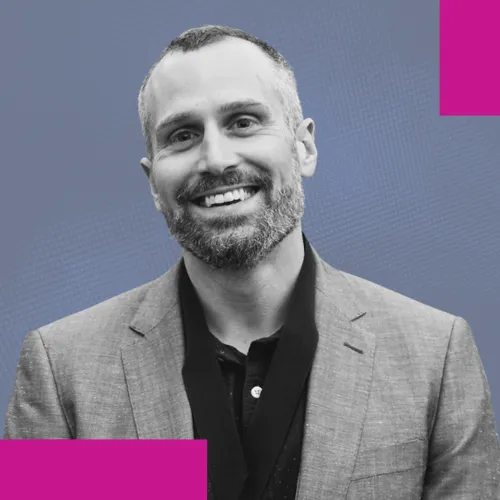
In this episode of Open Circuit, we’re joined by Brian Deese, former director of the National Economic Council and current MIT innovation fellow, to unpack why America’s building capacity has become our biggest competitive bottleneck.
Drawing from his Foreign Affairs piece, “Why America Struggles to Build,” Deese explains why breaking down physical infrastructure constraints could drive the next wave of economic growth.
Deese argues that 80% of project delays stem from state and local regulations, not federal policy. Using a “zero-based budgeting” approach to permitting, states could dramatically accelerate deployment of projects. Meanwhile, AI could slash the time and cost of environmental reviews from months to weeks, if regulators allow it.
We also explore the outcome of the recent GOP’s tax and spending bill, and examine why the Inflation Reduction Act’s messaging failed to create political durability. Deese argues that winning on infrastructure requires both economic arguments — jobs, wealth, and lower costs — and visceral arguments about strength, reliability, and energy security.
As Deese explains, we’re at a “unique economic moment” where AI, clean energy, and geopolitical fragmentation are converging to create unprecedented infrastructure demands. Can America overcome the politics of obstruction to build it?
Credits: Co-hosted by Stephen Lacey, Jigar Shah, and Katherine Hamilton. Produced and edited by Stephen Lacey. Original music and engineering by Sean Marquand.
Open Circuit is brought to you by Natural Power. Natural Power specializes in renewable energy consulting and engineering, supporting wind, solar, and battery storage projects from concept through financing. Discover how we’re creating a world powered by renewable energy at naturalpower.com.
Open Circuit is brought to you by Sungrow, the trusted provider of PV inverters and battery storage. With over 605 GW installed worldwide and a BloombergNEF ranking of “most bankable” in power conversion and energy storage, Sungrow provides solar tech you can count on. Learn more at sungrowpower.com.
Learn more about 38 North Solutions’ Policy Pulse, providing highly curated, actionable snapshots of the political developments shaping the clean tech landscape.
Transcript
Stephen Lacey: Brian, you made it. You’ve had quite the journey.
Brian Deese: It’s been like Mr. Toad’s Wild Ride.
Stephen Lacey: Brian was delayed in joining us because he had a full-on immersive experience in America’s infrastructure challenges, spending the night at the airport.
Brian Deese: I actually spent two nights back to back, the first in O’Hare and the second in Dulles. And so it really has been Mr. Toad’s Wild Ride. For those who aren’t already aware, we have an issue of congested airspace on the eastern seaboard coupled with more extreme weather. It’s a thing. It’s a thing.
Jigar Shah: Next time, he’s got to jump in the electric vehicle.
Katherine Hamilton: Yeah, my brother and his wife were trying to get back from Scotland last week and they were like, “The pilot said, ‘Guess what. I found a solution,'” from landing in Dulles. “We’re going to go to Newark.” And everybody on the plane was like, “No, don’t take us to Newark.”
Stephen Lacey: It’s extreme weather and infrastructure cosplay, Brian.
Brian Deese: Perfect for your audience.
Stephen Lacey: From Latitude Media, this is Open Circuit. This week, how do we solve our building bottleneck? Here’s a pretty remarkable fact. Only five companies from the 1990 Fortune 100 are still on it today. The digital era completely remade the American economy, and it was only possible because we built the physical infrastructure to support it. Today we’re at a far more radical turning point. AI, advanced computing, clean energy, and climate positive tech present even greater innovation potential. But these all require massive physical infrastructure, and America’s ability to lead in this new economy will be limited by its ability to build, yet we’re choosing obstruction over abundance.
On the left, a deference to rules and regulations has contributed to a slowdown in construction productivity, and on the right, the politics of obstruction have infested the GOP, threatening America’s industrial muscle memory just as we were building it back up. What will it take to build a real coalition that chooses building over blocking? I’m Stephen Lacey, executive editor at Latitude Media. Welcome. I am joined, as always, by Katherine Hamilton and Jigar Shah. They are my regular cohosts. Jigar, How’s it going?
Jigar Shah: It’s all right, it’s all right.
Stephen Lacey: Katherine, how are you?
Katherine Hamilton: Doing wonderful. So happy that Brian made it to be with us.
Stephen Lacey: Last week, under pressure from the president, congressional Republicans passed this sprawling tax and spending bill. And it sets a very different tone for America, phasing out support of clean energy and emphasizing defense and border spending over water, power, and transit infrastructure. And after passage of the bill, some house Republicans said they’re working with the administration to get, quote, “90% of all future projects terminated by making it harder to claim clean energy tax credits.” And sure enough, days later the White House issued an executive order on commenced construction rules that some are calling a backdoor cancellation of projects. While President Trump claims to be ushering in this golden era of energy infrastructure, we’re setting the conditions for constrained grid expansion, possible power shortages, higher electricity costs, and idle clean energy factories. And amidst this radical shift in policy, a coalition is emerging around a different set of pro-growth, pro-industrialization ideas, including one that’s well-known, abundance, popularized by Ezra Klein and Derek Thompson in their new book.
But there are of course many others who are out there that have been articulating this vision for some time, and one of them is Brian Deese. Brian served as director of the National Economic Council from 2021 to 2023 where he coordinated economic policy with the clean energy economy as a critical pillar of that work. And he was a senior advisor to President Obama and the global head of sustainable investing at BlackRock. And he’s an innovation fellow at MIT where he joins us from. And he published a stellar piece in Foreign Affairs back in March called Why America Struggles to Build. And he is here on Open Circuit to unpack that struggle. Brian, welcome.
Brian Deese: Thank you guys for having me.
America’s building capacity crisis
Stephen Lacey: I want to start with your premise in this piece that you wrote, which was fantastic. It got passed around in a lot of the circles that I am in. You make this argument that this moment when we’re on the cusp of massive economic changes from AI to bio manufacturing and of course climate change presents this unique imperative to build lots of new infrastructure. This is what we talk about regularly on this show. But make the case why our national capacity to build is so central to innovation and competitiveness in this new emerging economy.
Brian Deese: We are at a unique economic moment. And in my prior job at the National Economic Council, my goal is to think about the overall economy and look forward to not only where do we need to go over the next year or two, but over five or 10 years? And in a lot of exploration around that question, you came back again and again to the fact that for the first time in decades and in fact generations, our productive capacity as a country, our ability to increase GDP growth durably is rate limited today by our capacity to build. And that is a combination of a number of things coming together. It is, in the energy space, the return to demand and load growth, which we’ll get into, which is a generational trend, but puts us in a different paradigm than we were before. It’s in the technology and innovation space where the rise of AI and these other transformational technologies are intimately connected to our ability to build capacity to actually scale the innovation and then scale the utilization. And it’s connected to a very powerful structural change in our global geopolitics where we’ve shifted from broadly a geopolitical framework of markets and integration to one of fragmentation and resilience.
All of those things together put an imperative on our ability to build more physical capacity in order to unlock more economic growth. And that’s true if you look across almost every major sector of the economy. It’s true in the built environment of housing and physical buildings. It’s true for energy. And in a sense, from my perspective, that creates a very daunting prospect going forward. But I’m a perennial optimist. I also think as we think about big economic challenges we’ve faced as a country, I like this one more than others because this one actually operates on the supply side of our economy. If we can get it right and we can remove some of these barriers, we can unlock enormous investment and move very quickly on this front. The real issue is how do we do that?
Stephen Lacey: And what parallels can we draw from other eras of growth like say in the 1990s at the dawn of the digital economy?
Brian Deese: I think that if you look back, one of the great lessons is what we need is more physical capacity, looking at building the rails and building the systems that unlock that capacity becomes really important. In the digital economy, it was the build out of telecommunications and broadband infrastructure that has facilitated a lot of private investment and growth. Today it is, in energy, a lot of this is about the grid and a lot this is about transmission and not only where we are producing electricity, where we are producing energy, but where we are consuming it and how we’re moving it from place to place. But it’s also about the physical systems that enable growth in a smarter way, how people move around and where people live, which is why transportation, public transit, municipal infrastructure becomes really important as well. I think if you can get those systems investments right, you can unlock a lot more investment.
Jigar Shah: The challenge I see though is that we are entering a phase where people are not interested in their own economic wellbeing. You saw that from, for instance, Josh Hawley’s announcement around trying to get rid of the transmission line going through Missouri. The total amount of wealth creation that comes from that and that project is 13 or 14 years in. I guess what I’m trying to figure out is we depended upon logic and rationality in this conversation, and I feel like that is not where we are right now.
Brian Deese: I’m not going to try to defend that we’re at a moment of logic and rationality, that’s for sure. I think I may be a bit more optimistic that people actually are relatively rational and willing to support their self-interest as connected to the broader whole. I think maybe a different angle at that target, Jigar, is that if we think about building physical capacity, it’s one of the hardest things to connect the right economic outcome to the right practical, simple way of explaining why should I care about this and why is this good?
I’m quite buoyed by the change in the national conversation toward focusing on many of these problems. And at the same time, I worry a lot about us falling into narrative traps where we are talking about things that typical people who are living their lives would stop and say, “What on earth are you talking about? And why in the world should I care about that?” Well, it happens all the time in our space around… If you think about the grid and transmission space, there are a few things that are more important to actually unlocking cheaper, more reliable energy that helps people pay their grocery bill at the end of the month and then helps people get the jobs that they want and the economic security that they need. But if you think about 80% of the conversation we have around that, it is like a festival of acronym soup of DERs and GETs and RTOs and TOs and interconnected systems. And we have to wade into that complexity because that’s the way you actually drive system change, but we also need to operate in a very simple way.
And, Jigar, I think part of… We haven’t built the muscle memory to win big fights around saying, “Why does it matter whether or not we win the fight in the transmission line?” Ultimately it matters because you’re going to either have to pay higher electricity prices and you’re going to have less money for groceries or not. And somebody is making a choice on one side of those and somebody’s making a choice on the other side.
Look, I think it goes beyond energy too. Even the term abundance, if we just pause on it, abundance as a word is a word that you would hear much more often in law schools than you would hear in a bar. And I think that this is part of what we should all be thinking about when we’re thinking about the right questions for how we get to the right outcome is also how do we get from here to there and bring people to the table and actually ask them and listen to them and say, “Are we right that this matters to your life?” If it turns out that people say, “Yeah, you know what? I actually would rather pay higher electricity prices,” that would be a different conversation. I don’t think that we are getting to that conversation yet.
Katherine Hamilton: Yeah, and it feels like we have to attack this from a bunch of different ways, but one is the project costs. Input material costs are high, there are labor shortages where we need them. And there is not an incentive to be really cost-effective when we build. One of my directors, Tyler, had worked especially with offshore wind, and these companies were trying to build projects not only to be cost-effective, which is very difficult to do, but also to comply with all the regulation that’s there. And these folks did not necessarily understand the NEPA process, NEPA being all the environmental regs. And a lot of these folks would find themselves on the wrong side of the law before they even knew what to do.
And what that leads us to the conclusion, I would think, is that we need more not just streamlining of processes and making more cost-effective of processes, but also capacity to help people through those processes. And that’s where I get hung up is that it seems like right now our system is trying to cut back on that human capacity that is needed in an effort to be cost-effective, and it ends up making everything just stop in its tracks.
Brian Deese: Yeah, look, I think one of the other reasons why I think progress here is hard is there’s multiple stacked reasons why it’s gotten hard and expensive to build in the US. And none of them on their own is easy to disentangle. And it’s really easy to make broad-brush statements around why it is that we got those multiple stacked problems, which is why I tend to like to approach these things by saying there’s so much that is messed up and there’s more than enough blame. And if you unpack this, there are certainly things that progressives at the local level or Democrats at the national level have gotten wrong. There are certainly things that Republicans are getting wrong too.
And so more important is actually saying what does good look like? Where’s the outcome that we want to get to? Katherine, to your point, how do we get to a place where we’re being sufficiently radical about streamlining or eliminating process or doing zero-based budgeting on process and saying, “Why is there any process at all?” And let’s justify any process. But where process is necessary to get to the outcome, not playing the cynical game of the star of the beast of saying, “Well, now things are failing because we’ve streamlined process, but we’ve also gotten rid of all of the humans, or we’ve gotten rid of all of the capability in the system, and so nothing is getting done even though we’ve done notional streamlining.”
Jigar Shah: Right, but that approach is exactly opposite of what we’ve done. What we’ve done in the past is fast track projects that matter, or whether it’s this or that. And I think what you’re suggesting, which I agree with, is that we are hurting every project, even projects that you never see because of the regulations that they perceive that they have to meet or standards that they have to meet. They have to hire some consultant for $85,000 to give them the analysis to show that they actually qualify for an exemption. And there’s time.
And so part of I think what you’re saying with the zero-based budgeting analogy is that we actually have to eliminate everything and then figure out which steps are actually needed and which steps might actually be costless because AI can do it or something else. And that mindset to me is unfathomable right now within Blue States. When you think about what it would take to do that kind of work just in blue states, I think the folks in California spent 10 years to get the CEQA rolled back. I can’t even imagine how we could get Westmore to do anything in Maryland to roll back a lot of these things. We’re in a weird spot right now.
Stephen Lacey: Yeah, and to that point, is this more of a progressive blue state problem, Brian? On the left, you have obsession with process and a deference to government, and then on the right you have a lot of potential or actual destruction of economic value for the sake of politics. Where do you land in terms of where the challenges lie along the political spectrum?
Brian Deese: I think that fixing the endemic problems of over-process in progressive and blue states is absolutely necessary and also insufficient to really solve the problem, which is to say, yes, if we look at the trajectory of process-oriented stacked requirements, particularly in blue states, whether it’s housing or energy development, we got big problems, and we need to unpack and enroll a lot of those things. And at the same time, if we look at the federal level and we say, “How do we get to a pro-building, pro-economic growth, pro-lower costs and pro-climate outcome?” We’ve got big challenges to go through that loom larger on the Republican side of the balance sheet, so we need to be making progress in red states as well.
I guess I’m going to play optimist in this, which it’s a funny thing to find having spent a couple nights in airports and after the bill that passed last week, but I’m going to do it, which is, Jigar, when you were talking, it reminded me of the paraphrase, I think it’s the Bill Gates quote of, “Everything goes slower than you think in two years and everything goes faster than you think in 10 years,” which is I think we’re actually seeing some of the most… In terms of rate of change, of thinking, commitment, potential willingness to act, we’re seeing the second derivative, the rate of change now in a number of blue states is really exciting.
Now, we have a long way to go, but I think it’s possible that we look back 10 years from now and we say, “Yeah, there was an interesting moment. There was a fulcrum moment.” And I think part of that would’ve been all of the technological innovation that has led to this point that actually facilitates this to becoming really a deployment challenge. I would say some of the policymaking that we and others did in the last couple of years that helped reposition things. Some of this is the economic pincer associated with the return to energy demand, rising prices, and people feeling that more palpably. But I think it’s totally possible that we look back 10 years from now and say, “Wow, in that 10 year period, we made more progress than we had in the prior 50 years.”
Katherine Hamilton: Yeah, it’s like you first have to identify what is the problem you’re trying to solve for? And then what are the solutions to get you there? This administration has identified we’re in an energy crisis, we need abundance, we need dominance, and yet the solutions they’ve come up with are not going to get us there. And we can dive into what those are, but putting tariffs on, giving tax cuts to corporations but not to the folks who are going to actually build out the infrastructure. But the idea of the problem does have solutions. And so Brian, I do think that the optimist would say, “All right, well, right now they’re coming up with the wrong solutions to the problem, but maybe states will be able to do it or maybe regions will be able to do it and come up with the solutions in a different way.” And that’s where I see a lot of hope.
Brian Deese: Well, and also, to a point that Jigar made earlier, technology, if we enable, can drive a ton of efficiency and cost through the building process itself, that for 25 years it’s been settled expectation that you have to pay. I think I would go up from your $85,000, Jigar, I would pay $250,000 in three months for a site study or that the process of drafting the documents to go into an application for an EIS costs this much and take this much time. Those types of activities are precisely the segments in the economy in other sectors where AI-driven technology is coming in and taking radical cost out, just radical cost. If you’re operating a consultancy today where your business is to take three months and charge $250,000 for a study that Jigar probably in the time that I’m answering this question could have queried a half decent LLM-
Stephen Lacey: Jigar doesn’t use LLMs.
Brian Deese: Well, whatever Jigar uses. Jigar GPT.
Stephen Lacey: Yeah.
Brian Deese: What I like about the zero based budgeting concept is it says defend anywhere where you need process. And the answer is not going to be zero, but defend everywhere where you need to and then enable, allow for the most efficient tools to deliver on that process. And if the answer is you can actually do something that previously took a year in a month, we should allow that to happen because the concern is that you go from a year to a month and what you’re doing is you’re just shortcutting really, really important work. And obviously where you can justify that, then you should do it. But the technology piece of this is also this is why these things coming together at this particular moment, means you could drive a lot of cost itself out of the building process just in terms of time and money along those stages.
Katherine Hamilton: I’m really hopeful that this partnership between PJM and Tapestry will actually shorten interconnection times. And that would be exactly the type of thing you’re seeing is this ability to shorten what you would normally take years to do.
Jigar Shah: Yeah, the thing I’m most worried about is that I feel like the way in which we’ve kept a coalition happy is by giving them interim milestones to hang their hat on. We’ve spent this much money; you should be grateful that we’ve spent this much money on this issue. And I think where we need to move to, and I think your article goes there, is to be more outcomes-based. We actually have to meet this moment. We have to meet the amount of infrastructure needed to unlock AI or unlock EV infrastructure or whatever it is.
And I think that one of the challenges that I see is that in this moment, there’s a lot of people whose benchmarks for success will have to be radically changed with their donors, and that process is emotional. I don’t know that it’s actually a tactical one, it’s an emotional one. And I’m hopeful that we all can be helpful to our friends in this space who I think one-on-one are quite generous with what you’re talking about in terms of the need for this radical rethink but I think institutionally are just lost. There are tens of thousands of people who work in that sector who are just like, “I have been fighting coal for 20 years, and I don’t know how to pivot to this moment and be helpful.”
Stephen Lacey: And just to be clear, Jig, are you talking about environmental groups, energy associations?
Jigar Shah: Justice groups, labor groups. There’s a lot of people who… For instance, when you look at the bill that was just passed, the National Association of Building Trades out hard and said that they were supportive of making sure this bill got improved. They were completely on our side. When you talk to the million people who work for the National Building Trades, they weren’t sure because they sort of liked the framing of these are fragile technologies, and we want to build strong technologies. And I think that bringing all of those people along with us is exactly what didn’t happen in the 2024 election. And so one of the challenges that we have moving forward is I like this vision, but getting people enthusiastic about pursuing it I think is what’s going to be the difference when we look back 10 years from now and realize that we’ve made all these changes.
Brian Deese: Well, and I also think it goes to you do need concrete and exciting outcomes that people can rally around. And one of the core issues and challenges associated with taking on building capacity as the exciting economic outcome for the future is that by definition, it takes time. And by definition, you need to maintain sufficient continuity. And endless people will come and say, “Well, pass the IRA and then we had the electoral outcomes. Isn’t that a failure?” And we all have to figure out a politics and a narrative politics that say we can change what the right milestones are, we can change what the right exciting things that people push for and rally for, but we also need to not lose sight of the fact that if we’re going to build five million new housing units in the US and we’re going to build more energy in the United States than we have ever as a civilization, then we have to be committed to those big things as national projects that are exciting and get people emotionally invested in those outcomes and understanding that those outcomes, if we succeed, will deliver over the course of years, not days, years, not months. And that is tricky. Jigar, you’re absolutely right.
But look, I think as you were talking, Jigar, I was thinking about outside of the energy space, an example of the Low-Income Housing Tax Credit, the low-income Housing Tax Credit has an entire constituency around it. It’s the principle way in which we subsidize the build out of affordable multifamily housing in the US. And if we have really constrained supply, meaning it’s really, really hard to build, providing more Low-Income Housing Tax Credit doesn’t actually achieve the outcome that you want. You don’t end up with more housing. What you end up with is a higher share of the subsidy going to developers who are developing the same stock of multifamily housing. But even saying that, even stating that, and I just stated it in wonky terms, makes people uncomfortable because it’s like, well, wait a minute. If our goal was to advocate for the Low-Income Housing Tax Credit, then what are we supposed to do if we’re not advocating for that?
Jigar Shah: Well, the way I’ve said it for 10 years is that low-income housing costs more per square foot than luxury housing does in this country to construct. That is your zero-base budgeting. Why does it cost more to build low-income housing than luxury housing? I think that we are in a unique moment of everything being upside down.
And I agree with you, having a project that works is interesting. This bill that recently passed, I do think it provides clear support for distributed generation and microgrids. It is clear to me that every distributed generation of microgrid project is going to move forward now. And I think that’s exciting to everybody, right, left, middle. Some people hate their utility, that’s why they want a microgrid, some people love clean energy in their neighborhood and that’s why they want to do it.
There are goals where we can say we want 10 million rooftops by 2030 to get done, and that is going to require permitting reform at the local level. It’s going to require all this abundance framing to get done at the local level. It’s going to require folks who are reticent to adopt technology, to adopt AI tools. There’s all things that need to happen. I agree with you that there’s a tangible nature to this that we can put in place, but I do think that there’s a lot of people who define their power by the ability to force people to negotiate with their constituency through unnecessary process. And them giving up that power is going to be a very brutal conversation.
The outcome of the GOP’s reconciliation bill
Stephen Lacey: Since you brought it in, let’s talk about the Reconciliation Bill. We’ve established the challenge with coalition building. Let’s just talk about where we are politically and from an energy policy perspective.
And Katherine, to riff on what you said before, I think it was David Brooks maybe who said that Trump is the wrong answer to the right questions. It’s one of my favorite quotes about Trump. And Brian, you reflect on this in your piece. You talk about the administration’s dominance approach. And you write, “The economic policy approach that the administration seems intent on pursuing will make it harder to unleash a building boom with tariffs driving up costs for construction and manufacturing materials, political and economic uncertainty, limiting investment, and massive tax cuts, further ballooning the deficit and raising borrowing costs.”
And then meanwhile, we’ve seen the Department of Government Efficiency cut critical teams that can accelerate infrastructure projects, regulatory decisions that may require White House approval, potentially slowing down some decisions. Let’s talk about all of that, but I want to talk about the BBB, the Big Beautiful Bill. Katherine, lay it on us. Where did we end up on the energy front?
Katherine Hamilton: Well, I guess the best thing you could say is it could’ve been worse, although that’s not seeing that much. The clean energy credits, especially for solar and wind, solar and winds were targeted more than anything else. Projects do have four years from commence construction. If you start your construction within 12 months of enactment, then you have another four years or so to build. Otherwise, you have to have placed in service by December of 2027.
The issue with this… And so that seems like it gives everything a runway, but there was also some other regulatory pieces put into place, the foreign entities of concern, which will be a compliance issue as will the definition of commence construction. In order to get this bill over the finish line and get the folks from the Freedom Caucus to sign on, they said, “Yeah, sure, we’ll sign on, but we want you to do more damage to wind and solar than is already in the bill.” And so there was an executive order put out. The administration has 45 days to put into place definitions for commence construction and for also these foreign entities of concern compliance. And we just don’t know where that’s going to land.
Now, I would say some of the other provisions, the 45X manufacturing, storage, geothermal, hydropower, nuclear, those were not in as bad shape, but these FIOC, as they’re called, guidance could really throw a wrench in the works. And what’s weird is of course this is like regulation. This is actually doing exactly the opposite of what the president touts, which is we’re going to just let everybody build wherever they want. Well, that’s not actually true. They will let coal build where they want, they will let oil and gas build where they want, but they will not let renewables build where they want. That is part of the issue.
The other thing is that there were some tools that were… All the home energy credits were taken down, the 30D, which was the EV credit is going to stop, the 25D solar rooftop ends at the end of this year. But then also, a big tool that I thought was going to be really important to leverage and leverage in a smart economic way was the Greenhouse Gas Reduction Fund, this National Green Bank. And Brian, you’ve talked about this with an infrastructure bank, which is let’s figure out how to leverage the private sector, try to drive in and crowd in finance and provide a lot of tools. Now, a lot of that money had already gone out the door, so it’s being put to work now, but a lot of this was simply about we want to roll back whatever President Biden did. And it was done in a very clunky half hazard way that in the end is not going to get the president, as we have talked about, the goal that he has set forward of energy abundance.
Stephen Lacey: Yeah. I want to hopefully take a little bit of time to unpack the foreign entity of concern stuff and the commenced construction stuff. Just firstly, Brian, big picture reactions to the bill. What is this telling us about America’s priorities?
Brian Deese: Well, it suggests that the current administration has a incredible political holdover its majority. As a pure act of politics, it was impressive in terms of holding ranks on the bill. On substance, it’s Concerning on three fronts. The first, and you referenced it, Steve and I referenced it before, is that this is the most fiscally reckless piece of legislation that has been passed in my lifetime. And it comes at a moment where we don’t have available fiscal space to be operating anywhere near this recklessly. We’ve now locked in as a country go forward deficits of somewhere between 7% and 8% of GDP. We’ve run a deficit above 6% of GDP four times since World War II. All of those were periods of economic crisis. We’re now locked in on a independent [inaudible 00:35:30] cycle the deficits of that magnitude. And we’ve reduced our revenue structurally by 2% or 3% of GDP in a way that will have generational impacts for the country, for the cost of borrowing, for our economic strength, for our resilience to stand up against foreign adversaries. And so that’s at the top line concerning.
The second piece is it’s a deeply troubling and inhumane bill in terms of what it does in terms of taking healthcare away from over 10 million Americans and raising the cost of healthcare and undermining a lot of the progress that we have made over the last decade in actually providing healthcare to more Americans in a more efficient and more cost-efficient way. People don’t recognize, in addition to being a critical support for the elderly, people with disabilities, Medicaid is also a highly efficient program. Per capita, healthcare spending and Medicaid is significantly below private healthcare spending in the US. And so that will undermine our capacity as a country as well.
And then the third obviously is on the energy side. And I think we are making things more difficult for ourselves. And things are going to get more expensive and more costly. And so this is all a challenge.
Now, my baseline, and again I’ll play to the optimist, is in the period since this has passed, I feel like people have been going into two camps, which is the defensive crouch, despair camp of, “Oh God, what do we do?” And the other is the Timothy Snyder preemptive obedience stuff of, “Ph no, it’s fine. It’ll all be fine. Everything will be fine.” And I think the truth is that the economic forces behind driving cheaper, more reliable, cleaner energy are on our side and are very, very powerful, but we now need to be much more creative about figuring out how to unlock and how to harness them and how to get a lot more out of the existing energy system we have.
Stephen Lacey: Jigar, what camp are you in?
Jigar Shah: My God, have you failed miserably on political power camp. For the love of God, when you are deploying twice as much CapEx per year as the oil and gas sector, which in and of itself is the largest oil and gas sector in the entire world with 14 million barrels a day of drilling, and you spend 1/20th of the budget on influence as the oil and gas sector did, you brought this on yourself. And I’m just saying that I think that this time period where, “Everyone is going to see things our way because logic and reasonableness are on our side, are over.
We have over 20% of all the counties in the United States now that have banned solar and wind deployment on their land. And for a long time, the solar and wind industry were like, “We don’t care because we can work on the other 80% of counties.” Well, it’s time to care. It’s time to actually care.
We have overly financialized our assets. You work in communities; every one of those communities needs sponsorship of their T-ball team. Every one of those communities, you need to know who the city council and mayors and county commissioners are. And you need to maintain a relationship with them for 20 years, not just until you get your permit so you can start construction.
I just think that we are in a place right now where right now, we do not have the political power necessary to thrive and to meet the economic needs of our country. And so people need to understand what that means. That doesn’t mean Democrats, by the way, it just means that for all of these places, they were so afraid of Donald Trump that they were willing to destroy the economics of their district and vote for Trump’s bill. That is a wake-up call if I’ve ever seen one.
Katherine Hamilton: Here’s the thing. There are two things you need to do, or maybe three, because, Jigar, you did talk about influence at the community level, which I think is crucial. But I also think they need to be held accountable. There has to be pain felt about taking these votes when they wrote letters after letters clutching their pearls and saying, “Oh, we’ll never vote for a bill that does any harm to our constituents,” whether it was for Medicaid cuts or whether it was for clean energy cuts, and they all got in line and voted.
Stephen Lacey: Well, that brings us to a really interesting question, which is also the opportunity here. This is a very unpopular bill. The polling is quite bad. I guess, Brian, I’m curious about what you think the potential political consequences could be by talking about the lost economic opportunity, but also does it create an opportunity to present a more optimistic pro-growth agenda?
Brian Deese: I think it creates a huge imperative. It’s not even just an opportunity, but an absolute imperative to… If we can’t demonstrate the negative consequences of this piece of legislation on the lives and livelihoods of tens, if not hundreds of millions of Americans in a way that they respond and react, then, A, shame on us, and B, we have got much bigger problems.
I think that the most well-worn and the place where I think we will see that the clearest and painfully because people will experience palpable pain is because of the pullback of healthcare benefits and healthcare support. We are this fall going to see millions and millions of Americans who will receive letters that, “You now have to pay a lot more for your health insurance,” and then next year people receiving indications saying, “You’re going to lose your healthcare coverage altogether.” And if we could have avoided that, that would’ve been priority one, but now the reality is that people need to understand that that’s the case.
But I would say, to go back to the point that Jigar was making, I think that we don’t have yet a political and a narrative architecture to just turn on and make the case on the energy side about all of the ways in which this bill is going to undermine and undercut our security costs and the like. And so I think now is a moment not only for going out and making that case, but actually really pushing ourselves to innovate and try different angles at the target. Because we’re not to a place where we can just turn that on and say, “Well, people understand the pain, and we just need to make sure that they connect it to this bill,” I think we’ve got more work to do.
Katherine Hamilton: Yeah, and I don’t think we made the case for the Inflation Reduction Act. We didn’t really have enough time because it takes a while to build. And part of any kind of successful build out is having political stability over long-term so that you can actually get things done. And I think it took a little while, for example, for Obama’s Obamacare to actually start yielding benefits where people were saying, “No, don’t take it away from me.” And I think the same is true for clean energy. We did not make the case enough that people were on the ground saying, “No, no, no, no, don’t take that away from us.” I think we’ll see the results of that once they start losing their jobs and costs start going up. But not only we didn’t have enough time, and I just don’t think we made the case the way we needed to.
How do you build a pro-building coalition?
Stephen Lacey: Yeah, that brings me to a question that I wanted to grapple with Brian, which is what can we learn from the failure of messaging around the IRA? You and Jigar, as part of the administration, were out there with clear, cohesive arguments. I heard you on Ezra Klein’s podcast explaining Biden’s economic policy. Jigar is out there talking about creating climate wealth and the projects that are getting financed. And so there was good communication happening, but unfortunately you had a president that was unwilling to echo that well. And I’m just curious, the economic arguments were there percolating around, they didn’t break through as much. What did we learn about how they didn’t break through? And how can we apply that to this moment?
Brian Deese: One, you have to be committed to time discipline and overwhelming force. There’s no major economic policy that has been enacted in the US in the last 25 years that was popular immediately out of the gate. If you look at the Affordable Care Act, it wasn’t until three, five, seven years down the line when people felt palpably that their benefits might be taken away that people understood the benefit to their lives. And that’s true not just for democratic initiatives, it’s true for Republican initiatives as well. Look at the major tax cut. The one is it may seem like an easy answer to say, “Well, there wasn’t enough time.” I would flip it on its head to say our movement needs to have militant commitment to discipline and not constantly questioning or pulling back, but staying with your foot on the accelerator is number one.
Number two, I think we need to win this on economic terms and we also need to win this on visceral terms. On the economic side, we need to win that this is about jobs, it’s about wealth, and it’s about the cost that you pay at your kitchen table. But we also need to win this in a visceral sense. Part of what we see in the narrative and cultural debates around electric vehicles, part of what we see around the narrative and cultural debates around wind and solar is there’s this underlying sense of there is weak and unreliable energy and then there’s strong and reliable energy. And we all know substantively, we all get the substance and the economics of that. We could argue until the cows are blue. Is that the saying, cows are blue?
Katherine Hamilton: Until the cows come home.
Brian Deese: We could argue until the blue cows come home about why it is in fact that most of the reliability and strength and security comes from distributed sources of energy and all of that. But we need to win at a more visceral level that the things that will make us the strongest and the most secure and are the most reliable in our lives are the things that get us away from big price swings, foreign actors controlling our domestic destiny. We’ve got to win at a visceral level too because that’s behind a lot of this. That’s a lot of what’s behind the narrative debates on electric vehicles, as an example.
Stephen Lacey: You hit on something really important there, which is this cultural element and a lot of people seeing renewables as weak, which is why I think we’re having this conversation to talk about it in terms of hard infrastructure. I like that you brought up that point.
Jigar Shah: Yeah, but I want to make sure that we don’t lose the forest for the trees here. If this bill had passed without the IRA being passed first, it would’ve been the single largest subsidy for climate technologies in the history of the US Congress. And so when you think about just how much ground we maintained, it was extraordinary.
And my sense is that after the midterm elections is over, to the extent there are any manufacturers in people’s districts that need extensions of 45X that congress will willfully grant it. And my sense is that this conversation that we’re having is really about the lack of political power by the solar and wind industry. When you think about batteries and how little power batteries had for so long, they first got their tax credit in the IRA, that the IRA, those battery tax credits were fully maintained and juiced all the way to 2033. And when you think about all of the add-ons that we had for the tax credit, whether it was the labor add-on or whether it was energy communities add-on or some of those, those were all maintained. How did that happen? How in God’s grace did they figure out how to put in all of these adders and leave them in place? They would’ve taken them out first.
I feel like, for whatever reason, because we’re just colored within solar and wind, we have not really recognized the fact that the vast majority of the IRA was actually maintained in this bill. When people say, “Oh, there’s no political durability within the IRA,” I get the rhetoric, but for people on the ground who actually put their blood, sweat, and tears into building a new manufacturing facility in Dalton, Georgia or figured out how to get something together in Terre Haute, Indiana or et cetera, those people got a reprieve out of this bill. They’re going to be able to continue their manufacturing. And I think they believe they’re going to fight to be able to extend it after the midterms.
Brian Deese: I just want to double down on that point. And it goes to the political durability of policy change, which is the way that we make progress on maintaining and then expanding the policies that we think are going to change the country for the better is by actually learning from what we have done effectively politically, and then doing more of it and not going into the defensive crouch and/or clutching our pearls and saying, “How did all of this go wrong?” And instead say, “How do we keep winning? Let’s look where we won, how we won, and do we keep winning on that front?”
And I know I’m keep making healthcare analogies, but the analogy to healthcare is apt in this context, which is learn where you can win politically, do more of that. Worry less about how to do the stuff that’s not working and do more of what is working. And Jigar, I think part of the reason why… Look, part of the reason why batteries, which could have gone into the category of wind and solar or could have gone into their strong in firm, part of that is because of a narrative architecture around batteries being key to our economic security because having more independence and control over the upstream battery supply chain is connected to a security imperative. I think there’s something to learn from that. And we can lean into that and we can think more about where that takes us in other technologies as well.
Stephen Lacey: Those are both really good points, but I think the wild card here is the foreign entity of concern piece and the White House executive order on commence construction. Katherine, can you unpack those a little bit more for us? The foreign entity of concern thing is a policy tool used by the Biden administration. Why is this different? And why is the commence construction piece such a challenge?
Katherine Hamilton: Right. Well, it just totally depends on how the regs are written. And they have 45 days to do so. On one hand, you could say, “Oh, that’s actually great because that will provide certainty to the industry, so we’ll know exactly which direction to go in.” But the other side of that is are they going to write it such that it is impossible to do business? So that the regs, while not outside of the statute, still make it very, very difficult and where investors and banks are saying, “I don’t know, this seems like really difficult thing to do.”
I honestly agree with Jigar on a lot of this. The Inflation Reduction Act and also the infrastructure law and the CHIPS Act all put us in a certain trajectory, and I honestly don’t think that trajectory is stopping, but what I think that this bill has done for pieces of that is make it a lot harder. And I don’t think it means we’re not going to go. I hear from my clients every day, “All right, we are resilient. We’re going to figure out how to make this work.” There are a lot of analyses that indicate huge job loss, huge economic devastation from having these roll back.
At the same time, our industry is really strong, and I think that we will figure out a way to do it. I just hate the fact that we’re getting kneecapped or slowed down in that it’s going to make it so much harder. And I think, Stephen, that’s where we’re getting to is the fact that this administration, while rolling back a lot of other regulation, is putting new regulations in place for solar and wind is just going to make it harder. And it’s going to actually make it harder for the other technologies as well because of the FIAC restriction.
We’ll see how that turns out. It all hinges on how Treasury and IRS define everything. And I think that means people need to be very, very engaged. They need to be engaged with those agencies. They need to look at their supply chains, figure out where everything is going. They need to figure out what their pipeline is and get it ready. Everybody needs to be working as hard as they can, nevermind the fact that we don’t have the political strength. We need to do a lot of work still.
Stephen Lacey: Brian, I know we need to get you back to your kids after a long couple of nights at the airport, so I just want to finish up here with a question about what you think the most practical solutions are right now that could move the needle on America’s building capacity in energy or otherwise. Are there things just staring us in the face that you know that we should implement?
Brian Deese: 80% of the challenge that projects face are connected with state, municipal, and local regulations and processes that if you apply the right approach and the right discipline and you take a zero-based budgeting approach, we could make dramatic progress. And we’re seeing across the country that happen. This is a great example of Laboratory of Democracy stuff where we’re seeing that happen. We syndicate that and we syndicate that across the country. That is probably the most promising and powerful way to drive progress in the short term.
And the second is connected to what we were just talking about around where we continue to have long-term, durable incentives to bill. If we look at the existing energy system, the opportunity to optimize and get more out of the existing energy system, particularly into a period where prices will go up, volatility will go up, is an enormous economic opportunity. And so for new businesses and business models who want to take advantage of that opportunity, particularly into state and local and regional areas where they actually are willing to forego process in service of building, those two things together are where we’re going to really see, I think, a lot of exciting developments in the relatively short term.
Stephen Lacey: Brian Deese is an innovation fellow at MIT. He’s the former director of the National Economic Council. Brian, thank you so much.
Brian Deese: Thank you guys. It was fun.
Stephen Lacey: Jigar, Katherine, we’ll catch you guys next week. Thank you.
Katherine Hamilton: It was great. Thanks.
Jigar Shah: Always.
Stephen Lacey: Open Circuit is produced by Latitude Media. Jigar Shah and Katherine Hamilton are my co-hosts. The show is produced and edited by me. And Sean Marquand is our technical director. He wrote our nifty theme song. Anne Bailey is our senior podcast editor. And Latitude Media is supported by Prelude Ventures.
You could just go on over to Latitude Media for a lot more in-depth reporting on the topics that we cover on this show. I also write a weekly column based on what we talked about. We’ve got multiple newsletters, our daily, our weekly, our AI Energy Nexus newsletter. And you can just hit the subscribe button when you go to Latitude Media’s homepage. You’ll find all our newsletters right there. And of course, find this show anywhere you get pods.
Thank you for giving us a rating and review if you’ve done it. And if you haven’t, please just go over to Apple Podcasts or Spotify and do that. It’s really helpful for us. Everybody who’s in the podcast game asks that, and there’s a reason, because it is helpful for helping people find the show. And you can find transcripts at Latitude Media as well. Thanks, everyone, for being here. We’ll catch you next week.