It’s been nearly a year since a national energy emergency was declared, with big promises on prices and reliability. So we’re asking a simple question: how’s that going?
In this live episode of Open Circuit, recorded at the Power Resilience Forum in Houston, we take stock of a power system under growing strain. Outages are up, prices are up, markets are stressed, and grid reliability experts are warning of a “five-alarm fire.”
We’ll start with a look at how accelerating load growth, tighter reserve margins, delayed interconnection, and extreme weather are colliding — and what breaks first if current planning assumptions don’t change.
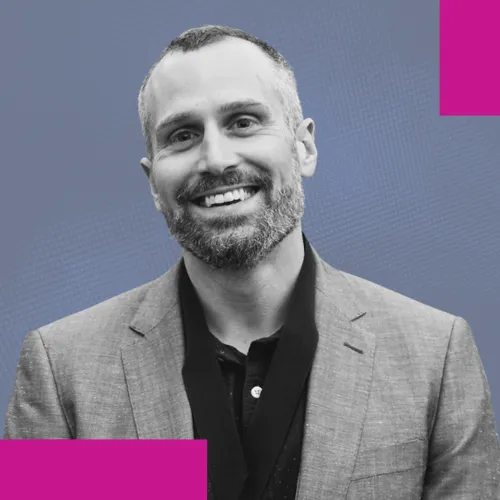
Then, we’re joined on stage by Wilson Rickerson, president and co-founder of Converge Strategies, to explore grid resilience through a national security lens. As the military increasingly depends on the civilian grid, what happens when that system is under sustained stress?
Wilson explains why thinking about the grid in a wartime context leads to familiar priorities: flexibility, transmission expansion, regional markets, and better coordination. And we talk about a report from Converge on lessons from the grid at war.
Join Latitude Media, April 13-14, in San Francisco for Transition-AI 2026, our flagship event on the AI-energy infrastructure buildout. The two-day conference will bring together developers, utilities, regulators, and hyperscalers to align on what’s real, what’s possible, and what can get built to meet AI infrastructure demand. Our podcast listeners get a 10% discount on this year’s conference using the code PODS10. Register today here!
Transcript
Stephen Lacey: From Latitude Media, this is Open Circuit. It’s been a year since a national energy emergency was declared with big promises on prices and reliability. So we’re asking a simple question. How’s that all going?
Outages are up, prices are up, markets are stressed, and grid reliability experts are warning of a five-alarm fire. We’re going to take stock at the moment and what it means for grid resilience. Then we’ll look at resilience through a different lens. With so much of our national security now dependent on the civilian power grid, what happens when that system is under sustained stress? Finally, we’re going to end with the quiz to see how much my co-hosts have been paying attention. That’s all coming live from the Power Resilience Forum.
Stephen Lacey: Hello, Houston, Texas. We are here at PRF26. I’m Stephen Lacey. I’m the executive editor at Latitude Media, and I am here with my regular co-host, Jigar Shah and Caroline Golin. Jigar is the former Director of the Department of Energy’s Loan Programs office. He is the co-managing partner at Multiplier. And Jigar, I know how much you love utilities. There are so many utilities in the room. Are we going to hold you back from all your fawning?
Jigar Shah: I love utilities. I love them so much that I want more for them.
Stephen Lacey: Caroline Golin is the CEO of Envision Energy Advisors. She is the former global head of energy development and innovation at Google. And she’s been at the center of many of the urgent challenges in the power sector. Caroline, how are you?
Caroline Golin: I’m great. I’m loving Houston, actually. I went to the Museum of Fine Arts yesterday. Phenomenal. Absolutely phenomenal.
Stephen Lacey: How does it feel now that you are a regular co-host on this show without a public relations person over your shoulder?
Caroline Golin: Oh, well, I don’t get places on time. But other than that, I think it’s actually really freeing. It’s been really enjoyable to just mingle and meet people and not have to have pre-rehearsed talking points on everything I have to say. Yeah, it’s been great.
Stephen Lacey: We have a special guest coming up. That is Wilson Rickerson. He’s going to be joining us a little bit on the stage to talk about the nexus between resilience and national security. But first, I just want to take stock of the power world. It’s been a pretty wild year. And to reflect on where things stand, I just want to take a minute to listen to what has happened over the last year.
Donald Trump: I will direct all members of My Cabinet to marshall the vast powers at their disposal to defeat what was record inflation and rapidly bring down costs and prices.
News clip: We are following the latest developments tonight as the Trump administration pauses leases for five large-scale offshore wind projects along the East Coast. Dominion says stopping the project for any length of time will, “threaten grid reliability for some of the nation’s most important war-fighting AI and civilian assets.” It will also lead to energy inflation and threaten thousands of jobs.
News clip: There is a national policy driven by the President of the United States to create a shortage of electrons.
News clip: Power grid operator PJM is under fire over significant electricity rate hikes across its 13 states. That’s led to local electricity bills soaring and calls from Governor Josh Shapiro to potentially leave the grid. Now grid officials say the expected heat wave could possibly make us reach a tipping point.
News clip: Extreme weather events are costly. And so far this year they’ve been more costly than ever at 14 extreme weather disasters, including the most costly of them, the California wildfires occurred from January to June. Price tag, more than $100 billion in damages.
News clip: After years of steady progress, America’s carbon pollution is moving in the wrong direction. New data shows US emissions rose in 2025, a reversal exports say is tied to weather, energy demand, and power costs.
Donald Trump: Energy is another area where the United States is now thriving like never before.
Jim Robb: We’re seeing an increasing number of small scale events and near misses that continue to reinforce what we can’t call anything but a five-alarm fire when it comes to reliability.
Stephen Lacey: So there you have it. That is a recap of this wild year, a snapshot of some of the big storylines. Load growth, markets under strain, increasing extreme weather, politics now infused in everything. So the last quote you heard was from Jim Robb, the president of NERC, who warned that we are facing a five-alarm fire for the grid. So if you take all this together, let’s talk about where the grid stands today. What level of risk do you think we are at right now on the power grid? Caroline?
Caroline Golin: Oh, I’m first. Great. I think it is not a five-alarm everywhere, but I think we’re at a five-alarm in certain parts of the country. I think California is certainly in a five-alarm state, when you have companies facing bankruptcy and clearly going through the same mechanisms over and over and over again. I think Texas is… I guess we’re going to find out this weekend to some degree if we learned our lesson. I’m not sure we did learn our lesson. I’m not sure we invested in weatherizing the full system to get to the point where we’re past the lessons of a few years ago.
Stephen Lacey: People were feeling pretty optimistic earlier this morning.
Caroline Golin: Well, good. I mean, that’s what you want. I don’t want to be right in that particular position. But no, I do think we’re in a micro five-alarm fire in terms of resilience, which is different from reliability. And I do think extreme weather is something that we’ve fought with the same tools that we were fighting 20 years ago, 30 years ago, and we need to change the way we fight those things. But I also would caveat that by saying that a five-alarm fire is sometimes the only way that you change, right? And we have a history in this country of letting things break before we build the new and better systems. So while I don’t want to see that happen all over the country, it is a forcing function politically. And if you couple that with rising rates and rising costs, yeah, you’re going to get the sustained motivation, I think, for change.
Stephen Lacey: Jigar, what level are we at? What alarm level?
Jigar Shah: I have never understood the five-alarm fire. Are there two alarm fires? Basically, is it just two trucks show up instead of five trucks? Is that what they’re referring to?
Stephen Lacey: Something I’ve always taken for granted. I actually don’t know.
Caroline Golin: It’s the bells in a fire station. Five-alarms.
Stephen Lacey: No, I think it’s the number of trucks-
Caroline Golin: No, I just made that up.
Stephen Lacey: … that they send to the fire. In any case, there are a lot of trucks mobilized this week for Winterstorm Fern. And I hope and pray that all those folks stay safe and get everyone back up and running quickly. Look, I think my introduction to all of this was Hurricane Sandy and the work that happened there. And I think the investment that PSE&G made after Sandy around hardening their grid and all of those things, I think it’s pretty obvious that the investments that were made since Sandy were crude. There were things that people did because they needed to do them, but they weren’t necessarily as well-thought-out as all of the booths that I’m staring at here at the Power Resilience Forum. I think when you think about the next generation of AI, the next generation of sensors, the next generation of tools and how they can be fully integrated into grid operations and de energized power lines and all those things, I do think we’ve come a long ways around what will work, right? What will actually materially reduce the risk. And for that, I think I’m grateful.
Now the question becomes, if we all collectively agree that that will work. Then, how fast can we roll it out? And I think I’m heartened by how many people have come to this event because I think they’re here because they do want to roll it out. And I think it’s one of the few times I’ve seen the venture capital community’s timeline and the utilities’ timeline actually converge to a single timeline, which is great. I mean, so I don’t know what that means for a five-alarm fire, but I’m hopeful.
Stephen Lacey: Yeah. I mean, I think you’re right. The technological landscape has changed dramatically in the last five to seven years. If you think about the period from Sandy to 2017, and then the period from 2017 to now, I think you’ve seen some pretty extraordinary leaps in deployments and in technological change. Let’s break down the NERC risks, because I think this is important. When Jim Robb says five-alarm fire, he’s talking about load growth. That’s a new piece in the NERC report. Tighter reserve margins, delays in resource interconnection and transmission. Obviously the increase in extreme weather events, that’s a huge piece of this event here. And then the growing interdependencies in gas and fuel supply and communication systems. So which of those stand out to you as the biggest threat right now?
Caroline Golin: So actually I want to focus in on something that’s not in that list, which is that…
Stephen Lacey: That’s the classic answer. I like your question, but let me answer it the way I…
Caroline Golin: Pivoted. And this is somewhere, of course, Jigar and I agree, which is that I think we both recognize that to solve a lot of the problems that are facing the economy right now, it requires that we empower commercial and residential customers to be more flexible on the grid. We empower the use of distributed resources, storage on the distribution system. We alleviate the pressure and the need to build on the transmission system and really ring-fence that to the large load and co-location model that we need to see. And Jigar, I know you agree with me on all of this. But I also think that the problem in doing, or the benefits of doing all of that, is reliability resilience, right? And a distributed model is going to breed more reliability and resilience and alleviate a lot of these issues.
But we don’t have a grid that was built with the IT structure or the software or the interoperability to do any of that. So all of those problems come down to a root cause, which is that we don’t have a smart enough grid to even onload all of the technologies that Jigar is talking about that have come up in the last five, seven years, and do so in a way which makes demonstrative impact into all those issues. And so what’s ironic is that we are home to the five largest IT companies in the world whose make-or-break in their economic transition and dominance is also dependent our ability for the grid to start working. And yet that integration hasn’t been there. So I would say they’re all equally important, but the root cause among all of them is that we don’t have this interoperable grid that can do all these things.
Stephen Lacey: Yeah. I mean, certainly that is a conversation that has come up here in some of my discussions with people. I think it comes down to the fact that many utilities don’t even know where some of their equipment is on the grid. And I know a company like Tapestry that was spun out of X inside Google is working on exactly this type of system, where you can really map out the entire system, create a true digital twin, and then be able to identify every single piece of equipment and its history. Jigar, what do you make of Caroline’s point about software, IT tools being a fundamental layer of risk here?
Jigar Shah: I learned a long time ago to just say yes.
Caroline Golin: When you’re sitting in the same room with me.
Jigar Shah: Yeah, yeah, yeah. No, I mean, she’s obviously right. I think that the thing that bothers me in this moment, which I think should bother everybody, is that there doesn’t seem to be a unified way of thinking about it. So when you think about what’s happening here in Texas, part of the way that Texas has really gotten to where it is right now is by deploying a huge amount of solar and battery storage. Just an enormous amount of solar and battery storage the last two years, right? And when you think about who’s fighting a huge amount of solar and battery storage from being deployed, it’s basically MISO and PJM. As much as you want to blame solar and wind for whatever it is that are all the ills of the utility grid, there is no solar and wind in PJM. I think it’s probably 8% of the total grid. It’s all coal and natural gas up there.
And so the reason why the PJM is in so much trouble is that they don’t have battery storage and then they’re not integrating it from a technical point of view, as Caroline suggested. And so we’re in this weird spot where we have all these technologies and those people, whoever those people are, whether it’s the PJM or the governors or the utilities within the PJM or… MISO is a little better, but MISO, they don’t have a unified thought process of, “Okay, we have this NERC report. Here’s how we’re all going to work together to solve it.” They’re still fighting around which ways they want to solve that problem. And so right now the PJM’s like, “Well, we’re going to accelerate all the natural gas projects in the grid and we’re going to take them out of the queue and just approve them.” That’s not helping, right?
Because now, the natural gas system is saying, “By the way, we can’t provide you firm gas to any of those sites. We’re going to have to build new pipelines for that. So you’re going to have non-firm service. You’re welcome.” And then, Carrie Zalewski wrote this fantastic paper on, and she used to be a regulator in Illinois and now she’s at ACP, but she wrote a fantastic after action report on what happened during Winterstorm Elliot where it really was a scheduling problem between the natural gas industry and the electric industry. The electric industry works like the stock market, 24/7 365, and the natural gas industry works like, I don’t know, street betting where you’re just doing numbers and they write stuff down on a piece of paper and then they shift it to four different people. And then that person fills the order seven hours later. And so there are people trying to schedule gas on Saturday and they were like, “Sorry, we don’t work on Saturday and Sunday. You’re supposed to schedule that gas on Friday.” And so when you think about all of that, and we’re already at 43% natural gas in our country, so what are some of those people suggesting that we should be at 60% gas and that’s how we’re going to solve the problem? I just think that that’s the problem I have is we don’t have a unified approach that everyone’s like, “Oh yeah, that’s what we’re going to do to fix this problem.”
Stephen Lacey: One more question on this before we move into the next theme. One of the points that was brought up earlier this morning was that there could be a conflict between meeting load growth, investing in resiliency, and decarbonization. And can utilities walk and chew gum at the same time, is the way it was put. Do you think that these three competing priorities mean that (A) we slow down decarbonization or, (B) we focus on load growth and then which undermines resiliency investments? How do you see those priorities potentially competing with one another?
Jigar Shah: I mean, I feel like batteries solve all three. I don’t see it being… And when I say batteries, the reason I say batteries is for those people who are a little bit geeky. You think about virtual power plants and you think about level zero to level four and the HUELS test that Energy Hub is trying to push forward, et cetera. Batteries are already there, right? Batteries have telemetry built into them that can fully integrate into a utilities grid operation system, so they really do run like a power plant. And so then once you’ve got batteries and the utilities agree that batteries are how you’re going to do it like they have in Texas, well, now you can integrate in thermostats or smart water heaters or other stuff, as long as it’s a small amount at first. And then as their software catches up and the IT catches up, as Caroline suggested, then they can make it bigger. The ADR pilot I think was successful here in CenterPoint had a big role in that. And so I think we’re headed in that direction, but I think all three of those things get solved, I think by batteries.
Stephen Lacey: Caroline, any parting thoughts here?
Caroline Golin: Yeah. I mean, I think it’s going to be a little bit more than batteries, but I do think that we’re potentially-
Jigar Shah: Killing my dream.
Caroline Golin: … I’m not killing your dream, I’m just adding to it. I think that there is a conflict and I think we have to be very sober about that conflict. And I think we cannot excuse away whose responsibilities collectively it is to solve that problem. So I do think that we, as an industry, relied heavily on the entities that were driving load growth to be the solvers of all the ailments of the grid. And that is no longer their agenda. And I think that what we see happening today is that the markets and utilities and suppliers are limited either by choice or by investment structure or by off-take availability and what solutions they can provide, largely by choice. I think load that is growing in this country is not limited by choice. I think they are agnostic. I think if you are able to provide a solution that improves resiliency and reliability on the grid for the communities that they operate in and meet their load in a timely way, you rise to the top of the picking, right? That has not been the approach that we’ve set out. And it is not legally the responsibility of most utilities, right? And so I think you have a huge construct issue that is pitting load growth against the empowerment and the resiliency of the rest of the customers on the grid. And without severe change to market rules, the products that we offer in the system, the regulatory structures that guide this, but more importantly, the innovation around structuring and contract and procurement that includes battery storage at all levels. Yes, you are unnecessarily running cars head-on to each other.
Stephen Lacey: Well, let’s add a new dynamic to this conversation and talk about national security. We’ve got a guest here who sits at the intersection of power systems, national security, and real world stress testing. That is Wilson Rickerson, the President and Co-founder of Converge Strategies. Wilson, welcome. Wilson, do I understand that you were on Jeopardy once?
Wilson Rickerson: Oh, man. Yeah, I was.
Stephen Lacey: How did that go?
Wilson Rickerson: I’ve got to say not well. I prepared for, I tried withstand and then did not recover from my…
Stephen Lacey: I found a clip on YouTube of you losing all your money on Jeopardy and leaving the show, and it has almost 23,000 views. Did you know that? It has that many views?
Wilson Rickerson: I mean, can we turn that into something? Is there… Yeah, I got to the Daily Double and I just heard you got to bet it all. Just lay all your chips on the table and go. And yeah, I lost. And it was the last question of Double Jeopardy, so I didn’t even make it to the final. There was just that blank podium.
Stephen Lacey: Well, it’s too bad they didn’t ask you about national security or energy security because Wilson is one of the top experts on that intersection. His work focuses on a question that is only getting more urgent, which is how we safeguard energy systems that underpin our economy and our security at a time when those risks to both are multiplying. So I want to start by just talking about the overlap between electricity systems and defense and military operations. And I think it’s interesting to talk about what just happened recently in Venezuela. So the US military captured President Nicolás Maduro by exploiting, among other things, a power outage. What does this tell us about the role electricity is playing in modern military operations?
Wilson Rickerson: Thanks for starting with the softballs. I think there’s going to be a lot of commentary. There has been a lot of commentary and there will be continuing to be about that particular operation. And I will not try to talk about it from the military side, except I guess with my power sector hat on, the grid is no longer just infrastructure. It’s the frontline. That’s one key takeaway from my perspective. And it has been in past conflicts, but this was the first time that it was cyber attack as a military tactic on the battlefield that took down command and control, which is pretty new. Another thing I’ve been wondering about and talking to some folks in this room too here is like, when something works, there may be a bit of a delay, but then maybe it’s part of the playbook. And especially if you are just not in a specific country, but the power sector writ large, what does that mean for the power sector if it starts coming back? What bell has been rung that can’t be unrung? What have we normalized? What monkey have we let out of the lab? And I think we’re… I don’t want to find out anytime soon, but I have concerns.
Stephen Lacey: Well, I think there’s a really interesting conversation about the overlap between the grid and defense operations, which is they’re becoming more and more integrated. And it actually brings us into a really interesting conversation about how we integrate more distributed energy, how we restructure markets. And so I want to use the defense piece as a lens to get us there. Can you just talk about the history of how the military has used the grid and how that has gotten more closer than ever?
Wilson Rickerson: Sure. And I’m not a historian. I’m a tourist is the history major, but it is something that we wanted to pause and look at in terms… There have been a number of recent conversations about grid resilience that have talked about, “Well, this how it used to be done back in the day.” And we realized we didn’t really know much about what had happened in the last century in some of the greatest tests of power sector resilience, which were the great conflicts of the 20th century. World War I, World War II, to a lesser extent, Korea. So like any good consulting shop, we wrote a paper on it, Stephen.
Stephen Lacey: It’s a really good paper.
Caroline Golin: It’s a really good paper.
Jigar Shah: It’s quite good.
Caroline Golin: It’s a little scary, but it’s really good.
Wilson Rickerson: Yeah. It’s called Powering the Fight: Lessons from the Grid at War. And we didn’t know what we were going to find. One of the first key takeaways was that in each of those major conflicts, the grid has buckled under the surge of defense production in ways that folks weren’t really ready for. And that was true even when we took a look at, as we as a country, took a look at like, “Well, maybe World War I wasn’t so great when we ran into energy shortages. Let’s try to get a bit ahead of the game this time around.” Still saw the same thing in World War II and also in Korea. So to that degree, the past is a bit of a guide to the present.
Here we are, y’all were talking about the five-alarm fire, whatever that may be, in peacetime. So if we were called upon to fight a major war again today, I think the grid would face immediate strain already. And so to layer that on top of the grid as it is, I think it feels like something that should be a more rich topic of conversation. It doesn’t have to dominate power sector resilience conversations, but at least where does that fit into what the things we’re already dealing with? So that was history lesson one. The other history lesson was not more of the same, different decades, same lesson. There’s going to be a lot of defense production and it’s going to strain the grid. It was more that in last century, the energy for the war effort was over there, where the fight was. And these days, our global missions tie back to our domestic installations, and those installations are largely dependent on the grid. So it’s a very different story. Our energy resilience of our grid is ultimately the energy resilience of our force projection.
Stephen Lacey: Absolutely. Jigar, I saw you pulling up a tweet thread that I think that you had done after you read Wilson’s report, and he was so excited about the white paper. He went on LinkedIn and wrote a post about it and went on Twitter and talked about it. What stood out to you, Jigar, about this framing?
Jigar Shah: Well, I mean, I think it’s fantastic. But the one thing that I think about today, when you think about AI, load growth, et cetera, I mean, I think that many people actually do believe it’s a defense posture, right? I mean, winning against our adversaries around the world to control the models that control AI in the future, but then also the inference and all the other pieces. I’m struck by the paper was very clear that the electric utility industry in all three scenarios were putting their best effort in, but ultimately the federal government had to come in over top of them and force them to coordinate in ways that they wouldn’t have naturally gotten to on their own to be able to unlock the capacity necessary to meet the defense moment. And so in some ways, I see the… I mean, I’d love your take on it. I mean, I see the White House meeting with 13 governors of exactly that start of that process within this administration. And I’m curious whether you see it the same way, which is that this White House is now thinking about coming in over the top of the normal mechanizations of the electric utility industry to say, “You will coordinate far better than you naturally would have to be able to accommodate this strategic load growth.”
Wilson Rickerson: Huh, that’s a pretty good question. And for a little bit of context, I won’t dwell too long in history, but in World War I, we were disconnected grids that ran out of power trying to win defense production ramped up. And a big part of the war effort was connecting those grids. Same thing in World War II. The grid was much bigger, but the surge in aluminum manufacturing up in the Northwest or bauxite mining in what is now SPP caused the creation of SPP in the formation of the Northwest Power Pool. And we also saw a lot of emergency orders come down. 20 happened in World War II that were like, “Okay, we got to do this faster, so we need more transmission. We’re going to connect our way out of this problem.” I mean, those emergency order laws are still on the books, they’re starting to be used for different things. And I think I’m pretty curious to see how that does play out. What are we really ultimately asking for? Do we really understand the connection between defense requirements and our national energy transmission or distribution or generation system enough to know where to place those bets and where to really build infrastructure?
Stephen Lacey: You’re getting to a really important coordination question, which I want to unpack a little bit more. But Caroline, what stood out to you as particularly relevant to this moment now?
Caroline Golin: Well, particular with your report, which was really phenomenal in anyone who’s ever wondered how did we get the markets that we got, what were the additional political pressures? I think it’s a really, really good read so I’d recommend it. But one of the things that stood out to me, germane to what you were saying, and I think where we are with load growth, and we talked about this a little bit this morning, is that there’s a cybersecurity angle here as our economy continues to digitize, and as you see those digital assets becoming centralized in large, cloud-based data centers, which require a certain amount of reliability, which require a certain amount of load growth, which require a certain amount of transmission being built. And then there’s this counterpiece to it, which is a geopolitical question, which is saying, hypothetically, in a war gaming situation, if we were to go into a conflict with another country, is their grid built better than our? And is that a strategic advantage and how so?
And I think when you layer the two on and then you layer on the question of climate change and extreme weather, which is somewhat agnostic to national boundaries, I think you end up coming to the same conclusion, which actually you came to in your report. Which is that one, yes the grid is a geopolitical tool. But the same problems that are facing our ability to gain geopolitical power in the economy, which is through digitization, AI, and everything, may be the same reasons why we gain in a war gaming situation. So the solutions are the same, which I thought was really fascinating because I wouldn’t naturally think that what’s going to strengthen our economy moving forward is also going to be the tool we needed to fight China or Russia or whoever it is that you think we’re going to fight in the future.
Stephen Lacey: Totally. And the solutions you outlined in the report, flexibility, transmission expansion, bigger regional markets, better coordination. These are all things that we talk about as part of the clean energy resilient power sector.
Caroline Golin: And they’re also the things we need for climate change. So when you have such macro issues all stack up with the same microtechnology and policy solutions, your question is, so why can’t we do this?
Jigar Shah: Yeah, I think the word you were looking for was batteries.
Wilson Rickerson: Carolyn, I don’t think I’m going to pick who we’re going to fight or anything like that. But also, I think one thing we picked up on is thinking through the wartime lens is not all doom and gloom or even necessarily about conflict. It can be a clarifying thing to think about even in peacetime. And to your point about industrialization or comparative advantage, that ultimately comes down to potentially deterrence. We think about nuclear deterrence. Who’s got the most warheads or the best nuclear triad, but really there’s also like, “Hey, how can we build our way out of the next conflict?” And if it seems like, or whatever your non-nuclear deterrent may be. And I think framing things that way.
Let’s say you’re stuck in a pretty wonky conversation of power sector resilience, being able to step back and say, “If we were actually going to try to take another swing at this question, but think about it through what investments would make it less likely for someone else to pick a fight for us?” And believe me, our adversaries are watching a lot of what we do very closely, especially on the power sector resilience side. That does shake up what may sometimes be myopic conversations.
Stephen Lacey: You raised a point in a previous conversation about this growing conflict between defense installations and new large loads, for example. Utilities are frantically trying to meet these new large industrial loads, data centers, for example. And the defense industry has typically come in and gotten what they want from utilities, if that’s a correct characterization. And now you have this problem where in certain regions of the grid, they may not have the capacity to meet what the defense industry needs. Talk about that conflict and what the implications are. And it gets to this coordination effort. It sounds like people aren’t really thinking about this yet.
Wilson Rickerson: Yeah. And to be clear, this is an emerging understanding for me as well. And the pod has been very helpful. Long time listener, first time caller. But yeah, when I started my resilience journey about 10 years ago, the talking points seemed to be hey, DOD, Department of War, whoever, the artist formerly known as, is the largest. It’s the big dog. It’s the largest energy consumer in the world and it’s going to get what it wants. And that’s suddenly no longer necessarily the case. And I think that’s caught a lot of people by surprise. How do we even have that conversation and what even is that conversation and when do we have it and where?
I mean, when you all were talking with Gene Clements a couple episodes ago, there was this moment where you all were saying, even if you go through the interconnection process, which used to be the gold standard and get through the final gate as a load, you might not have any capacity, every scarcity waiting for you on the other side. That was an eye-opener for me. And then Caroline, you’re opening my eyes to the sophistication of the data center’s ability to converse and engage with the energy sector, the electricity industry, and shape it. That capability and capacity, I don’t think exists in the DOD and the defense enterprise. So if those things are true, then what do those productive conversations look like? So where are we in competition and where are we just missing the boat?
Caroline Golin: Well, do you think, and this is something that popped into my head, this administration and I think largely the world sees owning and training AI on US solar as an economic deterrence policy. At the same time, what you’re saying is access to capacity for the military is also a deterrence policy. And are those two potentially at odds with each other? And then which one wins out if we don’t fix or do all the things you say for us to do in the report?
Wilson Rickerson: I think that’s a very live question that I would love to have with the good people here at the Power Sector Forum, either now in 2026 or 2027. But it is a complicated question because yes, AI, the race for AI is a national security race and it’s characterized that way specifically. And there are military data centers that are for AI. We are citing data centers on military installations, or at least we hope to. That’s a major push at the moment. But at the same time, large loads that we don’t fully understand may box out some critical defense plans that we haven’t fully communicated or fully understand yet. So yeah, I look forward to navigating that together with you guys.
Jigar Shah: I mean, as you step back for a second, and the report was great, but I mean, just to step back to a more broader lens, outside here, like CTC and TS Conductor, right? CTC’s got a deal with Google where Google will pay for the reconductoring of transmission lines so that they can get more capacity for their data centers. It’s really hard to give away. The utilities are like, “No, we want to rate base it. We don’t want free stuff from you and we don’t want to give you that capacity, so go away.”
And so we’re in this weird spot right now where I think that the utility companies are saying, we used to know how to do 4% load growth a year. We don’t anymore, and this is super scary for us. And we’d like to do it the old way where we just build new generation, upgraded transmission, upgraded distribution. The supply chain is not helping them do that. And even if it is helping them do that, it’s leading to five, six, seven, eight, 9% rate increases. And so now you’ve got a governor that’s announced an emergency on her first day in New Jersey. You’ve got legislation going through Virginia today to try to figure this out. Largely it’s around technologies that everyone knows will work. It’s around getting more out of the transmission grade that we’ve already paid for, using vendors that are out there with the table, deploying grid enhancing technologies, unlocking VPPs. When you think about what a VPP is, in previous wartime efforts, folks had their own community gardens. They had all sorts of stuff, right? People were asked to sacrifice. In this case, a VPP is basically a strategic reserve. And you basically say, instead of blacking out entire communities, you say, “No, we’re actually just going to leave all of this stuff in reserve so that if the defense department needs it or AI needs it, well, then we’re going to unlock this reserve.” What is required for that reserve to be unlocked? The utilities have to deploy DERMS platforms.
The utilities have to create specifications and cybersecurity standards. You’ve got this new product from IBM, which is basically unhackable called Sanctum that they’ve rolled out last week. And so you can imagine all the utilities saying all the VPP stuff has to go through Sanctum. And so it’s not like we don’t have the solutions to the problem. What we have is this coordination issue where people are like, “But damn it, I don’t want to change my culture.” And I was like, “I appreciate the value of your culture, but I appreciate economic and military deterrence a little bit more.”
Wilson Rickerson: Jigar, I think I totally agree with you there in terms of it’s not a technology problem, it’s a communication problem. We’ve worked with a hundred military installations around the country trying to figure out, “Hey, how do we move forward with energy resilience? How do we hit the department’s six nines reliability requirement?” I mean, that’s really hard. And the answer is that…
Jigar Shah: Well, in this case, it’s micro reactors. You get a micro reactor and you get a micro reactor.
Stephen Lacey: Look under your chairs. Everybody gets…
Caroline Golin: Oh, dear God.
Jigar Shah: A micro… You’re welcome.
Wilson Rickerson: Yeah. But ultimately it came down to the need for conversation. The military installations, the energy manager at an installation has a lot of jobs. Speaking utility or speaking bulk power system resilience is probably not necessarily one of them. And meanwhile on the utility side, and there are some great examples of utilities engaging with the military. NRECA and the co-ops are doing a wonderful job with a series of regional summits at the moment. But there’s not necessarily someone at the RTO or utility level whose job is to say like, “Hey, tell me about what you need as a military base.” So there is this need for conversation. I think the good news, a bright spot amongst a lot of doom and gloom, is that we are starting to get better at having those conversations. I mean, the first grid X, the grid X8, I guess this year really started to talk about defense issues for one of the first times that I’ aware of. So it’s starting, but it can get a lot better.
Stephen Lacey: So if you were sitting in the shoes of someone, a decision maker or an executive at a utility and you’re listening to this conversation, what’s one risk that you would want them to be planning for right now?
Wilson Rickerson: Do I have to pick just one?
Stephen Lacey: Yeah.
Wilson Rickerson: I’m not sure it’s the specific risk. I think it might be the risk of not fully understanding the defense requirements in your region. I mean that in a couple of different ways. Number one, the military installations that may be in your service territory, which I think many utilities know. The second though is that military installations also rely on the water, wastewater, natural gas, communications, fuel delivery, which are largely community owned. So if you’re talking about helping with defense risks specifically, Stephen, then you’re opening the aperture on resilience beyond the fence line of military installation to a whole community that’s tens of megawatts to maybe a gigawatt plus. And that just is different planning, different conversation, a whole mess of new stakeholders having maybe the first time they get together around the table to talk.
Stephen Lacey: All right. So we know you all can dish takes, but can you handle the cold, hard facts? And I’m going to think of this last segment as a bit of a redemption round for Wilson.
Wilson Rickerson: Let’s play the feud. Oh, no. Bless you and curse you, Stephen Lacey. I’m breaking out in a cold sweat.
Jigar Shah: Are you getting sweaty?
Wilson Rickerson: Yeah. So sweaty. Yeah.
Stephen Lacey: All right. So think of this as Resilience Jeopardy. I’m going to test each of you with Jeopardy style questions. And if you get it wrong, the others can take a whack. We’re not playing for money here, just pride. And-
Jigar Shah: Take the Daily Double.
Stephen Lacey: … I don’t have buzzers here, so we’re just going to go round-robin. This is not purely Jeopardy style, but you have to answer as if you were on Jeopardy.
Caroline Golin: Can I be like Vanna White or something and just turn?
Stephen Lacey: That’s a different game show.
Wilson Rickerson: When do I bet everything?
Jigar Shah: I will bet $1.
Stephen Lacey: Are you ready? Jigar, you get to go first. In 2024, the US experienced this many billion dollar climate disasters, roughly triple the long-term annual average.
Jigar Shah: Billion dollar?
Stephen Lacey: Yeah.
Jigar Shah: I don’t know. 124. What is 124?
Stephen Lacey: No. Way off.
Caroline Golin: Is this like The Price Is Right where you can go higher or lower?
Stephen Lacey: Give it a shot. Just take a whack.
Caroline Golin: What is 85?
Wilson Rickerson: What is 35?
Stephen Lacey: Wilson’s closest. It’s what is 27? Redemption attained.
Caroline Golin: We’re very negative.
Stephen Lacey: Caroline, this was the average number of hours US customers were without power in 2024, nearly double the decade long average.
Caroline Golin: You said nearly double?
Stephen Lacey: Yeah.
Caroline Golin: Seven. What is seven?
Stephen Lacey: No.
Wilson Rickerson: What is four hours, Alex?
Jigar Shah: What is 14 hours?
Stephen Lacey: Jigar’s closest. What is 11 hours? Residential sales-
Caroline Golin: Not by much. Okay. We split the difference on that one.
Stephen Lacey: … Wilson, over to you. That’s right. I guess you’re pretty close. Yes.
Wilson Rickerson: Whatever. I won.
Stephen Lacey: Residential things-
Caroline Golin: If we were in Price of Right, I would have won.
Stephen Lacey: … Residential sales of home standby and portable generators rose by this percentage from 2023 to 2024. Wilson.
Wilson Rickerson: What is 30%?
Stephen Lacey: No.
Caroline Golin: What is 90%?
Jigar Shah: What is 21%, Alex?
Stephen Lacey: What is 18%? So I guess taking these questions together, what do you think this tells us about how resilience is shifting onto customers in terms of the kinds of distributed solutions they’re investing in? Jigar, I know that you’ve really focused on this when it comes to batteries and comparing them to home generators.
Caroline Golin: Can we look at this against how much rates have gone up for increased resilience for residential customers?
Stephen Lacey: Sure. What do you mean?
Caroline Golin: You said that 14 hours. So that’s less than one day where they don’t have access to electricity. And how much more are they paying for those extra seven hours?
Stephen Lacey: I do not have that stat.
Caroline Golin: See? That would’ve been more interesting, Stephen.
Jigar Shah: Yeah. I mean, look, I think we’re now up to 15% of all US homes with backup power. And so that is clearly a decision that people have made to spend money out of their pockets to get backup power. Now, some of those are cheap. They’re $1,800 at a Home Depot for a gas generator that just sits out there and they just plug stuff into it. And others are expensive, like a Generac unit, that’s fully integrated into your whole home. And then they’ve got backup fuel and all that stuff, and then you got to pay for it to get tested every year and all those things. And then there’s some people who’ve decided to put in batteries as backup power.
I think but where we are today is that some of those solutions are EPA compliant to actually be used in this strategic reserve and some of them are not. So if you have a diesel backup that is not allowed to be used as a reserve or a grid resource. You have a natural gas backup generator, it’s only allowed to be used if it’s EPA compliant, which some are and some are not. If you have a battery as a backup generator, well, then it can actually be paid by the grid on a regular basis to actually help with other services. And so over time, I don’t know that you get a rate of return on that battery, but you could practically get it for free over time. And so I think it’s important to note that people have already decided that this is important to them, that they’re going to go out and do stuff. And so I think it’s incumbent upon whether it’s utilities or the CCAs in California or whoever it is that’s prosumer to say, “Hey, if you go this way with your purchases, you can be helpful to your neighbor. If you go this way to your purchases, you’re being selfish just for your family.”
Wilson Rickerson: For consumers and resilience, again, back in the day, I think resilience, the definition people would say, “Well, it’s the thing that we don’t know what’s going to happen, but it’s going to be really bad when it does.” And I think now a lot of that is lived experience and people are seeing it and people are voting with their wallets in terms of, “Well, I know actually how bad it can get these days.”
It’s no longer just a theoretical black swan. It was Tuesday. So I think that’s been a big sea change. We’re running the vehicle to everything pilot in Massachusetts at the moment, co-running the vehicle to everything pilot for the great Commonwealth of Massachusetts. Basically drive up, dozens of vehicles for backup power or vehicle to grid. And there’s a lot of excitement across the board. Yes, the utilities have been great, but also a lot of residents and school districts and others are putting up their hands and saying, “Yes, I would like whatever that is to keep the lights on.
Stephen Lacey: Let’s shift to the opportunity now. So Jigar, we’ll start with you again. By 2030, demand for climate resilience and adaptation technologies could create this much opportunity for private capital. What’s the dollar amount?
Jigar Shah: All right. What is $7.2 billion, Alex?
Stephen Lacey: Caroline, you want to take a whack at it?
Jigar Shah: Guide her.
Stephen Lacey: He’s way low.
Caroline Golin: 19.4.
Wilson Rickerson: 7.1 and 99 billion.
Stephen Lacey: $1 trillion. Mentions of climate resilience related terms in major company announcements and investor calls increased by this percentage between 2021 and 2025. Caroline?
Caroline Golin: 22%.
Stephen Lacey: What is… You have to…
Caroline Golin: What is 22%, Stephen?
Stephen Lacey: No. Anybody else want to take a whack?
Wilson Rickerson: This has been humbling enough. I’m good. Jigar, over to you.
Stephen Lacey: Okay. 55%.
Caroline Golin: I win.
Stephen Lacey: 61%.
Caroline Golin: I win because I’m the only participant. I get the medal for participation.
Jigar Shah: That’s just wrong. I got robbed.
Stephen Lacey: All right, this is the last one. Historically, this sector has funded more than 85% of all climate resilience investment, but that is starting to shift. Wilson?
Wilson Rickerson: What is utility sector?
Stephen Lacey: No. It is the public and philanthropic sector.
Wilson Rickerson: Just trying to give a shout-out.
Stephen Lacey: Well, I guess this just brings me to one of our last questions, which is, what do you think will unlock more capital for resilience technologies? I guess in the power sector, what’s the pathway for unlocking more money for this set of technologies?
Jigar Shah: Well, I mean, in large part, I think the money’s already there. The electric utility industry has pledged to spend $1.1 trillion between 2025 and 2029 on-
Stephen Lacey: That’s for a whole range of grid modernization. Yeah.
Jigar Shah: … And so I think where we are today is that those investments are largely going to follow investments that are in the comfort zone of utilities over the last 10 years. I think what governors are saying across the board today is that things have to change, right? That we can’t keep doing things that are comfortable that raise rates by double the rate of inflation and people fall further and further behind. And so there’s what, I guess, what we call a five-alarm fire these days happening such that Trump hosted 13 governors, most whom I think were Democrats, at the White House to say, “What are we going to do about it?” And the PJM wasn’t even invited that I could tell to this gathering.
And so we’re in the early days. It feels a little scattershot, a little chaotic, which it’s probably par for the course. And now we need to start having more structured conversations. And the reason that we’re having them is because the governors had largely outsourced this to other experts for a long time. And now that it’s a number two political issue, they’re saying, “No, no, I actually want to be involved and be in the room for these conversations.” And so it is very obvious that a lot of additional capacity could be taken out of the existing assets we’ve already paid for, whether it’s through grid enhancing technologies or advanced conductors or batteries or virtual power plants or all these other things, right? But that requires us to actually do things differently, regulate the utilities differently, actually have an entirely different approach to demand, which we currently only have with supply.
Stephen Lacey: Caroline, I know you’re working with different funds and thinking about innovative deal structures to serve this moment. I know you’re thinking a lot about data centers. What are some of the most interesting things happening in this space?
Caroline Golin: I think that there is a simultaneous effort going on around trying to figure out how to co-locate load in a way that it absolves itself from becoming a prosumer on the grid. And it essentially absolves itself from being able to or having a negative impact on rates. I think that the political conversation is real and heated and there isn’t a single fund or a single tech company right now that isn’t deeply thinking about the implications, political implications, if we don’t figure out affordability. Everyone is thinking about that. Affordability more so than resilience. I will say that. That is resilience is not at the top of the conversation in these.
There’s a simultaneous effort to think about how do you site and co-locate the limited turbines that we have in this country without having to build new pipelines, and at the same time, invest in what needs to be aggregated in the future and create capacity solutions in the future. And I think there is a lot of fervor, and we talked about this last week on the pod. I think there is a lot of fervor around big assets, whether that be nuclear or geothermal or natural gas. But there is a very strong and disciplined investment community around what is the future of aggregated distributed technologies and what is going to be the key to unlock consumer behavior in that? Because anyone who looks at power dynamics knows it has to be a both/and. It’s not going to be an either/or. It’s going to be a both/and.
What I think is missing, and Jigar alluded to this, is that we actually don’t have the market structures that allow for capital to treat that transition as a long-term asset class. And until we create those market structures and simultaneously create the commercial structures that force those market structures to stay, that’s going to be hard. And I would go back to my initial point, which is that, so we had FERC 2020, right? So go and distribute energy and aggregate it and treat it like capacity. Many of the RTOs in this country do not have the technology backbone to even do that.
Stephen Lacey: 22, 22.
Caroline Golin: What did I say?
Stephen Lacey: 2020.
Caroline Golin: Oh, damn.
Jigar Shah: We knew what you were talking about.
Caroline Golin: Well, at least I have something to write in my LinkedIn post next week. But I can’t believe … But anyway, so my point being is that I think sometimes the markets get ahead of what is commercially viable and what you can contract on, but then oftentimes the markets are held back by the technology opportunity that’s being able to be integrated. Yeah.
Stephen Lacey: So you see that clock, Wilson, it just started blinking red. So you get to close your thought as the… You’ve got 30 seconds to impart your wisdom on us. What’s the biggest unlock for resiliency?
Wilson Rickerson: In our company, we joked that resilience is held back by a lot of not very good conversations being held very slowly over time, and we just have to have better conversations faster. Looking out over the sea of 500 people in the room having good conversations, I’m excited to meet my 500 new best friends. I think it’s a really promising start, or a supercharge to a conversation that’s already happening and that needs to happen. So good to see you all. And thanks to this wonderful crew up here on the dais for inviting me onto the show. It’s been a real pleasure.
Stephen Lacey: Wilson Rickerson, Caroline Golin, Jigar Shah. I am Stephen Lacey. Thanks everyone. I am Stephen Lacey, your co-host and executive editor. The show is edited by me, Sean Marquand, and Anne Bailey. Of course, go to YouTube and subscribe to our channel for fresh episodes of Open Circuit. And of course, you can find the audio version anywhere you get your podcast plus transcripts and every episode are available at latitudemedia.com. And there you can subscribe to our newsletters, including our AI energy Nexus newsletter, which runs through a lot of the stuff that we are talking about today. Thanks a lot for being here. We’ll catch you next week.